Can A Cat Drink Almond Milk – Is It Safe Or Not
You can give your cat almond milk in small amounts as an occasional treat, but it’s not a safe or healthy substitute for water or a balanced diet. Almond milk lacks essential nutrients your cat needs and may cause digestive issues like bloating or diarrhea. It’s especially unsuitable for kittens.
If you want to keep your cat hydrated and healthy, there are better alternatives and precautions to evaluate before offering almond milk regularly. It’s always a good idea to check with your vet first to make sure what you’re giving is safe. Your cat’s health should come first!
What Is Almond Milk and Why Cats React Differently
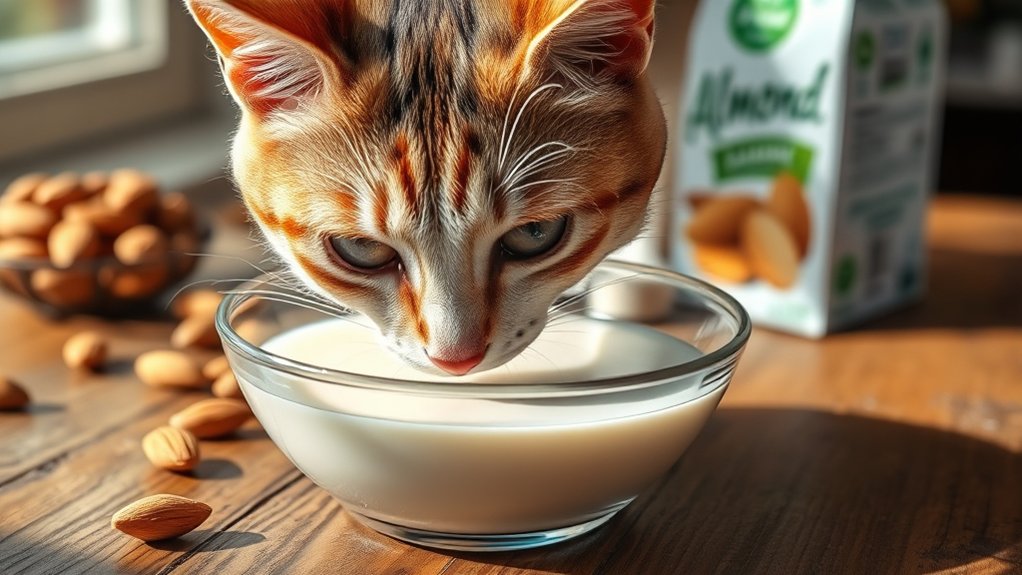
Almond milk is a plant-based drink made by blending ground almonds with water, but it lacks the essential nutrients your cat needs to stay healthy.
While cats are lactose intolerant and can’t properly digest dairy milk, almond milk is lactose-free, which might seem like a better alternative. However, almond milk contains very little protein, only about 1 gram per cup, which falls short of your cat’s dietary requirements.
Almond milk is lactose-free but lacks the protein cats need for a healthy diet.
Also, many store-bought almond milk brands include additives and artificial ingredients that could pose risks.
Because cats have sensitive stomachs, consuming almond milk may lead to gastrointestinal problems such as gas or diarrhea.
Understanding these differences helps you recognize why your cat might react differently to almond milk compared to other liquids.
Can Cats Safely Drink Almond Milk?
You can give your cat almond milk, but just in small amounts to avoid any digestive issues. It’s not toxic, so that’s a relief.
However, be careful with store-bought versions because they often have added sugars and artificial ingredients that might cause problems.
Almond Milk Nutritional Risks
How safe is it to give your cat almond milk? Unlike dairy products, almond milk lacks essential nutrients and provides only about 1 gram of plant protein per cup. That’s not enough to meet a cat’s dietary needs.
While almond milk isn’t toxic, it contains calories, about 30 to 60 per cup. These calories can contribute to weight gain, especially if your cat is mostly indoors.
Many store-bought almond milks include artificial additives. These additives may harm your cat or cause digestive issues if consumed regularly.
Since almond milk doesn’t supply the necessary nutrients cats require, it shouldn’t replace a balanced cat’s diet.
If you decide to offer almond milk, choose unsweetened varieties with minimal ingredients.
Also, limit the amount to avoid potential nutritional risks. It’s better to be cautious when it comes to your furry friend’s diet.
Digestive Effects On Cats
Although almond milk isn’t toxic to cats, you should be cautious when offering it. Many cats may develop digestive issues like gas or diarrhea. Unlike dairy milk, cats are often lactose intolerant, and almond milk’s additives can worsen their digestive health.
When giving almond milk, keep these points in mind:
- Offer only a small amount to observe any adverse reactions.
- Avoid store-bought almond milk with added sugars and artificial ingredients.
- Don’t replace water with almond milk; hydration through water is essential.
- Monitor for signs of bloating, diarrhea, or gastrointestinal discomfort.
Because of almond milk’s high fiber and additives, regular feeding can cause digestive issues.
What Almond Milk Does to Your Cat’s Digestion and Health
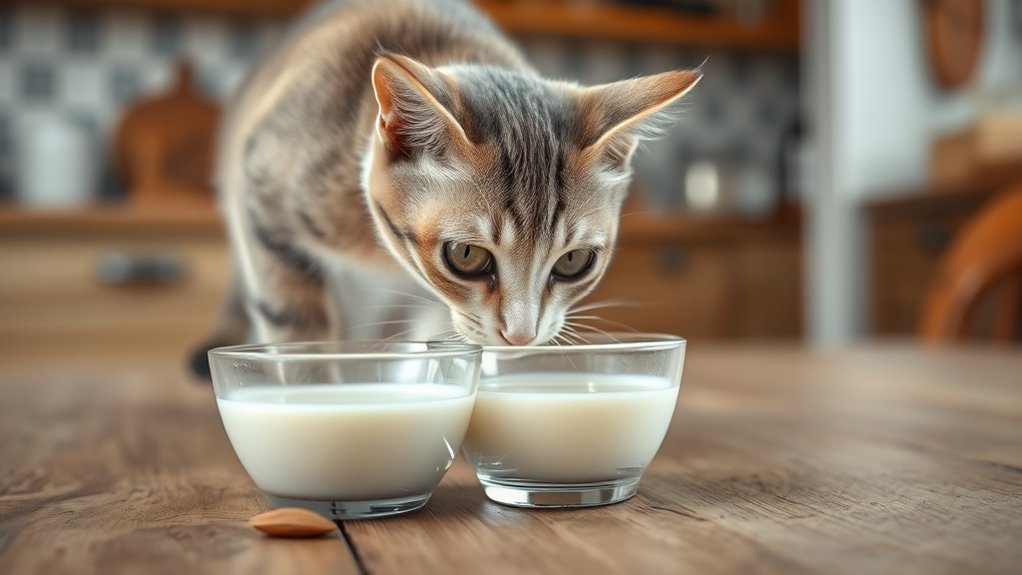
Since cats have unique dietary needs, feeding them almond milk can affect their digestion and overall health in several ways. Almond milk contains only about 1 gram of plant protein per cup, which falls short of what cats need for energy and proper nutrition. If cats drink almond milk regularly, they risk nutritional deficiencies.
Also, its high fiber content, nearly 4 grams per cup, can cause digestive discomfort like gas and bloating, especially in sensitive cats. Store-bought almond milk often includes artificial ingredients and added sugars, and these may worsen digestive issues.
While almond milk isn’t toxic, giving it excessively can lead to diarrhea and other gastrointestinal problems. For hydration, your cat should primarily drink water. Almond milk should remain an occasional treat, not a dietary staple.
Is Almond Milk Safe for Kittens?
Why should you avoid giving almond milk to kittens? Almond milk isn’t suitable for cats, especially kittens, whose digestive systems are still developing and sensitive.
Kittens rely on breast milk or specialized formulas like Kitten Milk Replacer (KMR) for essential nutrients. Introducing almond milk can lead to digestive issues and nutrient deficiencies.
Consider these points:
- Kittens need nutrient-rich milk replacers, not almond milk.
- Almond milk’s high fiber may cause gastrointestinal discomfort.
- It lacks the essential nutrients critical for kitten growth.
- Feeding almond milk risks disrupting their delicate digestive balance.
To guarantee your kitten’s health and proper development, stick to milk products formulated specifically for kittens rather than almond milk, which is unsuitable for cats at this stage.
What Are the Risks of Feeding Almond Milk Daily to Cats?
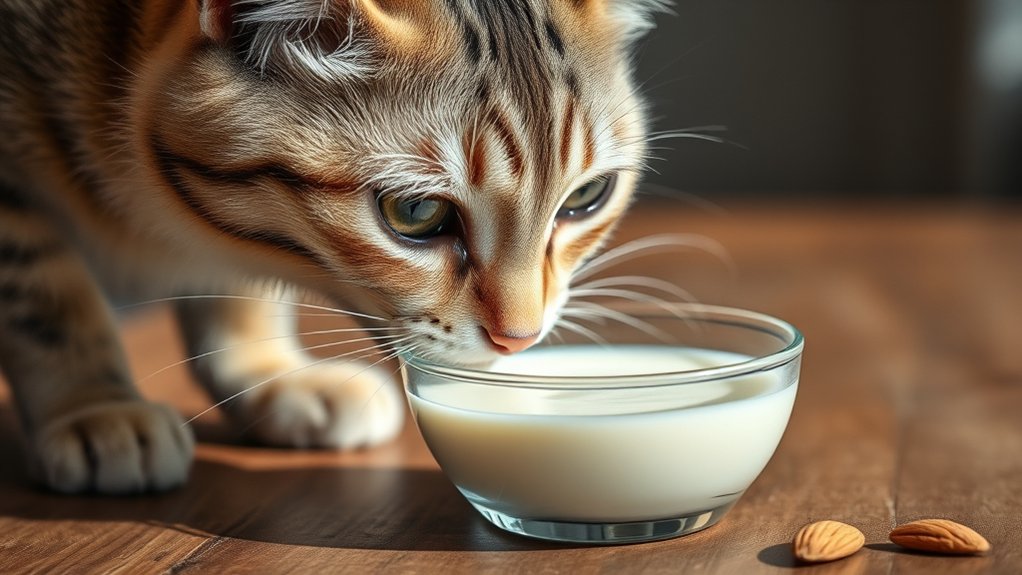
If you feed almond milk to your cat every day, you risk causing digestive problems like gas, bloating, and diarrhea, especially if your cat has a sensitive stomach.
While almond milk is lactose-free, it’s not designed to meet cats’ nutritional needs. It contains minimal protein and lacks essential nutrients cats require for energy and health.
Regularly giving almond milk can also add unnecessary calories, increasing the risk of obesity, particularly in indoor cats.
Furthermore, many store-bought almond milks include artificial ingredients and added sugars that may harm your cat.
Because cats are prone to digestive issues with unsuitable foods, almond milk should only be an occasional treat, not a daily milk substitute.
So, it’s better to prioritize your cat’s diet to guarantee their well-being and avoid preventable health problems.
Just keep almond milk as a rare treat if you want to share it with your furry friend.
How Does Almond Milk Compare to Other Plant Milks for Cats?
How does almond milk stack up against other plant-based milks when it comes to your cat’s health? Almond milk contains only about 1 gram of protein per cup, which is far from sufficient for your cat’s dietary needs.
While it’s generally safer than some alternatives, it’s still not good for cats as a regular part of their diet.
Here’s how it compares:
- Oat milk is higher in calories (80-100 per cup), which can lead to obesity if consumed often.
- Coconut milk is rich in saturated fats but can lead to gastrointestinal issues, similar to almond milk.
- Soy milk is tough to digest and often causes digestive problems.
- Most plant milks lack the protein and fat ratios essential for cats, emphasizing the need for a meat-based diet.
Better Liquid Options Than Almond Milk to Keep Your Cat Hydrated
You should always prioritize fresh water to keep your cat properly hydrated because it supports their overall health.
But if you’re thinking about offering milk, lactose-free options like Cat-Sip are a safer bet and less likely to cause digestive issues.
On top of that, nutrient-rich liquids like bone broth can help keep your cat hydrated and are especially great for picky eaters who mightn’t drink enough water on their own.
Optimal Hydration Choices
Why settle for almond milk when there are better ways to keep your cat hydrated? While cat almond milk might seem like a novel idea, it’s not the best choice. Instead, focus on ideal hydration choices that support your cat’s health.
- Fresh water: Always the essential and safest liquid for cats.
- Wet cat food: High moisture content naturally boosts hydration.
- Lactose-free milk for cats: Occasional treats like Cat-Sip avoid digestive upset.
- Bone broth: Provides hydration plus extra nutrients, often enjoyed by cats.
These options offer safer, more effective hydration than almond milk.
Keep an eye on your cat’s water intake and talk to a vet if you notice any changes. That way, your feline friend stays healthy and well-hydrated.
Benefits Of Fresh Water
Although almond milk might seem like a convenient alternative, fresh water remains the best choice to keep your cat properly hydrated. Fresh water supports kidney function and overall health without the risks associated with dairy or nut-based drinks like almond milk.
Cats need about 60-80 ml of water per kilogram of body weight daily, and fresh water provides this essential hydration without adding calories or causing digestive issues.
Unlike dairy products, which many cats struggle to digest, fresh water is safe and encourages consistent drinking. To boost fluid intake further, consider offering moist food alongside fresh water.
Ensuring clean, fresh water is always available helps prevent dehydration and urinary tract problems.
Safe Milk Alternatives
When looking for safe milk alternatives to almond milk, it’s important to choose options that support your cat’s health without causing digestive upset. Almond milk isn’t ideal because it lacks nutrients and may contain additives.
Instead, consider these safe milk alternatives.
1. Lactose-free milk
Specially formulated for cats, it contains low lactose and added taurine, which supports digestion and heart health.
2. Goat milk
It’s lower in lactose and rich in probiotics, so it may help your cat’s digestion if you introduce it gradually.
3. Plain yogurt
This offers natural probiotics but should be given sparingly to avoid any gastrointestinal issues.
4. Water
Always the best and safest choice to keep your cat hydrated without any risks.
Avoid coconut milk and regular cow’s milk because they can cause digestive problems.
How to Give Almond Milk as a Treat Without Upsetting Your Cat
If you want to give your cat almond milk as a treat, start by offering a small amount to see how they tolerate it. Choose unsweetened almond milk with minimal ingredients to avoid harmful additives or sugars.
Give your cat only a few tablespoons at a time, as excessive almond milk can cause bloating or diarrhea. Always serve it occasionally rather than regularly to prevent unnecessary calorie intake.
Monitor your cat closely for any digestive issues after introducing almond milk. Remember, almond milk should never replace fresh water, so make sure your cat has constant access to clean water.
Frequently Asked Questions
Can Almond Milk Cause Allergies in Cats?
Yes, almond milk can cause allergies in cats, although it’s rare. You should be cautious because some cats react to its ingredients, affecting digestion and causing symptoms like itching or an upset stomach.
Since almond milk offers limited nutritional value for cats, consider alternative milks specially formulated for them.
Always introduce any new milk gradually, watch for adverse reactions, and consult your vet. That way, you can help keep your cat healthy and comfortable.
How Much Almond Milk Is Toxic to Cats?
There’s no specific toxic amount of almond milk for cats, but you should follow moderation guidelines carefully.
Almond milk offers limited nutritional benefits, so it’s best as an occasional treat rather than a regular part of their diet. Too much can cause digestive issues.
To keep your cat healthy, stick to small amounts.
Also, consider safe alternatives like specially formulated cat milk. It provides better nutrition without risking discomfort or obesity.
Are Flavored Almond Milks More Harmful to Cats?
Yes, flavored varieties are definitely more harmful to cats.
You’ll find that their sugar content and artificial additives can upset your cat’s digestive system and lead to obesity over time. Unlike plain almond milk, these ingredients introduce unnecessary risks, so it’s best to avoid them entirely.
If you want to treat your cat, stick to unsweetened almond milk in moderation.
But always prioritize their health and consult your vet first.
Can Cats Develop Long-Term Kidney Issues From Almond Milk?
Yes, you can risk long-term kidney issues if your cat regularly drinks almond milk. Its low moisture content raises hydration concerns, which directly affect kidney function.
Plus, almond milk lacks essential nutrients, potentially causing imbalances that stress the kidneys over time.
If you want to offer alternative milks, choose those specifically formulated for cats or consult your vet. This way, you can guarantee your pet stays healthy without compromising kidney health.
Is Almond Milk Harmful to Pregnant or Nursing Cats?
You should avoid giving almond milk to pregnant or nursing cats because it only provides about 1 gram of protein per cup, which is far below their needs.
While almond milk is often used as an alternative milk for lactose-intolerant cats, it lacks the essential nutritional benefits required during pregnancy and nursing.
Its high fiber content and possible additives might cause digestive issues.
Conclusion
While almond milk might seem like a harmless treat, it’s best to keep it as a rare indulgence rather than a daily habit for your cat. Like a wolf in sheep’s clothing, it can upset their delicate digestion and pose health risks over time.
Stick to water and vet-approved options to keep your feline friend safe and healthy. Remember, your cat’s well-being is the heart of every choice you make.