Can You Have A Pallas Cat As A Pet – Laws, Care, And Challenges
You can’t simply have a Pallas cat as a pet due to strict laws and their unique care needs. They require large territories, specialized diets of small mammals, and environments mimicking cold, wild habitats. Their solitary, territorial nature often causes stress and aggression in captivity, posing safety risks.
Legal restrictions vary, with some states banning ownership entirely. Understanding these challenges and ethical concerns helps protect both you and these rare cats. It’s not just about the law, but also about their well-being.
If you’re curious, explore further to learn about proper care and conservation. It’s important to know what goes into caring for these fascinating creatures before considering anything.
What Makes Pallas Cats Unique
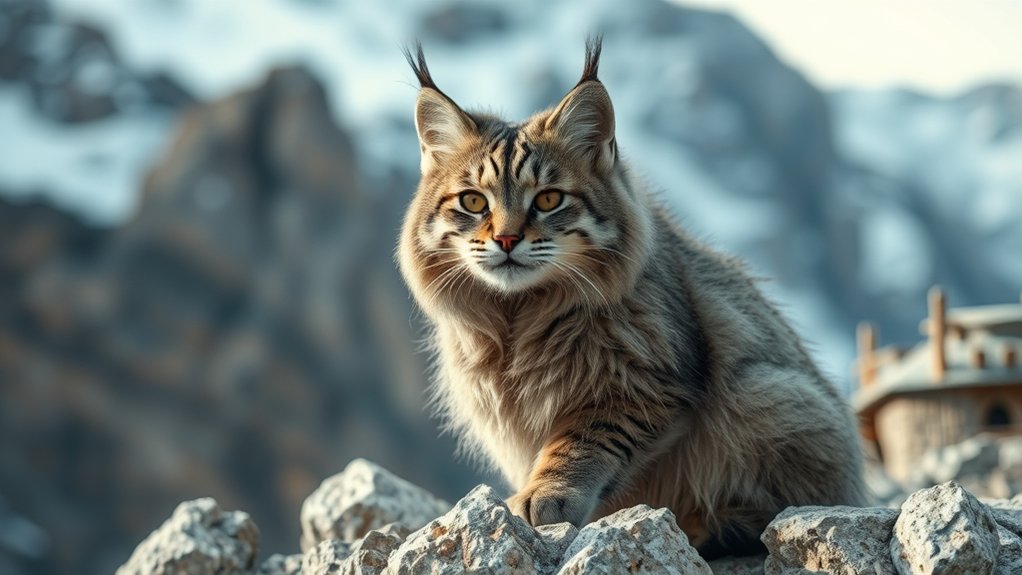
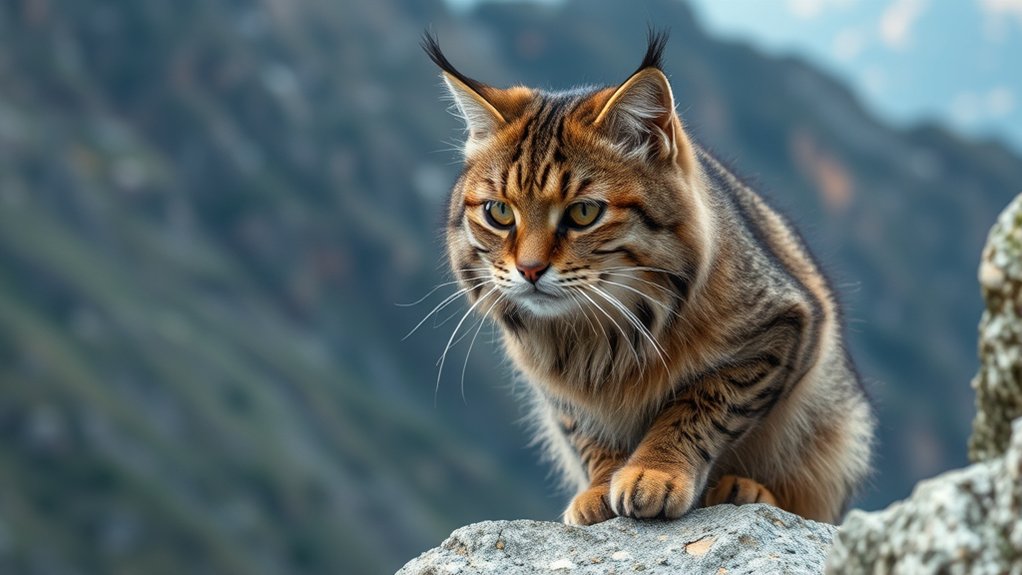
Pallas’s cats stand out with their stocky build, short flat faces, and the thickest, longest fur among all feline species. This thick fur keeps them warm in extreme cold.
As wild cats, they’ve unique round pupils instead of the vertical ones you see in domestic cats. This helps them see clearly in snowy, low-light conditions.
You’ll notice they’re mostly active at dawn and dusk, which suits their hunting style focused on small mammals like pikas.
Unlike typical house cats, Pallas’s cats communicate through honks, growls, and chirps. Sometimes, they even sound like small dogs yelping when excited.
These distinctive features make Pallas’s cats fascinating creatures, perfectly adapted to their harsh environments. They really do stand apart from other feline species you might know.
Reasons Pallas Cats Are Unsuitable As Pets
While their unique traits make them fascinating, these wild cats aren’t suited for typical pet life. Pallas’ cats are solitary and territorial, requiring vast ranges up to 3 miles, which you simply can’t provide at home.
As exotic cats, their diet mainly consists of small mammals like pikas, making it tough to meet their nutritional needs in captivity. This mismatch can impact their overall health, leading to stress and maladaptive behaviors.
Furthermore, Pallas’s cats can become aggressive if threatened, complicating safe interaction. Their natural instincts clash with domestic environments, so keeping one as a pet puts their welfare and your safety at risk.
Pallas’s cats’ aggression and wild instincts make them unsafe and unsuitable as household pets.
Understanding these challenges helps you appreciate why Pallas’ cats belong in the wild, not as household companions.
Common Behavioral Challenges When Keeping Pallas Cats At Home
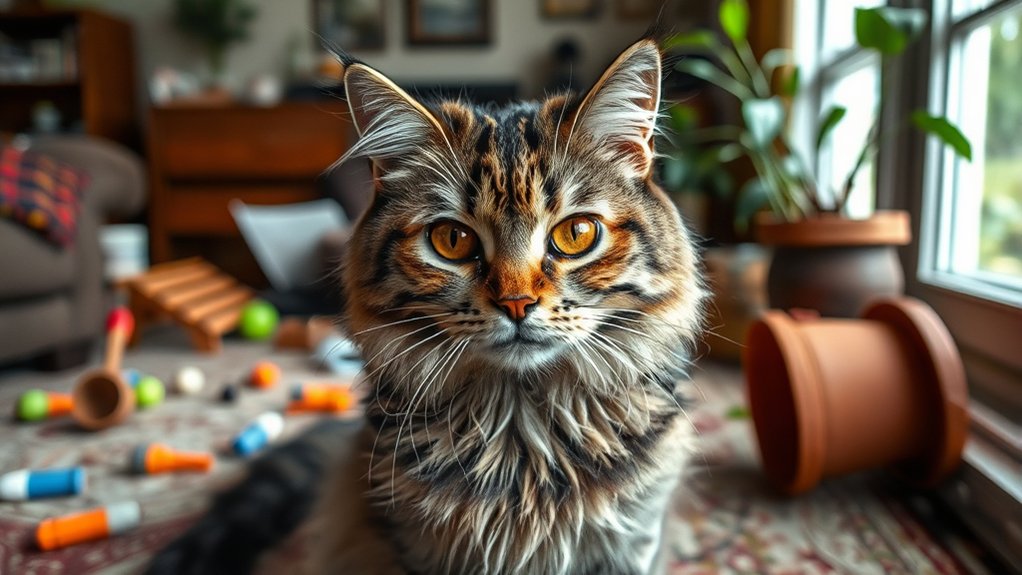
Because these cats are naturally solitary and territorial, keeping one at home presents several behavioral challenges you need to understand.
Pallas Cats require vast territories, around 2 to 3 miles, which is impossible to replicate indoors. This kind of confinement often leads to stress and behavioral issues that are unfamiliar to owners used to domestic cats.
Their crepuscular activity means they’re most active at dawn and dusk, which can clash with typical daytime routines and cause restlessness or agitation.
Unlike domestic cats, Pallas Cats spend much of the day and night sleeping, so interaction and companionship can be pretty limited.
Their wild instincts can trigger aggression if they feel threatened, making handling difficult.
Specialized Care Requirements For Pallas Cats In Captivity
Although caring for a Pallas Cat in captivity can be rewarding, it demands a highly specialized approach to meet their unique needs. You’ll need to provide a specialized diet, mainly small mammals like pikas, which can be tough to source and replicate.
Their solitary, territorial nature means they require large outdoor enclosures, ideally spanning 2-3 miles, to avoid stress.
Because Pallas Cats thrive in extreme temperatures, captive care must include strict temperature control to mimic their natural environment.
Enrichment is essential, focusing on hunting behaviors since they’re not playful like domestic cats and hunt mostly at dawn and dusk.
Finally, safety and sanitation are critical. Secure enclosures and regular monitoring guarantee their well-being, making captive care both demanding and highly specialized.
What You Need To Know About Pallas Cat Ownership Laws
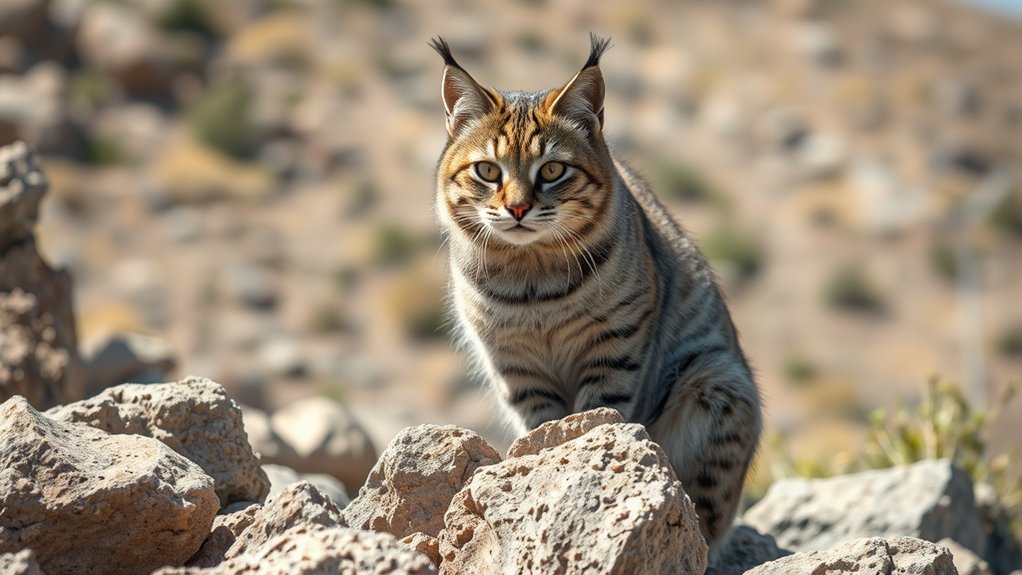
If you’re thinking about owning a Pallas Cat, it’s really important to understand the complex legal landscape around exotic feline ownership. Pallas Cats fall under strict ownership laws like the Big Cat Public Safety Act. This act restricts private ownership unless you have proper registration.
Regulations can vary a lot depending on where you live. Some states ban big cats completely. Others, like Alabama and Nevada, don’t have specific laws, which can make ownership easier.
So, knowing your state’s laws before getting one of these exotic pets is key. It helps you avoid legal trouble and ensures you’re being a responsible owner.
| State | Ownership Laws | Notes |
|---|---|---|
| Alabama | No specific laws | Easier ownership |
| Nevada | No specific laws | Easier ownership |
| California | Ban on big cat ownership | Strict restrictions |
| Texas | Requires permits | Registration needed |
| Florida | Ban on private big cats | Strict enforcement |
Ethical And Conservation Concerns Of Private Pallas Cat Ownership
You should understand that keeping a Pallas cat as a pet poses serious welfare challenges. Their natural behaviors and needs are really hard to meet in captivity.
On top of that, private ownership affects conservation efforts. When these cats are taken from the wild, it contributes to their declining populations.
Welfare Challenges
Because Pallas’s cats have specialized habitat and dietary needs that are difficult to replicate in captivity, keeping them as pets raises serious ethical and welfare concerns.
You face welfare challenges when trying to provide enough space and a natural diet for this exotic pet. These cats need vast territories, 2-3 miles (3-5 km), to thrive, which confinement can’t offer.
Habitat loss in the wild already threatens their populations, so private ownership adds pressure on their well-being.
You should consider these points:
- Inadequate space leads to stress and behavioral problems.
- Specialized diet is hard to maintain, risking malnutrition.
- Unregulated ownership promotes unethical breeding and poor care.
Ultimately, owning a Pallas cat often compromises their health and welfare. It’s just not something to take lightly.
Conservation Impact
Although Pallas’s cats face increasing threats from habitat loss and poaching, private ownership distracts from vital conservation efforts aimed at protecting their populations.
When you keep a Pallas’s cat as a pet, you contribute to ethical concerns surrounding their well-being. These cats are solitary and territorial, meaning their complex needs aren’t met in domestic settings, often causing stress and trauma.
Furthermore, the illegal pet trade worsens their population decline, undermining global conservation efforts focused on habitat preservation and ethical breeding in accredited zoos.
By supporting private ownership, you unintentionally divert attention and resources away from protecting wild populations.
To truly help Pallas’s cats, it’s essential to respect their natural environment and back legitimate conservation efforts rather than promoting ownership that causes harm and threatens their survival.
Why Pallas Cats’ Natural Habitat Matters For Their Care
When you consider caring for a Pallas cat, understanding its natural habitat becomes essential to meeting its unique needs. Pallas cats thrive in the steppes and rocky hills of Central Asia, where their environment shapes their behavior and physical adaptations.
To provide proper care, you must recognize how their natural habitats influence their lifestyle. They rely on rocky cover and vast territories, ranging 2-3 miles, for hunting and shelter.
Proper care requires understanding their need for rocky shelters and expansive territories spanning 2-3 miles.
Their dense fur insulates against extreme cold, often below -50°C. Crepuscular hunting patterns align with dawn and dusk activity in open grasslands.
Replicating these conditions in captivity is incredibly challenging, so appreciating their natural habitat is vital for any care approach. It really helps to keep their environment in mind if you want to support their well-being properly.
Alternatives To Owning A Pallas Cat: Zoos And Sanctuaries
If you’re curious about Pallas cats, one great way to see them up close is by visiting accredited zoos and sanctuaries.
These places create environments that are specially designed to keep the cats healthy and comfortable.
Plus, they focus a lot on conservation, working hard to protect the species.
Many also offer educational programs that help people understand the challenges Pallas cats face in the wild.
By supporting these facilities, you’re helping protect Pallas cats without taking on the risks that come with trying to keep one as a pet.
It’s a win-win for both you and the cats!
Accredited Zoo Programs
Because Pallas’s cats face numerous threats in the wild, accredited zoos and sanctuaries play an essential role in their conservation.
When you visit these accredited zoos, you support crucial conservation efforts that help protect Pallas’s cats from extinction. These programs focus on breeding to maintain genetic diversity and provide education about the species’ natural behaviors and challenges.
You can contribute by learning and advocating for their protection.
At accredited zoos, you’ll find:
- Breeding programs promoting genetic diversity and species survival
- Educational exhibits that highlight Pallas’s cats’ ecological importance
- Funding for research and conservation initiatives benefiting wild populations
Choosing to engage with these programs offers a responsible alternative to owning a Pallas cat as a pet.
Sanctuary Conservation Efforts
Although owning a Pallas cat might seem appealing, sanctuaries offer a much better way to support their survival by providing safe, natural habitats where these elusive cats can thrive.
Sanctuaries participating in conservation programs focus on protecting Pallas’s cats from poaching and habitat loss while allowing them to exhibit natural behaviors.
Many accredited zoos and sanctuaries also collaborate on breeding efforts to maintain genetic diversity and boost captive populations.
By supporting these sanctuaries, you contribute financially to essential research and habitat restoration initiatives.
These conservation programs aim to preserve the species in the wild, ensuring their long-term survival.
Choosing to engage with sanctuaries rather than private ownership helps protect Pallas’s cats ethically and effectively, aligning your care with their well-being and conservation needs.
Educational Visitor Experiences
When you visit accredited zoos and sanctuaries, you get a unique chance to observe Pallas cats up close. You can learn about their natural behaviors and the challenges they face in the wild.
These places offer educational programs that really highlight why Pallas cats are so important to the ecosystem. They also explain the urgent need for conservation efforts.
Instead of owning one, you can engage with these wild felines in meaningful ways. For example, there are interactive exhibits and guided tours that talk about habitat loss and poaching risks.
You might also enjoy virtual experiences or live feeds that showcase their elusive nature. Plus, there are plenty of opportunities to support sanctuaries through donations and awareness campaigns.
It’s a great way to connect with these amazing animals without keeping one as a pet.
Frequently Asked Questions
How Long Do Pallas Cats Typically Live in Captivity?
You can expect a Pallas cat lifespan in captivity to be around six years on average, but with excellent captive care, some live up to 12 years or more.
To support this, you’ll need to focus on specialized diets, enriching environments, and regular health considerations like veterinary check-ups.
Providing the right care helps these unique cats thrive longer than they’d in the wild, where their lifespan is generally shorter.
It’s all about giving them what they need to stay healthy and happy.
What Is the Origin of the Name “Pallas Cat”?
Imagine discovering a rare book and naming it after the explorer who first found it. That’s how the Pallas cat got its name. You’ll find this wild feline named after Peter Simon Pallas, who described it in 1776.
Its unique characteristics, like stubby ears and dense fur, suit the harsh Eurasian steppe habitat.
Understanding Pallas cat behavior helps you appreciate how this solitary, elusive creature thrives in such a tough environment.
Can Pallas Cats Interbreed With Domestic Cats?
You can’t breed Pallas cats with domestic cats because their genetics are too different.
Pallas cat behavior, adapted to their wild habitat, is unique. They prefer cold, rocky regions and have a diet of small mammals and birds.
Since their instincts and needs differ greatly from domestic cats, hybridization isn’t possible or safe.
Understanding these differences helps you appreciate why Pallas cats belong in the wild, not in a typical pet setting.
What Is the Typical Size and Weight of a Pallas Cat?
Like a compact mountain shadow, a Pallas cat typically weighs between 9 to 11 pounds and measures 18 to 26 inches long, with a bushy tail adding another 10 to 12 inches.
In its harsh habitat, this sturdy size helps it hunt its diet of small mammals efficiently.
Understanding Pallas cat behavior, you’ll see they’re built for ambush, relying on their robust, stocky frame to survive cold, rugged environments.
Are Pallas Cats Nocturnal or Diurnal Animals?
Pallas cats aren’t strictly nocturnal or diurnal; they’re crepuscular, meaning you’ll see them most active at dawn and dusk.
Their habitat preferences in open grasslands support this, letting them blend into their environment while hunting small rodents during low light.
Their hunting behavior relies on these twilight hours, too.
Social interactions are minimal since they’re solitary.
Conclusion
Owning a Pallas cat is like trying to keep a wild storm in a glass jar. Its beauty and spirit resist confinement. Though you might be drawn to their unique charm, their specialized needs and legal protections remind you they belong in the vast, untamed wild.
By respecting these boundaries, you honor both the animal’s well-being and the fragile balance of nature. Choosing care and conservation over captivity is the way to go.