
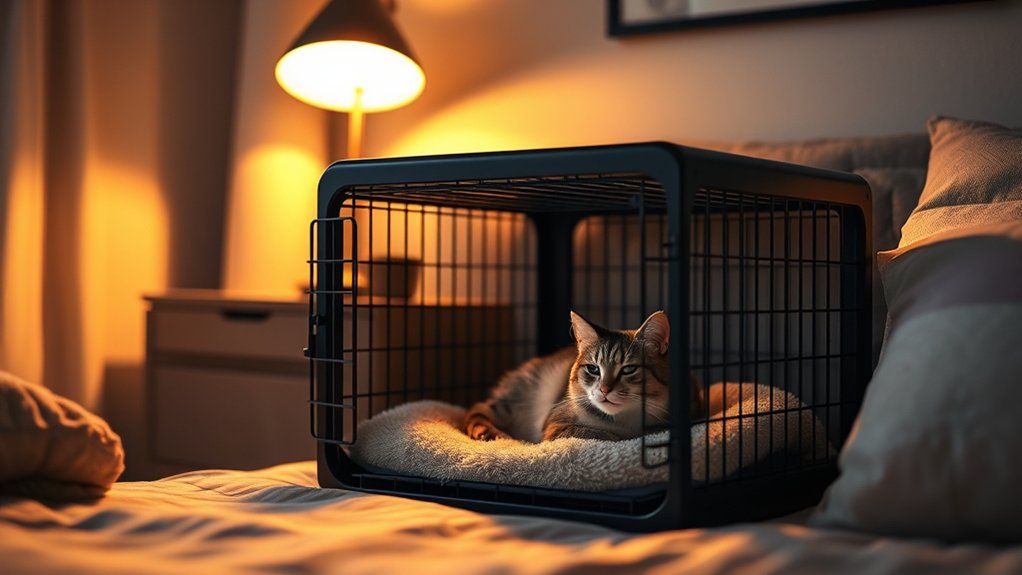
Can I Crate My Cat At Night – Pros, Cons, And Tips
You can crate your cat at night safely if you do it thoughtfully, making sure the crate is spacious and comfortable. It should be stocked with essentials like food and a litter box.
Crating can help reduce stress, limit movement after surgery, and manage nighttime behavior. Just keep an eye out for signs of anxiety. Also, avoid keeping your cat confined for too long to prevent health issues.
Proper crate training and exploring alternatives can help keep your cat happy. Keep trying different approaches to find what works best for both of you.
When Is It Okay to Crate Your Cat Overnight?
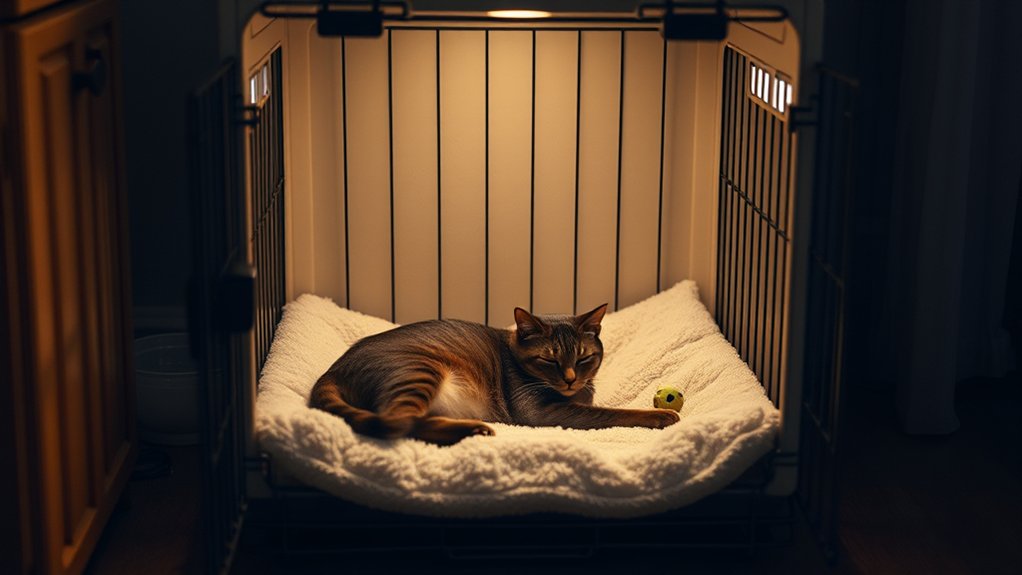
While crating your cat overnight isn’t always necessary, it can be a helpful tool in certain situations. For example, when your cat is adjusting to a new environment, a crate at night offers a secure, confined space that eases their changeover.
It’s also appropriate during post-surgery recovery, where restricting movement helps healing.
In homes with multiple pets, crating your cat at night can prevent conflicts and guarantee safety. However, it’s vital to make the crate comfortable, providing enough room for a litter box, food, and water.
In multi-pet homes, a comfy crate with essentials ensures safety and prevents nightly conflicts for your cat.
Always monitor your cat’s behavior to watch for signs of stress or anxiety.
When done thoughtfully, crating at night can support your cat’s well-being during specific needs. So, if you decide to crate your cat overnight, just make sure it’s for the right reasons and done with care.
What Are the Benefits of Crating Your Cat Overnight?
Crating your cat overnight comes with quite a few benefits. For one, it gives your furry friend a safe and secure spot, which can really help reduce stress and keep accidents at bay.
Plus, if your cat is recovering from an illness or surgery, having a crate limits their movement, making it easier for them to heal.
On top of that, crating can help with behavior by cutting down on nighttime disruptions and encouraging your cat to use the litter box properly.
It’s a simple way to keep things calm and organized while everyone gets some rest.
Safety And Security
If you want to guarantee your cat’s safety overnight, providing a secure crate can be an effective solution. Crate training creates a controlled environment that prevents your cat from accessing dangerous areas or objects while you sleep, reducing risk.
For new kittens or recently adopted cats, a crate offers a comforting space that eases anxiety during adjustment.
In homes with multiple pets, crating can prevent nighttime conflicts by keeping cats separated, promoting calm and security.
A properly sized, comfortable crate becomes your cat’s personal refuge, minimizing disturbances and enhancing well-being.
Health And Recovery
When your cat is recovering from surgery or managing a medical condition, providing a controlled space overnight can really support their healing process.
Keeping your cat in a crate limits excessive movement that might delay recovery. It also prevents access to unsafe areas in your home.
This controlled environment helps reinforce litter box use, which reduces accidents as your cat adjusts.
For newly adopted or feral cats, a crate offers a secure spot to get comfortable and acclimate.
Plus, having your cat in a crate lets you monitor them closely.
That way, you can quickly notice any signs of stress or discomfort and provide timely care.
Overall, crating overnight creates a safe, predictable space that promotes healing and well-being during those vital recovery periods.
It’s all about giving your cat the best chance to feel better soon.
Behavior Management
Although it might seem restrictive at first, confining your cat overnight can greatly reduce unwanted behaviors like scratching furniture or excessive vocalizing. By providing a secure, comfortable space, you help meet your cat’s needs for safety and routine, which can decrease anxiety-driven actions.
Crating also helps new kittens adjust by promoting proper litter box habits and minimizing accidents. In multi-pet homes, it prevents nighttime conflicts, ensuring all pets remain safe and stress-free.
Plus, a consistent crating routine supports your cat’s overall well-being, leading to better sleep for both of you.
When done thoughtfully, crating addresses your cat’s behavioral needs while creating a calm, controlled environment that benefits everyone in your household. It really can make a big difference for you and your furry friend.
Risks of Crating Your Cat Overnight
Because cats rely on freedom to explore and express their natural behaviors, crating them overnight can pose several risks to their well-being. The risks of crating your cat overnight include increased stress, anxiety, and potential health issues due to restricted movement and lack of access to a litter box.
If the crate isn’t large enough, your cat remains confined uncomfortably. This may trigger frustration and attempts to escape, causing injury.
| Risk | Impact on Cat |
|---|---|
| Stress & Anxiety | Behavioral problems |
| Restricted Movement | Frustration and discomfort |
| Lack of Litter Access | Urinary and health issues |
Make sure you monitor your cat closely to avoid these risks. Always prioritize their health and comfort.
Choosing the Right Crate for Overnight Use
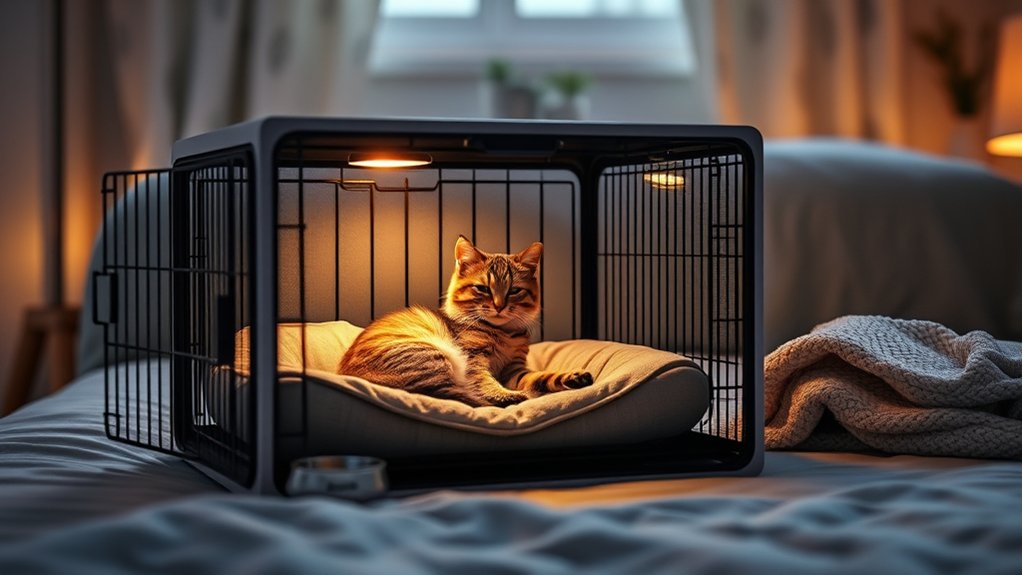
When you’re picking out a crate for overnight use, make sure it’s roomy enough for your cat to move around comfortably.
It should also have enough space for essentials like a litter box and some bedding. You’ll want to go for sturdy materials like metal or heavy-duty plastic because they provide good ventilation and keep your cat secure.
Also, look for features that make life easier, like removable trays for quick cleaning.
Adding cozy bedding can really help your cat feel safe and relaxed throughout the night. That way, both you and your furry friend can get a good night’s rest!
Crate Size Requirements
Choosing the right crate size plays an essential role in ensuring your cat’s comfort and safety during overnight confinement.
When considering crate size requirements, select a crate spacious enough to fit a litter box, bed, toys, and food or water bowls, allowing your cat to move comfortably.
Larger crates, often designed for dogs, are ideal because they offer better ventilation and extra space compared to standard carriers.
Aim for a crate at least 24 to 30 inches long to accommodate most adult cats lying down comfortably.
Make sure the crate is free from sharp edges and provides adequate airflow.
Material Options Overview
Finding the right size for your cat’s overnight crate sets the foundation, but selecting the appropriate material is just as important for comfort and safety.
In this material options overview, you’ll find crates made from metal wire, plastic, or nylon mesh, each offering different benefits.
Your crate should be large enough to fit a litter box, bed, and food or water bowls. This way, your cat can move comfortably around inside.
Metal wire crates provide excellent ventilation but may lack sturdiness.
Plastic crates offer better security and moderate weight, making them ideal for travel and home use.
Nylon mesh crates are lightweight but mightn’t be as durable.
Whichever material you choose, make sure the crate has proper ventilation and secure latches. This will keep your cat safe and comfortable overnight.
Essential Crate Features
A well-designed crate can make all the difference in guaranteeing your cat feels secure and comfortable overnight. When selecting essential crate features, prioritize spaciousness. Your cat needs room for a litter box, bed, toys, and food or water bowls.
Choose sturdy materials like metal wire or durable plastic. These offer good ventilation and visibility while keeping your cat safe. Don’t hesitate to consider larger crates made for dogs. They provide extra space for stretching, which helps reduce stress.
Look for practical additions such as a removable tray to simplify cleaning. This keeps hygiene effortless.
Finally, make sure the crate has secure locking mechanisms to prevent escapes. This will give your cat a safe, cozy environment throughout the night.
How to Make Your Cat Comfortable in Their Crate Overnight
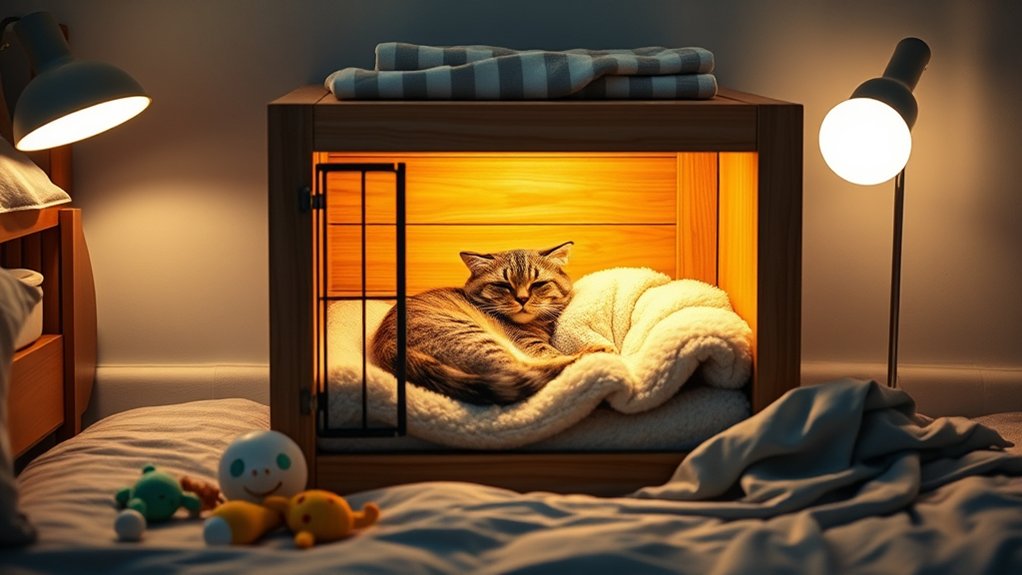
When you want your cat to feel secure and comfortable in their crate overnight, creating a cozy, familiar environment is essential.
Make sure the crate is spacious enough for your cat to stand, turn around, and lie down comfortably. Add a soft bed or blanket for warmth and include familiar items like their favorite toys or a piece of your clothing to ease anxiety.
If space permits, place a small litter box and a water bowl inside the crate to prevent discomfort during the night.
Keep the area calm with soft lighting and minimal noise. These steps help your cat settle in peacefully and feel secure throughout the night.
It’s all about making the space inviting so your cat feels right at home.
How to Crate Train Your Cat for Nighttime Success
Although crate training a cat can seem challenging, starting with positive reinforcement makes the process smoother and more effective.
Begin by introducing your cat to an open crate, using treats to create positive associations. Gradually increase the time your cat spends inside, rewarding calm behavior to build comfort.
Incorporate a litter box within the crate to guarantee easy access overnight, preventing accidents. Use a cue word when your cat willingly enters the crate and reinforce this with treats to encourage compliance.
Throughout crate training, monitor your cat’s behavior closely, adjusting session length and environment as needed to minimize stress.
With patience and consistency, crate training can become a comfortable, secure nighttime routine for your cat. Just take it slow and keep things positive!
What Are the Alternatives to Crating Your Cat Overnight?
If crate training doesn’t feel like the right fit for you or your cat, there are several effective alternatives to contemplate for overnight comfort and security.
Providing cozy cat beds and private spaces, like a quiet room or enclosed area, offers your cat safety outside the crate.
Create cozy beds and quiet, private spaces to give your cat a safe, comforting retreat outside the crate.
Interactive toys and pre-bed playtime help your cat expend energy naturally, reducing nighttime restlessness. Scheduled feeding, especially with wet food, promotes calmness and encourages sleep through the night.
You can also offer various resting spots, like cat trees and window perches, letting your cat choose their preferred sleeping place while feeling secure.
Training your cat to respond to bedtime cues further supports a smooth nighttime routine, helping them settle down comfortably without confinement.
How to Transition Away From Overnight Crating Peacefully
Easing your cat out of overnight crating requires a thoughtful, gradual approach that prioritizes their comfort and security.
Start by expanding their space from the crate to a small room, allowing them to explore safely before granting access to the entire house. Create a cozy retreat with familiar items like a bed, toys, and a litter box to replace crate confinement’s security.
Maintain a consistent routine with scheduled feeding and playtimes to provide stability. Incorporate calming activities such as feeding before bedtime and interactive toys in the morning to foster relaxation.
Watch for signs of stress or discomfort and adjust your strategy accordingly.
Frequently Asked Questions
Can Crating Affect My Cat’s Litter Box Habits?
Yes, crating can affect your cat’s litter box habits if they don’t have easy access to a litter box during confinement.
It may cause anxiety, leading to accidents outside the crate and disrupt litter box training.
To prevent issues, include a small litter box inside the crate and maintain a consistent feeding schedule.
Make sure to monitor your cat closely after crating so you can quickly address any changes in elimination behavior and support their litter box training.
How Long Can a Cat Safely Stay in a Crate Overnight?
You can safely keep your cat in a crate overnight for about 8 to 10 hours, but making sure the crate is comfortable is super important.
Give them easy access to a litter box, fresh water, and food to keep things stress-free and cozy.
For kittens, though, shorten this to 4 to 6 hours because they’ve more energy and smaller bladders.
Always keep an eye out for any signs of distress.
Try to gradually increase the time your cat spends in the crate so they can get used to it smoothly.
It’s all about helping them feel safe and comfortable.
Should I Cover the Crate With a Blanket at Night?
When your cat curls up quietly in a softly covered crate, you’re creating crate comfort that mimics a cozy den.
Covering the crate with a breathable blanket can reduce distractions and help your cat feel secure at night. Just make sure the blanket allows airflow to prevent overheating.
If your cat seems anxious or uncomfortable, try leaving the crate uncovered.
Always watch their behavior to guarantee they’re calm and comfortable throughout the night.
Can Crating Help With a Cat’s Separation Anxiety?
Yes, crating can be an effective separation solution for your cat’s anxiety. By creating a secure, controlled space, you help your cat feel safe when you’re away.
Gradually introducing the crate with positive reinforcement encourages comfort and reduces stress.
Just monitor your cat’s behavior closely to guarantee the crate remains a calming refuge, not a source of distress.
This approach can notably ease separation anxiety over time. It’s all about making the crate a place your cat actually wants to be.
What Signs Show My Cat Dislikes the Crate?
When your cat isn’t exactly thrilled about the crate, behavioral indicators will gently reveal their feelings. You might notice excessive vocalizations like meowing or yowling, attempts to escape, or signs of irritation such as hissing and scratching.
Watch their body language too. Flattened ears, puffed fur, or a tense posture all signal discomfort.
If your cat avoids the crate or hides when it appears, they’re sending you a clear message: they dislike confinement.
Conclusion
You might’ve heard crating a cat overnight can cause stress, but with the right approach, it can be safe and even comforting.
By choosing a cozy crate, introducing it gradually, and making sure your cat’s needs are met, you’ll help them feel secure through the night.
Remember, every cat is different. Always watch their behavior and adjust accordingly.
When done thoughtfully, overnight crating can be a helpful tool, not a source of anxiety.