Why Does My Cat Lick Me Then Bite Me – Behavior Meaning
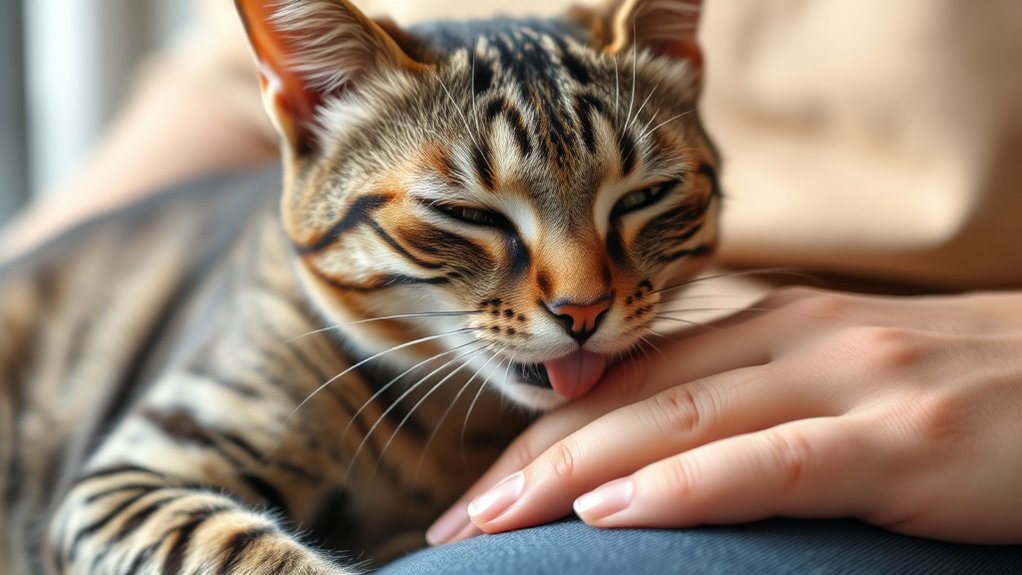
When your cat licks you then bites, it’s often showing affection paired with a boundary reminder. Licking signals trust and bonding, while biting can mean overstimulation, play aggression, or stress.
Watch for body language like twitching tails or flattened ears to catch signs early. Gentle nips may reflect social grooming, but if biting becomes frequent or intense, adjusting interaction or seeking guidance is key.
Understanding these behaviors helps you respond effectively and strengthen your relationship.
Why Does My Cat Lick Me and Then Bite?
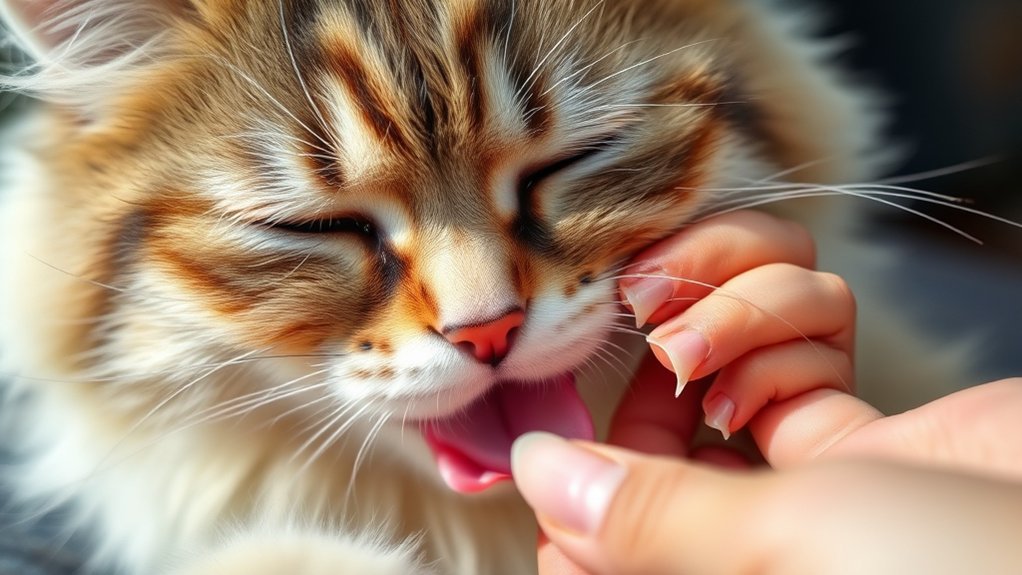
Although your cat’s licking may feel like a clear sign of affection, the sudden bite that follows can be confusing and even painful. Cats often use licking and biting as forms of communication. Licking usually shows affection and bonding, kind of like grooming behaviors they share with other cats.
But the biting that comes after might mean your cat is overstimulated and needs a break. Sometimes, these gentle nips, called love bites, show your cat includes you in its social circle and wants to interact.
Biting after licking can signal overstimulation or be gentle love bites showing social bonding.
Pay attention to your cat’s body language, like twitching tails or flattened ears. These signs help you spot irritation or overstimulation.
When you understand these cues, you can respond in a way that keeps your cat’s affection positive and comfy for both of you.
What Licking Then Biting Means: Affection and Trust
When your cat licks you and then gives a gentle bite, it’s usually showing affection. This behavior comes from grooming habits they picked up from their mom.
It’s kind of like a little ritual that says, “I trust you.”
And honestly, it helps build a stronger bond between you and your furry friend.
Signs Of Affection
One common way cats show affection is by licking followed by gentle biting, a behavior rooted in their natural grooming habits. When your cat licks then bites softly, it signals trust and a sense of belonging. This affectionate behavior mimics the grooming interactions cats share within their social groups.
These “love bites” are gentle and non-aggressive, reflecting comfort and safety. Understanding this helps you recognize your cat’s emotional state and strengthens your bond. It’s pretty sweet once you get the hang of what they’re trying to tell you.
| Behavior | Meaning | Example |
|---|---|---|
| Lick | Grooming, bonding | Cat licking your hand |
| Gentle bite | Affection, trust | Soft nip after licking |
| Repetitive lick-bite | Social inclusion | Kitten with mother cat |
| Sudden bite | Not affectionate | Warning or overstimulation |
Trust Through Grooming
Two key behaviors, licking followed by gentle biting, play an essential role in how cats express trust and affection through grooming.
When your cat licks you, it’s a natural grooming behavior rooted in allogrooming, which fosters social bonds and reflects deep trust. This positive reinforcement signals that your cat feels safe and included in their social unit.
The gentle bite that follows often represents a “love bite,” a sign of comfort rather than aggression. It’s your cat’s way of communicating affection while sometimes setting boundaries gently.
By understanding this sequence of cat licks and gentle bite, you can better appreciate the trust your feline shows.
Recognizing these cues enriches your interactions and strengthens your bond based on mutual respect and care.
Social Bonding Rituals
Although licking followed by gentle biting might seem puzzling at first, this behavior serves as an important social bonding ritual in cats, signaling affection and trust.
When your feline friend licks you then bites gently, they’re mimicking grooming behaviors seen in mother cats and littermates, creating a positive association between you.
This normal part of cat interaction shows inclusion in your family group and reinforces your bond. The gentle nips often indicate a desire to play or engage further, reflecting comfort and familiarity.
Recognizing licking then biting as social bonding rituals helps you appreciate these actions as expressions of affection rather than aggression.
It deepens your understanding of your cat’s emotional needs and communication style.
When Biting Signals Overstimulation or Discomfort
When your cat suddenly bites after licking, it often signals overstimulation or discomfort. It means they need a break from interaction. Cats have different sensitivity thresholds, so what starts as a pleasant lick can quickly turn into irritation because of their heightened nervous system.
You might notice signs like twitching tails, dilated pupils, and flattened ears. These are clear indicators your cat feels uneasy.
Sometimes, this discomfort leads to petting-induced aggression, especially in sensitive spots like the belly or back.
Repeated contact in those areas can result in a nip or bite as a way to say “stop.” Recognizing these signs helps you respond the right way. This prevents unwanted biting and keeps your bond with your cat respectful and stress-free.
Understanding this behavior is key to making sure your cat stays comfortable and emotionally well during your interactions.
How to Recognize Your Cat’s Overstimulation Signs
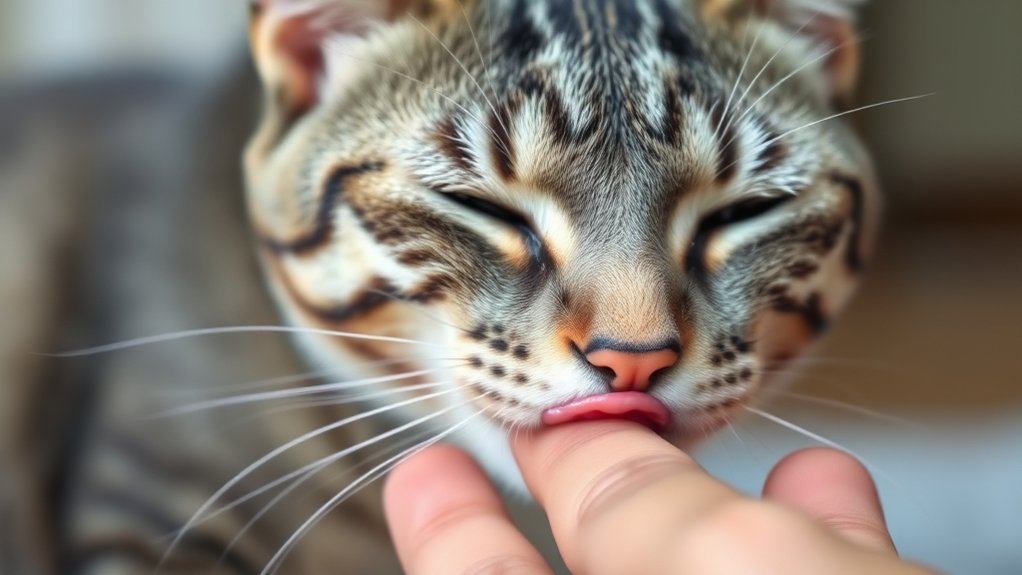
You’ll start to see your cat’s body language shift when they get overstimulated—things like their tail twitching or their ears flattening.
If you keep an eye out for these signs, you can stop petting before they get irritated or even aggressive.
Just keep the petting sessions short and pay attention to how they’re reacting, and you’ll make sure your time together stays positive and comfy for both of you.
Overstimulation Body Language
If your cat suddenly shifts from purring to biting, it’s a clear sign they’ve reached their limit for interaction. Overstimulation often shows up through specific body language, like twitching tails, dilated pupils, flattened ears, and skin rippling.
These subtle cues mean your cat is feeling uncomfortable, even if they seemed affectionate just moments before. Understanding your cat’s body language helps you spot when petting sessions are getting overwhelming.
Prolonged touch, especially in sensitive areas, can trigger biting as a way for them to say they need a break. So, by paying close attention to these signals, you can respect their boundaries and keep your bond positive.
When you watch for signs of overstimulation, you make sure your cat feels safe and comfortable during interactions. This helps prevent stress and those unwanted biting incidents, keeping both of you happy.
Preventing Petting-Induced Aggression
Although petting your cat is a way to show affection, recognizing signs of overstimulation is essential to prevent petting-induced aggression. Overstimulation often leads to a cat bite as a clear communication of discomfort.
To avoid this common behavior, watch for these signs:
- Tail twitching or flicking, which signals irritation.
- Flattened ears indicate stress or unease.
- You might also notice dilated pupils or sudden shifts in body posture.
- Excessive grooming can be a sign your cat is feeling overwhelmed.
Is Play Aggression Causing the Lick-Then-Bite Behavior?
Why do cats often lick before biting during play? The lick-then-bite behavior is a common sign of play aggression, especially in younger cats with high energy. Licking acts as an invitation for playful interactions, but as excitement builds, the bite follows.
This mimics natural feline socialization, where kittens learn bite inhibition through littermate play. Understanding this helps you manage the behavior effectively.
To reduce unwanted biting, provide appropriate toys that satisfy your cat’s hunting instincts. Engaging in structured play sessions redirects their energy away from you, promoting positive interaction.
How Grooming and Social Bonding Explain This Behavior
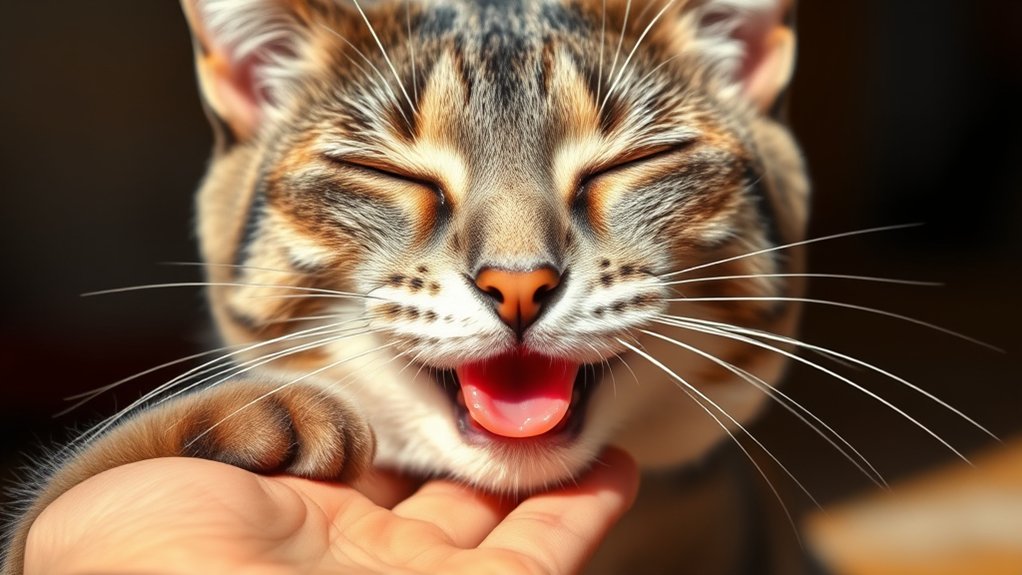
You’ll notice your cat’s licking is a lot like the social grooming rituals they share with other cats. It’s their way of building trust and showing affection.
Basically, when your cat licks you, they’re saying you’re part of their family group.
This kind of behavior really helps strengthen the bond between you two. When you recognize these little cues, it can give you a better understanding of what your cat needs socially and how they’re feeling emotionally.
It’s pretty amazing how much they communicate through something as simple as licking!
Social Grooming Rituals
When your cat licks you, it’s engaging in a social grooming ritual that mirrors the behavior they use to strengthen bonds within their own feline groups. This grooming behavior is more than just affection. It’s a complex social signal.
Here’s what this behavior means:
- Your cat’s lick mimics allogrooming, a social act that builds trust and hierarchy in cat groups.
- The rough texture of their tongue not only cleans but stimulates your skin, reinforcing tactile bonds.
- Licking followed by biting can signal a shift from grooming to play or overstimulation, showing their need for space.
- This ritual means your cat includes you in its social circle, highlighting companionship and mutual trust.
Understanding this behavior helps you appreciate your cat’s unique way of bonding. It’s pretty amazing how much they communicate just by licking, right?
Bonding Through Affection
Although grooming is a natural feline behavior, its extension to human companions shows how cats express affection and trust. When your cat licks you, it’s mimicking the social grooming you see among cats. This means it considers you part of its social group.
This cat lick then bite behavior often reflects playful interaction. It’s a positive way your feline shows affection while strengthening your bond. The rough texture of their tongue helps with grooming, which reinforces comfort and social connection.
Understanding these cat behavior cues helps you bond with your feline on a deeper level. You’ll see that licking followed by gentle biting isn’t aggression but a meaningful social gesture.
Embracing this knowledge fosters a positive, trusting relationship between you and your cat.
Family Inclusion Signals
Because cats groom each other to reinforce social bonds, their licking and gentle biting of you signals that they consider you a member of their family unit. This behavior mimics maternal grooming, showing trust and affection.
When your cat licks then bites you, it’s communicating social inclusion and comfort within its family group.
Here’s what this behavior means:
- The lick is a social bonding act, affirming familial ties.
- The gentle bite mimics kitten nips, indicating affection and trust.
- This behavior expresses your cat’s desire for interaction and closeness.
- Individual cats vary in how much they use licking and biting to show family affection.
Understanding these signals helps you appreciate how your cat includes you in its social world through this unique behavior. It’s pretty cool when you think about it!
How Stress Affects Your Cat’s Licking and Biting
If your cat suddenly starts licking or biting more than usual, it could be their way of coping with stress. Stress often triggers aggressive behavior like excessive licking and biting as a form of self-soothing. Changes in the environment, like loud noises, new pets, or unfamiliar scents, can heighten stress and cause your cat to act out.
Recognizing these signs helps you understand their needs better. It also helps prevent skin irritation or injuries from over-grooming.
| Stress Trigger | Behavior Exhibited | Possible Outcome |
|---|---|---|
| Loud noises | Increased licking | Skin irritation |
| New pets | Biting and hiding | Anxiety |
| Routine changes | Aggressive behavior | Need for space |
Addressing environmental stressors can reduce licking and biting caused by anxiety. So, it’s worth paying attention to what might be stressing your cat out.
How to Respond to Lick-Then-Bite Behavior
When your cat licks and then bites, it’s important to interpret this behavior carefully to respond appropriately. This sequence can indicate affection or overstimulation, so pay close attention to your cat’s body language and context.
Interpreting your cat’s lick-then-bite behavior helps you respond with care and understanding.
To manage this behavior effectively, start by recognizing the context. Figure out if your cat is showing affection or signs of irritation.
Limit petting sessions to prevent overstimulation that often triggers biting. Also, try redirecting biting during play by offering toys instead of your hands.
Keep an eye out for warning signs like tail twitching or flattened ears. When you see these, pause the interaction to give your cat some space.
How to Prevent Overstimulation and Biting
Recognizing the signs of overstimulation in your cat can help you prevent biting before it starts. To prevent biting incidents, keep an eye on your cat’s body language for signs of discomfort like twitching tails or flattened ears.
Limit petting sessions and avoid sensitive areas such as the belly or tail, which can trigger irritation. Every cat has a unique tolerance, so be ready to adjust based on their mood and environment.
Use positive reinforcement to reward calm behavior. This helps your cat associate gentle touch with pleasant experiences.
| Action | Purpose |
|---|---|
| Monitor body language | Detect signs of overstimulation |
| Limit petting duration | Maintain comfort and reduce stress |
| Use positive reinforcement | Encourage calm, gentle interactions |
When to Seek Professional Help for Biting Issues
Although occasional biting can be a normal part of feline behavior, frequent or aggressive biting signals that you should consult a veterinarian or animal behaviorist. Addressing biting early helps manage underlying anxiety or aggression effectively.
Consider seeking professional help if biting becomes frequent or escalates in aggression, which could indicate stress or anxiety. Also, if sudden changes in biting behavior happen alongside other unusual behaviors, it might suggest health issues.
If play aggression biting continues despite attempts at redirection and training, it’s a good idea to get some expert advice.
And of course, if biting causes injury or significant discomfort to you or your cat, don’t wait to seek help.
A professional assessment can identify triggers and develop tailored interventions to improve your cat’s emotional well-being and reduce aggression.
Don’t hesitate to reach out—this ensures both your safety and your cat’s behavioral health.
Frequently Asked Questions
Can Certain Cat Breeds Be More Prone to Lick-Then-Bite Behavior?
Yes, certain breeds show distinct patterns in lick-then-bite behavior.
You’ll notice Siamese tendencies include high energy and playful nips, while Maine Coon quirks often mean gentler interactions.
Ragdoll affection usually results in calm, less frequent bites.
Bengals display playfulness with more intense bite play, reflecting their hunting instincts.
Persian temperament leans toward docility, so you’ll likely see minimal lick-then-bite actions.
Understanding these traits helps you manage your cat’s behavior effectively.
Does a Cat’s Age Influence Its Licking and Biting Tendencies?
Back in the days of knights and castles, you’d see kitten playfulness dominate licking and biting because of their socialization stages.
As your cat matures, age-related behavior shifts. Adult cats show more controlled affection.
Senior cat habits might reflect discomfort or stress. You’ll notice maturity effects influencing how often and why your cat licks then bites.
This helps you understand their communication and adjust interactions empathetically for their well-being.
How Does a Cat’s Diet Impact Its Behavior Towards Licking and Biting?
Your cat’s behavior around licking and biting is closely tied to dietary deficiencies and nutritional balance.
If their food lacks essential nutrients, irritability and over-grooming may increase.
Food preferences and treat rewards can influence their mood and interactions, so choose wisely.
Maintaining a consistent feeding schedule helps regulate energy levels, reducing stress-induced biting.
By ensuring a balanced diet, you support your cat’s emotional well-being, minimizing unwanted behaviors effectively.
It’s all about what and when they eat!
Can Medical Conditions Cause Increased Licking Followed by Biting?
Did you know up to 15% of cats with unexplained licking triggers have underlying medical issues?
Yes, medical conditions can cause increased licking followed by biting. These behaviors might signal anxiety, pain, or neurological problems rather than just playful aggression or attention seeking.
When biting stressors escalate, your cat’s licking could be an anxiety signal or a response to discomfort.
Consulting a vet helps identify if health concerns fuel this behavior.
Is Lick-Then-Bite Behavior More Common in Indoor or Outdoor Cats?
You’ll notice lick-then-bite behavior is more common in indoor cats.
The indoor environment often limits outdoor exploration, increasing stress factors and overstimulation. Indoor cats rely heavily on you for social interaction, which can heighten their territorial instincts within the home.
Outdoor cats, with more freedom to roam and express natural behaviors, tend to show this less frequently.
Understanding these differences helps you manage your cat’s behavior more effectively.
Conclusion
You might worry that your cat’s lick then bite behavior means they’re upset or aggressive, but it often reflects affection or overstimulation instead. Understanding these signals helps you respond calmly and prevent biting before it starts.
Remember, this behavior is a natural part of how cats communicate, not a sign of rejection. By recognizing the signs and adjusting your interactions, you can strengthen your bond and keep both you and your cat comfortable and happy.