Can I Give My Cat Benedryl – Safety, Dosage, And Risks
You can give your cat Benadryl safely, but only under veterinary guidance with the correct dosage. Typically, it’s 1 mg per pound every eight hours. It helps with allergies by reducing itching and swelling.
Just watch for side effects like drowsiness, vomiting, or agitation. Avoid giving it to kittens, pregnant cats, or those with health issues. Overdose risks include seizures and rapid heartbeat.
So, understanding dosage, risks, and alternatives is really important before you decide to give your cat Benadryl. Always check with your vet first to keep your furry friend safe.
What Is Benadryl And How Does It Work?
Although Benadryl is widely known as an over-the-counter antihistamine for humans, it also plays a role in managing allergic reactions in cats by blocking histamines in their bodies.
Benadryl’s active ingredient, diphenhydramine, helps alleviate symptoms such as itching, swelling, and redness caused by allergies.
Diphenhydramine in Benadryl reduces itching, swelling, and redness from allergies in cats.
This medication is generally safe for cats when used under a veterinarian’s guidance, who’ll determine the correct dosage to minimize risks.
Diphenhydramine can cause side effects like drowsiness, which might be helpful in certain situations but requires careful monitoring.
Since cats metabolize medications differently than humans, consulting your veterinarian before administering Benadryl is crucial to guarantee safety and effectiveness.
Understanding how this antihistamine works helps you make informed decisions about your cat’s allergy treatment.
Can You Safely Give Benadryl To Your Cat?
You should never give your cat Benadryl without first talking to your veterinarian.
It’s important to make sure it’s safe and the right choice for your furry friend. Some cats, like kittens, older cats, or pregnant cats, could have serious health risks from this medication.
Your vet will help figure out the correct dosage and keep an eye out for any side effects or interactions.
Veterinary Guidance Essential
Before giving your cat Benadryl, always consult a veterinarian to determine if it’s safe and appropriate for your pet’s specific health needs.
Veterinary guidance is essential because Benadryl’s recommended dosage, typically 1 mg per pound, can vary based on your cat’s condition.
You should always check with your veterinarian to confirm the right dose and make sure it won’t interact with other medications or make existing issues like heart disease or glaucoma worse.
When you give your cat Benadryl, keep a close eye on them for side effects such as sedation, vomiting, or agitation.
Remember, Benadryl isn’t a substitute for emergency veterinary care in severe allergy cases.
Prioritizing veterinary guidance ensures safe use and effective management of allergies in cats.
Health Risks Considered
Guaranteeing your cat’s safety goes beyond consulting a veterinarian. It means understanding the potential health risks associated with giving Benadryl. While this antihistamine can be safe for cats when administered at recommended doses, typically 1 mg per pound of body weight, it’s not suitable for kittens under six months, pregnant or nursing cats, or seniors with certain health issues.
You must carefully monitor for possible side effects such as sedation, vomiting, dry mouth, or excitement.
Overdose risks include severe symptoms like rapid heartbeat and seizures, which require immediate veterinary attention. Always consult your veterinary professional before giving Benadryl to confirm the appropriate dosage.
Make sure it’s safe for cats with your pet’s specific health profile. This helps avoid adverse drug interactions and minimizes health risks.
When in doubt, it’s always best to ask your vet to keep your furry friend safe and healthy.
When Should You Give Benadryl To Your Cat?
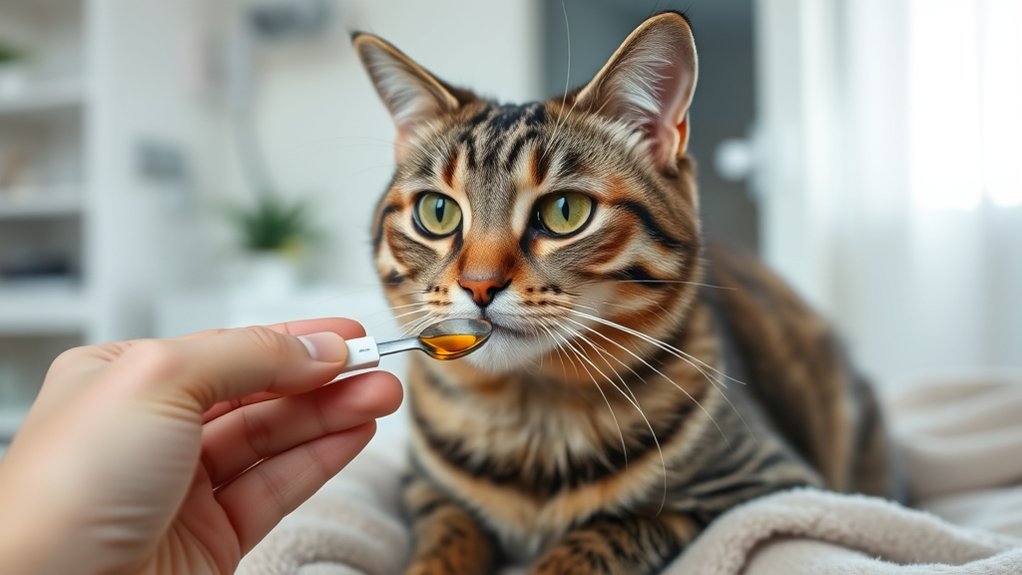
Although Benadryl can relieve certain allergic reactions and mild motion sickness in cats, it’s important to use it only when appropriate. You should consider Benadryl primarily for acute allergic reactions, such as insect bites or vaccination responses, where symptoms like itching and swelling occur.
It also helps manage mild motion sickness during travel, easing your cat’s discomfort.
However, always consult your veterinarian before giving Benadryl to guarantee the dosage and safety are tailored to your cat’s specific health needs.
Remember, Benadryl is an antihistamine meant for mild cases and should never replace emergency veterinary care for severe allergies or breathing difficulties.
Using Benadryl responsibly guarantees your cat’s safety while effectively addressing allergies or motion sickness symptoms.
How To Find The Right Benadryl Dosage For Cats
Knowing when to give Benadryl to your cat is only part of the equation; determining the correct dosage is equally important to avoid potential risks.
The recommended Benadryl dosage for cats is generally 1 mg per pound of body weight. For example, a 10-pound cat would receive about 10 mg, often half of a 25 mg tablet or 4 ml of liquid Benadryl.
Always consult a veterinarian before administering this antihistamine medication, as your cat’s health and weight influence the safe dosage. Use only liquid Benadryl free of harmful additives like xylitol.
After giving the medication, closely monitor for symptoms and side effects. Following the recommended dosage and frequency is essential to guarantee the safety of Benadryl for your cat.
It’s better to be cautious and check in with your vet if you’re unsure. Your cat’s well-being comes first, so never hesitate to ask for professional advice.
Benadryl Side Effects To Watch For
What side effects should you watch for when giving Benadryl to your cat? Benadryl side effects can vary, so careful monitoring is really important. Common reactions include sedation, vomiting, and diarrhea, and these often show up within an hour.
Watch for sedation, vomiting, and diarrhea within an hour when giving Benadryl to your cat.
Some cats might also experience urinary retention, drooling, or reduced appetite. If you notice any adverse reactions, it’s a good idea to contact your veterinarian right away.
Overdose symptoms like seizures, abnormal breathing, or unconsciousness need urgent veterinary attention. Always check with a vet before giving Benadryl to make sure it’s safe and you’re giving the right dose.
Keep a close eye on your cat after giving the medication to catch any signs of distress early.
- Excessive sedation making your cat unresponsive
- Persistent vomiting or diarrhea causing dehydration
- Difficulty urinating or signs of urinary retention
- Sudden weakness or seizures indicating overdose symptoms
Which Cats Should Avoid Benadryl
You should avoid giving Benadryl to kittens under six months old, pregnant or nursing cats, and those with certain health conditions like glaucoma or heart disease.
It’s also important to be cautious with senior cats and those on specific medications, as they may face additional risks.
Health Conditions Contraindications
Although Benadryl can be helpful for many cats, certain health conditions make its use risky and potentially harmful. When considering Benadryl for cats, you must recognize contraindications that increase toxicity risks and adverse reactions. Always consult a veterinarian to determine if Benadryl is safe based on your cat’s health status.
Avoid giving Benadryl to cats with liver problems, which alter drug metabolism and increase side effects. Kidney problems are another concern because they raise the risk of drug toxicity.
Respiratory issues, heart disease, or glaucoma can also worsen with Benadryl.
It’s best to steer clear of Benadryl for pregnant or nursing cats due to unknown effects on offspring.
Prioritizing your cat’s safety means respecting these health conditions contraindications before administering Benadryl. When in doubt, always check with your vet first.
Age And Pregnancy Restrictions
Since kittens under six months have developing systems, they’re especially sensitive to medications like Benadryl and shouldn’t receive it.
Age and pregnancy restrictions also apply to pregnant or nursing cats, as Benadryl may pose risks to both the mother and her kittens.
Senior cats require extra caution, particularly if they’ve underlying health conditions, because their sensitivity to the drug increases.
Cats with illnesses such as glaucoma or heart disease should never be given Benadryl without veterinary guidance.
For your cat’s safety, always consult with a veterinarian before administering Benadryl, especially if your pet falls into these sensitive categories.
Understanding these restrictions helps you avoid the risks of Benadryl and guarantees you provide safe, appropriate care.
Handling Benadryl Overdose In Cats
If your cat shows signs of a Benadryl overdose, such as rapid or slow breathing, increased heart rate, seizures, or loss of consciousness, you must seek immediate veterinary care.
Recognizing symptoms of overdose early is crucial to prevent severe complications. Always stick to the recommended dosage of Benadryl, which is 1 mg per pound of body weight, given no more than every eight hours.
Keep a close eye on your cat after giving Benadryl. This way, you can catch any adverse reactions before they get worse.
If you notice extreme sedation, agitation, or unusual behavior, contact a veterinarian or emergency animal clinic right away.
- The fear of harming your beloved cat by misdosing
- Anxiety while waiting for professional help
- Relief when prompt action saves your cat’s life
- Commitment to prevent overdose through careful administration
Better Alternatives To Benadryl For Cat Allergies
Being cautious with Benadryl dosage is important, but you might want to think about other options for managing your cat’s allergies.
Hydroxyzine and Cetirizine are often safer antihistamine alternatives. Cetirizine tends to cause fewer side effects and less sedation, which is a bonus.
Hydroxyzine and Cetirizine offer safer allergy relief, with Cetirizine causing fewer side effects and less sedation.
For chronic conditions, prescription corticosteroids may be necessary. However, they require strict veterinary oversight because of potential risks.
Beyond medication, flea control and environmental management play a big role in reducing allergy symptoms by tackling the root causes.
Adding Omega-3 fatty acids as a natural remedy can also help reduce inflammation and improve skin health.
Always check with your veterinarian before switching treatments. That way, you can make sure your cat gets the best care and stays safe with their specific allergy needs.
Frequently Asked Questions
Can Benadryl Affect My Cat’s Appetite or Behavior Long-Term?
Yes, Benadryl can cause appetite changes and behavior shifts in cats, especially with improper dosage.
Long term effects aren’t well studied, so you should monitor sedation levels and other side effects closely.
Allergy relief might come with risks, so regular health monitoring is essential.
Always consult your vet before using Benadryl, and consider alternative treatments to avoid potential complications affecting your cat’s wellbeing over time.
How Should I Store Benadryl to Keep It Safe for My Cat?
You should store Benadryl in its original dosage packaging within childproof containers to guarantee safety and proper dosage control.
Keep it in a cool, dry place, away from direct light and humidity, maintaining stable temperature conditions. Always check expiration dates before use.
Organize medications to avoid accessibility issues, especially around pets and children.
Regularly review safety reminders to prevent misuse and guarantee your cat’s medication is stored responsibly and effectively.
It’s all about keeping things safe and easy to manage!
Can Benadryl Interact With Other Common Pet Medications?
Yes, Benadryl can interact with other pet medications, so you should consult your vet before combining treatments.
Veterinary recommendations emphasize following strict dosage guidelines to avoid potential side effects like drowsiness or allergic reactions. Age restrictions and breed considerations matter too.
Watch for common symptoms indicating adverse reactions. It’s important to know emergency protocols and explore medication alternatives if needed.
Also, be aware that different product formulations might affect how Benadryl interacts with other drugs.
Is It Safe to Give Benadryl to Kittens or Pregnant Cats?
Imagine a tiny kitten curling up, or a pregnant cat nesting peacefully. Your priority is their kittens’ safety.
Giving Benadryl to kittens or pregnant cats isn’t typically safe without veterinary advice.
You must follow strict dosing guidelines and consider health conditions. Side effects and allergic reactions can pose overall risks. Frequency limits are essential, and alternatives may be better.
Always consult your vet to protect their delicate health and choose the safest option.
How Quickly Does Benadryl Start Working in Cats?
Benadryl typically starts working in cats within 30 to 60 minutes after administration, depending on dosage guidelines and administration methods.
Allergy symptoms may begin to improve during this window, but individual sensitivity and weight considerations affect timing.
Watch for common side effects and factor in environmental factors that might worsen symptoms.
Always consult your vet before use, as prescription alternatives could be safer.
Your vet’s guidance guarantees proper dosage and monitors duration effects for your cat’s health.
It’s always better to be safe and get professional advice when it comes to your furry friend.
Conclusion
Giving your cat Benadryl can be like walking a tightrope. It requires careful balance and attention. While it may help with allergies, you must use the correct dosage and watch for side effects closely.
Always consult your vet before giving it to your cat. Some cats shouldn’t take it at all. If you’re uncertain or worried about risks, consider safer alternatives.
Your cat’s health is worth the extra caution. Keeping them safe and comfortable should always come first.