Can A Cat Kill A Possum – What Really Happens
While cats have strong hunting instincts and may attack small or young possums, adult possums usually defend themselves effectively with their size, sharp teeth, and clever behaviors. This makes fatal outcomes pretty rare.
However, cat bites can cause serious infections in possums. At the same time, possums can pose health risks to cats through bites and disease.
Knowing these interactions helps you protect both your cat and local wildlife. Keep exploring to understand how to handle injuries and promote safe outdoor adventures.
Can Cats Kill Possums? What You Need to Know
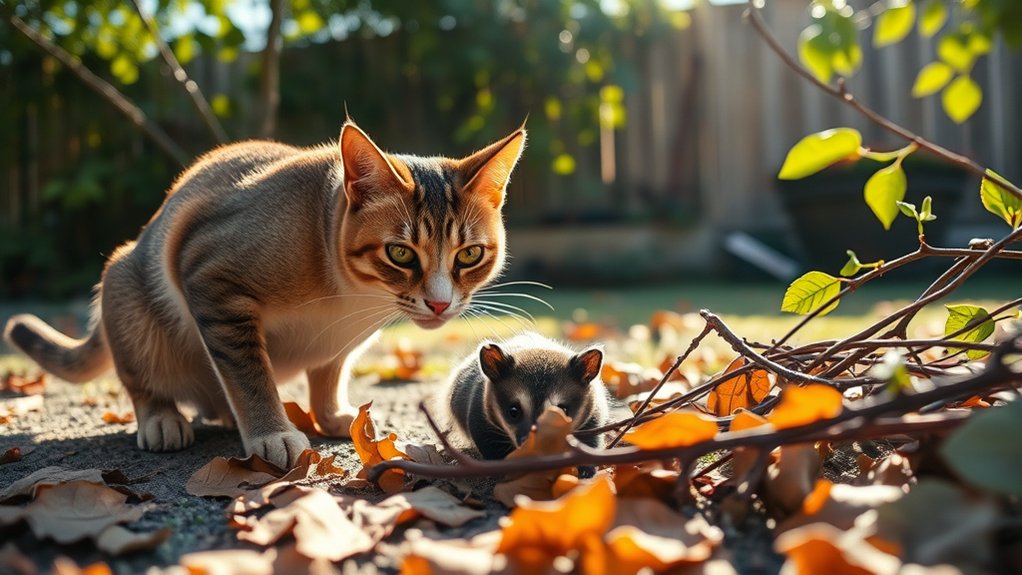
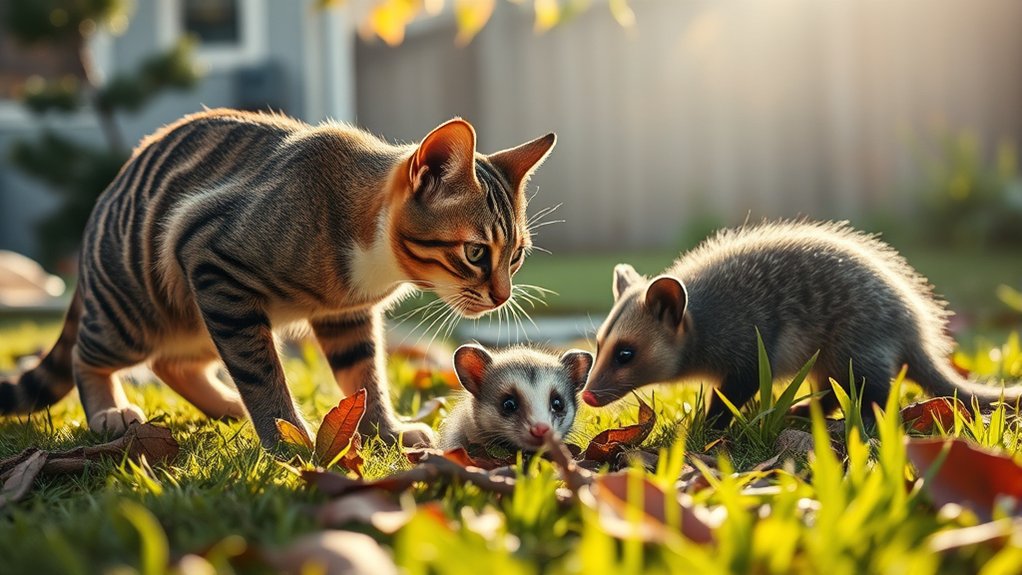
Although cats are natural hunters, they rarely kill adult possums because possums are larger and have strong defensive behaviors. You should know that possums use sharp teeth and claws to protect themselves, which makes adult possums difficult targets for cats.
Cats seldom kill adult possums due to their size and strong defensive tactics.
While young or smaller possums are more vulnerable, most encounters result in possums escaping or avoiding fights.
Cats can inflict wounds that introduce harmful bacteria, posing health risks to possums, sometimes causing paralysis.
Injuries from these encounters can affect both cats and possums, often requiring veterinary care.
Understanding these dynamics helps you see why, although cats can kill possums under specific circumstances, it’s uncommon for them to kill adult possums outright.
Cat Hunting Behavior and Possum Vulnerability
Cats rely on their strong hunting instincts to pursue small animals, including possums, even when they’re well-fed at home. This cat hunting behavior is driven by instinct rather than hunger, prompting cats to stalk and attack.
Possums, however, usually weigh more than domestic cats and have tough defensive skills, which lowers their vulnerability. Young or smaller possums face greater risks since they lack the experience and strength to evade or fight back effectively.
When cats engage in hunting behavior targeting possums, both animals can suffer injuries like scratches or bites, potentially spreading diseases.
Adult possums typically avoid fights and use their defenses well, making fatal outcomes rare in cat-possum encounters.
Understanding these dynamics helps clarify the real risks involved. It’s not just about hunger—it’s about instinct and survival for both animals.
Possum Defense Mechanisms Against Cat Attacks
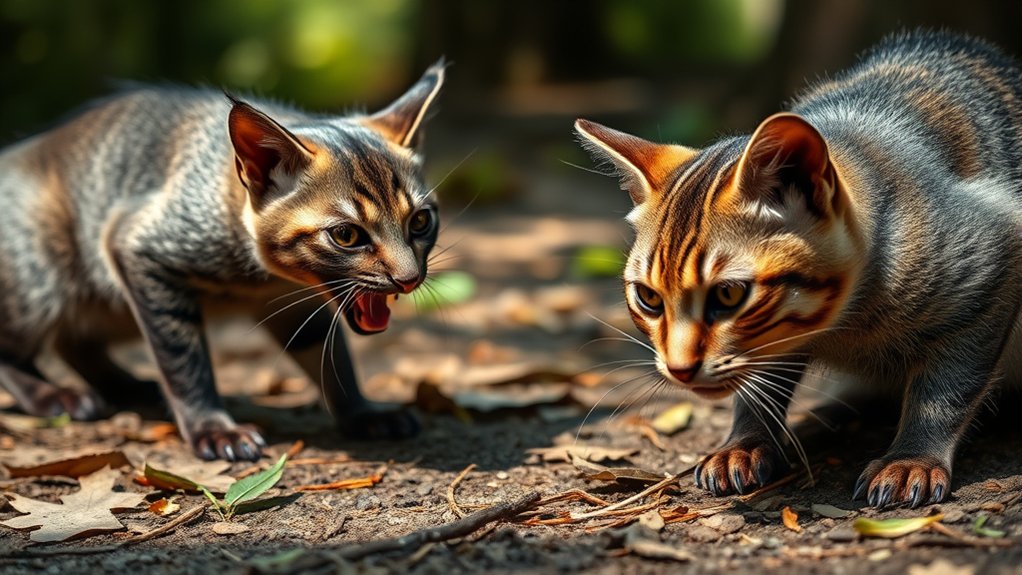
When a cat threatens a possum, you’ll often see the possum relying on some clever defensive behaviors. For instance, they might play dead or hiss to steer clear of a fight.
They’ve also got a sturdy build and sharp teeth, which come in handy if they get cornered and need to defend themselves physically.
But honestly, their best moves are using their nocturnal habits and quick getaways.
Possum Defensive Behaviors
If you observe a possum under threat, you’ll notice it employs various defensive behaviors to protect itself from predators like cats. These behaviors can be surprisingly effective in deterring attacks and ensuring survival.
Key defensive behaviors include:
- Playing dead. Possums often “play possum,” remaining motionless to make predators lose interest. It’s a clever trick that sometimes fools even the most determined attacker.
- Vocalizations. Hissing or growling signals their readiness to defend and intimidates attackers. It’s their way of saying, “Back off!”
- Physical deterrence. When cornered, possums use their sharp teeth and claws to fight back. They don’t give up easily.
- Evasion. They rely on their larger size and agility to escape confrontations. Sometimes, the best defense is just getting away fast.
Physical Defense Features
Understanding how possums defend themselves goes beyond their behaviors to include the physical traits they rely on during confrontations. Possums possess sharp teeth and claws, essential physical defense features that can effectively deter or injure attackers like cats. Their generally larger and sturdier build compared to domestic cats gives them a distinct physical advantage in fights.
Furthermore, possums can hiss or growl to warn potential threats, using these vocalizations alongside their physical attributes to discourage aggression.
While playing dead is a common behavioral defense, it’s their physical defense features, like teeth, claws, and robust size, that provide tangible protection during close encounters.
These traits make possums well-equipped to handle cat attacks, enhancing their chances of survival in such confrontations. So, when it comes down to it, their physical qualities really give them an edge.
Escape And Avoidance
Although possums possess physical defenses, they primarily depend on escape and avoidance strategies to evade cat attacks. You’ll notice that possums rarely engage in direct combat. Instead, they rely on behaviors that help them avoid confrontation.
Here’s how possums use escape and avoidance effectively:
- They remain still and quiet, blending into their surroundings to avoid detection.
- They prefer to flee quickly, using their nocturnal habits to escape when cats are active.
- When threatened, they hiss or play dead, discouraging cats from attacking.
- If cornered, biting is a last resort, but they mostly avoid aggressive encounters.
Common Injuries From Cat-Possum Encounters
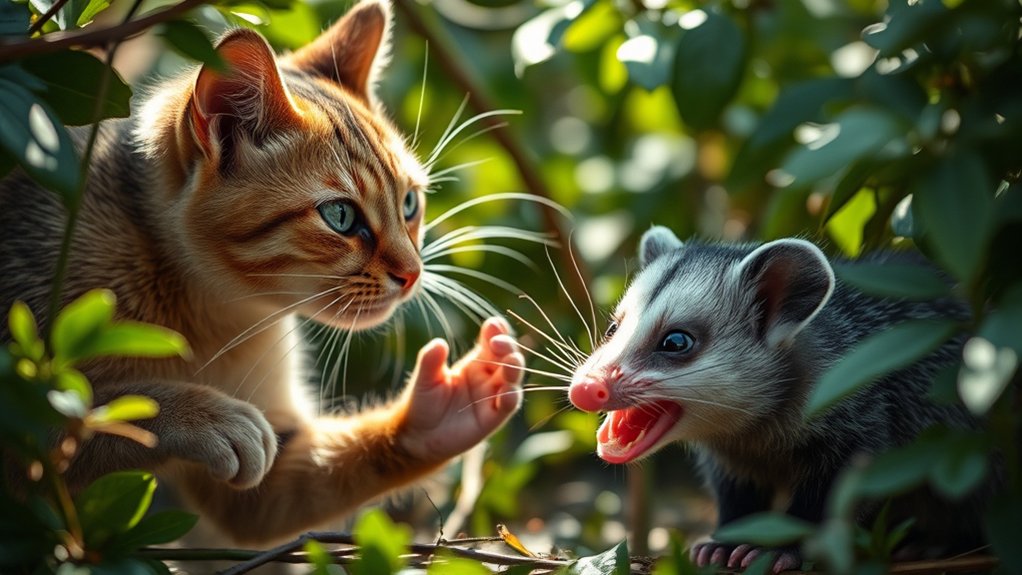
When cats and possums clash, you’ll often see deep scratches and puncture wounds—especially from bites.
These injuries can easily become infected because cat bites introduce bacteria that might cause serious health problems for possums.
Typical Wounds Observed
Several types of wounds commonly appear on possums after encounters with cats, with puncture wounds being among the most frequent. These typical wounds often carry bacteria that can lead to more serious health problems.
You’ll notice small puncture wounds from cat bites, which can go deep and introduce bacteria. Scratches from cat claws might seem minor but can cause significant tissue damage.
Injuries usually affect young or smaller possums more, since they can’t defend themselves as well. Sometimes, the wounds are severe enough to need veterinary care, showing just how serious these attacks can be.
Understanding these wound types helps you see the physical toll cat encounters take on possums. While the immediate injuries are obvious, these wounds can also affect a possum’s movement and overall health.
Infection Risks From Bites
How serious can infections from cat bites be for possums? Very serious. Cat bites carry bacteria that act aggressively once introduced into a possum’s tissue.
Even small puncture wounds pose significant infection risks from bites. These can quickly lead to severe infections that may cause paralysis or death if left untreated.
Possums are especially vulnerable because the bacteria can overwhelm their immune response. Plus, the stress from an attack further weakens their defenses. It’s a tough situation for these animals.
Furthermore, cat scratches can introduce harmful bacteria too, making things worse and requiring veterinary care.
Understanding these infection risks from bites really shows why encounters with domestic cats are dangerous for possums. It’s important to minimize contact to protect these animals from potentially fatal health complications.
Health Risks to Cats From Possums: Bites and Disease
Although possums rarely carry rabies, they can still pose significant health risks to your cat through bites and disease transmission. When your cat encounters a possum, bites can lead to serious infections because possums’ mouths harbor harmful bacteria.
Plus, these encounters can increase the risk of parasite transfer and disease. It’s not just about the bite itself, but what might come with it.
Here are key health risks from possums to your cat:
- Bites causing wounds that may become infected and require veterinary care.
- Transmission of parasites like fleas, ticks, and mites that affect your cat’s health.
- Spread of diseases such as leptospirosis and tuberculosis.
- Stress and anxiety resulting from confrontations, impacting your cat’s wellbeing.
Knowing about these risks helps you keep your cat safe and healthy during outdoor adventures. Just a little awareness goes a long way in protecting your furry friend.
How Cat Predation Affects Local Possum Populations
While your cat faces health risks from possums, the impact goes both ways.
Cats also greatly affect local possum populations through predation. In Australia, cat predation is a major factor in the deaths of an estimated 2 billion animals each year, including many possums.
Cats’ hunting instincts and ambush skills make them especially dangerous to younger or smaller possums, like ringtail possums. These smaller possums can suffer from lethal infections caused by cat bite wounds.
Although adult possums often defend themselves effectively, persistent cat predation still reduces their numbers over time.
If you let your cat roam outdoors, it likely contributes to this decline. Understanding how cat predation affects possums shows why responsible ownership is so important.
Keeping cats indoors helps preserve local possum populations and maintain ecological balance.
Protecting Possums and Keeping Your Cat Safe
Because outdoor encounters between cats and possums pose risks to both, taking proactive steps to protect wildlife and keep your cat safe is essential.
Protecting possums means minimizing these risky interactions while making sure your cat stays well.
Here’s how you can do this effectively:
- Keep your cat indoors or provide supervised outdoor time to prevent predation on possums.
- Offer indoor enrichment to satisfy your cat’s hunting instincts without endangering wildlife.
- Schedule regular health checks and vaccinations to avoid disease transmission between possums and cats.
- Educate your community about the ecological impact of free-roaming cats to promote responsible pet ownership.
Doing these things helps keep possums safe and your cat happy and healthy.
It’s a win-win for everyone involved!
What to Do If Your Cat or Possum Gets Injured
If your cat or a possum gets injured during an encounter, taking prompt and appropriate action is essential to prevent complications.
For injured animals like your cat, clean wounds gently with mild soap and water. But avoid antiseptics unless your vet approves, as they can worsen injuries.
Seek veterinary care immediately if your cat has a possum bite. That’s because bacteria might cause severe infections or even paralysis.
If your cat is bitten by a possum, get vet care immediately to prevent serious infections or paralysis.
If the possum is injured, contact a wildlife rescue organization for expert assessment and treatment. They know how to handle animals that might carry diseases.
Meanwhile, keep a close eye on both animals for signs of infection or distress, like swelling, redness, or lethargy.
It’s also a good idea to keep injured animals separated from other pets. This helps reduce stress and stops disease from spreading until they get proper care.
Frequently Asked Questions
Can Possums Carry Diseases Harmful to Humans?
Yes, possums can carry diseases harmful to humans, but the risk of disease transmission is generally low. They may host illnesses like leptospirosis, tuberculosis, and Chagas disease.
They can also carry parasites such as fleas, ticks, and mites.
You should avoid direct contact to minimize risks. Since possums tend to avoid confrontation, you’re unlikely to encounter disease transmission unless you handle them or their fleas and ticks directly.
Are Certain Cat Breeds More Likely to Hunt Possums?
Ever wonder if some cats are naturally better hunters? Yes, certain cat breeds with strong hunting instincts, like Abyssinians, Bengals, Siamese, and Oriental Shorthairs, are more likely to hunt possums.
Their high energy and prey drive push them to pursue wildlife actively.
But remember, it’s not just breed. Your cat’s personality and environment also shape hunting behavior.
How Can I Train My Cat to Avoid Wildlife?
To train your cat to avoid wildlife, focus on wildlife safety by using positive reinforcement. Reward your cat with treats or praise when they engage with toys instead of wildlife.
Teach commands like “leave it” and “come” to redirect their attention. Supervise outdoor time with a leash and harness, and provide stimulating indoor activities to reduce hunting urges.
Consider barriers like cat-proof fences to limit wildlife encounters altogether. It might take some time, but with patience, your cat can learn to stay safe and respect wildlife.
Do Possums Ever Attack Cats First?
Possums rarely exhibit predatory behavior toward cats and almost never attack first.
You’ll find that possums mainly rely on avoidance and defensive tactics like playing dead when threatened. They’re scavengers, not hunters, so they don’t see cats as prey.
If a possum feels cornered, it might hiss or growl as a warning, but actual attacks on cats are extremely uncommon.
You can be confident they prioritize escape over confrontation.
What Are the Legal Protections for Possums in Australia?
Imagine a shield protecting a delicate treasure. That’s possum conservation in Australia.
You must know possums are safeguarded under the National Parks and Wildlife Act 1974. This means it’s illegal to harm, kill, capture, or relocate them without a permit. If you don’t comply, you could face hefty fines.
So, it’s really important to follow the rules. Instead, you’re encouraged to use humane methods and check with your local council.
That way, possums stay safe while you manage any issues responsibly. It’s all about finding a balance that works for everyone.
Conclusion
Imagine your cat as a curious knight and the possum as a wary fortress. While the knight’s curiosity can lead to skirmishes, the fortress has strong defenses and surprising resilience.
Though your cat might sometimes win small battles, the risks, like injuries and diseases, are real for both sides. Understanding these dynamics helps you protect your feline knight and the possum fortress.
This way, both can coexist safely in your shared kingdom. It’s all about keeping everyone safe and sound.