Can Cats Have Honey – Is It Safe For Cats
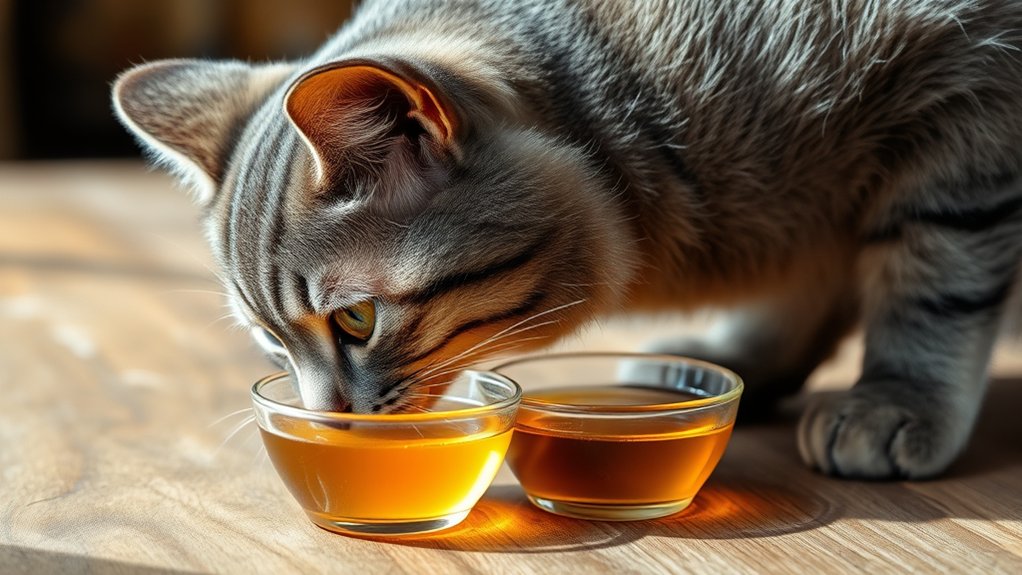
You shouldn’t give honey to your cat because it’s high in sugar and can cause digestive problems, obesity, and even diabetes. Kittens and older cats are especially vulnerable to botulism from honey’s bacteria spores.
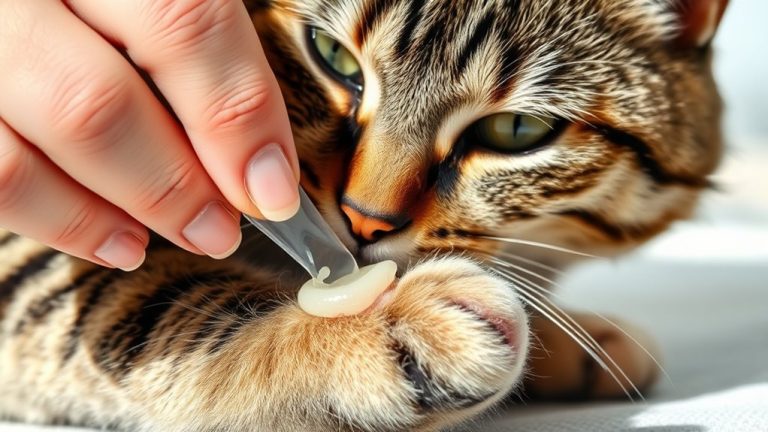
While Manuka honey is used safely on wounds, ingesting honey isn’t recommended for your cat’s diet. If you want to keep your cat healthy and avoid risks, it’s best to stick with safer treat options.
Learn more about honey’s effects on feline health to make the best choices for your furry friend.
What’s In Honey and Why It Matters to Cats
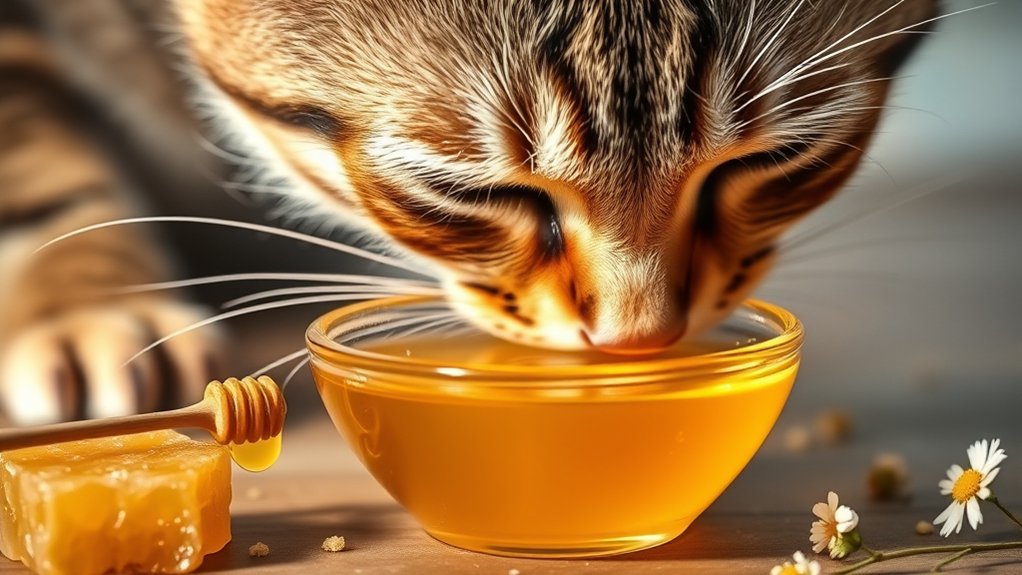
Honey’s high sugar content makes it unsuitable for your cat’s diet. It’s made up of about 80% carbohydrates, mostly sugars, which doesn’t really match what cats need nutritionally since they’re obligate carnivores.
Their digestive systems aren’t built to handle so much sugar, and this can cause digestive upset. Over time, feeding honey to your cat could lead to health problems like obesity.
Now, Manuka honey does have antibacterial properties and is sometimes used as a natural remedy in vet wound care. But that doesn’t mean it’s safe for cats to eat regularly.
There’s also the risk of botulism, which makes honey potentially toxic, especially for kittens or sick cats. Plus, cats can’t even taste sweetness, so honey isn’t very appealing to them.
Can Cats Safely Eat Honey? Risks Explained
Although honey isn’t toxic to cats, you should avoid feeding it to them because its high sugar content can cause digestive upset and lead to weight gain. When cats eat honey, the sugar content can strain their digestive system, causing gastrointestinal issues such as vomiting and diarrhea.
Honey isn’t toxic but can upset your cat’s digestion and cause weight gain due to its high sugar content.
The risks explained go beyond just digestive discomfort. Kittens and immunocompromised cats face serious health risks like botulism from honey exposure.
Since cats lack taste receptors for sweetness, they don’t benefit from honey nutritionally.
Veterinarians recommend steering clear of honey altogether, as it offers no essential nutrients and poses avoidable dangers to your cat’s health.
To keep your feline companion safe, it’s best to exclude honey from their diet and focus on species-appropriate foods designed for cats.
How Honey Affects Cat Digestion and Health
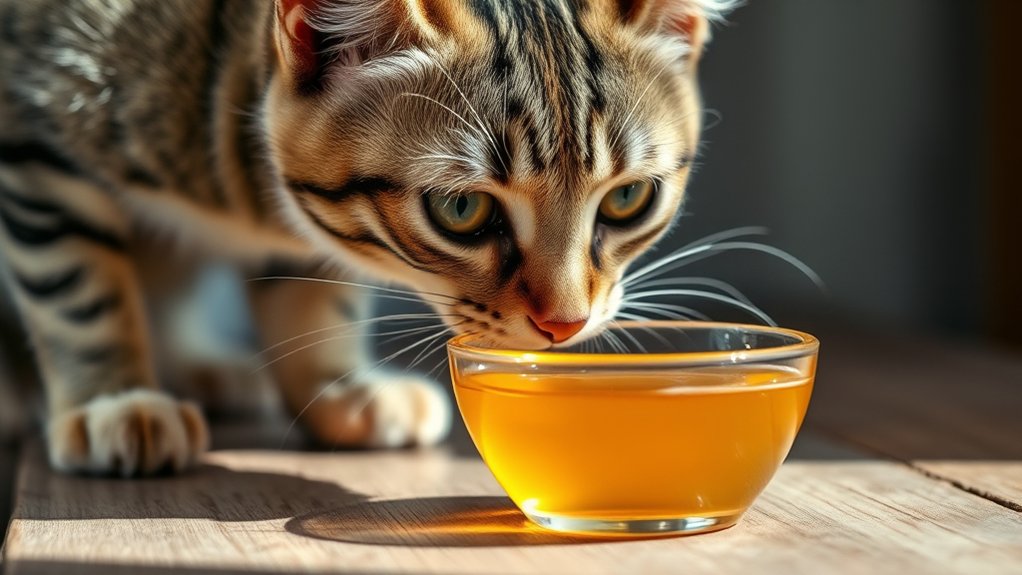
Because cats lack the necessary enzymes to efficiently process carbohydrates, feeding them honey can disrupt their digestion and lead to issues like vomiting and diarrhea.
While honey isn’t toxic, it contains high sugar levels that challenge your cat’s digestive system.
Small amounts of honey may not cause immediate harm, but cats shouldn’t eat it regularly due to its limited nutritional benefits.
Over time, the extra calories can cause weight gain and increase the risk of feline diabetes.
Although some claim honey helps with minor ailments, these potential health benefits are minimal for cats.
Considering these factors, it’s best to avoid giving honey to your cat to maintain their digestive health and prevent metabolic problems.
Botulism Risks of Honey for Cats
Beyond digestive concerns, you should also be aware that honey can carry spores of Clostridium botulinum, which pose a serious risk of botulism to cats.
Raw honey, in particular, is more likely to contain these spores because it’s unpasteurized.
Kittens and cats with weakened immune systems are especially vulnerable due to their immature or compromised digestive systems.
Even small amounts of honey can introduce these dangerous spores, leading to symptoms like lethargy, weakness, and respiratory issues.
Given these risks, it’s safest to avoid giving honey to your cat altogether.
Protect your feline friend by steering clear of honey, especially if they’re young, elderly, or have health issues.
Botulism can cause severe complications and requires immediate veterinary attention.
Is Honey Safe for Cats With Diabetes?
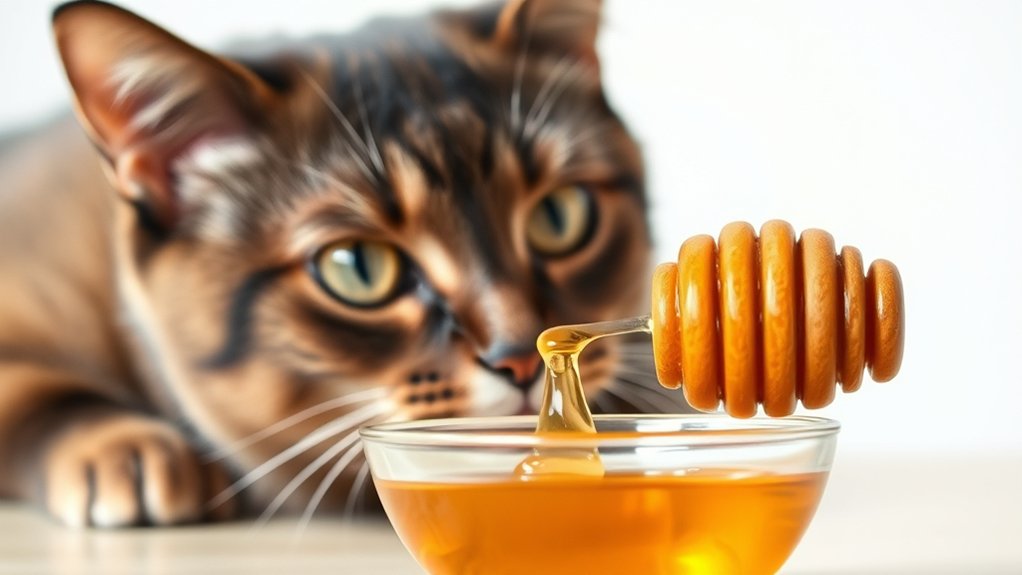
If your cat has diabetes, you should avoid giving them honey because it has a lot of sugar. This sugar can cause dangerous insulin spikes and make it harder to manage their blood sugar levels.
Diabetic cats need careful control of their sugar, and honey can quickly mess with that balance.
While small amounts of honey mightn’t cause immediate harm, it’s still not a good idea. It can lead to digestive issues and contribute to weight gain, which makes diabetes worse.
There’s no scientific proof that honey helps diabetic cats in any way.
When and Why Do Vets Use Manuka Honey?
You’ll often find vets using Manuka honey because of its powerful antibacterial properties. It’s great for preventing infections in wounds.
The unique compounds in Manuka honey create an environment that stops bacteria from growing and helps the healing process along.
But here’s the thing—it’s applied directly to the skin rather than being given as a treat or food for cats. That’s mainly because of worries about the sugar content.
Wound Healing Benefits
Although Manuka honey isn’t suitable for your cat’s regular diet, veterinarians often use it topically to treat wounds because of its strong antibacterial properties. Its high methylglyoxal (MGO) content effectively prevents bacterial infections, making it a valuable tool in veterinary medicine.
The honey’s naturally low pH creates an acidic environment that discourages microbial growth, supporting wound healing.
Plus, honey’s osmotic effect locks in moisture, which keeps wounds moist and promotes faster recovery while preventing drying and cracking.
Veterinary-grade Manuka honey is carefully formulated to guarantee safety and effectiveness for cats, unlike regular raw honey.
When applied properly, it enhances the wound healing process without adverse effects.
Antibacterial Properties Usage
When treating wounds or infections in cats, veterinarians rely on Manuka honey because of its potent antibacterial properties, mainly due to its high methylglyoxal (MGO) content. This veterinary-grade honey creates a hostile environment for bacteria, which helps prevent infections and supports wound care.
Its low pH and antioxidant effects also reduce inflammation and promote healing by keeping the area moist. That moisture is key because it aids tissue regeneration, helping your cat recover faster.
Vets usually apply Manuka honey topically instead of giving it orally. This approach keeps things safe and makes sure you get the best therapeutic benefits.
By using Manuka honey, you can also cut down on how much you rely on antibiotics. It supports your cat’s natural healing process, which is always a good thing.
But remember, always check with your vet before putting honey on your cat. Using it the wrong way or letting your cat ingest it mightn’t be safe.
All in all, Manuka honey’s unique properties make it a handy tool for managing wounds in cats. It’s a natural option that vets trust to keep infections at bay and help healing along.
Do Cats Like the Taste of Honey?
How likely is it that cats enjoy the taste of honey? Since cats lack the taste receptors for sweetness, honey tends not to appeal to them as a sweet treat.
While cats and honey might spark curiosity due to honey’s smell and texture, most cats show little preference for the taste of honey itself.
Honey-flavored medications may be tolerated, but that doesn’t mean honey for your cat is a favored flavor.
How Much Honey, If Any, Is Safe for Cats?
You should be really careful about giving honey to your cat. Even a small amount, like a teaspoon, doesn’t provide any real benefits and might upset their stomach.
Plus, if your cat eats honey regularly, it could lead to bigger problems like obesity and diabetes because of all the sugar.
Recommended Honey Quantities
Only very small amounts of honey, such as a teaspoon of raw Manuka honey, might be safe for some cats, but it’s important not to make it a regular part of their diet.
When considering recommended honey quantities for your cat, keep these points in mind:
- Use only small amounts of honey occasionally, as cats eat it rarely due to their sensitivity to sugar.
- Raw Manuka honey is preferred for possible benefits but should be given sparingly.
- Honey can be used as a rare treat, not a dietary staple, to avoid stomach upset.
- Always monitor your cat’s health and consult a vet before introducing honey.
Just remember, a little goes a long way with honey and cats.
It’s always better to be cautious and keep it as an occasional treat rather than something regular.
If you notice any changes in your cat’s health, check with your vet right away.
Risks of Overconsumption
Although small amounts of honey mightn’t cause immediate harm, regularly giving it to your cat can lead to serious health issues because of its high sugar content. The risks of overconsumption include obesity and digestive issues since cats don’t have the enzymes to properly digest carbohydrates.
Even a teaspoon can cause vomiting, diarrhea, and abdominal pain from honey’s fructose and glucose.
Kittens and elderly cats face greater danger since their immune systems are weaker, which increases the risk of botulism from bacterial contamination.
Importantly, honey isn’t species-appropriate for cats, and there’s no safe recommended quantity for regular feeding.
Better Alternatives to Honey for Your Cat’s Health
Since cats thrive on a diet rich in protein and low in sugars, it’s best to choose treats made from lean meats like chicken or turkey instead of honey.
Here are some better alternatives to support your cat’s diet:
- Offer high-protein treats or homemade cat treats using meat purees or fish to provide essential nutrients cats naturally prefer.
- Incorporate wet food or guarantee fresh water is always available to maintain proper hydration and aid digestion.
- Use fiber-rich diets, including pumpkin or psyllium, to help with hairball control and digestive health without the risks of honey.
- For wound care, rely on veterinary-approved antiseptics or topical medical-grade Manuka honey rather than feeding honey to avoid digestive upset.
These options align with your cat’s natural dietary needs more safely and effectively than sweet treats like honey.
Safe Honey Use for Cats: Vet Tips and Advice
If you’re thinking about giving honey to your cat, even though there are better options out there, you should know how to do it safely. Use very small amounts only because honey has a lot of sugar. That sugar can put stress on your cat’s liver and might cause allergies or stomach upset.
Honey is great for humans in some ways, but it’s not something cats should have regularly. If you ever want to try medical-grade Manuka honey, it’s only for applying on the skin. Never let your cat eat it.
Always check with your vet before adding honey to your cat’s diet. This is especially important if your cat is a kitten or an older cat since they’re more sensitive to health issues.
| Aspect | Detail | Advice |
|---|---|---|
| Honey Content | High sugar, carbs | Avoid regular feeding |
| Health Risks | Liver strain, allergies | Watch for reactions |
| Medical Use | Manuka honey topically only | No ingestion |
Frequently Asked Questions
Can Honey Cause Allergies in Cats?
Honey rarely causes allergies in cats, but you should watch for honey toxicity symptoms or digestive reactions like an upset stomach.
While honey offers some nutritional benefits, it’s not essential and may not always suit your cat’s taste preferences or the additives in their food.
Instead, consider natural sweetener alternatives or safe treat options for your feline friend.
Always follow honey consumption guidelines carefully. If your cat shows any discomfort, make sure to seek advice from your vet to keep their health a priority.
Is Raw Honey Different From Processed Honey for Cats?
Raw honey and processed honey present pretty different profiles for your cat.
Raw honey holds honey benefits and nutritional value but risks allergic reactions and digestive issues due to spores.
Processed honey is safer in small, safe amounts but loses some natural remedies properties.
You should limit feeding frequency, respect cat preferences, and consider alternative sweeteners.
Always prioritize caution, as cats need balanced nutrition without excessive sugars or potential hazards.
It’s best to keep their diet simple and safe.
Can Honey Interact With Medications My Cat Is Taking?
Yes, honey can interact with medications your cat is taking due to its sugar content concerns. This might affect your cat’s digestive system and how well the medication works.
While honey does have some health benefits and is sometimes used as a natural remedy for cats, you should think of it as a treat, not a treatment. Always stick to dosage recommendations for cats.
And it’s really important to check with your vet before giving your cat honey to avoid any side effects.
If needed, there are honey alternatives available too.
How Should Honey Be Stored to Keep It Safe for Pets?
To keep honey safe for pets, use airtight, pet-safe honey storage methods to prevent contamination.
Store honey in a cool, dry place. Avoid the fridge, as temperature storage tips warn it causes crystallization.
Check honey shelf life regularly and watch for signs of spoilage. Don’t fall for honey storage myths like refrigeration.
Use safe honey containers and offer honey in moderation.
Choose pet-friendly honey brands to guarantee quality and safety for your curious pets.
Are There Any Breeds of Cats More Sensitive to Honey?
You should know that breed differences don’t clearly dictate sensitivity levels to honey, but individual cats can react uniquely due to feline taste and dietary preferences.
Sugar content in honey poses health risks, especially digestive issues, which might be worse in breeds prone to certain conditions.
Age factors like kittens or seniors increase exposure effects.
Always monitor your cat closely and consult your vet before offering honey to manage any unexpected sensitivities or health concerns.
It’s better to be safe and keep an eye on how your furry friend responds.
Conclusion
You might be tempted to share honey with your cat, but hold on. There’s more to evaluate than just taste. While a tiny lick might not harm, honey’s sugars and potential toxins could pose serious risks, especially for kittens or diabetic cats.
Before you decide, weigh the dangers carefully. Curious about safer options that actually benefit your feline friend? Don’t rush. Consult your vet first to keep your cat healthy and happy.