
How Much Wet Food To Feed A Cat – Feeding Guide
You should feed your cat about 4-5 ounces of wet food daily if it weighs 8-10 pounds. Adjust the portions based on age, weight, and activity level. Kittens need nearly twice the calories, while senior or less active cats require less.
Split meals into two for adults and three to four for kittens. Make sure to serve the food at room temperature. This helps your cat enjoy their meal more.
Keep an eye on your cat’s weight and use high-quality, balanced wet food. Understanding the right portion, how often to feed, and proper storage will keep your cat’s nutrition on point.
How Much Wet Food Should You Feed Your Cat?
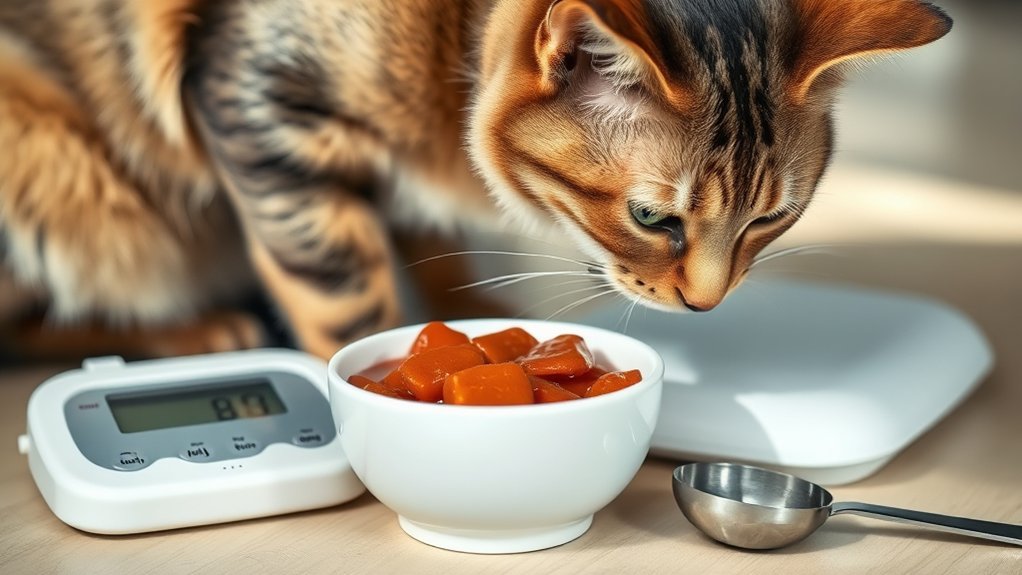
This feeding guide serves as a reliable baseline, though you should adjust portions according to your cat’s activity level and health.
Manufacturers often suggest around 3.25 cans for a 10-pound cat, but individual needs vary.
Manufacturers recommend about 3.25 cans daily for a 10-pound cat, but adjust based on your cat’s needs.
Remember, wet food shouldn’t be left out more than two hours to avoid spoilage. Leftovers must be refrigerated and used within three days.
Following these guidelines guarantees your adult cats receive proper nutrition without overfeeding or waste. This helps support their overall health and well-being.
How Age and Weight Affect Wet Cat Food Portions
Because cats’ nutritional needs change with age and weight, you should adjust their wet food portions accordingly. Kittens require nearly twice the calories of adult cats, so they need considerably more wet food to support growth and energy.
An average adult cat weighing 8-10 pounds typically needs 4-5 ounces of wet food daily. However, heavier cats demand more calories, increasing the amount of wet food to maintain their body functions.
For senior cats, calorie needs often decrease, and they benefit from lower-calorie, easily digestible wet food, which usually means reducing their daily portions.
Understanding how age and weight affect feeding helps you provide the right amount of wet food to keep your cat healthy throughout life stages.
Adjusting Wet Food Amounts for Your Cat’s Activity and Age
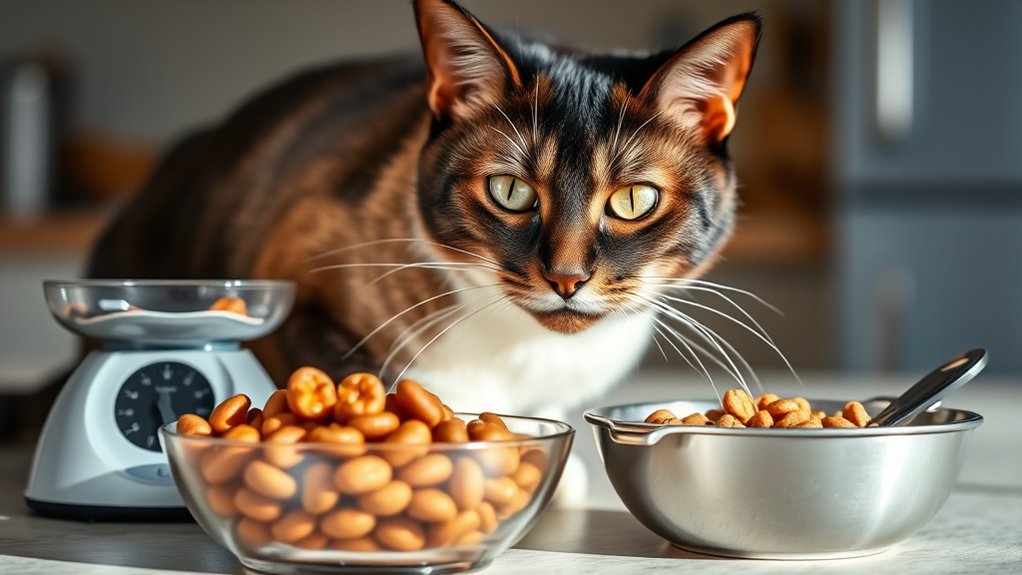
You’ll want to tweak your cat’s wet food portions depending on how active they’re and their age.
For example, kittens and nursing cats need a lot more calories because they’re growing or producing milk.
On the other hand, older cats or those who aren’t very active usually need less food to keep a healthy weight.
Knowing these differences makes it easier to give your cat just the right amount of nutrition for their growth, energy, and overall health.
Activity Level Impact
When adjusting wet food amounts, consider your cat’s activity level and age because these factors greatly influence their caloric needs. Active cats burn more energy and usually need 10-20% more wet food than less active ones to maintain their weight and wellbeing.
On the other hand, less active or senior cats often do better with smaller portions, up to 30% less, to avoid obesity and manage health problems. Spayed or neutered cats might also be less active and have slower metabolisms, so they typically need smaller wet food servings.
Keep an eye on your cat’s weight and energy levels regularly. If you notice changes in how active they are, adjust their wet food portions accordingly.
Tailoring their wet food intake based on activity level helps ensure your cat gets just the right amount of calories to stay healthy and energetic throughout their life.
Age-Based Calorie Needs
Adjusting wet food amounts means more than considering activity levels; your cat’s age plays a big role in figuring out calorie needs. Age-based calorie needs vary a lot. Kittens require about twice the calories of adult cats.
For example, a 5-pound kitten needs about 3.5 cans of wet food daily, while a lean adult cat of the same weight needs around 1.75 cans.
Adult cats usually need one 3-ounce can for every 3 to 3.5 pounds of body weight. That works out to 4–5 ounces daily for an 8–10 pound cat.
These differences come from their metabolic demands and growth needs. To feed your cat right, adjust portions based on their age.
Make sure kittens get enough calories to support rapid growth, and adult cats get enough maintenance nutrition without overfeeding.
Growth And Senior Care
Because your cat’s nutritional needs evolve with age and activity, tailoring wet food portions is essential for supporting healthy growth and managing senior care.
Kittens need about twice the calories of adult cats, roughly 3.5 cans daily for a 5-pound kitten. Pregnant or nursing cats require 25-50% more calories, sometimes up to four times an adult’s amount.
Senior cats, however, benefit from lower-calorie, highly digestible wet food due to decreased energy and potential health issues.
Adjust portions based on activity levels. Active cats burn more calories and need increased food intake compared to sedentary ones.
Regularly monitor your cat’s weight and health to recalibrate wet food amounts, ensuring ideal nutrition throughout all life stages.
This precision supports growth, maintains well-being, and accommodates the unique needs of senior cats and pregnant or nursing cats.
How to Use a Wet Food Feeding Chart
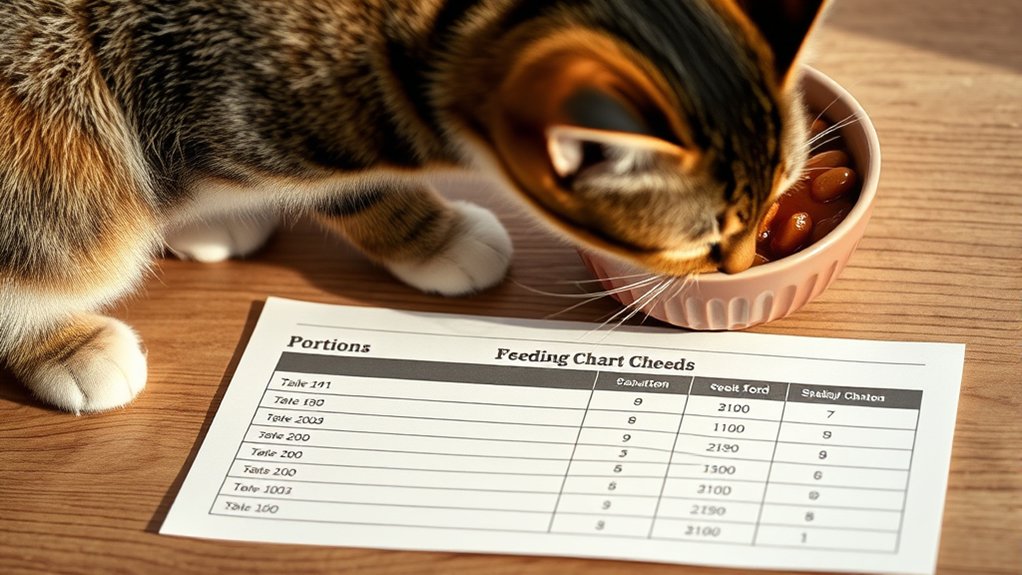
Although feeding charts provide a helpful starting point, you should tailor your cat’s wet food portions based on their weight, age, and activity level.
A wet food feeding chart typically recommends about 1 can (3 oz) per 3 to 3.5 pounds of an adult cat’s weight daily. But kittens and active cats need more, while spayed or neutered cats usually require up to 30% less.
To use the chart effectively, consult the specific brand’s guidelines to account for varying caloric content. Monitor your cat’s weight regularly and adjust the portions accordingly.
This approach guarantees personalized feeding that meets your cat’s unique nutritional needs, promoting health and preventing overfeeding or underfeeding.
Always view the chart as a flexible guide, not a strict rule.
How Often Should You Feed Your Cat Wet Food?
You should feed your cat wet food twice a day. This matches their natural eating habits and helps support their digestive health.
It’s a good idea to time their meals carefully. That way, you can prevent the food from spoiling and keep the portion sizes just right.
Also, offering several small meals throughout the day can be really helpful. It can aid in weight control and reduce stress, especially for cats that tend to overeat.
Ideal Feeding Frequency
How often should you feed your cat wet food to keep them healthy and satisfied? The ideal feeding frequency for adult cats typically involves two meals per day, reflecting their natural hunting patterns. Feeding wet food this way supports digestion and helps maintain energy levels.
If you feed wet food exclusively, dividing the daily amount into two or three smaller meals is a good idea. This prevents leftovers from sitting out too long because wet food shouldn’t be left unrefrigerated for more than two hours to avoid bacterial growth.
For kittens, more frequent feedings, three to four times daily, are necessary to meet their growth demands.
Establishing a consistent feeding routine not only guarantees proper nutrition but also strengthens your bond with your cat. It gives them a sense of security and structure in their daily life.
Meal Portion Timing
Feeding your cat wet food at appropriate times throughout the day supports their natural eating habits and overall health. For adult cats, meal portion timing generally involves two meals per day, aligning with feeding guidelines connected to their hunting instincts.
Kittens require more frequent feedings, three to four times daily, to meet their growth and energy needs. When combining wet and dry food, adjust the wet food per day accordingly to maintain balanced calorie intake.
Always avoid leaving wet food out for more than two hours to guarantee safety and freshness.
Monitor your cat’s appetite and activity levels closely. This helps you fine-tune meal portion timing and feeding frequency for ideal health and well-being.
Following these feeding guidelines guarantees your cat thrives on their wet food diet.
Benefits Of Multiple Meals
Offering your cat two to three smaller meals of wet food daily closely mimics their natural hunting patterns. This promotes better digestion and reduces food-related stress.
Feeding your cat wet food in multiple meals is really beneficial, as it supports healthier eating habits and lowers anxiety linked to food scarcity. Kittens may need more frequent meals because they have higher energy demands.
Splitting portions also helps prevent overeating and food spoilage. Plus, it makes feeding routines easier for both you and your cat.
| Feeding Frequency | Cat Type | Benefit |
|---|---|---|
| 2-3 meals daily | Adult Cats | Mimics hunting, aids digestion |
| 4 meals daily | Kittens | Supports rapid growth |
| 1-2 meals daily | Mixed Diet Cats | Reduces overeating, spoilage |
Multiple meals really make feeding your cat wet food more effective and comfortable.
How to Combine Wet and Dry Food for a Balanced Diet
Although wet and dry foods each have unique benefits, combining them can give your cat a balanced diet that supports hydration and dental health.
When combining wet and dry food, a common ratio is two-thirds wet food to one-third dry kibble. This mix enhances both palatability and nutritional variety.
Introduce this mix gradually over about ten days, starting with small amounts of wet food added to dry to prevent digestive upset.
Keep a close eye on total daily calories, aiming for around 4-5 ounces of wet food for an average adult cat. Always consult your veterinarian to tailor your cat’s diet based on age, weight, and health.
This approach guarantees your cat enjoys the best of both worlds in a well-rounded, balanced diet.
It’s all about giving them variety and making sure they stay happy and healthy.
Serving Wet Food: Temperature, Texture & Presentation
To get the most out of your cat’s wet food, pay close attention to its temperature, texture, and presentation. Cats prefer wet food served at room temperature because it enhances the flavor and aroma, making it more appealing. If the food is refrigerated, just warm it for about 15 minutes before serving to improve palatability.
Texture plays a vital role too. Offering varieties like pâté, chunks in gravy, or shredded meat caters to your cat’s preferences and keeps meals interesting. You can even mix wet food with dry kibble to provide diverse textures while supporting hydration and dental health.
Present wet food attractively in a clean bowl to encourage eating. Proper temperature and varied texture really help guarantee your cat enjoys every meal and receives peak nutrition.
How to Store Opened and Unopened Wet Cat Food Safely
You should store unopened cans of wet cat food in a cool, dark place to keep them fresh for up to two years.
It’s pretty simple—just find a spot like a pantry or cupboard away from heat and light.
Once you open the can, make sure to cover the food with an airtight lid and pop it in the fridge at or below 37°F.
Try to use it within three days to keep it safe and tasty for your cat.
Also, avoid leaving any leftover food out for more than two hours.
That way, you prevent spoilage and keep harmful bacteria from growing.
Storing Unopened Cans
When storing unopened cans of wet cat food, keep them in a cool, dark place like a pantry to preserve their quality. Properly storing unopened cans can extend their shelf life, which can be up to two years under ideal conditions.
Always check the expiration date before purchase and periodically while in storage to guarantee freshness.
Avoid exposing cans to heat or direct sunlight, as this can degrade the food and reduce its shelf life. Keep cans dry and avoid stacking them in a way that could cause damage or dents, which might compromise the seal.
By following these guidelines, you maintain the nutritional integrity of the wet food.
This way, you can be sure your cat receives safe and high-quality meals whenever you decide to open a can. It’s really about keeping things simple and making sure the food stays fresh until it’s time to serve.
Refrigerating Opened Food
Proper storage doesn’t end once you open a can of wet cat food. To keep the food fresh and safe, transfer the opened contents into an airtight container or use a specialized lid designed for cans.
Always refrigerate opened wet food at 37°F or below, limiting storage to a maximum of three days. This helps prevent spoilage and bacterial growth that could harm your cat.
Unopened cans, on the other hand, can be stored at room temperature in a cool, dark place for up to two years. Just make sure to check the expiration date before use.
After three days, toss out any unused opened food to keep your cat healthy. Following these refrigerating and storage guidelines ensures your pet gets the safest, freshest wet food possible.
Choosing High-Quality Wet Cat Food
Although many wet cat foods are available, choosing a high-quality option requires careful attention to nutritional labels and ingredient lists. You should look for products labeled “complete and balanced” to guarantee they meet your cat’s specific nutritional needs, especially the requirement for animal-based proteins.
Selecting wet cat food means checking labels for complete nutrition and prioritizing animal-based proteins.
Focus on wet foods that list high-quality ingredients, with real meat as the first component. Avoid those with fillers, artificial additives, or excessive carbohydrates.
Consider the caloric content, which can range widely, so you can tailor portions according to your cat’s weight and activity.
Texture also matters. Pâté, chunks, or shredded varieties can affect palatability and cater to dental health.
Always prioritize your cat’s preferences and consult a vet if specialized dietary needs arise.
Common Mistakes to Avoid When Feeding Wet Food to Your Cat
Selecting high-quality wet food is just the beginning of maintaining your cat’s health. One common mistake is to overfeed wet food, which can cause obesity and related health problems. Always provide the appropriate amount of food based on your cat’s age, weight, and activity level, following manufacturer guidelines.
Leaving wet food out too long increases the risk of urinary tract infections due to bacterial growth. So, make sure to discard uneaten portions after two hours.
Rapidly switching brands can upset your cat’s digestion. Instead, introduce new wet food gradually over 7-10 days.
Also, avoid giving excessive treats that disrupt your cat’s dietary balance. Keep an eye on your cat’s body condition regularly to make sure they maintain a healthy weight and energy level. This helps prevent unnoticed issues linked to overfeeding or poor nutrition.
Frequently Asked Questions
Can I Feed My Cat Only Wet Food Without Dry Food?
Yes, you can feed your cat only wet food.
Wet food has some great benefits like higher hydration levels and essential nutrients that support their overall health. It also helps prevent urinary issues.
You should feed wet food multiple times a day, depending on your cat’s size and activity level.
Just make sure the wet food is complete and balanced to meet all their nutritional needs.
Keep an eye on your cat’s weight and health while they’re on this diet to make sure they’re doing well and thriving.
How Do I Transition My Cat From Dry to Wet Food?
Did you know 75% of cats prefer wet food’s aroma over dry?
To shift your cat from dry to wet food, start with gradual changes. Mix 25% wet with 75% dry.
Increase the wet food by 10-25% every few days while watching your cat’s flavor preferences closely. Serve wet food at room temperature to make it more appealing.
Keep an eye on your cat’s behavior and weight. Adjust portions as needed to keep them healthy throughout the transition.
Are There Specific Wet Food Ingredients to Avoid for Cats?
Yes, you should avoid specific ingredient concerns in wet food, like artificial preservatives, colors, and flavors, which can harm your cat over time.
Watch out for wet food additives high in carbohydrates, especially grains, since they disrupt nutrition balance by lowering animal protein content.
Also, steer clear of by-products, excessive sodium, and low-quality fillers like corn and soy.
Prioritize high-quality protein to keep your cat healthy and thriving. It really makes a difference in their overall well-being.
Can Wet Food Cause Urinary Tract Issues in Cats?
Wet food generally supports feline urinary health by boosting moisture intake and improving hydration. This helps dilute urine and reduce urinary tract issues.
However, feeding wet food with inappropriate ingredients or high carbohydrate levels can mess with urinary pH and promote crystal formation.
To keep your cat’s urinary health in check, choose high-quality, high-protein wet food with balanced moisture content.
This way, you make sure it supports ideal feline hydration and lowers the risk of urinary tract problems.
How Long Can Wet Food Sit Out Before It Spoils?
You shouldn’t leave wet food out for more than two hours to prevent spoilage.
If it’s hotter than 90°F, limit wet food storage at room temperature to one hour. Stick to a consistent feeding schedule to avoid waste.
Always check for signs of spoilage like bad odors or texture changes before feeding leftovers.
If you notice any, discard the food immediately to keep your cat safe and healthy.
Conclusion
Feeding your cat the right amount of wet food isn’t just about filling a bowl. It’s about their health and happiness. You might think you know the perfect portion, but there’s more to reflect on: age, weight, activity, and even the food’s quality.
Miss these, and you could be risking their well-being. Ready to get it exactly right? Follow the guidelines carefully. The secret to your cat’s best life is in how you feed them every meal.