Can Cat Eat Corn – Is It Safe To Feed
You can safely give your cat small amounts of plain, cooked corn as an occasional treat. It shouldn’t replace a meat-based diet, though. Corn is non-toxic and offers some nutrients, but too much can cause digestive issues or allergies.
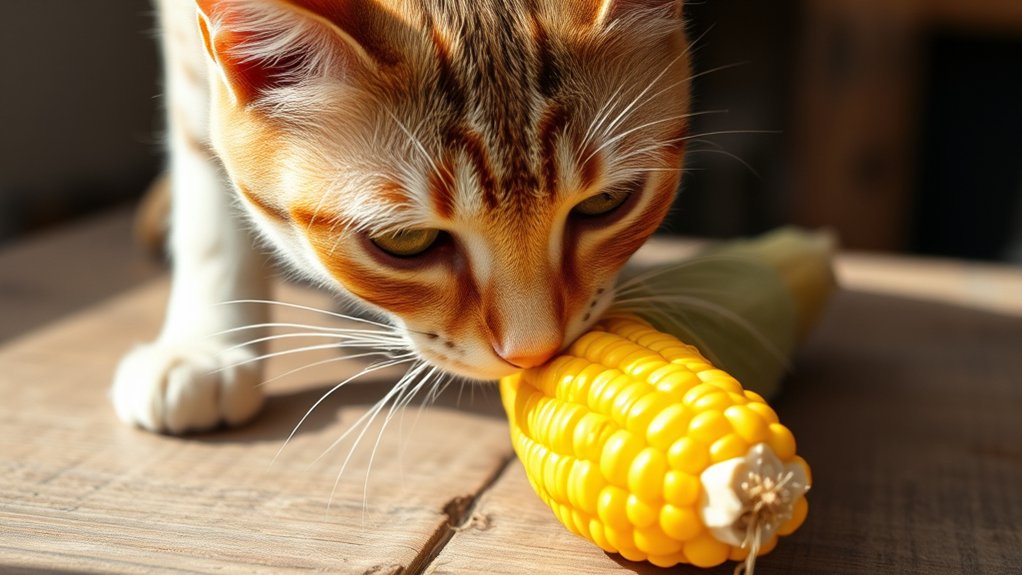
Always cook it thoroughly and avoid giving your cat corn on the cob. It’s best to limit the amount to less than one tablespoon weekly.
Keep an eye out for any signs of discomfort after feeding corn. If you want to provide the best nutrition, it’s important to understand corn’s role and consider safer alternatives.
Is Corn Safe for Cats to Eat?
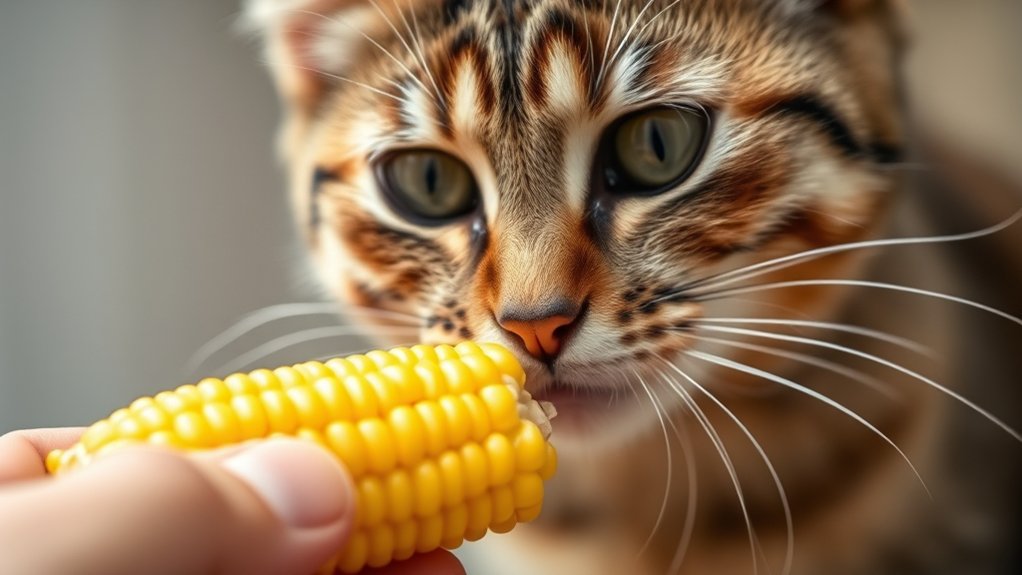
Although cats are obligate carnivores and rely primarily on meat for nutrition, you can safely offer them small amounts of plain, cooked corn as an occasional treat. Corn is non-toxic to cats and poses no immediate danger when fed properly.
However, it provides minimal nutritional value compared to the essential nutrients found in a meat-based diet. When feeding corn to your cat, guarantee it’s plain, cooked, and never served on the cob to avoid choking hazards.
Keep in mind that excessive corn can cause digestive issues like gas or bloating and contribute to weight gain due to its high carbohydrate content.
Also, cats can develop allergic reactions over time, so monitor for any signs of allergy when introducing corn into their diet.
Why Is Corn Used in Cat Food?
You’ll find corn in many cat foods mainly because it’s an affordable source of carbohydrates. It provides quick energy and also helps give the kibble its shape and texture.
While corn does offer some fiber, B vitamins, and linoleic acid, it doesn’t actually supply the essential nutrients that cats need to thrive.
Corn’s Role In Cat Food
Because corn provides a cost-effective source of carbohydrates, many cat food manufacturers include it to add quick energy and improve kibble texture.
When feeding corn in cat food, it’s important to remember that cats are obligate carnivores, meaning they rely primarily on animal-based proteins.
Corn offers limited nutritional value for cats, lacking essential proteins and nutrients they require. Processed corn is easier to digest, making it a common filler ingredient to keep costs down.
However, high-quality cat food should focus on meat proteins rather than corn.
Also, some cats may develop allergies to corn, so you should monitor your pet for any adverse reactions when feeding corn-based products.
Understanding corn’s role helps you make informed choices about your cat’s diet. It’s all about giving your furry friend the best nutrition possible.
Nutritional Benefits Of Corn
Corn remains a common ingredient in many cat foods because it provides a cost-effective source of calories and energy. While it’s not a primary nutrient source, corn products do offer some nutritional benefits to a cat’s diet. They supply dietary fiber, which helps digestion and adds texture to dry kibble.
Plus, corn contains small amounts of B-complex vitamins and essential fatty acids like linoleic acid. These aren’t critical since cats mainly rely on animal-based proteins for their best health.
Processed corn is digestible, but it should never replace meat protein as the main ingredient.
In cat food, corn mostly serves as a supplemental energy source and helps improve kibble structure. This supports balanced nutrition without taking away from the importance of animal-based nutrients in your cat’s diet.
What Nutritional Benefits Does Corn Offer Cats?
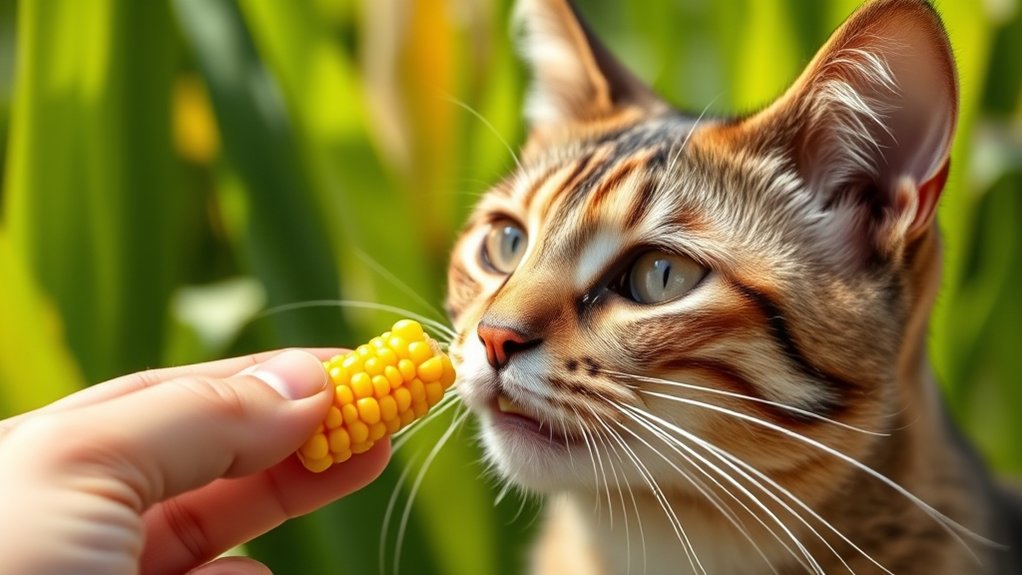
Although cats primarily thrive on meat-based nutrients, including small amounts of corn in their diet can offer some nutritional benefits.
Corn provides essential fatty acids that contribute to healthier skin and coat, enhancing your cat’s overall appearance. It also contains B-complex vitamins, which support metabolic processes and energy production.
The fiber in corn aids gastrointestinal health by promoting better digestion and regularity. Furthermore, antioxidants like beta-carotene and vitamin E in corn help combat oxidative stress, supporting overall wellness.
However, while corn has these advantages, its nutritional value is limited compared to the crucial protein and nutrients found in meat-based nutrients.
What Are the Risks of Feeding Corn to Cats?
You should know that feeding corn to your cat might cause allergies or sensitivities. This can lead to itchy skin or upset stomach.
Also, too much corn can cause digestive issues like gas or diarrhea. On top of that, it might contribute to unhealthy weight gain.
Allergy And Sensitivity
When you introduce corn into your cat’s diet, you should do so cautiously, as some felines may develop allergies or sensitivities. Corn can trigger allergic reactions like itchy skin and gastrointestinal upset. Digestive issues such as vomiting, gas, or diarrhea may occur if corn is not introduced gradually.
It’s important to monitor your cat for adverse reactions, especially if they have known sensitivities to grains. Avoid regular corn feeding to prevent potential allergy-related problems.
| Risk Type | Symptoms | Prevention |
|---|---|---|
| Allergy | Itchy skin, vomiting | Introduce corn gradually |
| Sensitivities | Gastrointestinal upset | Monitor for adverse reactions |
| Digestive Issues | Gas, bloating, diarrhea | Avoid frequent corn feeding |
Being cautious helps keep your cat safe and healthy.
Digestive And Weight Issues
Since cats have a limited ability to digest carbohydrates, feeding them corn can lead to digestive problems like gas, bloating, and diarrhea. This is especially true if corn is introduced too quickly or in large amounts.
When thinking about your cat’s diet, keep in mind that how much corn cats can handle varies. But too much corn might cause gastrointestinal issues and even weight gain. Feeding your cat large quantities of corn or corn-based cat food isn’t a great idea because it provides empty calories without essential nutrients, which could increase the risk of obesity.
To keep your cat safe, only offer small amounts of plain, cooked corn as an occasional treat—not as a regular part of their diet.
Also, avoid giving them corn cobs and husks since these can cause choking or blockages. Always focus on balanced nutrition that fits your cat’s carnivorous needs.
How Much Corn Can You Give Your Cat?
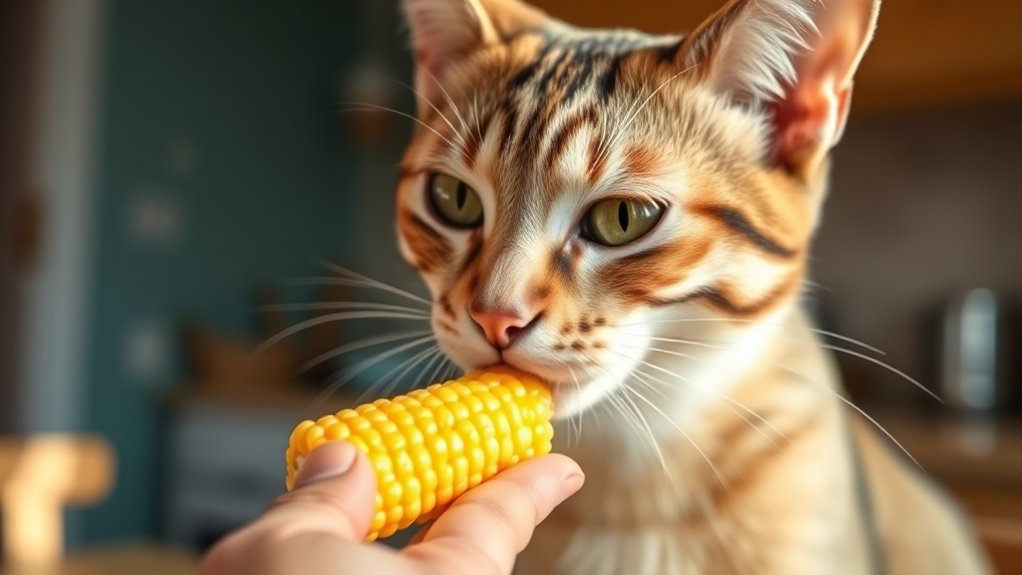
Limiting corn to less than one tablespoon of plain, cooked corn per week guarantees your cat enjoys this treat safely without risking nutritional imbalance. When feeding corn, make sure it stays under 10% of your cat’s daily caloric intake to avoid weight issues.
Start with small amounts and watch for any gastrointestinal reactions. Always serve cooked corn that’s free from additives. And never feed corn on the cob to prevent choking or blockages.
| Factor | Recommendation |
|---|---|
| Amount per week | Less than 1 tablespoon |
| Portion of daily diet | Under 10% of daily caloric intake |
| Feeding caution | Monitor for digestive issues |
How Should You Prepare Corn for Your Cat?
To prepare corn safely for your cat, cook it thoroughly to make it easier to digest and get rid of any harmful bacteria.
Always remove the kernels from the cob before serving because the cob can be a choking hazard and might cause blockages in their stomach.
Remove kernels from the cob to prevent choking and potential stomach blockages in your cat.
Make sure to serve only plain, cooked corn. Avoid adding any seasonings like butter or salt since those can upset your cat’s stomach or even be toxic.
It’s best to offer small amounts—less than one tablespoon of cooked corn per week—to keep your cat from gaining weight or having digestive issues.
When you add corn to your cat’s diet, do it slowly and watch out for any bad reactions like vomiting or diarrhea.
Taking these steps helps make sure corn stays a safe and occasional treat for your feline friend.
What to Do If Your Cat Has a Reaction to Corn?
If your cat shows signs of an allergic reaction such as itching, vomiting, or diarrhea after eating corn, stop feeding it immediately and monitor your pet closely.
Discontinue feeding corn and observe your cat for any unusual symptoms over the next 24 to 48 hours. Keep a detailed record of all foods consumed to help identify allergens.
If symptoms persist or worsen, consult your veterinarian promptly for professional advice and possible veterinary care.
In severe cases, such as difficulty breathing or swelling, seek emergency veterinary attention immediately. Your vet can recommend safe dietary alternatives to corn, ensuring your cat’s nutrition remains balanced without triggering allergic reactions.
Taking these steps helps protect your cat’s health and prevents future adverse reactions related to corn.
It’s always better to act quickly and keep a close eye on your furry friend. That way, you can make sure they stay happy and healthy.
What Are Healthier Treat Alternatives to Corn?
When your cat can’t tolerate corn or you want to avoid potential allergic reactions, choosing healthier treat options becomes important.
Opt for high-protein treats like plain, cooked lean meats such as chicken or turkey, which suit a cat’s carnivorous diet perfectly.
Fish, especially salmon, offers essential fatty acids along with protein, making it a nutritious alternative.
Cooked eggs also serve as a safe, protein-rich snack when given in moderation.
Incorporating fiber-rich vegetables like steamed broccoli, cooked sweet potatoes, or peas can provide variety without the risks associated with corn.
Moreover, commercial cat foods and cat treats formulated specifically for felines guarantee balanced nutrition tailored to their needs.
These healthier treat alternatives support your cat’s well-being while avoiding potential allergens.
It’s all about giving your furry friend the best while keeping them safe.
Frequently Asked Questions
Can Kittens Eat Corn Safely?
You can offer corn to kittens, but only in very small, plain, cooked amounts since kittens’ dietary needs prioritize protein over carbs.
Corn’s nutritional value is minimal and doesn’t meet kitten nutrition facts for growth. When introducing new foods, watch for kitten food allergies and digestive issues.
It’s best to focus on safe kitten treats and kitten food options designed for peak health.
Always consult your vet before adding corn or any new food. Better safe than sorry, right?
Just keep their diet balanced and protein-rich!
Is Canned Corn Safe for Cats?
Yes, canned corn is generally safe for cats if you follow proper corn preparation tips.
It offers limited canned corn benefits due to low corn nutritional value for felines.
Make sure to avoid corn toxicity risks by choosing plain, additive-free corn and feeding small portions.
Always respect your cat’s taste preferences and watch for any reactions.
Try to stick to feeding guidelines of less than one tablespoon weekly.
If you want something with better nutrition and safety, consider corn alternatives like pumpkin or green beans.
Can Corn Cause Allergies in Cats?
Wondering if corn can cause allergies in cats? Yes, it can trigger corn allergy symptoms like persistent scratching, hair loss, and corn skin reactions.
You should watch for corn digestive issues such as vomiting or diarrhea, especially since corn is a common ingredient in cat food.
While corn offers some nutritional value, its potential for corn pet allergies makes it a concern compared to other grains.
How Often Can Cats Have Corn Treats?
You should give your cat corn treats in moderation, ideally less than one tablespoon of cooked corn per week. This corn serving size provides some fiber and vitamins, adding mild corn nutritional value as a snack.
Use safe corn preparation methods, like plain and cooked only, to avoid additives.
While corn treat benefits exist, remember cats need mainly meat. If you want alternatives, try small amounts of pumpkin or peas, which suit their diet better.
Just keep it simple and always watch how your cat reacts to new treats.
Can Corn Help With Cat Digestion?
Yes, corn can help with cat digestion because it contains fiber that supports bowel regularity and helps prevent constipation. The fiber in corn acts like a natural digestive aid for your cat.
Corn also offers nutritional benefits that positively affect gut health.
But remember, cats mainly thrive on meat-based diets, so corn should only be a small part of their food.
Don’t fall for myths about corn and digestion. Its effects on the gut are mild and should be balanced when you consider corn versus other grains.
They can impact your cat’s system differently, so it’s good to keep that in mind.
Conclusion
You can cautiously consider corn as a crunchy complement to your cat’s cuisine, but always with care. While corn provides some nourishing nutrients, it’s essential to monitor your cat’s response to prevent potential problems. Prioritize portion control and proper preparation to protect your pet’s health.
When in doubt, choose safer, specialized snacks tailored to feline needs. Careful consideration and consistent caution create a confident, content cat with a clear, corn-conscious diet.