What Can I Put On My Cat For Dry Skin – Safe Home Remedies
You can soothe your cat’s dry skin with safe home remedies like applying a small amount of food-grade coconut oil or pure aloe vera gel to dry patches. Adding olive oil to their food boosts skin hydration with essential fatty acids. Omega-3 supplements support long-term skin health, while regular grooming helps spread natural oils.
Using a humidifier can ease dryness by increasing air moisture. If you want to explore effective ways to keep your cat’s skin healthy, there’s more to contemplate. Just take it one step at a time and see what works best for your furry friend.
How to Identify Dry Skin in Your Cat
Recognizing dry skin in your cat starts with observing changes in their behavior and coat. You’ll notice increased scratching or itchy skin, often accompanied by dandruff. These are white or gray flakes on their fur.
Pay attention to grooming habits. If your cat struggles to groom because of age or arthritis, dry skin and matting can develop. Healthy skin should feel clean and pliable, neither overly oily nor dry, without sores or lesions.
Environmental factors, like low humidity—especially in winter—can make dry skin worse. A greasy coat along with dryness might mean the oil isn’t balanced right. This could point to underlying health issues.
Watching for these signs of illness and changes will help you spot dry skin early. That way, your cat stays comfortable and healthy.
Choosing the Right Diet for Healthy Skin
You can support your cat’s skin health by feeding a diet rich in essential fatty acids and balanced nutrients.
Adding vet-recommended supplements, like omega-3s, is also a great idea because they help reduce inflammation and keep the skin moisturized.
It’s best to work with your vet to create the right nutritional plan that fits your cat’s specific skin needs.
Essential Fatty Acids
- Providing a balanced diet rich in essential fatty acids, including omega-3 and omega-6.
- Choosing commercial cat foods formulated with added omega fatty acids.
- Considering omega-3 fatty acid supplements like fish oil or flaxseed oil, introduced gradually.
- Consulting a veterinarian who can help tailor the diet to your cat’s unique needs.
A high-quality diet guarantees your cat gets the right ratio of fatty acids, which is crucial for healthy skin.
Always seek veterinary advice before adding supplements to avoid digestive issues and confirm proper dosage.
Balanced Nutrient Intake
Choosing the right diet plays a crucial role in maintaining your cat’s skin health and preventing dryness. A balanced diet rich in omega-3 fatty acids, like those found in fish oil, supports skin health by reducing inflammation and dryness.
Important fatty acids, especially omega-6, help maintain the skin barrier and prevent moisture loss. Incorporating wet food can boost hydration and provide essential nutrients often missing in dry kibble.
Be mindful of nutritional deficiencies; a lack of vitamins E and A can worsen dry skin issues. Providing a well-rounded diet guarantees your cat receives all necessary nutrients for overall health, supporting both skin and coat condition.
It’s a good idea to regularly review your cat’s diet. This way, you can address any specific needs and keep their skin healthy and comfortable.
Vet-Recommended Supplements
Beyond a balanced diet, incorporating vet-recommended supplements can greatly improve your cat’s skin health.
These supplements provide essential nutrients that boost skin hydration and overall cat health.
Here are four key components to take into account:
- Omega-3 Fatty Acids reduce inflammation and enhance skin hydration for a healthier coat.
- High-Quality Protein supports skin elasticity and prevents dryness by maintaining tissue health.
- Vitamin E acts as an antioxidant, protecting skin from oxidative stress that can cause dryness.
- Wet Food Inclusion improves hydration and delivers crucial nutrients directly through diet.
Always consult a veterinarian before adding supplements or changing your cat’s diet.
This helps guarantee safety and effectiveness tailored to your cat’s specific needs.
Adding Omega-3 Supplements for Skin Health
Adding omega-3 supplements can really help improve your cat’s dry skin by reducing inflammation and boosting moisture.
It’s a simple way to support their skin health.
But, it’s important to check with your vet first to get the right dosage.
Too much omega-3 can sometimes cause digestive issues, so a little guidance goes a long way.
You can easily add omega-3s to your cat’s diet in different forms—like liquids, soft chews, or mixed right into their food.
This makes it easy to keep their skin healthy over time.
Benefits Of Omega-3
While dry skin in cats can be frustrating to manage, incorporating omega-3 fatty acids into their diet can make a significant difference. These essential fats help reduce inflammation and boost your cat’s skin health by improving moisture content.
You’ll likely notice less dandruff and dry skin, leading to a softer, shinier cat’s fur. When choosing supplements like fish oil, always follow veterinary recommendations to guarantee safety and effectiveness.
Here are four key benefits of omega-3 for your cat’s skin:
- Reduces inflammation linked to dry skin
- Enhances moisture content, preventing irritation
- Decreases dandruff and flaky skin
- Supports overall skin and coat health
Adding omega-3 supplements is a reliable way to promote your cat’s comfort and well-being. It’s an easy addition that can really make a difference!
Dosage And Safety
To see the benefits of omega-3 supplements for your cat’s dry skin, you need to use the right dosage and prioritize safety. Omega-3 fatty acids support skin health by reducing inflammation and improving hydration. Typically, a dosage between 20 to 55 mg per kg of your cat’s body weight is recommended.
But always consult your veterinarian to tailor the amount specifically.
Many pet-formulated fish oil supplements come in liquid or capsule form, which guarantees safety and accurate dosing. When starting supplements, keep a close eye on your cat for any gastrointestinal upset or other adverse reactions.
Regular veterinary check-ups are essential to assess how well the supplements are working and to adjust the dosage if needed.
With proper monitoring and professional guidance, you can make sure your cat benefits safely from omega-3 supplements. It’s all about finding the right balance for your furry friend.
How to Use Safe Oils and Topical Remedies
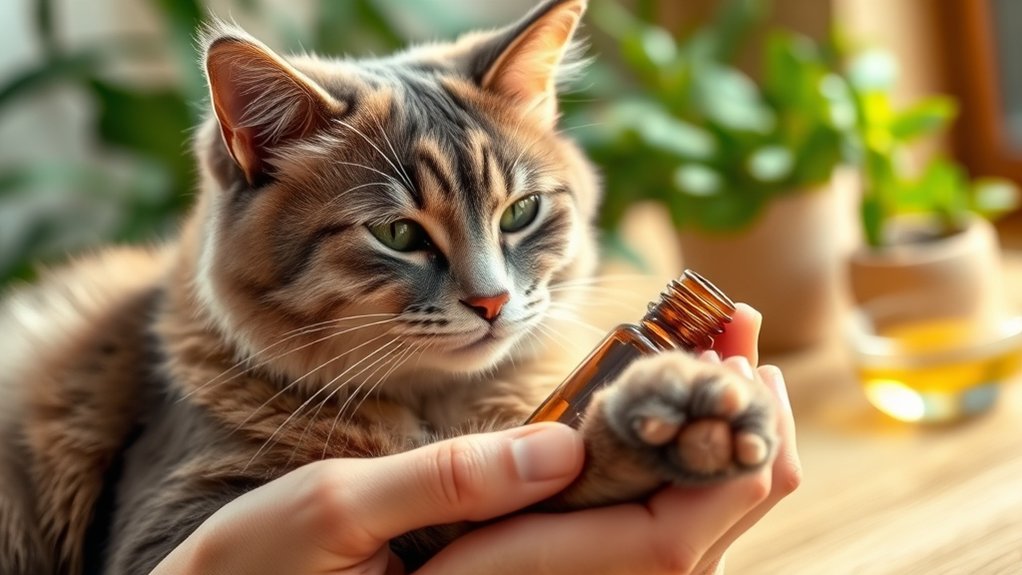
When you notice dry patches on your cat’s skin, applying a small amount of food-grade coconut oil directly can provide quick relief by moisturizing and soothing irritation.
To effectively use safe oils and topical treatments for dry skin in cats, follow these steps:
- Apply pure aloe vera gel to localized dry areas for its soothing and healing properties.
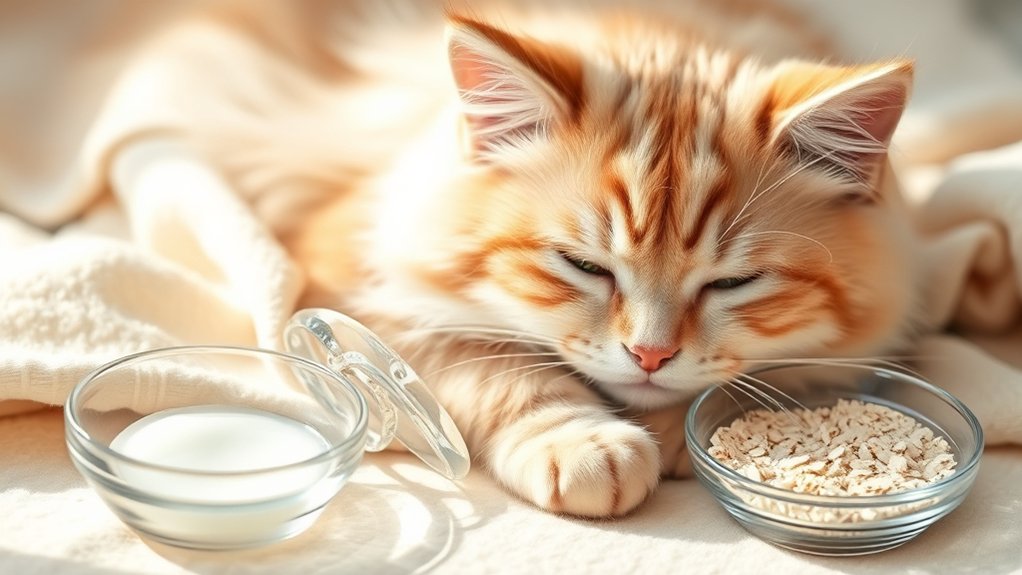
- Use oatmeal baths to lock in moisture and reduce skin inflammation.
- Add a teaspoon of olive oil to your cat’s food to boost skin hydration with essential fatty acids.
- Consider omega-3 and omega-6 supplements to improve skin health over time.
These remedies combine moisturizing properties and skin hydration to guarantee your cat’s comfort and promote healthy skin.
They’re simple to use and can make a big difference in how your cat feels.
Give them a try and see the improvement!
Grooming Regularly to Prevent Dry Skin
Alongside using safe oils and topical remedies, maintaining a regular grooming routine plays a key role in preventing dry skin in your cat. Grooming helps distribute natural oils evenly across their skin and coat, boosting moisture retention and supporting overall skin health.
For medium and long-haired cats, daily brushing is ideal, while short-haired breeds benefit from grooming at least weekly to remove dead skin cells and loose fur. Using tools like a slicker brush followed by a metal comb effectively reduces matting and irritation.
Regular grooming sessions also allow you to identify early signs of skin issues, so you can seek veterinary advice promptly if needed.
Using Humidifiers to Relieve Cat Dry Skin

Although indoor heating keeps your home warm during colder months, it often dries out the air. This can make your cat’s dry skin worse.
Using humidifiers helps increase moisture levels, creating an environment that can ease symptoms like scratching and flaking.
To help your cat’s skin health, try these steps:
- Place the humidifier in your cat’s favorite room. This way, they get consistent moisture where they spend most of their time.
- Keep humidity levels between 30% and 50%. This helps prevent skin irritation.
- Check and adjust the humidifier regularly to make sure moisture levels stay just right.
- Use the humidifier along with daily brushing. Brushing spreads natural oils and removes dead skin, giving extra relief.
Managing Stress to Reduce Dry Skin Flare-Ups
Since stress can trigger or worsen dry skin flare-ups in cats, managing your pet’s anxiety is essential for maintaining healthy skin. Establishing a consistent routine for feeding, playtime, and your cat’s grooming helps reduce stress and promotes skin health.
Providing cozy hiding spots and vertical spaces creates a safe environment, easing anxiety that may contribute to dry skin. Incorporate mental enrichment through interactive toys and regular play to keep your cat engaged and calm.
Using calming products like pheromone diffusers can further support a relaxed atmosphere. Stay mindful of any environmental changes, such as new pets or home renovations, and adjust your cat’s routine accordingly.
When to See a Vet Instead of Home Remedies
How do you know when your cat’s dry skin needs more than home remedies? Recognizing when to see a vet instead of trying things at home is really important for your pet’s health.
If your cat is showing severe itchiness and inflammation or if the dry skin just won’t go away despite your efforts, it’s definitely time to check in with a veterinarian. They can figure out what’s really going on, like food allergies or infections, and get your cat the right treatment.
Think about getting vet care sooner rather than later if you notice things like hair loss, skin lesions, or really bad itchiness.
Also, watch for excessive grooming or changes in your cat’s behavior. If your cat starts vomiting, has diarrhea, or changes its appetite along with dry skin, that’s a clear sign to see a vet.
And if you’ve tried home remedies like changing their diet or brushing more often but don’t see any improvement, it’s time to get professional help.
Putting your cat’s well-being first means knowing when to call in the pros for effective and safe treatment.
Frequently Asked Questions
Can Dry Skin in Cats Cause Hair Loss?
Yes, dry skin can cause hair loss in your cat. Causes like nutritional deficiencies, environmental factors, seasonal changes, skin infections, or parasite infestations often lead your cat to groom excessively, which can cause hair loss.
You can help by following cat grooming tips, managing stress, and making sure your cat stays properly hydrated.
Keeping these things in check can really improve your cat’s skin condition.
If the hair loss keeps happening, it’s a good idea to consult your vet. They can help rule out any underlying issues and keep your cat’s skin healthy and comfortable.
Are There Any Household Plants That Help Improve Cat Skin?
You can use Aloe Vera, Calendula Cream, and Chamomile Tea as gentle herbal infusions to soothe your cat’s dry skin safely.
Oatmeal baths also relieve irritation effectively.
Coconut Oil and Fish Oil provide nourishing moisture from the inside out.
Avoid Lavender and Neem Oil unless prescribed, as they might irritate your cat.
Always patch-test first and consult your vet before trying new remedies to guarantee your cat’s comfort and safety.
How Often Should I Bathe My Cat With Dry Skin?
You should limit cat bathing frequency to once every few months to avoid worsening dry skin causes. Use the best shampoos designed for hydration and pair baths with gentle grooming techniques to maintain skin health.
Try adjusting indoor humidity and consider environmental factors like weather effects to support your cat’s skin. It really helps to keep their skin comfortable and less flaky.
Incorporate hydrating foods into their diet, and follow skin health tips consistently.
If dryness persists, it’s a good idea to consult your vet for tailored care. They can provide advice specific to your cat’s needs.
Can Allergies Contribute to My Cat’s Dry Skin?
Yes, allergies cause dry skin in about 10% of cats. Allergy symptoms like itching and dandruff often result from skin irritants such as flea bites, food allergies, or environmental factors.
Seasonal changes and low humidity levels can make dryness worse. Grooming habits also play a role—they can either help or harm your cat’s skin.
It’s always best to seek veterinary advice to pinpoint the cause and manage symptoms effectively.
This way, you can keep your cat comfortable and maintain healthy skin all year round.
Is It Safe to Use Human Moisturizers on Cats?
You shouldn’t use human moisturizers on your cat because of risks like toxic ingredients and irritants. These products aren’t made for their sensitive skin, so it’s best to avoid them.
Instead, look for pet-specific products or natural oils like coconut or almond oil. These offer safe ways to keep your cat’s skin hydrated without causing harm.
Always follow moisturizing tips carefully and keep an eye out for any changes in your cat’s skin condition.
If you’re unsure, consult your veterinarian for hypoallergenic options that suit your cat’s needs. They can help make sure the ingredients are safe and effective.
Conclusion
Taking care of your cat’s dry skin is like tending to a delicate garden. It needs consistent attention and the right conditions to thrive.
By choosing a healthy diet, adding omega-3 supplements, using safe oils, and maintaining regular grooming, you’ll help keep your feline’s skin soft and comfortable. Don’t forget to manage stress and consider a humidifier.
If dryness persists, seeing a vet guarantees your cat gets the care they deserve.