Can Cats Have Coconut Oil – Benefits And Risks
You can give your cat small amounts of high-quality virgin coconut oil to help improve skin, coat health, and digestion, especially for hairball control. Use a pea-sized amount topically or start with 1/8 teaspoon orally. Just watch for any digestive upset or allergies.
Avoid coconut oil if your cat has pancreatitis, liver disease, or is overweight. It’s always best to check with your vet before starting. They can guide you on the right amount and whether it’s safe.
Take your time introducing coconut oil and pay attention to how your feline friend reacts. That way, you can spot any potential risks early and keep your cat happy and healthy.
What Is Coconut Oil and Why Cat Owners Use It
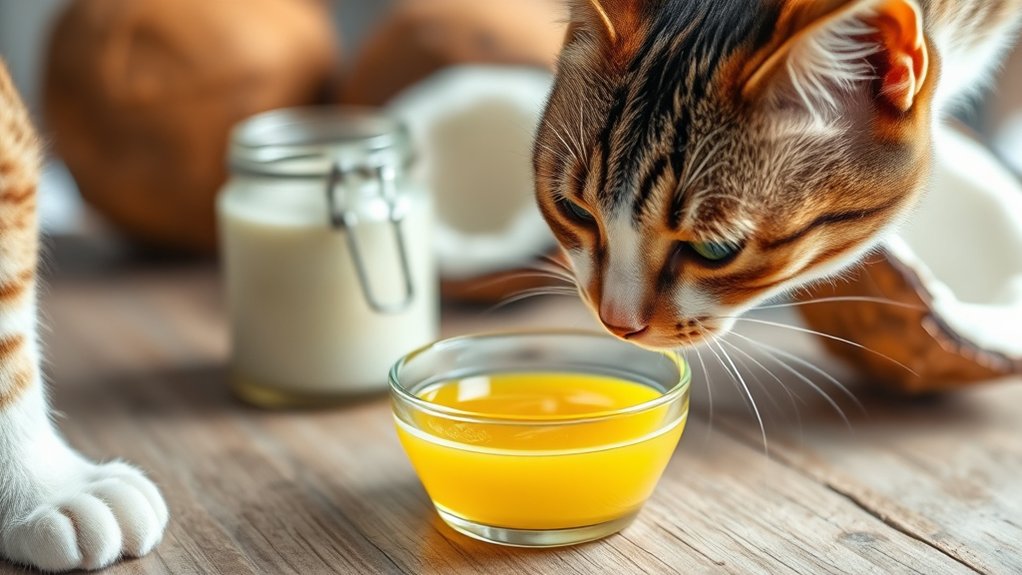
Coconut oil, derived from mature coconuts, contains medium-chain triglycerides (MCTs) and lauric acid that offer antimicrobial and anti-inflammatory benefits.
Many cat owners turn to coconut oil to support their pet’s skin and coat health, as it provides moisturizing effects that can soothe dry patches and boost shine.
Its antimicrobial properties also make it useful for addressing minor skin irritations.
Plus, coconut oil offers digestive support, potentially easing hairball formation by lubricating the digestive tract.
However, it’s essential to introduce coconut oil in small amounts to avoid digestive upset or weight gain.
Understanding these health benefits helps you make informed decisions about incorporating coconut oil responsibly into your cat’s routine for ideal wellness.
Is Coconut Oil Safe for Cats?
Many cat owners have found coconut oil helpful for improving their pet’s skin and digestive health, but you might wonder if it’s truly safe to use. Coconut oil is generally safe for cats when given in small amounts, such as starting with 1/8 teaspoon daily and increasing cautiously.
Its benefits include enhancing skin health by moisturizing and reducing mild irritation, especially when applied topically. However, you should use only high-quality coconut oil and seek veterinarian approval before introducing it, particularly if your cat has underlying health issues.
Overuse can cause digestive upset like diarrhea or vomiting due to its high-fat content. Always monitor reactions carefully to minimize risks.
Cats That Should Skip Coconut Oil
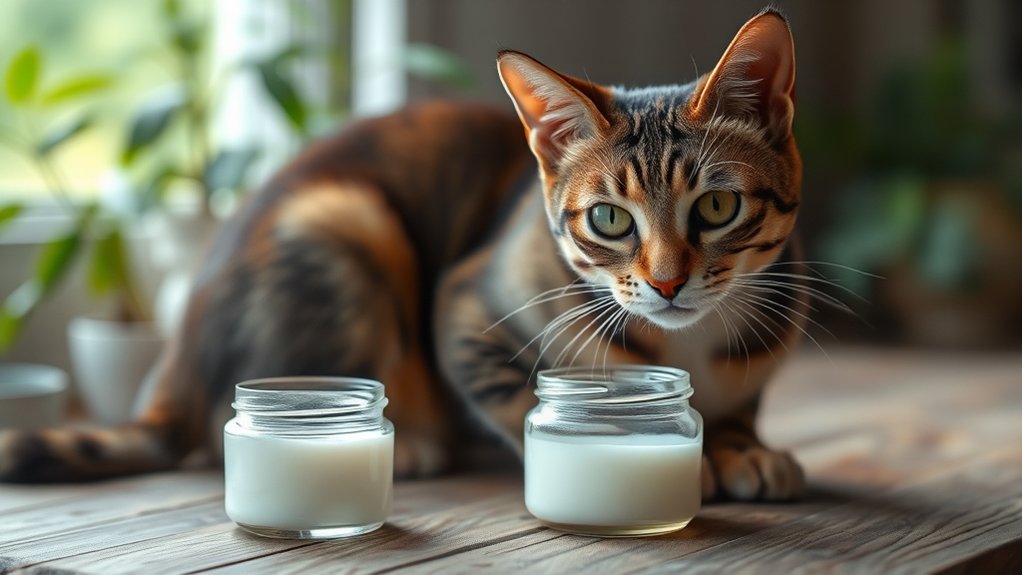
If your cat has medical conditions like pancreatitis or liver disease, it’s best to skip giving them coconut oil because of its high-fat content.
Cats dealing with obesity or sensitive stomachs might also have a tough time, experiencing things like weight gain or digestive upset.
Medical Conditions Contraindications
When your cat suffers from certain medical conditions, introducing coconut oil can do more harm than good. Coconut oil’s high-fat content poses contraindications for cats with pancreatitis, as it may trigger inflammation and worsen their condition.
If your cat has a sensitive stomach or chronic diarrhea, coconut oil can cause gastrointestinal upset like vomiting and diarrhea.
Cats with liver disease should avoid coconut oil since it might exacerbate their illness and lead to complications.
Moreover, obese cats or those on fat-restricted diets risk weight gain due to coconut oil’s calorie density, which can further impact their health.
Because of these risks, always consult your veterinarian before adding coconut oil to your cat’s routine, especially if they’ve pre-existing medical conditions.
Dietary And Digestive Restrictions
Because coconut oil contains a high concentration of fats and calories, cats with specific dietary and digestive sensitivities should skip it to prevent adverse effects. Cats with pancreatitis, sensitive stomachs, or liver disease risk worsening health due to coconut oil’s high-fat content.
Obese cats or those on fat-restricted diets may experience weight gain and gastrointestinal upset. Always consult a veterinarian before introducing coconut oil, especially if your cat has pre-existing conditions.
| Condition | Risk from Coconut Oil | Recommendation |
|---|---|---|
| Pancreatitis | Exacerbates due to fat content | Avoid coconut oil |
| Sensitive Stomachs | Causes vomiting, diarrhea | Skip coconut oil |
| Obesity | Leads to weight gain | Consult veterinarian first |
Top Benefits of Coconut Oil for Cats’ Skin and Coat
Coconut oil offers several benefits for your cat’s skin and coat by moisturizing dry areas, enhancing shine, and reducing flakiness. When you apply coconut oil topically, it helps to soothe dry skin and supports healing of minor irritations.
The lauric acid in coconut oil provides mild antimicrobial effects, which can combat superficial skin infections and reduce inflammation.
Regular use strengthens the skin barrier, especially in cats with allergic skin conditions, easing itching and discomfort.
By moisturizing effectively, coconut oil improves the overall coat texture and appearance, making it healthier and more vibrant.
Incorporating coconut oil into your cat’s grooming routine can be a natural, evidence-backed way to maintain skin integrity and promote a glossy, well-nourished coat.
It’s a simple addition that can make a noticeable difference.
Coconut Oil and Cat Hairball Reduction
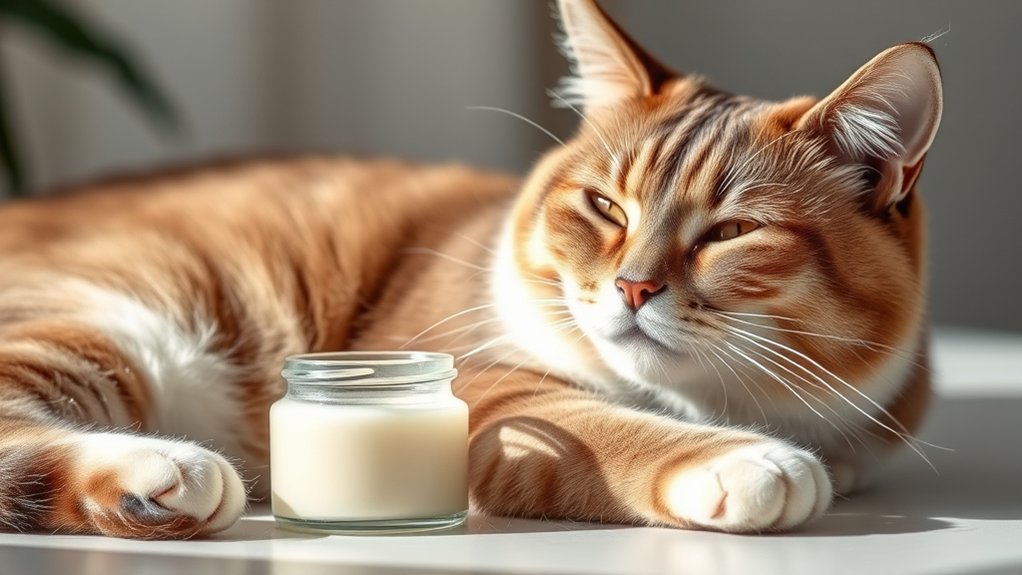
If your cat struggles with frequent hairballs, adding small amounts of coconut oil to their diet may help reduce the problem. Coconut oil acts as a natural lubricant, helping hair move smoothly through the digestive tract. The medium-chain triglycerides (MCTs) in coconut oil enhance digestion, supporting hairball reduction.
For best results, follow these steps:
- Start with 1/8 teaspoon of coconut oil daily to lubricate the digestive tract.
- Monitor your cat for any digestive upset before increasing the amount.
- Use coconut oil regularly as part of daily use to maintain digestive health.
- Combine with balanced nutrition and grooming for effective hairball management.
It’s pretty simple, really. Just keep an eye on how your cat reacts and make sure they’re getting a good diet along with regular grooming.
That way, you’re tackling hairballs from all angles!
Common Risks and Side Effects of Coconut Oil in Cats
While incorporating coconut oil into your cat’s routine can offer benefits like reducing hairballs, it’s important to be aware of potential risks and side effects. Coconut oil’s high caloric density can cause weight gain, especially in less active cats.
Gastrointestinal issues such as diarrhea, vomiting, and digestive disturbances may occur, particularly in cats with sensitive stomachs. Some cats experience adverse reactions, including allergic symptoms like itching or redness, which means you should consult your vet promptly.
Avoid coconut oil in cats with pancreatitis or liver disease, as it may worsen their condition.
| Risk | Details |
|---|---|
| Gastrointestinal Issues | Diarrhea, vomiting, abdominal pain |
| Weight Gain | Due to high caloric density |
| Allergic Reactions | Itching, redness, swelling |
| Health Conditions | Exacerbates pancreatitis, liver disease |
How Much Coconut Oil Is Safe for Cats?
How much coconut oil should you give your cat to guarantee safety and effectiveness? To keep coconut oil safe, start with a small amount and gradually increase. Here’s a clear guideline:
Begin feeding coconut oil orally at 1/8 teaspoon daily, watching for tolerance. If your cat shows no signs of gastrointestinal upset, you can increase the amount to 1/4 teaspoon. The general safe dose is about 1 teaspoon per 10 pounds of body weight.
For topical applications, use a pea-sized amount 1-2 times weekly to avoid a greasy coat. Always consult your veterinarian before using coconut oil, especially if your cat has health issues or risks weight gain.
Monitoring for gastrointestinal upset is essential. When used correctly, coconut oil may help improve your cat’s skin and coat health. Just remember to introduce it slowly and keep an eye on how your cat responds.
Safe Ways to Give Coconut Oil to Your Cat
Making sure your cat benefits from coconut oil starts with administering it safely and correctly. Begin with a small amount, about 1/8 teaspoon daily, and gradually increase to 1/4 teaspoon if your cat tolerates it well. Always keep an eye out for any digestive upset because some cats might react poorly.
For topical application, use a pea-sized amount of virgin coconut oil. Massage it gently into dry or irritated skin 1-2 times weekly to help improve skin health. Choose high-quality virgin coconut oil that’s free from additives to make sure it’s safe for your cat.
Before you start giving your cat coconut oil, check with your veterinarian, especially if your cat has health issues or special dietary needs.
After applying it on the skin, try to distract your cat to prevent excessive licking. This way, you can make sure the care is both safe and effective.
Safer Alternatives to Coconut Oil for Cats
If you’re looking for alternatives to coconut oil that offer targeted health benefits with fewer risks, several options stand out. Considering coconut oil risks like high calories and digestive issues, these safer alternatives support your cat’s health without compromise.
First up, fish oil is rich in omega-3s. It helps reduce inflammation and promotes joint and skin health.
Then there’s pumpkin puree, which is high in fiber and aids digestion. It also naturally decreases hairballs.
Olive oil provides healthy fats and antioxidants. It improves coat condition but has lighter fat content compared to coconut oil.
You might also consider commercial hairball remedies and probiotics. These effectively address digestive issues and hairball control, tailored to your cat’s nutritional needs.
Choosing these safer alternatives helps maintain your cat’s well-being while minimizing potential side effects linked to coconut oil.
It’s all about keeping your feline friend happy and healthy without the extra risks.
When to Contact Your Veterinarian About Coconut Oil Use
If your cat starts vomiting, has diarrhea, or shows any allergic reactions after using coconut oil, you should reach out to your veterinarian right away.
It’s important to keep an eye on these signs and act quickly.
Also, if your cat already has health issues like pancreatitis, liver disease, or is overweight, it’s a good idea to talk to your vet before giving them coconut oil.
Getting professional advice beforehand can help make sure the coconut oil won’t cause any problems or make things worse for your furry friend.
Signs of Adverse Reactions
Although coconut oil can offer health benefits for cats, you need to watch closely for signs that your pet might be having an adverse reaction.
Monitoring your cat after introducing coconut oil is essential to guarantee their safety and well-being.
Be alert for these signs of adverse reactions:
- Gastrointestinal issues such as vomiting, diarrhea, or greasy stools.
- Allergic reactions, including itching, redness, or swelling of the skin.
- Sudden decrease in appetite or lethargy.
- Unexplained weight gain due to excessive use.
If you notice any of these symptoms, seek veterinary advice promptly.
Early intervention can prevent complications and help you adjust or discontinue coconut oil safely for your cat’s health.
Preexisting Health Concerns
When your cat has preexisting health conditions, introducing coconut oil requires extra caution and professional guidance.
Cats with pancreatitis should avoid coconut oil because its high-fat content may worsen inflammation. If your cat has liver disease, coconut oil could strain liver function even more, which is risky.
Also, obese cats or those on fat-restricted diets might gain unwanted weight since coconut oil is calorie-dense.
Cats with sensitive stomachs or chronic diarrhea might experience gastrointestinal upset like vomiting or diarrhea from coconut oil.
So, given these risks, it’s really important to talk to your veterinarian before adding coconut oil to your cat’s diet, especially if they’ve health concerns.
Your vet can help make sure coconut oil is safe and appropriate, keeping your cat’s health protected.
It’s always better to be safe and get professional advice when it comes to your furry friend’s diet.
Frequently Asked Questions
Can Coconut Oil Help With a Cat’s Dental Health?
Yes, coconut oil can support your cat’s dental hygiene by leveraging its antibacterial properties to reduce plaque buildup and tartar.
Incorporating it into your cat’s oral care routine, either applied directly or in homemade dental treats, may boost gum health and complement cat toothpaste.
While it’s not a standalone solution, coconut oil serves as a holistic remedy to enhance dental care.
Always consult your vet to verify it suits your cat’s specific needs.
Does Coconut Oil Affect a Cat’s Urine Odor?
Coconut oil doesn’t directly change your cat’s urine odor, but it can influence hydration levels and diet impact, which may affect urine pH and odor changes.
Proper oil absorption supports feline digestion, reducing bacterial growth that causes odor.
However, excessive coconut oil dosage might upset digestion, altering urinary tract health and urine smell.
Can Coconut Oil Be Used to Repel Fleas on Cats?
You can use coconut oil as a natural remedy for flea prevention, but it’s not a guaranteed flea treatment. Its lauric acid may help repel fleas when applied carefully during cat grooming.
However, essential oils can cause allergic reactions or skin irritation. Always follow proper application methods and consult your veterinarian before use.
Combining coconut oil with proven flea control options guarantees better protection for your cat’s health and comfort.
It’s a good idea to be cautious and keep an eye on your cat’s reaction when trying new treatments. That way, you can make sure they stay safe and happy.
Is Coconut Oil Safe for Kittens Under Six Months?
Yes, coconut oil can be safe for kittens under six months if you follow vet recommendations closely.
Start with a very small coconut oil dosage to protect kittens’ digestive health and watch for allergic reactions.
Its skin absorption offers hydration benefits and acts as a grooming aid.
Plus, it may provide nutritional benefits like an energy boost and immune support.
Always consult your vet before adding coconut oil to your kitten’s routine.
It’s better to be safe and get professional advice tailored to your kitten’s needs.
How Should Coconut Oil Be Stored to Maintain Freshness?
To maintain coconut oil shelf life and quality, store it in airtight, proper storage containers like glass jars to avoid contamination.
Keep it in cool storage locations away from direct sunlight to prevent light exposure effects and temperature sensitivity that degrade coconut oil quality.
Make sure to seal containers well to avoid humidity impact. Organic coconut oil often lasts longer, so that’s something to keep in mind.
Also, watch for expiration signs like off smells or changes in texture, whether solid or liquid, to guarantee freshness.
It’s pretty easy to tell when it’s no longer good to use.
Conclusion
You might worry that coconut oil could upset your cat’s stomach, but when given in small amounts, it’s generally safe and can boost their skin and coat health. Just start with a tiny dose and watch for any reactions.
Remember, not every cat should have it, especially those with certain health issues. If you see any problems, contact your vet promptly to keep your furry friend happy and healthy.