Can My Cat Eat Cooked Chicken – Safe Feeding Guide
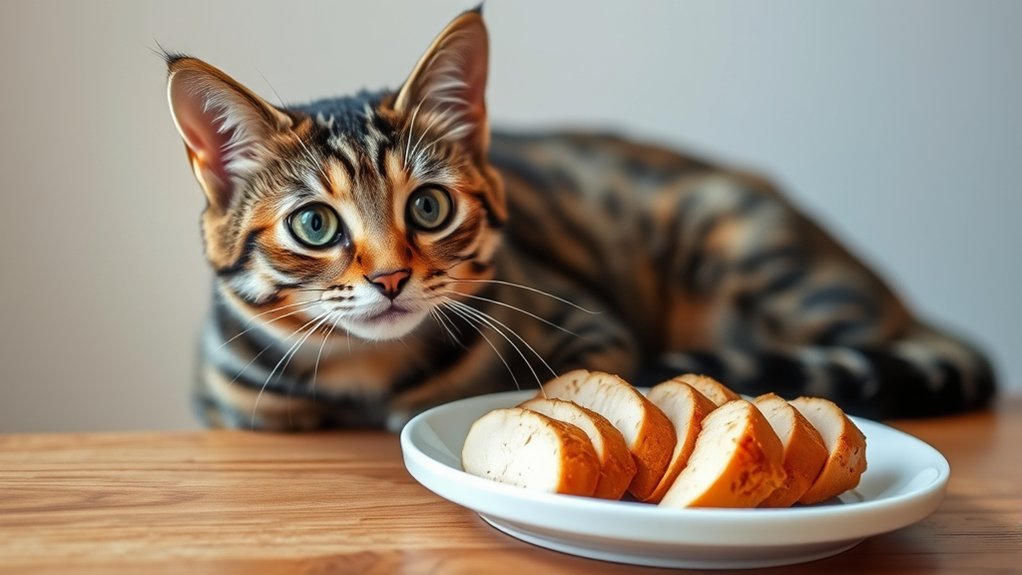
You can safely feed your cat cooked chicken as long as it’s plain. That means no spices, salt, oils, bones, or skin.
Cooked chicken offers high-quality protein and essential amino acids. These nutrients support your cat’s health when given in moderation, about 10% of their daily calories.
Avoid raw chicken because it poses bacterial risks. Also, keep an eye out for any digestive upset like vomiting or scratching.
If you want to know the best preparation methods and feeding tips for your cat’s safety and nutrition, keep exploring.
Is Cooked Chicken Safe for Cats?
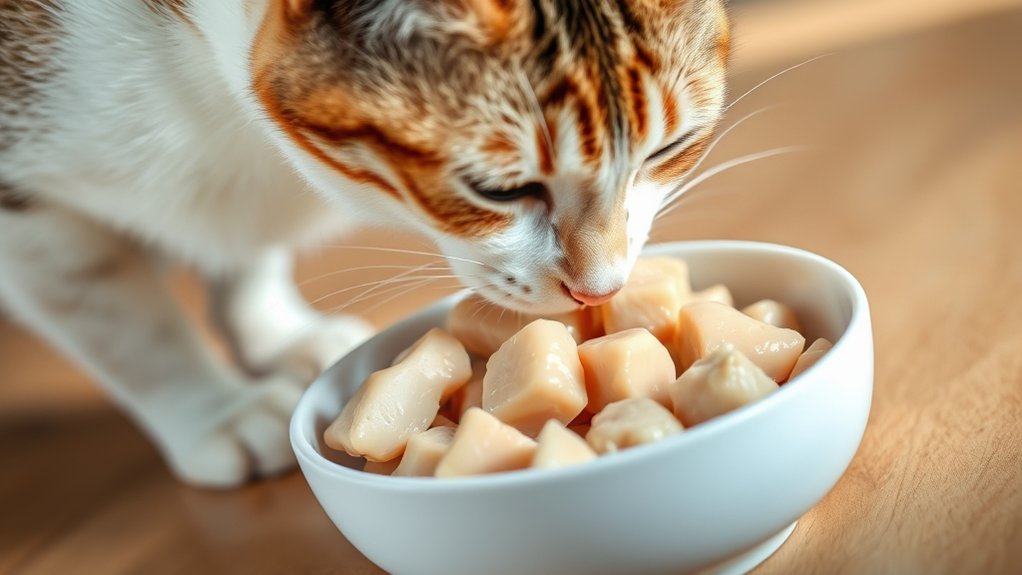
Wondering if cooked chicken is safe for your cat? Yes, cooked chicken is safe for cats as long as you prepare it without spices, salt, or oils, and always remove bones. It provides a high-quality protein source and essential amino acids that support your cat’s overall health.
However, chicken should only make up a small portion of their diet, ideally not exceeding 10% of their daily caloric intake. Feeding raw chicken poses health risks due to potential bacterial contamination, but fully cooked chicken eliminates these dangers.
Cats with sensitive stomachs often tolerate cooked chicken better, making it a suitable treat.
Preparing Chicken Safely for Your Cat
If you want to prepare chicken safely for your cat, the best way is to cook it by boiling or baking. Just make sure you don’t add any seasoning or additives.
Also, it’s really important to remove all the bones and skin before serving. This helps prevent choking and keeps your cat’s digestion happy.
And remember, avoid using spices, salt, or oils because these can be harmful to your furry friend. Keeping it simple is the safest way to go!
Cooking Methods To Use
Although chicken can be a healthy treat for your cat, you must prepare it carefully to avoid health risks. Always cook chicken thoroughly using boiling or baking to eliminate harmful bacteria. Avoid spices, oils, or seasonings to keep it safe for your cat.
Plain canned chicken and homemade chicken broth without additives are also good options. Remember to remove bones and skin before feeding chicken, but that’s covered in the next section.
| Cooking Method | Key Points |
|---|---|
| Boiling | Fully cooked, no additives |
| Baking | Thorough cooking, no seasoning |
| Plain Canned Chicken | Rinse to reduce sodium |
| Homemade Broth | No salt or harmful ingredients |
| Feeding Chicken | Always remove bones and skin |
Stick to these methods for safe, cooked chicken feeding.
Removing Bones And Skin
Since cooked chicken often contains small bones and fatty skin, you must remove both before offering it to your cat.
Removing bones is essential because they can splinter, posing serious choking risks or causing internal injuries.
Likewise, take off the skin to prevent digestive issues, as its high fat content can upset your cat’s stomach.
Always make sure the cooked chicken is prepared thoroughly to eliminate harmful bacteria, promoting safe feeding.
Cut the chicken into small, manageable pieces to further reduce choking risks and make it easier for your cat to eat.
Avoiding Harmful Additives
When preparing chicken for your cat, you have to avoid any spices, oils, or additives that could upset their digestive system. Cooked chicken should be plain to keep it safe for your furry friend.
Here’s how to avoid harmful additives:
- Always bake or boil chicken without spices or oils.
- Remove all bones and skin because bones can splinter and skin has fats that aren’t good for cats.
- For canned chicken, pick plain types and rinse them well to cut down on sodium.
- Stay away from fried or processed chicken like nuggets since they often have harmful fats and spices.
Which Forms of Chicken Are Best for Cats
You should stick to cooked, unseasoned chicken, like boiled or baked breast, to keep your cat healthy.
It’s best to avoid processed options like fried chicken or nuggets because they contain harmful fats and spices.
Also, always make sure to remove bones and skin before feeding your cat to prevent any risks.
Cooked Chicken Options
Although many forms of cooked chicken can be safe for your cat, choosing the right type is essential to guarantee their health. When you feed a cat cooked chicken, opt for plain, unseasoned options that provide high-quality protein without harmful additives.
Here are four good choices:
- Boiled or baked chicken breasts. They’re lean, rich in protein, and low in salt.
- Canned chicken. Offer it in moderation and rinse well to reduce sodium.
- Boneless wings. These add some texture variety, but keep portions small.
- Homemade chicken broth. Make sure it’s low in salt; it adds hydration and healthy fats.
Stick to these options to make sure your cat enjoys the benefits of cooked chicken safely and healthily.
Avoid processed or seasoned varieties to protect your cat’s well-being.
Avoid Processed Chicken
Three key rules help you choose the best chicken for your cat: avoid processed products, remove the skin, and serve only fully cooked meat. Processed chicken like nuggets or fried chicken contains harmful additives and fats that can upset your cat’s digestion and health.
Instead, offer fresh, cooked chicken without seasoning to provide safe, lean protein essential for your cat’s diet. While canned chicken can be used occasionally, make sure it’s plain and rinsed to minimize sodium.
| Chicken Type | Safe for Cats? | Notes |
|---|---|---|
| Processed (nuggets, fried) | No | Contains harmful additives |
| Fresh, cooked | Yes | Best source of lean protein |
| Canned (plain) | Yes (moderate) | Rinse to reduce sodium |
Chicken Bones: Why They’re Dangerous for Cats
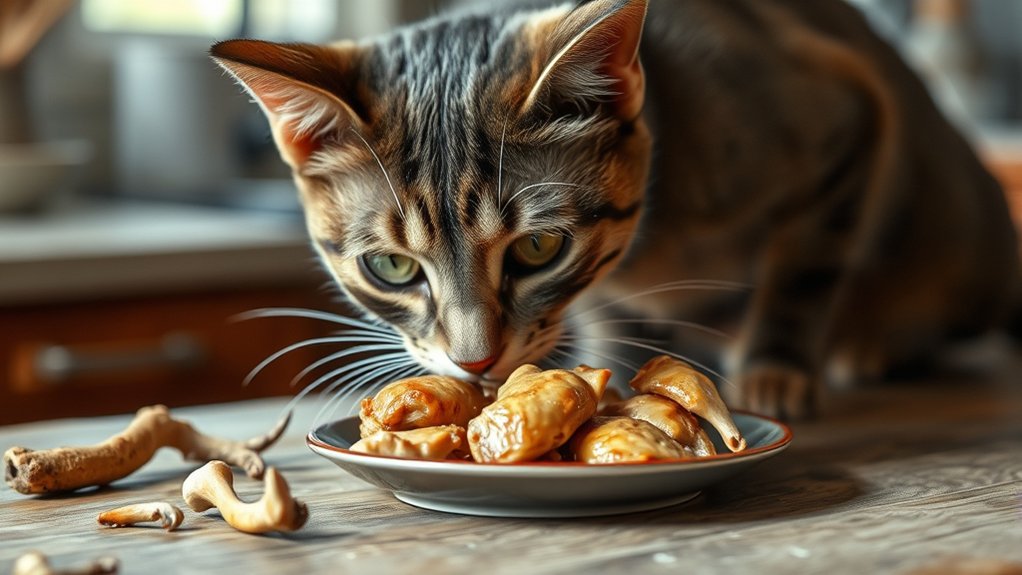
Because chicken bones can easily splinter, they pose a serious choking hazard to cats. Whether you’re feeding raw or properly cooked chicken, you must remove all bones to prevent harm.
Chicken bones are a dangerous part of the bird that can cause several problems. For example, choking hazards from small, sharp splinters lodged in the throat.
They can also cause mouth and throat injuries due to jagged bone fragments. Plus, intestinal blockages are a risk, and these may require emergency surgery.
Internal punctures or tears can happen from sharp bone edges, too. So, never feed your cat chicken bones, no matter how they’re prepared.
Always double-check that the chicken is boneless to keep your feline safe. Removing all bones takes away the risk of choking and blockages, making mealtime safe and enjoyable for your cat.
Raw vs. Cooked Chicken: What’s Safer?
When deciding between raw and cooked chicken for your cat, safety should be your top priority. Cooked chicken is a safe protein option because cooking eliminates bacteria and parasites like Salmonella and E. coli. Raw chicken, however, carries health risks due to possible contamination and parasites, posing dangers to both your cat and you.
Always avoid bones and skin to prevent choking hazards. This concise feeding guide highlights the key differences:
| Aspect | Raw Chicken |
|---|---|
| Bacteria & Parasites | High risk |
| Health Risks | Significant |
| Safe Protein Option | No |
| Choking Hazards | Bones and skin present |
| Recommendation | Avoid due to safety concerns |
Cooked chicken is the safer choice for your feline’s diet. It’s just better all around when it comes to keeping your furry friend healthy.
How Much Cooked Chicken Can Your Cat Eat Daily
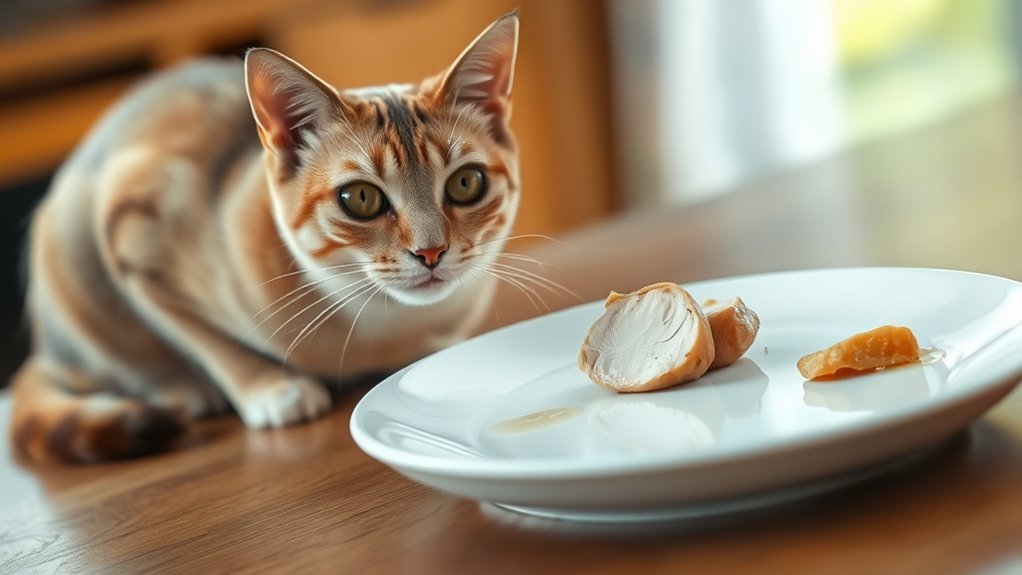
Now that you know cooked chicken is a safer protein choice for your cat, it’s important to understand the appropriate daily amount to feed.
Cat owners should practice portion control to maintain nutritional balance and avoid upsetting your cat’s digestive system.
Here’s how much cooked chicken you can safely offer daily:
- Kittens under 6 months: up to 2 teaspoons as a diet supplement.
- Cats over 6 months: up to 2 tablespoons without exceeding caloric intake.
- Treats, including cooked chicken, shouldn’t exceed 10% of daily calories.
- Always prepare chicken without spices, bones, or skin to protect essential nutrients and avoid harm.
How to Tell If Chicken Upsets Your Cat
How can you tell if cooked chicken isn’t agreeing with your cat? Watch for signs of digestive upset, such as vomiting or diarrhea, after feeding chicken.
Changes in appetite or lethargy can also indicate discomfort. Be alert to allergic reactions like excessive scratching or skin irritations. These signs suggest chicken mightn’t suit your cat’s system.
Watch for appetite changes, lethargy, or allergic reactions like scratching—these may signal chicken isn’t right for your cat.
Monitor portion sizes carefully. Overfeeding your cat can cause digestive issues. Cooked chicken should make up no more than 10% of their daily caloric intake to avoid gastrointestinal problems.
If your cat consistently shows signs of distress or discomfort after eating chicken, consult your veterinarian promptly. They can provide tailored advice to guarantee your cat’s diet remains safe and balanced.
How to Add Chicken to Your Cat’s Balanced Diet
Although cooked chicken can be a healthy addition to your cat’s diet, you must prepare it carefully to avoid health risks. To safely add chicken to your cat’s balanced diet, follow these steps:
- Cook chicken plain, with no spices, salt, or skin to keep it safe and nutritious.
- Limit chicken to 10% of your cat’s daily calories, which is roughly 2 tablespoons for adults and 2 teaspoons for kittens under six months.
- Introduce chicken gradually so you can monitor how your cat tolerates it, especially if they’ve dietary restrictions.
- Always feed boneless chicken as a protein supplement alongside high-quality commercial cat food. This helps provide essential amino acids and taurine.
Frequently Asked Questions
Can Cooked Chicken Cause Allergies in Cats?
Yes, cooked chicken can cause cat food allergies since it’s one of the common allergens.
You should watch for symptoms like itching, digestive upset, or ear infections. If you notice these, testing for allergies is essential.
Managing allergies involves vet consultation importance to adjust diets and consider alternative protein sources.
Following allergy management tips helps keep your cat comfortable and healthy while avoiding trigger foods.
Is Seasoned Chicken Harmful to Cats?
You might think seasoning your cat’s chicken adds a gourmet touch, but seasoning effects can quickly turn dangerous. Flavor additives like garlic and onion pose serious chicken toxicity risks, causing anemia and other health issues.
Cats face spice sensitivities that lead to vomiting and diarrhea. Avoiding onion dangers and garlic risks is essential, as these common seasonings have severe health implications.
Stick to plain, cooked chicken to keep your feline safe and healthy. It’s really best to keep it simple when it comes to feeding your cat.
Can Kittens Eat Cooked Chicken Safely?
Yes, kittens can safely eat cooked chicken as a protein source, but it should be boneless, skinless, and unseasoned.
When introducing foods, start gradually to monitor kitten preferences and any reactions.
Cooked chicken offers dietary variety and complements kitten nutrition without replacing balanced kitten food.
Always prioritize safe feeding practices.
And don’t forget to consult your vet to make sure this addition supports your kitten’s overall health and growth effectively.
How Long Can Cooked Chicken Be Stored for Cats?
You probably don’t want your cat dining on chicken that’s auditioning for a science experiment.
Cooked chicken stays safe in your fridge for 3-4 days. So, practice safe refrigeration, please.
Freeze extras up to 4 months using proper freezing methods. Always watch for signs of spoilage like smell or texture changes.
It’s important to manage portion sizes and feeding frequency to avoid waste.
Follow these storage tips to keep your kitty’s meals fresh and safe. Your cat will thank you!
Can Cooked Chicken Help With a Cat’s Urinary Health?
Yes, cooked chicken can help support your cat’s urinary health. As a lean protein source, it aids muscle repair and reduces inflammation in the urinary tract.
Its moisture content provides hydration benefits, which are vital for preventing urinary issues.
That said, you should keep the diet balanced by combining chicken with commercial food.
Also, make sure to monitor feeding frequency so you don’t overfeed your cat. This way, your cat gets essential nutrients while promoting urinary tract health effectively.
Conclusion
You can safely feed your cat cooked chicken by following the right preparation steps and portion sizes. Remember, an ounce of prevention is worth a pound of cure. Avoiding bones and seasoning keeps your cat safe from harm.
Keep an eye on their reaction to new foods. Always balance chicken with a complete diet. With proper care, cooked chicken can be a healthy, tasty addition to your cat’s meals without risk.