Can Cats Eat Cherries – Risks And Safety Advice
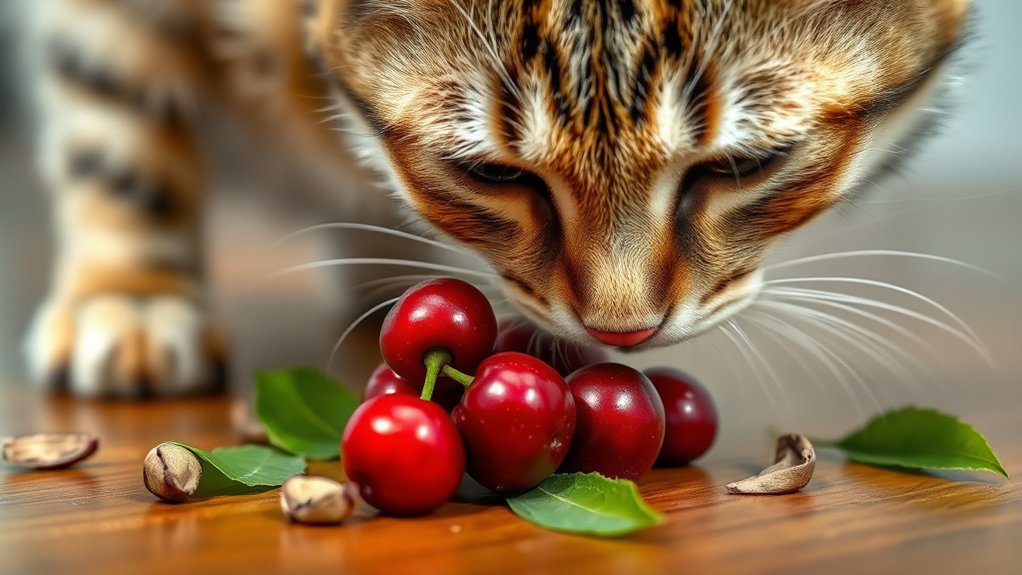
You shouldn’t let your cat eat cherries because all parts, like pits, stems, leaves, and flesh, contain toxic cyanogenic compounds. These can cause vomiting, seizures, or even worse.
Cherry pits and stems also pose choking and blockage risks. Even processed cherry products aren’t safe since they have added sugars and other additives.
If your cat eats cherries, act fast and consult your vet immediately. Knowing the symptoms, safe fruit substitutes, and prevention tips can really help keep your cat safe and healthy.
Can Cats Eat Cherries Safely?
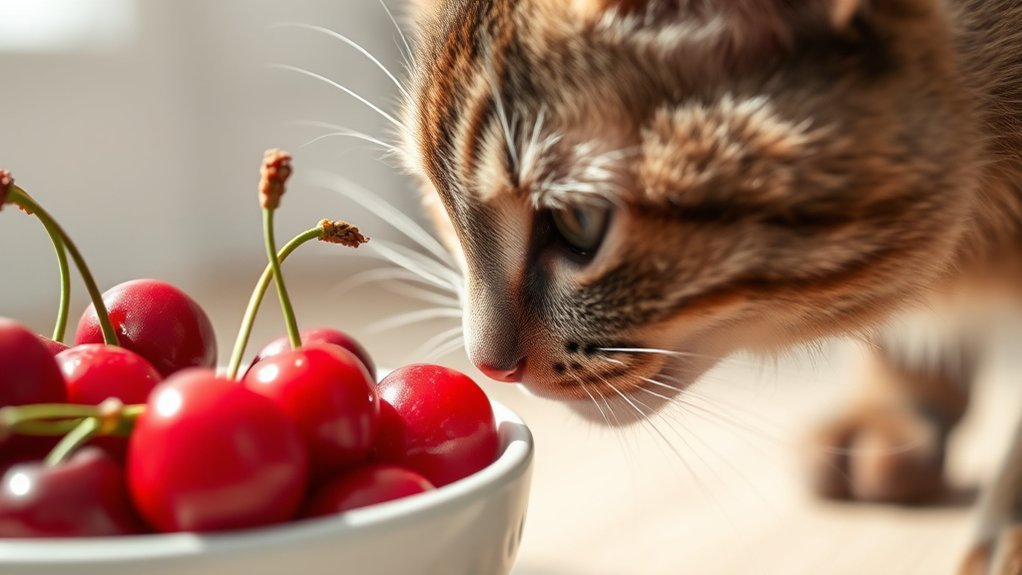
Although cherries might seem like a harmless treat, you should avoid giving them to your cat because their pits, stems, and leaves contain cyanogenic glycosides that can release toxic cyanide.
You may wonder, can cats eat cherries safely? The answer is no, as cherries are toxic to cats.
Even the fleshy part of the cherry poses some risk, and cherry poisoning can lead to serious health issues.
While cherries offer some health benefits to humans, cats don’t need them in their diet since they’re obligate carnivores.
If your cat ingests any part of the cherry, seek immediate veterinary advice.
It’s best to keep cherries away from your feline friend to protect their health and prevent potential poisoning.
Why Cherries Are Dangerous for Cats
Understanding why cherries pose a danger to your cat helps explain why you should never offer them as a treat. Cherries are toxic because they contain cyanogenic glycosides, compounds that release cyanide when digested. This creates serious risks to your cat’s health, including vomiting, difficulty breathing, and even seizures.
Cherries contain cyanide-releasing compounds that can cause severe health issues in cats, including vomiting and seizures.
While many cat shows highlight the importance of natural diets, cherries remain a hazardous choice. Even small amounts of cherry flesh can upset your cat’s digestive system due to high sugar content.
To protect your feline friend, always avoid cherries in any form. Keeping cherries away from your cat is essential to prevent potentially fatal poisoning and guarantee their well-being.
Prioritizing safety means steering clear of any foods that pose such clear threats. It’s just not worth the risk!
Why Cherry Pits and Stems Are Dangerous for Cats
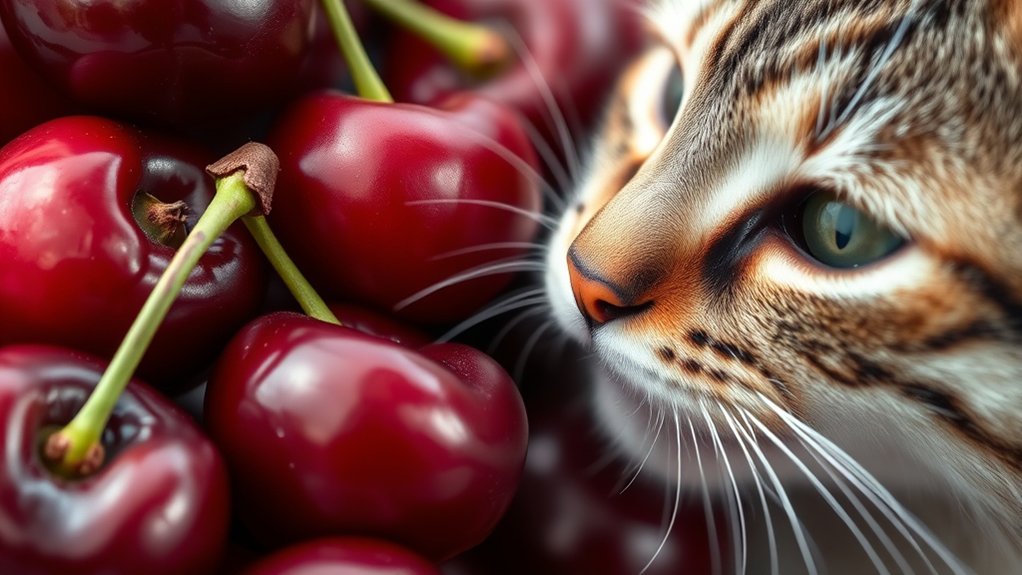
Because cherry pits and stems contain cyanogenic glycosides, they pose a serious toxicity risk to your cat when ingested. These compounds can convert to cyanide in your cat’s digestive system, making cherry pits highly toxic.
The highest concentration of these harmful substances is found in the pits and stems, so allowing cats to eat cherries without removing these parts is dangerous.
Beyond chemical toxicity, cherry pits also present a physical hazard. They can cause choking or intestinal blockages, both of which require immediate veterinary care.
Even small amounts of these cherry parts act as pet poison and increase the risk of cyanide poisoning.
To protect your cat’s health, always keep cherry pits and stems well out of reach. Avoid letting your cat eat cherries that contain them.
It’s better to be safe than sorry when it comes to your furry friend’s safety.
Signs of Cherry Poisoning in Cats
If your cat has eaten cherries, keep a close eye out for early signs like gagging, drooling, or pawing at the mouth.
You might notice your furry friend acting a bit off—maybe hiding more than usual or refusing to eat. These behavioral changes can show up within just a few hours.
But if things get worse, like your cat having trouble breathing or experiencing muscle spasms, that’s a serious red flag.
In those cases, you need to get your cat to a vet right away. Spotting these signs early can make all the difference in getting your cat the help it needs.
Early Symptoms Overview
When your cat shows signs like gagging, drooling, or pawing at its mouth within an hour of cherry exposure, these early symptoms can indicate poisoning. If your cat has eaten cherries, it’s critical to monitor them closely for any further signs of distress.
Early symptoms may also include vomiting, reluctance to eat their regular cat food, and hiding behaviors appearing within 1 to 6 hours. These signs can signal cyanide toxicity, which requires prompt attention.
Rapid breathing, weakness, red gums, and dilated pupils are additional indicators to watch for.
Because cherry poisoning can escalate quickly, you should seek immediate veterinary consultation if you notice any of these symptoms.
Acting swiftly can make a significant difference in your cat’s recovery and safety. So, don’t wait if you suspect something’s wrong—getting help right away is the best move.
Severe Toxicity Indicators
Recognizing severe toxicity indicators in cats after cherry ingestion can save your pet’s life. Cherries contain cyanide, which can cause serious poisoning. Symptoms like vomiting, diarrhea, and gastrointestinal upset often appear quickly.
More critical signs include red gums, dilated pupils, muscle spasms, seizures, and difficulty breathing. Weakness or collapse demands immediate veterinary attention. Watch your cat closely after any exposure.
| Symptom | Description | Urgency Level |
|---|---|---|
| Vomiting & Diarrhea | Gastrointestinal upset | Moderate |
| Muscle Spasms | Cyanide poisoning effect | High |
| Weakness/Collapse | Critical, life-threatening | Immediate action |
If you notice these symptoms, don’t wait—seek veterinary care right away to prevent severe harm.
Behavioral Changes Noted
Although cherry poisoning often triggers physical symptoms like vomiting and diarrhea, you should also watch for notable behavioral changes in your cat.
After ingestion, behavioral changes such as hiding, lethargy, and increased vocalization may indicate discomfort or pain. These symptoms, combined with refusal to eat, can be early signs of poisoning.
Monitoring your cat’s behavior closely after possible cherry ingestion is crucial for timely intervention.
If you notice rapid breathing, weakness, or muscle spasms, these could signal severe toxicity requiring immediate veterinary care.
Keep a close eye on litter box habits and general activity levels, as changes here can also suggest poisoning.
Prompt recognition of both physical and behavioral symptoms will help guarantee your cat receives the care needed to prevent serious complications.
Immediate Action After Cherry Ingestion
If your cat eats cherries, the first thing to do is figure out what parts they actually got into—was it the pits, stems, or just the fruit? This helps you understand how risky the situation might be.
Keep a close eye on your kitty for the next few hours. Look out for signs like vomiting or trouble breathing. These symptoms can be serious, so don’t ignore them.
As soon as you notice anything unusual, call your vet right away. Give them all the details about what your cat ate and how much, so they can guide you on what to do next.
Identify Cherry Parts Ingested
When your cat consumes cherries, pinpointing exactly which parts were ingested, whether it’s the flesh, pit, stem, or leaves, is essential because each carries different levels of risk.
The pits, stems, and leaves contain cyanogenic glycosides that can release toxic cyanide upon ingestion, posing serious health threats. While ripe cherry flesh is less toxic, it may still cause gastrointestinal upset.
Identifying the specific parts of the cherry your cat ate helps assess the potential danger and guides your next steps.
If your cat has consumed any non-flesh parts, seek immediate veterinary consultation to guarantee prompt treatment.
It’s also a good idea to keep a sample of the cherry parts ingested to assist the veterinarian in evaluating toxicity and determining the best course of action.
Monitor For Toxic Symptoms
After figuring out which parts of the cherry your cat has eaten, keep a close eye out for any signs of toxicity. When your cat eats a cherry, you need to watch for symptoms like vomiting, diarrhea, and trouble breathing, especially within the first hour after ingestion.
Make sure to note the type and amount of cherry your cat ate. This info will be really helpful if you have to call the vet. Avoid trying to make your cat vomit unless a professional tells you to, since that could make things worse.
| Symptom | Timeframe | Action |
|---|---|---|
| Vomiting | Within 1 hour | Monitor closely |
| Diarrhea | Within 1 hour | Keep a record |
| Difficulty Breathing | Within 1 hour | Contact a veterinarian |
| Weakness/Collapse | 6–24 hours | Urgent veterinary advice |
Contact Veterinarian Immediately
Because cherry ingestion can lead to serious toxicity, you should contact your veterinarian immediately for guidance.
If you suspect your cat has eaten cherries or parts of a cherry tree, quick action is essential to prevent cyanogenic glycosides poisoning.
Provide your vet with precise details about the type and amount of cherry involved in the accidental ingestion.
Monitor your cat closely for symptoms of toxicity such as vomiting, lethargy, or difficulty breathing, and report these promptly.
Do not attempt to induce vomiting unless your veterinarian advises it, as this could worsen the situation.
Since cats eat cherries only rarely, any exposure to cherry tree fruit or pits requires cautious attention and immediate veterinary consultation to guarantee your cat’s safety and prevent severe health complications.
Veterinary Care for Cherry Poisoning
If your cat consumes cherries, you should seek immediate veterinary care to evaluate the risk of poisoning and begin appropriate treatment.
If your cat eats cherries, get veterinary help immediately to assess poisoning risk and start treatment.
Prompt veterinary care is essential because cherry pits contain cyanogenic glycosides, which can release toxic cyanide.
During your veterinary visit, bring any cherry remnants with you. This helps the vet assess how much your cat was exposed to.
Watch for symptoms like vomiting, difficulty breathing, or signs of shock. These are serious and mean your cat needs urgent care.
The veterinarian might run blood tests to check cyanide levels and see how your cat is doing overall.
Acting quickly really improves your cat’s chances since cherry poisoning can become life-threatening fast without treatment.
Can Cats Eat Processed Cherry Products?
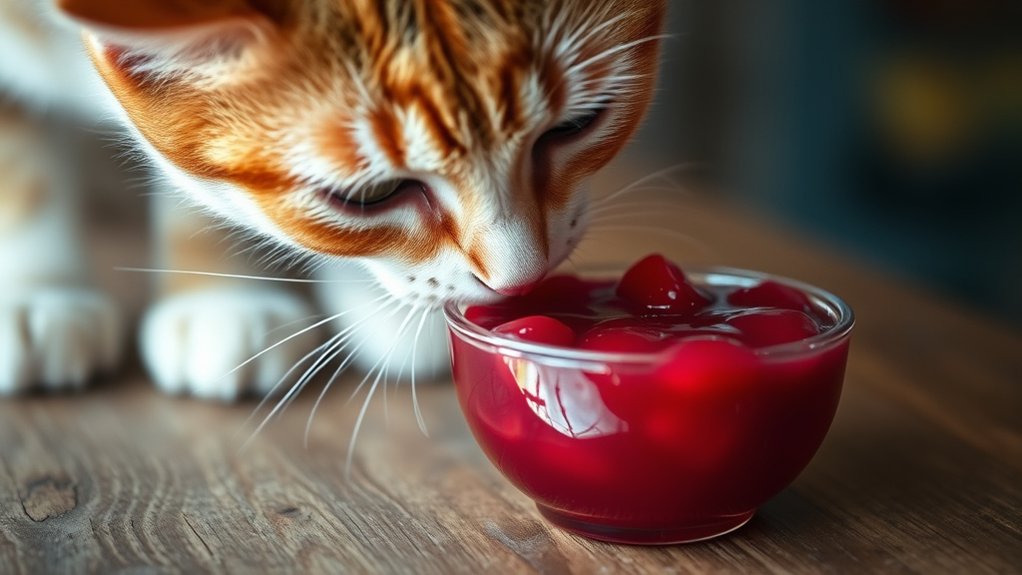
While processed cherry products might seem harmless, they pose several risks to your cat’s health. Cats should avoid these items due to their composition and potential dangers.
Processed cherry products, like jams, canned cherries, and maraschino cherries, contain:
- High sugar content, which can lead to stomach upset
- Artificial additives that irritate your cat’s system
- Small pieces of pits or stems increasing choking hazards
- Risk of cyanide exposure from leftover pits or stems
- No nutritional benefit, making them unnecessary treats
Even dried cherries aren’t recommended, as they still carry risks.
Feeding your cat processed cherry products can cause digestive distress and serious health issues. So, it’s best to keep these products out of reach to guarantee your cat stays safe and healthy.
Safe Fruit Alternatives to Cherries for Cats
If you’re thinking about giving your cat a fruity treat, there are some safe options you can try.
Blueberries, seedless watermelon, or peeled apples are great choices. They offer antioxidants, vitamins, and hydration without the dangers that cherries can bring.
Just keep in mind to serve these fruits in moderation and make sure they’re prepared properly.
That way, you’ll help keep your furry friend happy and healthy!
Safe Fruits For Cats
Although cherries pose risks for cats, you can safely offer several other fruits as occasional treats. Since cherries are considered hazardous due to pits and potential toxicity, it’s important to choose safe fruits for cats when feeding your cat.
Always offer these in small amounts to avoid digestive upset.
Here are some safe fruit alternatives:
- Blueberries: low calorie, high in antioxidants
- Seedless watermelon: hydrating and free of harmful seeds
- Apples: remove seeds and core before offering
- Strawberries: wash thoroughly, provide fiber and vitamin C
- Bananas: safe but limited due to sugar content
Nutritional Benefits Of Alternatives
Because cherries carry risks for cats, choosing safe fruit alternatives is essential to provide nutritional benefits without harm.
Blueberries offer antioxidants with low calories, supporting your cat’s overall health. Seedless watermelon hydrates and provides vitamins A and C, making it a rejuvenating treat in moderation.
Apples, without seeds or core, supply fiber and vitamin C, aiding digestion and immune function.
Strawberries, rich in antioxidants and low in calories, make a healthy occasional snack to support your cat’s well-being.
Bananas contain potassium and vitamin B6, and while higher in sugar, they can be given sparingly as an occasional treat.
Including these fruits thoughtfully in your cat’s diet can offer nutritional value while avoiding the dangers associated with cherries.
Preventing Cherry Exposure at Home and Yard
To protect your cat from the dangers of cherries, you should take proactive steps to limit their exposure at home and in your yard.
Protect your cat by proactively limiting their exposure to cherries at home and in your yard.
Keep your cat safe by removing cherry trees or plants from your property to prevent accidental exposure. Regularly inspect your garden for fallen cherries, which can attract curious pets.
Also, make sure to securely store cherry products like jams so they stay out of reach. Don’t forget to educate family members and visitors about these risks to ensure everyone helps protect your cat. It’s a team effort!
Consider using barriers or fencing to restrict access to areas where cherry trees might be present.
Key actions include:
- Keep cherry trees out of your yard
- Prevent accidental exposure by removing fallen cherries
- Secure storage of cherry products
- Educate family members on cherry hazards
- Use barriers to limit access to cherry areas
When to Contact Your Vet After Cherry Ingestion
Even with careful prevention, your cat might still manage to ingest cherries. Since cherries contain cyanogenic glycosides, which can release toxic cyanide, they are not safe for cats. You need to contact your veterinarian immediately if your cat eats any part of a cherry, including pits, stems, or leaves.
Watch closely for symptoms like vomiting, difficulty breathing, or lethargy within 24 hours. Quick action is essential to prevent serious harm. Don’t wait to see if the symptoms go away on their own—it’s better to be safe and get professional advice.
| Symptom | Action to Take |
|---|---|
| Vomiting | Contact your veterinarian immediately |
| Difficulty breathing | Seek emergency care |
| Lethargy | Monitor and report |
| Cherry part ingested | Bring sample to vet |
| Unusual behavior | Do not induce vomiting; contact vet |
Always prioritize veterinary guidance for the safest outcome. If you’re ever unsure, just reach out to your vet—they’re there to help!
Frequently Asked Questions
Can Cherry Leaves Be Used as Cat Toys Safely?
You shouldn’t use cherry leaves as cat toys because cherry leaf safety is a serious concern. They contain toxins that are harmful to your cat.
Instead, choose cat toy alternatives that are safe, like commercially made or DIY toys using safe plants such as catnip or cat grass.
Balancing natural and synthetic materials can make playtime more fun without risking your cat’s health.
Always put your cat’s safety and well-being first during playtime. It’s better to be safe than sorry when it comes to what your cat interacts with.
Are All Cherry Varieties Equally Toxic to Cats?
Imagine walking through a garden where every flower looks harmless but some hide thorns beneath. Not all cherry types have the same toxicity levels, but all pose plant hazards to your cat.
Black cherries are especially dangerous, yet even ripe flesh can threaten pet safety.
To protect your feline diet, avoid all cherry varieties and opt for safe fruit alternatives. Always prioritize caution to keep your cat healthy.
Can Cherry Juice Cause Long-Term Health Issues in Cats?
Yes, cherry juice effects can pose long term risks to your cat’s health. Its high sugar content and cyanogenic compounds threaten feline digestive health, potentially leading to obesity, diabetes, or toxicity symptoms like vomiting and lethargy.
You should avoid giving cherry juice and instead offer safe fruit alternatives recommended by veterinary professionals.
Always follow veterinary recommendations to protect your cat from harmful substances and guarantee a balanced, nutritious diet.
Do Cherries Interact With Common Cat Medications?
Yes, cherries can cause cat medication interactions, especially with drugs processed by the liver.
You should watch for cherry toxicity symptoms like vomiting or lethargy. Cherry pit dangers also pose choking and poisoning risks.
For feline digestive health, it’s safer to offer safe fruit alternatives like blueberries or peeled apples.
Always follow veterinary advice tips before introducing new foods. And never let your cat consume cherries if they’re on medication.
Is Cherry Toxicity in Cats Seasonal or Year-Round?
Think of cherry poisoning symptoms as an unwelcome guest who never takes a break.
Cherry toxicity in cats isn’t seasonal but happens year-round.
Even though cherries are more common in certain seasons, the toxic parts of cherry plants stick around all the time. This means cats can be affected anytime, no matter the season.
To keep your cat safe, it’s best to avoid giving them cherries and offer alternative treats instead.
Knowing about pet toxicity helps you protect your furry friend continuously.
Conclusion
You might be surprised to learn that even small amounts of cherry pits can release cyanide, which is highly toxic to cats. Because of these risks, it’s best to avoid giving your cat cherries altogether.
Instead, stick to safer fruit options and keep cherries well out of reach. If you suspect your cat has ingested any part of a cherry, contact your vet immediately to prevent serious health issues.
Your cat’s safety is worth the extra caution.