Are Spathiphyllum Plants Poisonous To Cats – Toxicity Guide
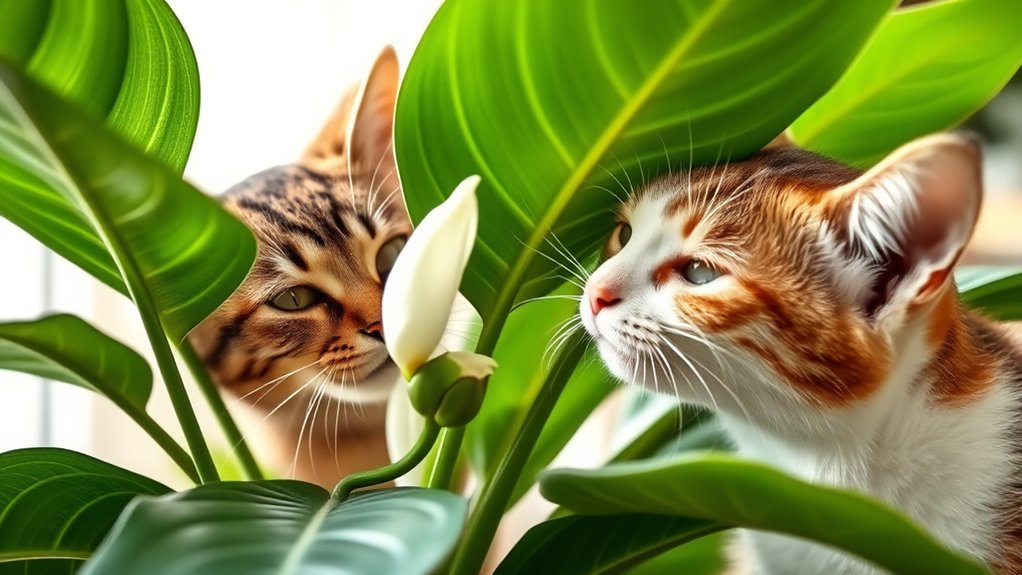
Spathiphyllum plants, or peace lilies, are toxic to cats because they contain insoluble calcium oxalate crystals. If your cat chews on one, you can expect immediate oral irritation, drooling, and vomiting. It’s not as severe as true lilies, but peace lilies can still cause discomfort and stomach upset.
If your cat does nibble on a peace lily, quick removal and gently rinsing their mouth can help. However, if symptoms keep going, you should definitely see a vet. Knowing the symptoms, how to prevent exposure, and safe plant alternatives can really help you protect your cat.
Managing any exposure effectively means being prepared and informed. That way, you can keep your furry friend safe and comfortable.
Why Are Peace Lilies Toxic To Cats?
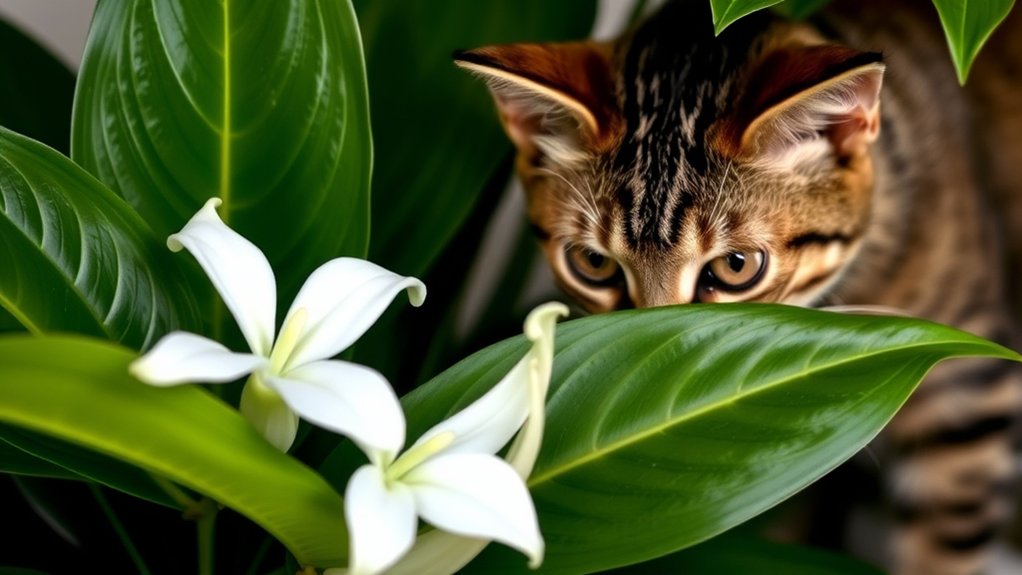
Although peace lilies (Spathiphyllum) are popular houseplants, you should know they contain insoluble calcium oxalate crystals that cause oral irritation and gastrointestinal upset if your cat ingests them.
These needle-shaped crystals embed in the mucous membranes of your cat’s mouth and digestive tract, triggering immediate pain and inflammation.
The toxic nature of the peace lily plant leads to symptoms such as drooling, vomiting, pawing at the mouth, and reduced appetite.
These symptoms usually appear within minutes to a few hours after ingestion. It’s not fun for your cat, and you’ll want to act fast.
While the peace lily plant is toxic, it’s less dangerous than true lilies because it doesn’t cause kidney failure.
Promptly rinsing your cat’s mouth and making sure they stay hydrated can help reduce the effects.
But honestly, the best approach is to keep the plant out of your cat’s reach in the first place.
Peace Lily vs. True Lilies: Toxicity Differences
You should know that peace lilies have calcium oxalate crystals, which can cause mild oral irritation if your cat nibbles on them.
But the good news is, their toxicity is much lower compared to true lilies.
Now, true lilies — like those in the Lilium and Hemerocallis families — are a whole different story. They can lead to severe kidney failure and other life-threatening symptoms in cats.
So, it’s really important to tell these plants apart.
Peace lilies mostly cause irritation around the mouth and digestive system, while true lilies can cause serious, systemic kidney damage.
Knowing the difference can make a big difference in how you respond if your cat gets into one of these plants.
Toxicity Levels Compared
When comparing the toxicity of peace lilies (Spathiphyllum) and true lilies (Lilium), it’s important to recognize that peace lilies contain insoluble calcium oxalate crystals.
These crystals cause localized irritation and mild gastrointestinal upset in cats.
True lilies pose a much greater risk by inducing potentially fatal kidney failure.
Peace lilies primarily affect the oral cavity, resulting in symptoms like drooling and vomiting, but they don’t cause kidney failure.
True lilies, on the other hand, are highly toxic to cats and can lead to severe systemic damage that requires immediate veterinary intervention.
Understanding these differences is essential for cat owners to assess the risk level of plants in their environment.
Overall, peace lilies are less toxic to cats and present a lower hazard compared to the severe toxicity of true lilies.
Effects On Cats
Understanding the distinct effects of peace lilies and true lilies on cats helps clarify the specific symptoms and risks associated with each plant.
Peace lilies contain insoluble calcium oxalate crystals that act as a mild poison, causing oral irritation and gastrointestinal upset in cats. If your cat chews on a peace lily, expect symptoms like drooling, vomiting, and decreased appetite.
But severe reactions are pretty uncommon.
True lilies, such as Lilium and Hemerocallis species, are far more dangerous. They pose a high risk of acute kidney failure in cats even with small amounts ingested. This makes true lilies highly toxic compared to peace lilies, which are classified as mildly poisonous.
While mild irritation from peace lilies often resolves with home care, immediate veterinary attention is vital for symptoms suggesting kidney failure from true lily exposure.
Early Symptoms Of Peace Lily Ingestion
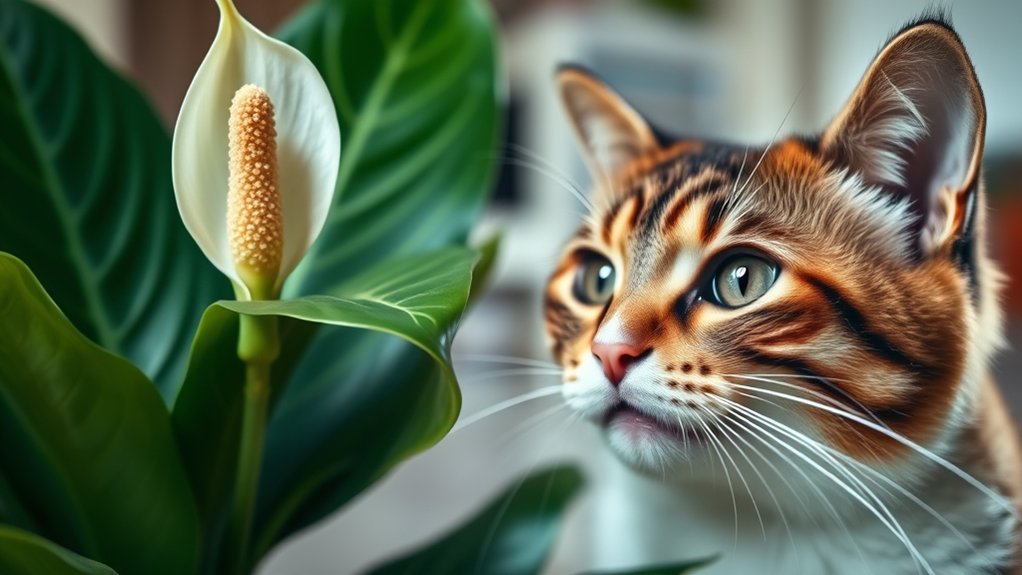
Although Peace Lilies are common household plants, ingestion by cats triggers immediate oral irritation. This often causes drooling and pawing at the mouth within the first 30 minutes. You’ll notice a burning sensation in your cat’s mouth, leading to lip smacking and a reluctance to eat during the initial hours.
Vomiting and decreased appetite typically develop 30 to 180 minutes after ingestion. This reflects the cat’s response to the plant’s irritants. Some cats may hide or show mild mouth soreness within 6 to 24 hours.
Vomiting and loss of appetite usually appear within hours, with some cats hiding or showing mouth soreness.
Peace Lilies are toxic primarily because of calcium oxalate crystals. But they don’t cause kidney failure in cats.
Recognizing these early symptoms is essential for timely intervention, as untreated irritation can escalate to swelling or difficulty swallowing.
What To Do After Your Cat Eats A Peace Lily
If your cat has ingested any part of a Peace Lily, your immediate action can help reduce discomfort and prevent further complications.
First, remove your cat’s access to the Spathiphyllum to prevent further ingestion. Gently rinse your cat’s mouth with cool water to alleviate irritation caused by the insoluble calcium oxalate crystals present in the plant.
Offer fresh water or low-sodium broth to encourage hydration and soothe the gastrointestinal tract.
Closely monitor your cat for symptoms such as drooling, vomiting, or difficulty swallowing, which may appear within 30 minutes to several hours after ingestion. Monitoring your cat carefully allows you to assess the severity of the reaction and respond appropriately.
Taking these steps promptly can help manage mild exposure effectively.
Just keep a close eye on your furry friend, and if things seem to get worse, don’t hesitate to reach out to your vet.
When To Seek Veterinary Care For Peace Lily Exposure
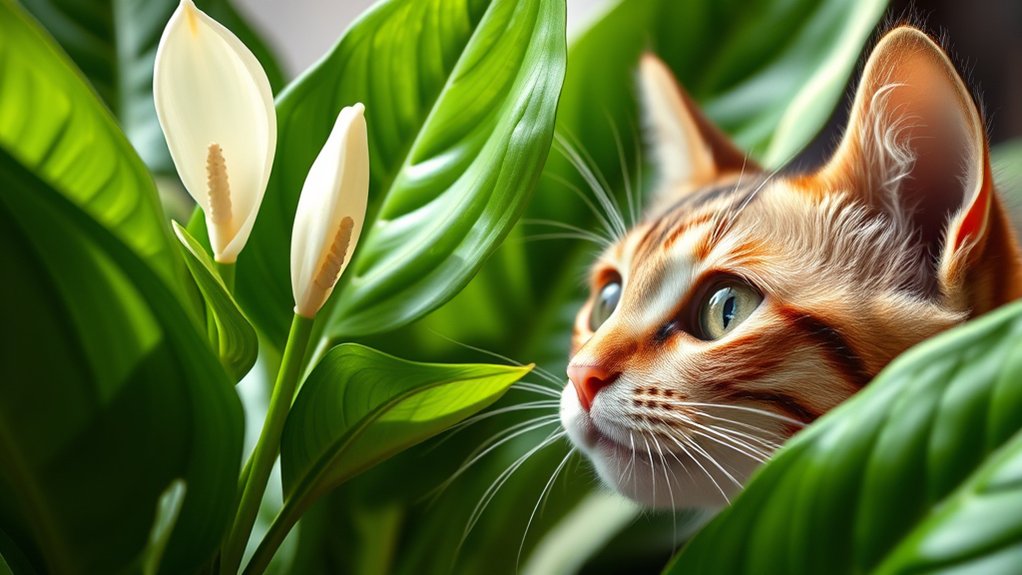
If your cat starts showing severe symptoms like excessive drooling, vomiting, or trouble swallowing after coming into contact with a Peace Lily, it’s important to get veterinary help right away.
You should reach out to your vet or a poison control helpline within 30 minutes if you notice any signs of oral irritation or discomfort.
Keep a close eye on your cat, and if the symptoms don’t improve or get worse over the next few hours, don’t hesitate to consult your vet again.
It’s always better to be safe and make sure your furry friend is okay.
Recognizing Severe Symptoms
When your cat shows intense oral irritation, has difficulty swallowing, or is drooling excessively after exposure to a Peace Lily, these signs point to a serious reaction that needs immediate veterinary care.
Severe cases might also include vomiting and reluctance to eat within 30 to 180 minutes after ingestion.
If your cat chews on the plant and develops severe oral irritation or swelling in the mouth or throat, it could lead to breathing difficulties. This situation demands urgent attention.
Keep an eye out for symptoms that persist or get worse, like increased vomiting, lethargy, or unusual behaviors. These signs mean you should get your cat evaluated by a vet right away.
Recognizing these severe symptoms quickly is key. It helps make sure your cat gets timely care, reduces complications from Peace Lily toxicity, and improves the chances of a full recovery.
Immediate Veterinary Actions
Act promptly by rinsing your cat’s mouth with cool water right after you suspect it has ingested Peace Lily. This helps reduce irritation quickly.
As part of immediate care, offer fresh water or some low-sodium broth to keep your cat hydrated. Keep an eye out for symptoms like difficulty swallowing, excessive drooling, or persistent vomiting.
If you notice these signs or if symptoms last more than a few hours, don’t wait—contact a veterinarian or poison control helpline right away.
| Symptom | Action Required |
|---|---|
| Mouth/Throat Swelling | Seek urgent veterinary care |
| Excessive Drooling | Contact veterinarian promptly |
| Difficulty Swallowing | Immediate veterinary attention |
| Persistent Vomiting | Veterinary consultation needed |
| Behavioral Changes | Monitor and report to vet |
Following these steps ensures your cat gets timely veterinary care after Peace Lily exposure.
Monitoring Post-Ingestion Signs
How can you effectively monitor your cat after it has ingested a Peace Lily? Begin by watching for symptoms like drooling, pawing at the mouth, vomiting, and lip smacking. These signs usually mean oral irritation from calcium oxalate crystals. They typically show up within 30 minutes to a few hours.
Keep a close eye on your cat and look out for any reluctance to eat or signs of discomfort. Encourage them to stay hydrated by offering fresh water or some low-sodium broth.
If the symptoms last more than 24 hours or get worse, like swelling or trouble breathing, you should get veterinary care right away. Make sure to remove your cat’s access to the plant so they don’t ingest more.
How Much Peace Lily Is Too Much For Cats?
What amount of Peace Lily consumption poses a risk to your cat? Even small quantities contain the toxic substance calcium oxalate crystals, which can cause immediate symptoms like drooling, oral irritation, and vomiting.
Any ingestion of Peace Lily parts, no matter how minimal, can trigger these symptoms within 30 minutes to 2 hours.
The severity of clinical signs directly relates to the amount consumed. So, while minor exposure might result in mild discomfort, larger amounts increase the risk of significant gastrointestinal upset and distress.
Because of the potential for toxicity, you should consider any ingestion concerning. If symptoms arise or your cat shows difficulty swallowing, seek veterinary advice promptly.
It’s important to monitor your cat closely after exposure to manage the toxic effects of Peace Lily consumption effectively.
How To Prevent Cat Exposure To Peace Lilies
To keep your cat away from Peace Lilies, try placing the plants in high spots or areas that your cat can’t easily reach.
You could also use physical barriers like cages or cloches to create a safe space around the plants.
Another helpful tip is to add soil toppers—they can make the soil less tempting for your cat to dig in.
Plus, offering your cat some safe alternative plants to chew on can satisfy their natural instincts without putting them at risk.
Just keep an eye on your furry friend’s behavior to make sure they’re staying clear of the Peace Lilies.
With a bit of attention, you can protect your cat and keep your plants safe too!
Safe Plant Placement
Although Peace Lilies add aesthetic value to your home, you should place them strategically to minimize your cat’s exposure to their toxic components. Safe plant placement is essential because the Peace Lily contains potentially toxic substances that can harm your cat if ingested.
To reduce risk, consider these measures:
Position Peace Lilies on high shelves or hanging planters, out of your cat’s reach. Add soil toppers or decorative rocks to deter digging in the pot. Provide alternative, non-toxic plants to redirect your cat’s attention.
Also, regularly observe your cat’s behavior around plants for any signs of interest or chewing. If your cat repeatedly shows curiosity or nibbling behavior, remove Peace Lilies promptly.
These steps guarantee your cat’s safety while maintaining your indoor greenery.
Physical Barriers Usage
Since Peace Lilies contain compounds toxic to cats, using physical barriers is a crucial step to keep your pet safe. You can cover the plant with decorative cloches or cages to block your cat’s access.
Putting the Peace Lily on high shelves or in rooms where pets aren’t allowed also helps reduce the risk.
Another trick is to use soil toppers like decorative stones. These discourage cats from digging in the plant’s pot and limit their contact with it.
You can also install pet gates or simply keep doors closed to restrict access to areas where Peace Lilies are kept.
All these physical barriers work together to create a safe environment for your cat. When you use these methods consistently, you can keep your pet protected and still enjoy having the plant in your home.
Alternative Pet-Friendly Plants
While physical barriers help reduce your cat’s access to Peace Lilies, selecting alternative plants that pose no risk offers a proactive way to protect your pet.
Choosing alternative pet-friendly plants allows you to keep a Peace Lily safely or replace it entirely. Consider pet-safe species that satisfy your cat’s curiosity without toxicity.
To prevent cat exposure, you can:
Place Peace Lilies on high shelves or in rooms off-limits to pets.
Use soil toppers or citrus peels in pots to deter digging.
Provide alternative pet-friendly plants such as Christmas Cactus or bromeliads.
Regularly monitor your cat’s interaction with indoor plants.
Use decorative cages or cloches as additional physical barriers.
These practices minimize risk while maintaining a cat-safe environment. It’s all about keeping your furry friend safe without giving up your love for plants.
Caring For Your Cat After Peace Lily Exposure
If your cat has come into contact with a Peace Lily, you should closely monitor for symptoms like drooling, vomiting, or decreased appetite. These can appear within 30 minutes to 24 hours after ingestion.
To help with mouth irritation, gently rinse your cat’s mouth with cool water. This can soothe the mouth and reduce discomfort.
Also, encourage your cat to drink by offering fresh water or low-sodium broth.
Make sure to remove your cat’s access to the Peace Lily right away. Wipe its fur and paws to prevent ingesting any leftover sap.
If symptoms persist or get worse, don’t hesitate to seek veterinary advice or contact a poison control hotline.
Providing timely supportive care is important to minimize complications and help your cat recover quickly.
Safe Plant Alternatives For Homes With Cats
Although many popular houseplants pose risks to cats, you can choose from several non-toxic alternatives that brighten your home without compromising your pet’s safety.
Incorporating safe plant alternatives into your indoor garden guarantees both aesthetic appeal and pet well-being.
These plants are non-toxic to cats and require minimal care, making them ideal for pet owners.
Consider these options for your indoor garden:
- Pink Christmas Cactus: Vibrant winter blooms, non-toxic to cats
- Francesca Guzmania Bromeliad: Long-lasting flowers, pet-safe
- Evita Vriesea Bromeliad: Bright blooms after several years, safe for cats
- Spider Plant (Chlorophytum comosum): Easy-care greenery, non-toxic
- Boston Fern (Nephrolepis exaltata): Air-purifying, lush and safe
Selecting these plants helps maintain a safe environment while enhancing your living space.
Choosing these plants supports a safe home and adds natural beauty to your space.
It’s a simple way to keep both your home beautiful and your furry friends safe.
Understanding Peace Lily Toxicity Severity And Risks
Because peace lilies (Spathiphyllum) contain insoluble calcium oxalate crystals, you should understand the severity and risks associated with their toxicity to cats. Symptoms of ingestion include drooling, vomiting, pawing at the mouth, and decreased appetite, typically within hours.
Though toxic, peace lilies are less dangerous than true lilies, which can cause severe kidney failure. Immediate care involves rinsing your cat’s mouth and consulting a veterinarian if symptoms persist.
| Aspect | Details |
|---|---|
| Toxic component | Insoluble calcium oxalate crystals |
| Symptoms of ingestion | Drooling, vomiting, pawing at mouth |
| Risk comparison | Less severe than true lilies causing kidney failure |
Avoiding exposure is essential to protect your cat’s health. So, keep those peace lilies out of reach to be safe!
Frequently Asked Questions
Can Peace Lilies Cause Allergic Reactions in Cats?
Peace lilies generally don’t cause true allergic reactions in cats, as cat allergies to this plant are pretty rare.
Instead, what you might notice is plant sensitivity, which can lead to oral irritation and some gastrointestinal upset. These symptoms look like allergic reactions but actually come from calcium oxalate crystals, not an immune response.
If your cat shows signs of persistent discomfort or sensitivity, keep a close eye on them.
It’s a good idea to check in with your vet to rule out any complications and make sure your furry friend gets the right care.
Are Peace Lily Flowers More Toxic Than the Leaves?
Don’t judge a book by its cover.
Peace lily flowers aren’t more toxic than the leaves. Both contain similar Spathiphyllum toxicity levels, so Peace lily ingestion causes comparable symptoms in cats, like oral irritation, drooling, and vomiting.
Neither part poses a greater risk.
You should treat any ingestion seriously and seek veterinary care promptly to manage symptoms in cats and prevent complications effectively.
How Long Do Peace Lily Symptoms Last in Cats?
Symptom duration after your cat ingests a peace lily typically ranges from a few hours up to 24 hours for mild cases.
Drooling and vomiting usually show up quickly.
If symptoms stick around or get worse, you should get veterinary help right away to avoid any complications.
To keep your cat safe, try to keep plants out of reach and consider cat-safe alternatives.
Acting fast and keeping an eye on your cat really helps make sure they recover quickly.
Can Peace Lily Toxicity Affect Kittens Differently Than Adult Cats?
Yes, peace lily toxicity affects kittens differently because they’re more sensitive and their bodies are still developing.
Their smaller size means the symptoms can be more severe compared to adult cats.
Kittens often show symptoms like drooling, pawing at their mouth, and vomiting pretty quickly—sometimes within just 15 minutes.
Because they’re more vulnerable, it’s really important to get them to a vet right away.
This helps prevent dehydration and other complications from the poisoning.
Are Peace Lilies Toxic to Other Common Household Pets?
Yes, Spathiphyllum safety is a concern for other common household pets like dogs and small mammals because of pet toxicity risks.
These plants contain insoluble calcium oxalate crystals. If ingested, they can cause oral irritation and gastrointestinal upset.
If you keep household plants around, you should watch your pets closely. Try to avoid letting them chew on peace lilies.
And if you notice any symptoms, prompt veterinary care is really important to keep your pets safe.
Conclusion
Just like the cautionary tales of poisonous plants in classic literature, Spathiphyllum poses a real threat to your cat’s health. While not as deadly as true lilies, its toxicity can still cause serious discomfort and complications.
Stay vigilant and act quickly if ingestion occurs. Also, consider safer plant choices to protect your feline friend.
Remember, prevention is your best defense because in the story of your cat’s well-being, you’re the essential protagonist.