Can Cat Eat Pizza – Ingredients, Risks, And Safety
You shouldn’t feed your cat pizza because its ingredients like garlic, onions, processed meats, and cheese can cause serious health problems such as anemia, digestive upset, and obesity.
Pizza crust offers no nutritional value and may lead to weight issues, while tomato sauce and high fat content can irritate their system.
If your cat consumes pizza, watch for vomiting or lethargy. For safer options and prevention tips, keep exploring how to protect your feline friend from harmful foods.
Can Cats Safely Eat Pizza?
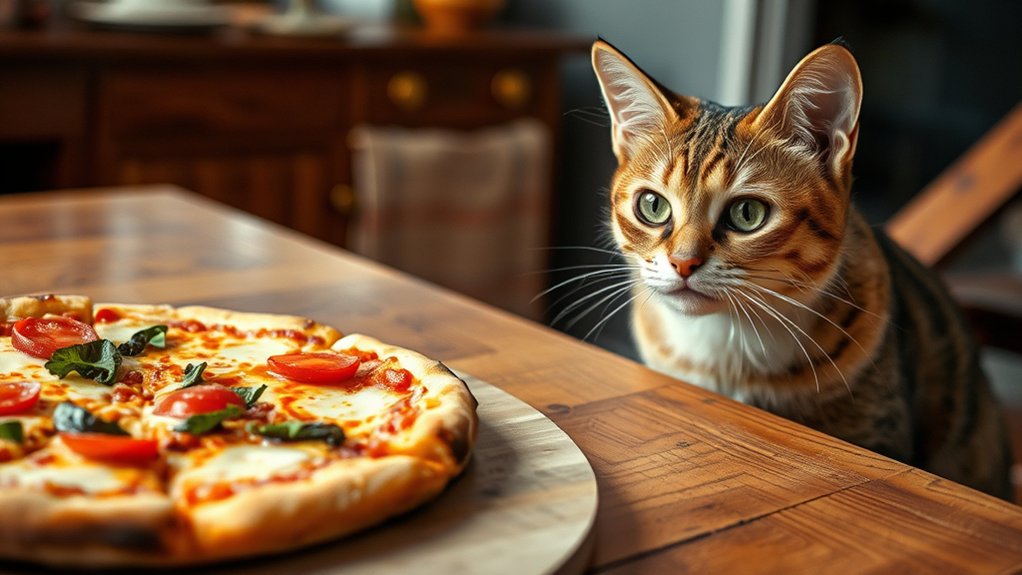
How safe is it to share pizza with your cat? The short answer is it’s not safe.
Cats are sensitive to many harmful ingredients found in pizza, such as garlic, which is toxic and can cause serious health issues.
Most cats are lactose intolerant, so the cheese on pizza can lead to an upset stomach, including vomiting and diarrhea.
Cheese in pizza can upset your lactose-intolerant cat’s stomach, causing vomiting and diarrhea.
Plus, pizza’s high-fat content and processed meats can strain your cat’s digestive system.
The crust’s carbohydrates offer no nutritional benefit and may contribute to obesity.
When making feeding decisions, it’s essential to avoid giving your cat pizza or any foods containing toxic or harmful ingredients.
Even small amounts can trigger adverse reactions, so keeping pizza away from your feline friend is the safest choice.
Harmful Ingredients in Pizza for Cats
Because pizza contains several ingredients that can harm your cat, it’s important to recognize which ones pose the greatest risks. Garlic and onions, often found in tomato sauce or seasoning, are highly toxic even in small amounts and can seriously damage your cat’s red blood cells.
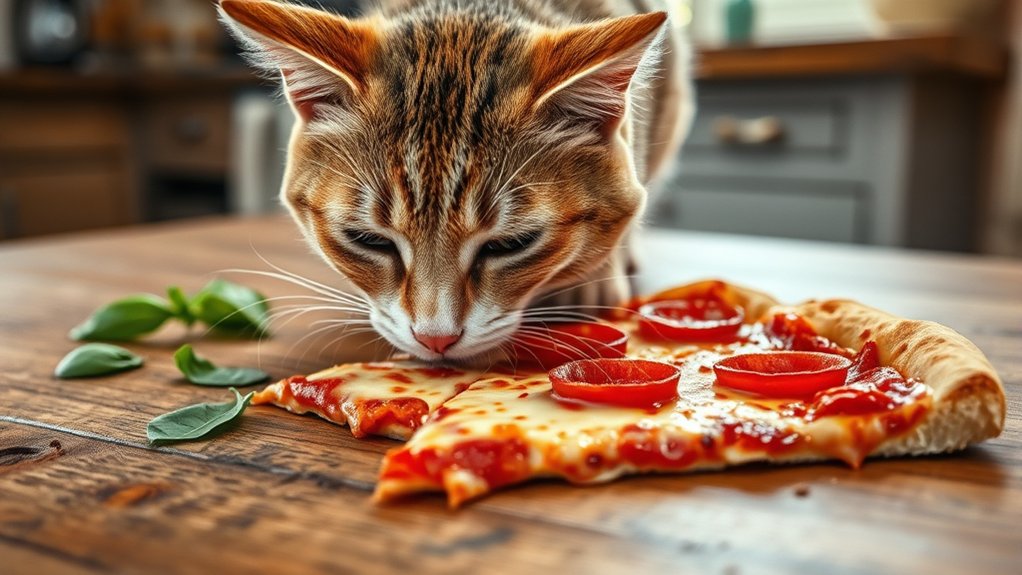
Processed meats like pepperoni are high in sodium and fat, which can strain your cat’s kidneys and pancreas.
Many cats are lactose intolerant, so cheese may upset your cat’s stomach, causing bloating or diarrhea. Tomato sauce itself often contains additives like garlic powder and excessive salt, further risking dehydration.
Moreover, pizza crust is low in nutritional value and high in carbohydrates, which can contribute to obesity and digestive issues if eaten regularly.
As responsible pet parents, understanding these harmful ingredients helps you keep your cat safe. It’s always best to stick to foods that are made specifically for cats and avoid sharing pizza or other human treats.
Your furry friend will thank you for it!
Health Risks of Pizza Ingredients for Cats
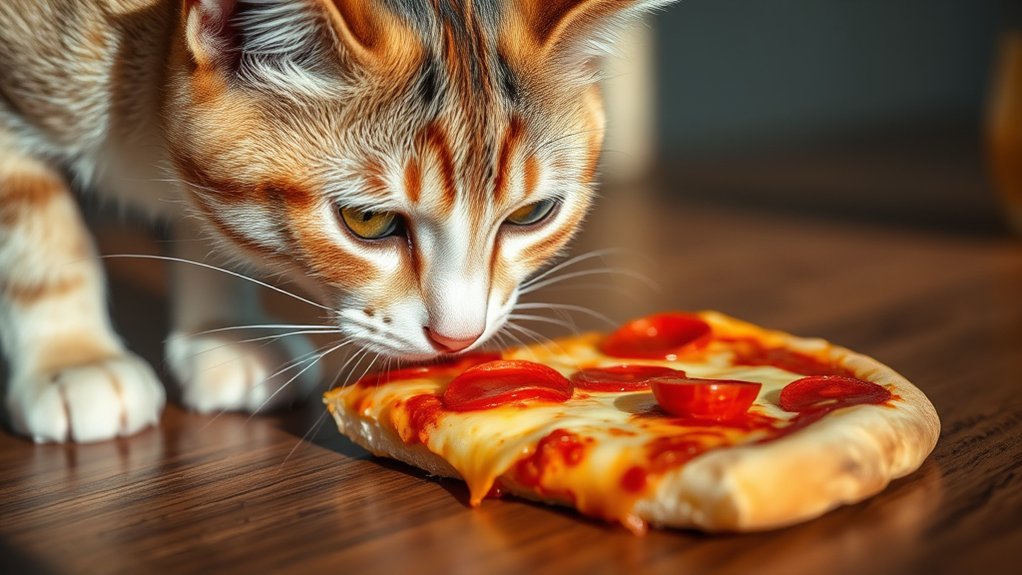
While pizza might seem like a tempting treat to share, you should be aware that several common ingredients pose serious health risks to your cat. Garlic and onion, both toxic to cats, can cause severe damage to their red blood cells, leading to anemia.
Processed meats like pepperoni contain high salt content and fat, increasing the risk of obesity and pancreatitis.
Tomato sauce often includes garlic or onion powder, which can further irritate your cat’s digestive system. Cheese may cause gastrointestinal distress in lactose-intolerant cats, resulting in bloating and diarrhea.
And pizza crust is carbohydrate-heavy and offers no nutritional benefit, with yeast posing gastrointestinal risks.
Feeding pizza to cats can lead to significant health issues, so it’s best to avoid sharing this human food with them. It might seem harmless, but it’s really not worth the risk!
Symptoms of Pizza Toxicity in Cats
What signs should you watch for if your cat has eaten pizza? Pay close attention to symptoms of distress such as vomiting or diarrhea. These can happen shortly after your cat ingests harmful ingredients like garlic or onion.
You might also notice excessive drooling. This happens because spicy or acidic toppings can irritate your cat’s mouth. Increased thirst or urination may develop too, thanks to the high sodium content. That can lead to dehydration and stress on the kidneys.
Abdominal sensitivity or pain is another warning sign. This could mean your cat is experiencing gastrointestinal distress or pancreatitis, especially after eating fatty foods like pizza.
Lethargy and weakness might suggest more serious complications such as anemia from toxic substances.
Recognizing these symptoms early is super important. It helps protect your cat’s health and prevents further harm from pizza toxicity. So, keep an eye out and act quickly if you notice anything unusual.
How to Respond If Your Cat Eats Pizza
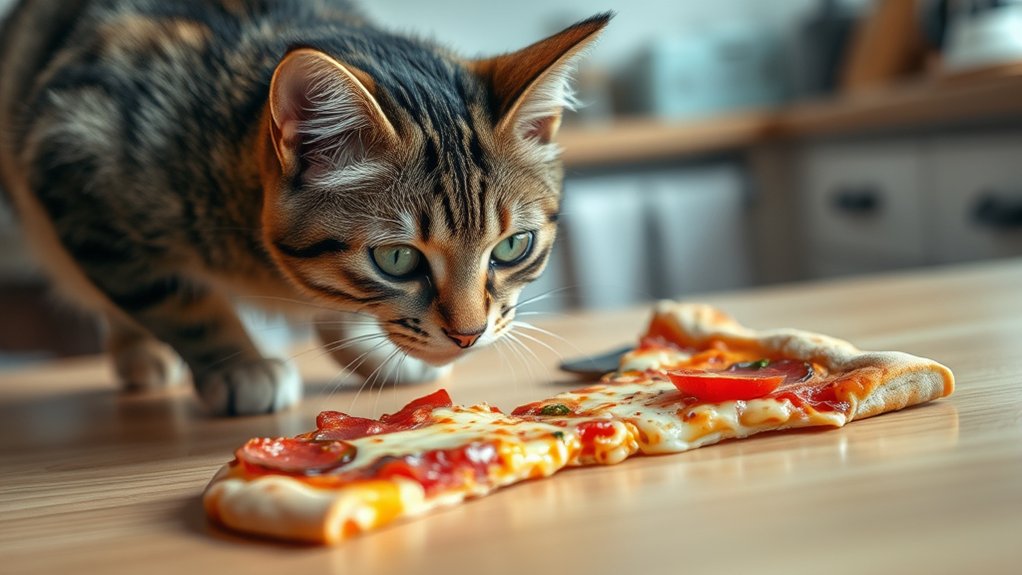
Noticing symptoms like vomiting or lethargy after your cat eats pizza means you should act quickly to protect their health.
First, monitor your cat closely for signs of distress such as diarrhea or decreased activity. These can indicate gastrointestinal upset or toxicity.
Check what pizza toppings your cat ate, since some ingredients like garlic and onions can be really harmful.
Be aware of harmful pizza toppings like garlic and onions that can pose serious risks to your cat’s health.
Make sure your cat has access to fresh water to help flush out any bad stuff.
If you see severe symptoms or know your cat ate something toxic, call your vet right away for prompt care.
To avoid problems in the future, keep all human food, including pizza, out of your cat’s reach. This helps prevent accidental eating and health issues down the line.
Safe Alternatives to Pizza Treats for Cats
Because pizza contains ingredients that can harm your cat, it’s important to offer safe and nutritious alternatives instead. When feeding your cat, choose plain cooked meats like chicken or turkey in a small piece. This provides a high-protein, low-fat option that’s safe for cats.
Commercial cat treats are designed to meet your feline friend’s nutritional needs. They offer balanced protein and fat without harmful additives. Freeze-dried meat treats also serve as natural, low-calorie rewards.
You can also consider catnip, which is safe and enjoyable for many cats. It offers fun without health risks.
Just remember to introduce new treats gradually and watch for any adverse reactions.
Always avoid feeding your cat pizza or other human foods that might upset their health or digestion. It’s better to stick with safe options that keep your furry friend happy and healthy.
How Smart Feeders Keep Your Cat From Eating Pizza
Although cats are curious and often tempted by human foods like pizza, smart feeders can effectively prevent them from accessing these harmful treats.
Smart feeders are designed to dispense only cat-safe meals, keeping those tempting snacks out of reach.
Smart feeders ensure your cat enjoys only safe meals, blocking access to harmful human foods.
With portion control features, they help maintain a healthy weight and reduce begging behaviors that could lead to pizza consumption.
Automated feeding schedules guarantee your cat receives meals on time, promoting routine and minimizing the chance of accidental treats.
Many smart feeders also allow you to monitor pets via built-in cameras, giving you real-time insight into their eating habits.
App-based controls let you adjust feeding times and portions, ensuring your cat gets appropriate nutrition without the risk of harmful human food exposure.
Tips to Keep Pizza and Unsafe Foods Away From Your Cat
When you keep pizza and other unsafe foods out of your cat’s reach, you greatly reduce the risk of accidental ingestion.
Cats, because of their sensitive digestive systems, can be harmed by pizza toppings and many human food ingredients. To protect your cat, follow these tips:
Store pizza and human food in sealed containers or cabinets to prevent your cat from accessing ingredients that are harmful to cats.
Monitor meal preparation closely, promptly cleaning up any dropped scraps to avoid temptation.
Make sure everyone in your household knows about the dangers of feeding pizza or even a small piece as a treat to your cat.
These steps help maintain a safe environment and guarantee you only treat your cat with appropriate food, avoiding health risks.
Frequently Asked Questions
Can Pizza Toppings Cause Allergies in Cats?
Yes, pizza toppings can cause cat allergies because of common allergens like dairy, processed meats, garlic, and onion.
You should watch for your cat’s sensitivities and reactions to ingredients. Things like itching, vomiting, or diarrhea can be signs of dietary issues.
To avoid health concerns, it’s best to steer clear of risky toppings and offer safe alternatives instead.
Keep a close eye on your cat after they’re exposed to new foods. This way, you can spot allergy symptoms early and protect their well-being effectively.
Is Pizza Crust Digestible for Cats?
You should know pizza crust isn’t easily digestible for your cat because they’ve a sensitive digestive system.
Common crust ingredients and flavorings like garlic or onion powder can actually harm them.
While some pizza crust types have low nutritional value, even safe crust portions offer little benefit and might upset your cat’s health.
Instead, consider crust alternatives that are tailored to feline taste preferences.
These options support their digestion and wellbeing much better than typical pizza crust.
How Often Do Cats Naturally Seek Out Human Food?
About 50% of cats naturally seek out human food because of their curiosity and food scavenging behavior.
Your cat’s dietary exploration is influenced by natural feeding instincts and the availability of food in their environment. But remember, their taste preferences usually lean more towards protein than carbs.
It’s important to stay aware of your cat’s dietary habits and nutritional needs to avoid encouraging begging.
How humans interact with them plays a big role in this behavior. So, managing their access to human food carefully is key to keeping them healthy.
Can Cats Develop a Preference for Salty Foods?
Yes, cats can develop a preference for salty foods due to their feline taste sensitivity. When you offer salty snacks regularly, it can influence their flavor preferences and create food cravings.
This shifts their nutrition choices, potentially harming their dietary habits. You need to practice snack moderation because excessive salt intake leads to negative health impacts and behavioral responses.
Keeping salty foods limited helps maintain your cat’s well-being and balanced nutrition. So, it’s really about finding the right balance to keep your furry friend healthy and happy.
Are There Any Pizza Ingredients That Benefit Cats?
Think of pizza ingredients as a garden: some blooms nourish, others poison. You can offer your cat safe toppings like plain cooked meat options, such as chicken or turkey. These provide valuable protein for feline nutrition.
Small amounts of cheese might add calcium, but watch out for lactose intolerance.
Tomatoes hold vitamins, but be careful with tomato risks from sauces. Always mind spice concerns.
Practice strict portion control to keep your cat safe and healthy. It’s better to be cautious than sorry when it comes to what your furry friend eats.
Conclusion
You shouldn’t feed your cat pizza, shouldn’t ignore the harmful ingredients, and shouldn’t overlook the health risks. You must recognize the symptoms of toxicity, must respond quickly if your cat eats pizza, and must provide safer alternatives.
You can use smart feeders, can keep unsafe foods out of reach, and can protect your cat’s health with vigilance. By acting responsibly, you guarantee your cat stays safe, healthy, and happy.