What Can I Give My Cat For A Cold – Safe Relief Options
You can safely help your cat feel better by using gentle home remedies like steam therapy and wiping away discharge with a warm cloth. Keep their environment humid and offer nutritious, easy-to-eat wet food with plenty of fresh water to stay hydrated.
Avoid human medications and never give antibiotics unless prescribed by a vet. Watch for worsening symptoms closely. If you want to guarantee proper care and recovery tips, there’s more helpful guidance ahead.
How to Recognize a Cat Cold: Symptoms and Signs
Recognizing a cat cold early can help you provide the care your pet needs before symptoms worsen. Common symptoms of a cat cold include sneezing, coughing, and a runny nose, often appearing within 24 hours of infection.
Early recognition of a cat cold allows timely care before symptoms worsen, with sneezing, coughing, and runny nose common within 24 hours.
You might also notice discharge from the eyes, lethargy, and a mild fever.
Keep a close eye on your cat’s behavior. Signs like a lack of appetite and dehydration suggest the cold may be severe.
While symptoms usually last seven to ten days, difficulty breathing or a prolonged lack of appetite are serious signs that require immediate veterinary attention.
By identifying these symptoms and signs early, you can act promptly to support your cat’s recovery and prevent complications.
It’s always better to be cautious when your furry friend isn’t feeling well!
Safe Home Remedies for Cat Cold Symptoms
You can help ease your cat’s cold symptoms right at home. One gentle way is using steam therapy—it helps relieve their congestion. Just be sure it’s mild and safe for your furry friend.
Also, wiping away any nasal or eye discharge with a warm cloth can make them feel more comfortable.
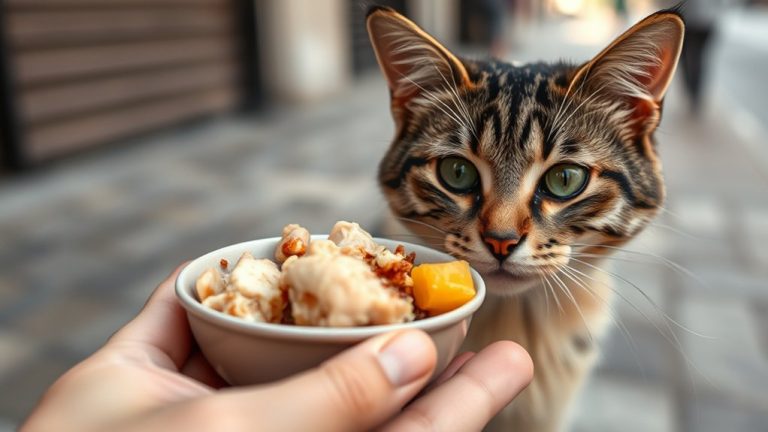
When your cat’s appetite is low, offering nutritious, easy-to-eat wet food is a great idea. It supports their energy and helps with recovery.
These simple steps can really make a difference, helping your cat feel better as they heal.
Humidity And Steam Therapy
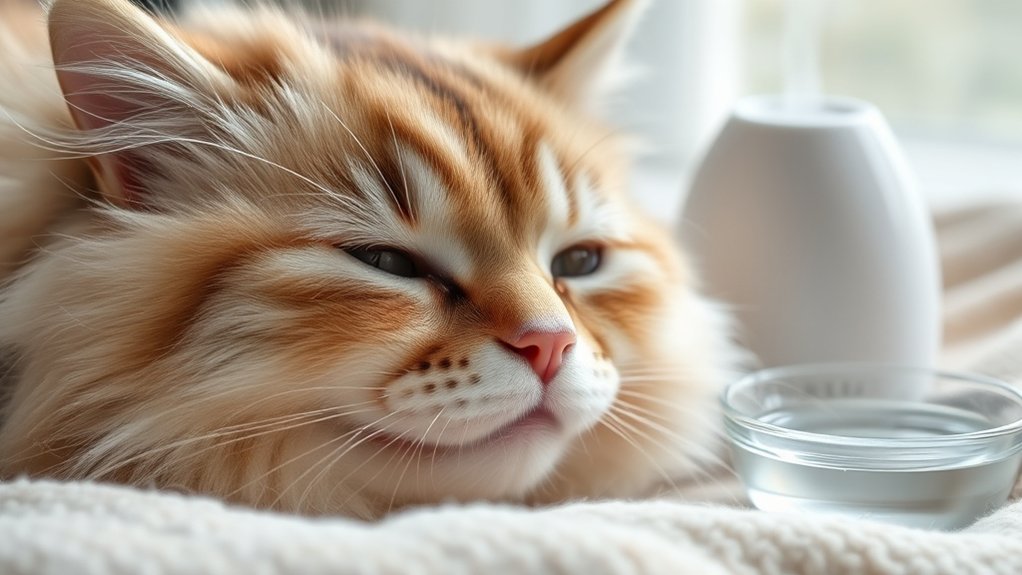
Although a cat’s cold can be uncomfortable, increasing humidity and using steam therapy can ease their nasal congestion and help them breathe easier. You can use a humidifier or vaporizer without essential oils to raise humidity levels. This soothes irritated airways and helps relieve symptoms.
Steam therapy is another option. Running a hot shower to fill a bathroom with steam while your cat stays inside for short periods can clear nasal passages. Gently wiping your cat’s nose and eyes with a warm damp cloth also provides comfort and removes discharge.
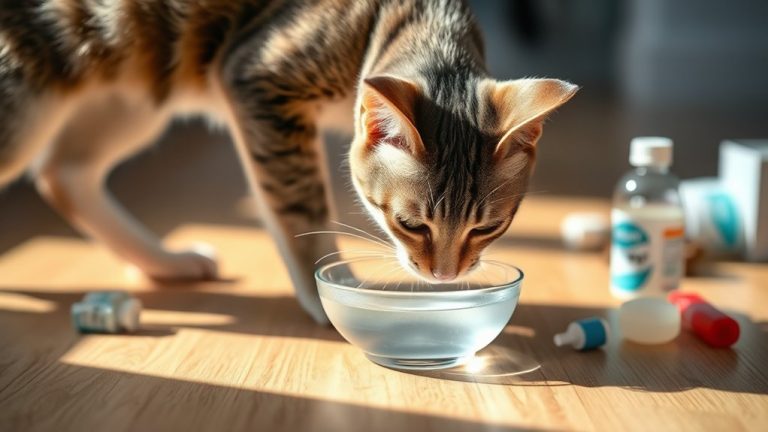
Remember, keeping fresh water available is essential since hydration supports recovery.
Humidity and steam therapy can help with congestion but don’t replace the need for water. These simple steps can make your cat’s cold more manageable at home.
Gentle Cleaning Techniques
How can you ease your cat’s discomfort from cold symptoms at home? Start with gentle cleaning techniques. Use a warm, damp cloth to carefully wipe away discharge from your cat’s runny nose and watery eyes. This keeps them comfortable and helps prevent irritation.
Applying a saline solution with a soft cloth or cotton ball can moisten a stuffy nose, making breathing easier. Maintain a humidified environment to relieve congestion further.
While doing this, keep an eye on their eating habits. Warming wet food might encourage your cat to eat if they’re feeling unwell.
Avoid any human medications and always consult your veterinarian before trying home remedies. These simple, gentle steps support your cat’s comfort as they recover from a cold.
Nutritional Support Options
When your cat battles a cold, providing high-calorie, easily digestible wet food can boost their energy and encourage eating despite a reduced appetite.
Wet food, especially fish-based options like Fancy Feast, often appeals more to sick cats, helping stimulate their appetite.
To support recovery, consider nutritional supplements such as Nutrical, which supplies essential vitamins to strengthen their immune system.
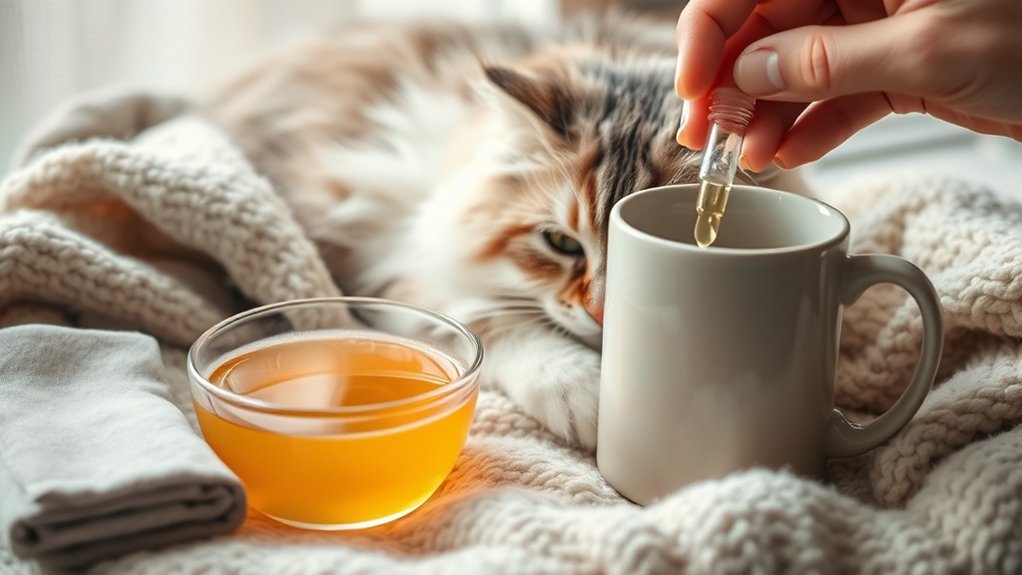
Hydration is equally important. Make sure fresh water is always available, and if your cat refuses to drink, gently offer fluids with a syringe.
Keeping your cat hydrated helps loosen congestion, making it easier for them to breathe and eat.
Combining these nutritional support options helps your cat recover comfortably and regain strength during a cold.
Cleaning Your Cat’s Eyes and Nose During a Cold
Since your cat’s eyes and nose can become irritated and blocked during a cold, you should clean these areas gently and regularly to keep your pet comfortable.
Use a warm, soft cloth dampened with saline solution on a gauze pad to carefully remove any discharge or crust from the eyes and nose. This method is safe and effective for clearing mucus without causing irritation.
Always wash your hands before and after cleaning to maintain proper hygiene and reduce the risk of spreading infection.
Regular cleaning prevents buildup that can lead to secondary infections, helping your cat heal more comfortably.
By staying consistent with this gentle cleaning routine, you’ll support your cat’s recovery and ease discomfort caused by cold-related discharge.
It might feel a bit tedious, but your furry friend will thank you for the extra care!
How Humidity Helps Cats With Colds Breathe Easier
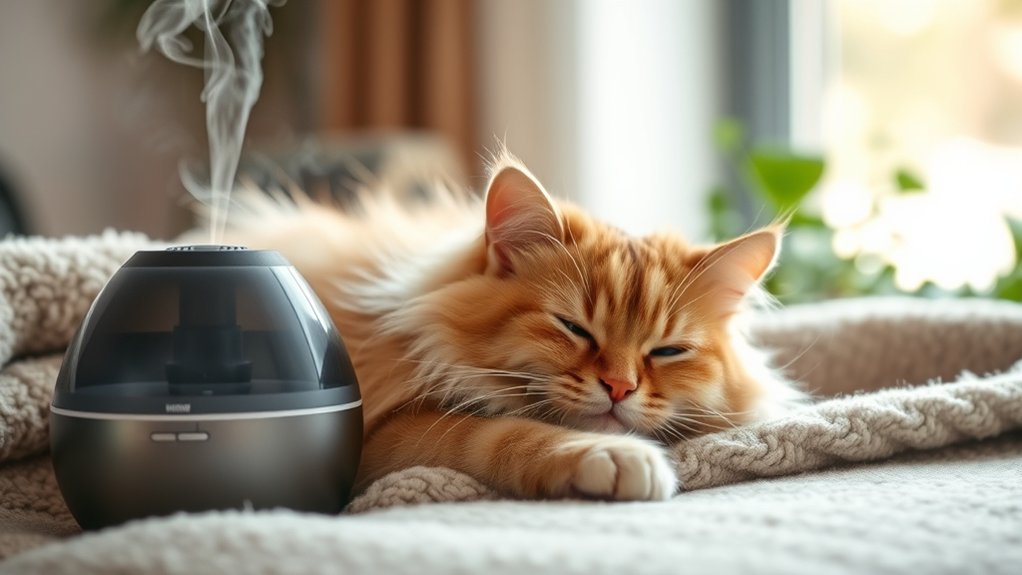
After gently cleaning your cat’s eyes and nose, you can further ease their discomfort by improving the air they breathe. Increasing humidity helps soothe irritated nasal passages, making it easier for your cat to breathe when dealing with congestion.
Using a humidifier keeps the air from becoming too dry, which often worsens respiratory symptoms like coughing and congestion. Maintaining humidity levels between 30-50% creates an ideal environment that supports respiratory comfort and helps reduce the risk of secondary infections by keeping mucous membranes healthy.
You can also provide immediate relief through steam therapy. Simply run a hot shower with your cat safely in the bathroom to help open nasal passages.
Foods and Fluids That Support Cat Cold Recovery
To help your cat recover from a cold, try offering nutrient-rich foods that are easy to eat and tasty, like wet food or fish-flavored varieties.
You’ll want to keep fresh water available at all times, and adding some broth can encourage your cat to drink more, which is super important for healing.
Just keep an eye on their eating and drinking habits so you know they’re getting the nutrition and fluids they need to bounce back quickly.
Nutrient-Rich Food Choices
When your cat is battling a cold, providing nutrient-rich food can make a big difference in their recovery. Wet food from trusted brands like Fancy Feast or 9-Lives offers both nutrition and hydration, which is super important during illness.
Warming the food can help stimulate your cat’s appetite by enhancing its aroma. This makes it easier for a congested cat to eat.
If your cat refuses to eat, you might want to try syringe feeding with high-calorie, easily digestible options. This way, you can make sure they get the essential nutrients they need.
Adding a calorie-dense supplement like Nutrical can also boost their energy and support healing.
By focusing on nutrient-rich, wet food choices, you’re helping your cat maintain strength and promote a faster recovery.
It’s all about addressing their delicate needs while they’re dealing with a cold.
Hydration Importance
Although your cat may seem less interested in drinking while sick, keeping them hydrated is essential to help thin mucus and support their recovery. Wet food can help increase fluid intake and provide crucial nutrients.
You can also add water or low-sodium chicken broth to dry food to encourage your cat to drink more. Always have fresh water available, and consider a pet water fountain to stimulate their natural drinking instincts.
If your cat refuses to eat or drink, syringe feeding high-calorie, digestible foods may be necessary to maintain hydration and energy.
| Hydration Tips | Benefits |
|---|---|
| Wet food | Increases fluid intake |
| Water added to dry food | Encourages drinking |
| Fresh water availability | Maintains hydration |
| Pet water fountain | Stimulates natural drinking habits |
| Syringe feeding | Supports hydration if needed |
Using Vet-Prescribed Medications for Cat Colds
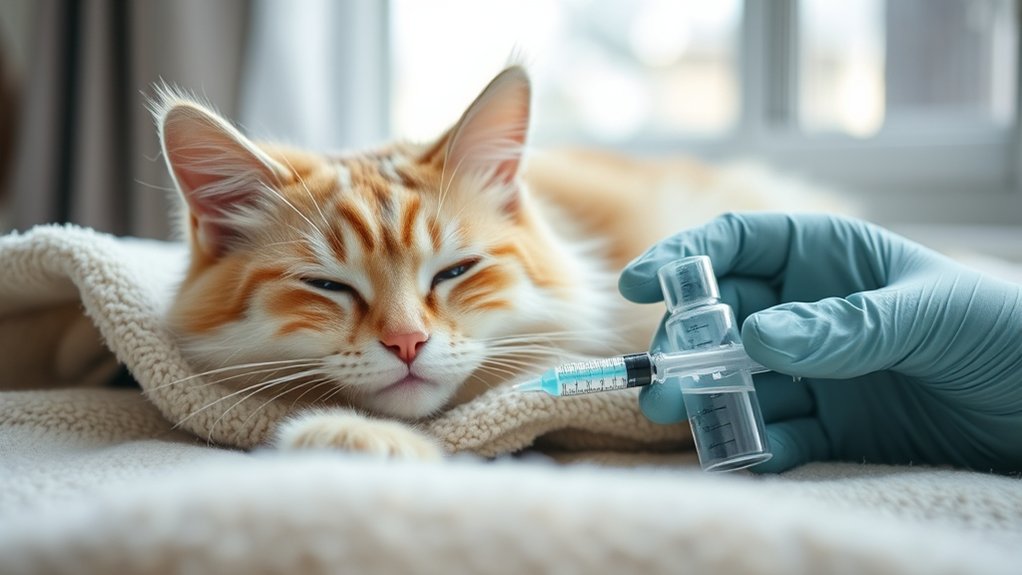
Since cat colds are caused by viruses, you should only give medications prescribed by your veterinarian to secure targeted and safe treatment.
Vet-prescribed medications address the common causes of feline colds and help avoid complications. While antibiotics won’t treat the viral infection itself, your vet may prescribe them if a secondary bacterial infection develops, preventing serious illnesses.
Antiviral drugs might be recommended in severe cases, like feline herpesvirus, to reduce symptoms and speed recovery.
Never use over-the-counter human medications, as they can be harmful. Your vet’s accurate diagnosis guarantees that your cat receives the right treatment based on their specific condition.
Always follow medical advice regarding pets to support your cat’s healing and monitor their progress through regular check-ups.
It’s the best way to make sure your furry friend gets better safely and quickly.
Signs Your Cat Needs Immediate Veterinary Care
Vet-prescribed medications play an essential role in managing your cat’s cold, but it’s equally important to recognize when symptoms worsen and require immediate veterinary care.
Cats showing signs of a cat cold that include lack of appetite for over 24 hours, difficulty breathing, or severe lethargy need prompt attention. Ignoring these could lead to serious infections if left untreated.
| Symptom | Why You Should Contact Your Vet |
|---|---|
| Lack of appetite | Prevents dehydration and further health issues |
| Difficulty breathing | May indicate serious respiratory infections |
| Severe lethargy | Could signal underlying serious conditions |
| Persistent vomiting/diarrhea | Can cause dangerous complications |
Always observe your cat carefully. Contact your vet if you notice any of these signs.
Prevent Cat Colds With Hygiene and Environment Tips
To prevent your cat from catching a cold, you should focus on maintaining a clean and healthy environment.
Prioritize good hygiene by regularly cleaning litter boxes and food dishes to minimize the spread of germs. Keep your living spaces well-ventilated to reduce airborne transmission of viruses.
Isolate new or sick cats from others to prevent upper respiratory infections from spreading. Make sure all your cats are up-to-date on vaccinations, especially for feline herpesvirus and calicivirus, which are key to bolstering their immunity.
Furthermore, provide a stress-free environment by avoiding overcrowding and keeping consistent routines.
These steps help prevent cat colds by minimizing exposure to infectious agents and supporting your cat’s overall health through a clean environment and effective vaccinations.
Frequently Asked Questions
Can I Give My Cat Human Cold Medicine Safely?
You shouldn’t give your cat human cold medicine safely because of human medication risks, which can be toxic.
Instead, focus on safe home remedies like keeping your cat hydrated and comfortable while managing feline cold symptoms.
Herbal treatments may help but only under veterinary advice. Always consult your vet before trying anything new to guarantee your cat’s safety and health.
Prioritize hydration importance and professional guidance for the best care.
It’s always better to be safe and get expert advice when it comes to your furry friend.
How Long Does a Typical Cat Cold Last?
Think of your cat’s cold like a passing storm. It usually lasts seven to ten days. You’ll notice symptoms like sneezing and a runny nose, which signal the storm’s arrival.
To ease symptoms, keep your cat hydrated and try gentle home remedies. Prevention is all about minimizing stress and keeping things clean.
Keep an eye out for signs of recovery. But if symptoms last more than four days, it’s a good idea to check in with your vet. You’re their shelter through this brief, uneasy weather.
Are Cat Colds Contagious to Humans or Other Pets?
Cat colds aren’t contagious to humans or other pets, so you don’t need to worry about catching it yourself. Focus on spotting the symptoms and keeping your cat hydrated to help them recover.
Try using prevention tips like isolating your cat and maintaining good hygiene around them. While herbal remedies might provide some relief, always check with your vet first to make sure the treatment is safe.
Keep an eye out for signs your cat is getting better, like more energy and less sneezing. That way, you’ll know they’re on the mend and feeling better soon!
Can Stress Cause My Cat to Catch a Cold?
Yes, stress can cause your cat to catch a cold, especially if you notice stress symptoms like hiding or appetite changes.
Stress weakens their immune system, making them more vulnerable to infections.
Environmental factors, like new pets or loud noises, can trigger feline behavior changes linked to stress.
You should focus on stress management and create a calm space.
If your cat’s symptoms persist, a vet consultation is essential to guarantee proper care.
It’s always better to be safe and get professional advice when needed.
Should I Isolate My Cat When It Has a Cold?
Yes, you should isolate your cat when it has a cold to prevent spreading germs.
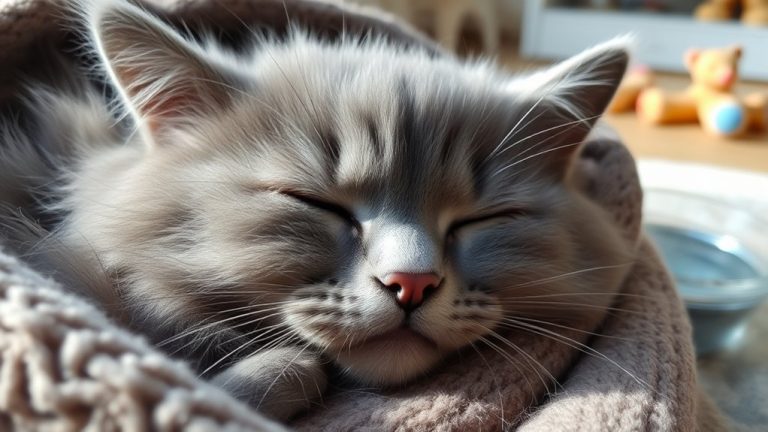
Use a symptoms checklist to monitor their condition, and follow recovery tips like making sure they stay hydrated and comfortable. Giving them a warm, cozy space can really help.
Home remedies might be helpful, but always check with your vet if symptoms get worse.
Isolation can actually reduce stress and support healing.
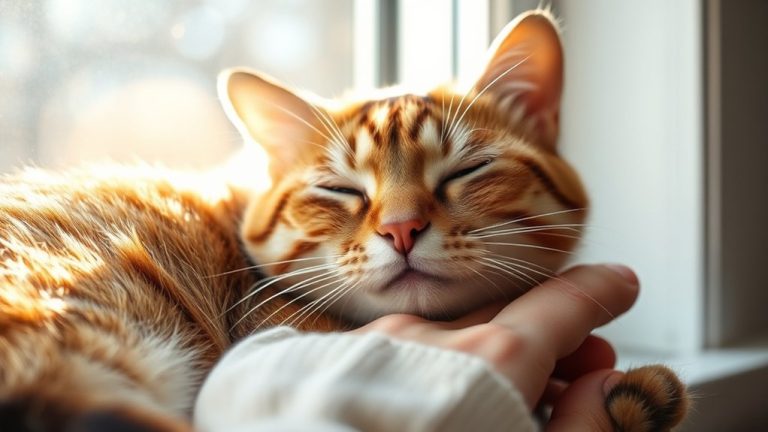
At the same time, offer gentle social interaction to keep your cat comforted during recovery.
It’s all about balancing rest with a little love.
Conclusion
Taking care of your cat during a cold can feel like juggling a thousand flaming torches, but you’ve got this! By recognizing symptoms early, using safe home remedies, and keeping their environment clean and humidified, you’re giving your furry friend the best chance to bounce back quickly.
Always stay alert for signs needing vet care, and never hesitate to reach out. With your love and care, your cat will be purring happily again in no time!