What Scents Do Cats Hate – Complete List
You’ll find cats hate strong scents like citrus. Lemon, lime, and orange peels work well because they irritate their sensitive noses. They also avoid spicy odors from cayenne and chili due to capsaicin.
Cats dislike menthol’s sharpness too. Essential oils like peppermint and tea tree are toxic and must be avoided. Harsh cleaners containing bleach or ammonia are no good either.
Natural deterrents like vinegar and certain herbs are safe options. If you want to understand these scents’ effects more deeply, keep exploring further.
Cats’ Most Sensitive Scents: What They Hate and Why
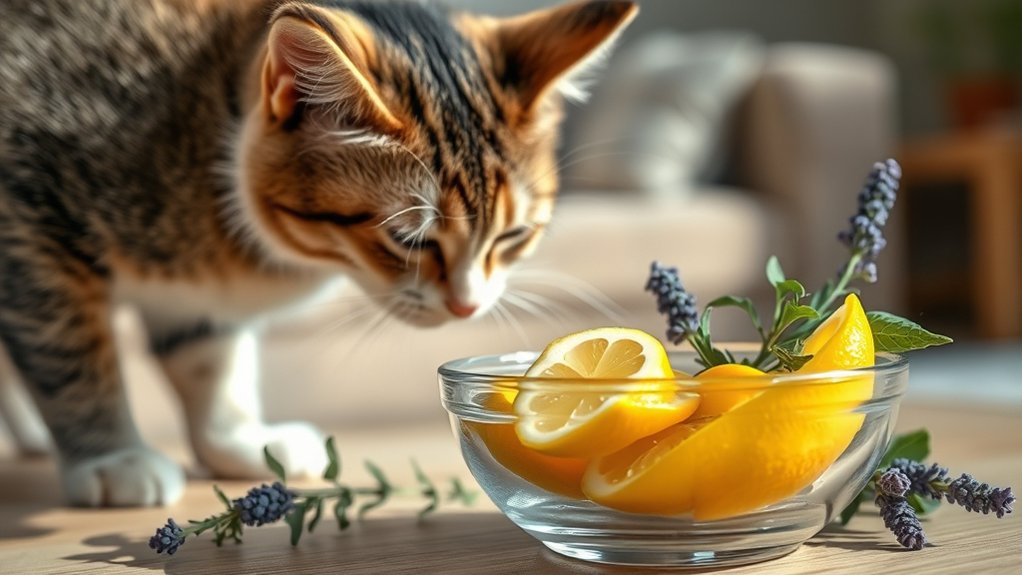
Although cats rely heavily on their sense of smell to navigate the world, their olfactory sensitivity makes them particularly averse to certain scents. With approximately 200 million scent receptors, cats detect even subtle odors, especially strong ones like citrus, which they instinctively dislike.
Scents such as spicy cayenne and chili peppers contain capsaicin, which causes discomfort and deters cats from areas where these smells linger.
Essential oils like peppermint and tea tree oil aren’t only unpleasant but also toxic. They can potentially induce drooling or vomiting if inhaled or ingested.
Household cleaners with harsh fragrances such as bleach and ammonia irritate cats’ respiratory systems, prompting them to avoid those areas.
Understanding these scents can help you manage your environment effectively to deter cats without causing harm or distress. It’s all about keeping things safe and comfortable for your furry friends.
Why Cats Hate Citrus and How to Use It to Deter Them
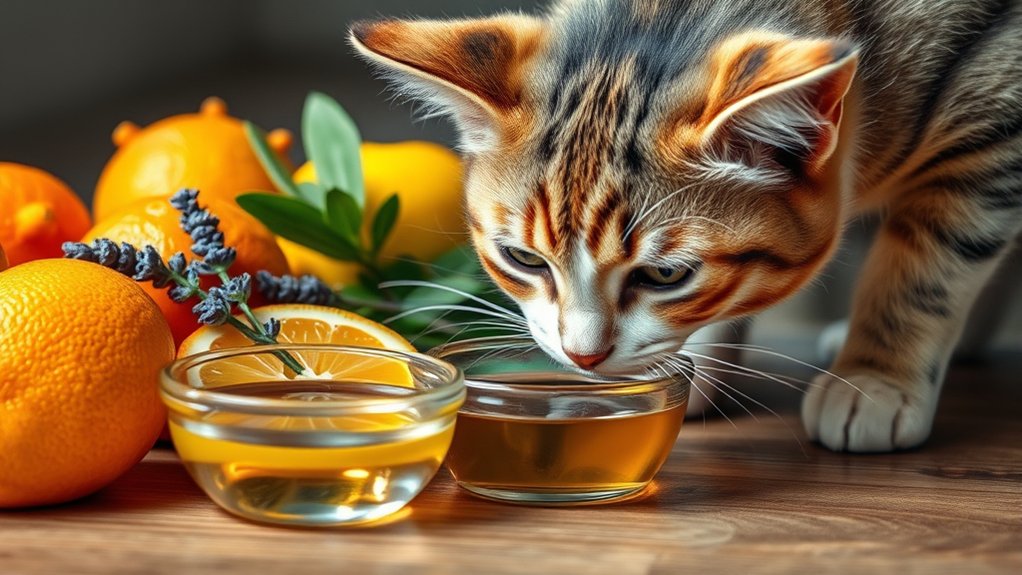
Because cats have a highly sensitive olfactory system, they strongly dislike the sharp, acidic scents found in citrus fruits like oranges, lemons, and grapefruits. Citrus scents contain compounds like limonene and linalool, which can irritate cats and, in concentrated forms, are highly toxic.
You can use citrus as an effective natural deterrent to repel cats by placing fresh peels or diluted sprays in areas you want to keep cats away. The strong odor also masks unwanted smells, such as litter box odors. Remember to reapply regularly, especially outdoors, since the scent dissipates quickly.
| Method | Purpose |
|---|---|
| Fresh citrus peels | Natural, safe deterrent |
| Diluted citrus spray | Easy application, odor control |
| Strategic placement | Targeted repelling |
| Regular reapplication | Maintains effectiveness |
| Avoid concentration | Prevent toxicity |
Spicy and Menthol Smells Cats Avoid and Their Effects
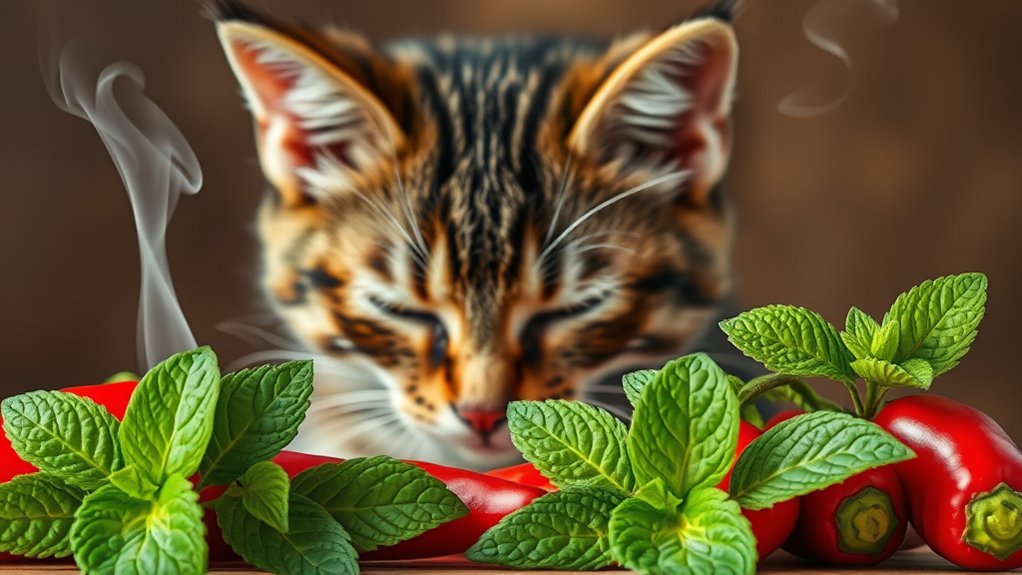
When you introduce spicy smells like cayenne or chili peppers, cats instinctively avoid them because of the burning sensation caused by capsaicin. This aversion comes from a learned response since cats associate these spicy smells with discomfort or possible danger.
Similarly, menthol, which you find in products like Vicks VapoRub®, triggers an aversion in cats. Its strong aroma can irritate their sensitive respiratory systems. While some cats might be curious about mint scents, the overpowering menthol odor usually makes them recoil.
Being around these scents can cause respiratory issues, stress, and noticeable behavioral changes in your cat.
Essential Oils and Household Cleaners Cats Find Unpleasant
Beyond spicy and menthol scents, many cats react negatively to certain essential oils and household cleaners. Essential oils like peppermint, tea tree, and clove are toxic to cats and can cause drooling or vomiting if ingested or inhaled. You should avoid using these oils around your pet.
Household cleaners with strong scents, especially those containing bleach, ammonia, or floral fragrances, can irritate your cat’s respiratory system.
Cats also find vinegar’s sharp, acidic smell unpleasant, which makes diluted vinegar a safe, effective cleaning agent and deterrent.
Furthermore, products with strong citrus scents, such as lemon and orange, overwhelm cats’ sensitive noses and act as natural repellents.
While some essential oils can deter cats, always exercise caution due to their potential toxicity and health risks.
How Other Animals’ Scents Affect Cats’ Behavior
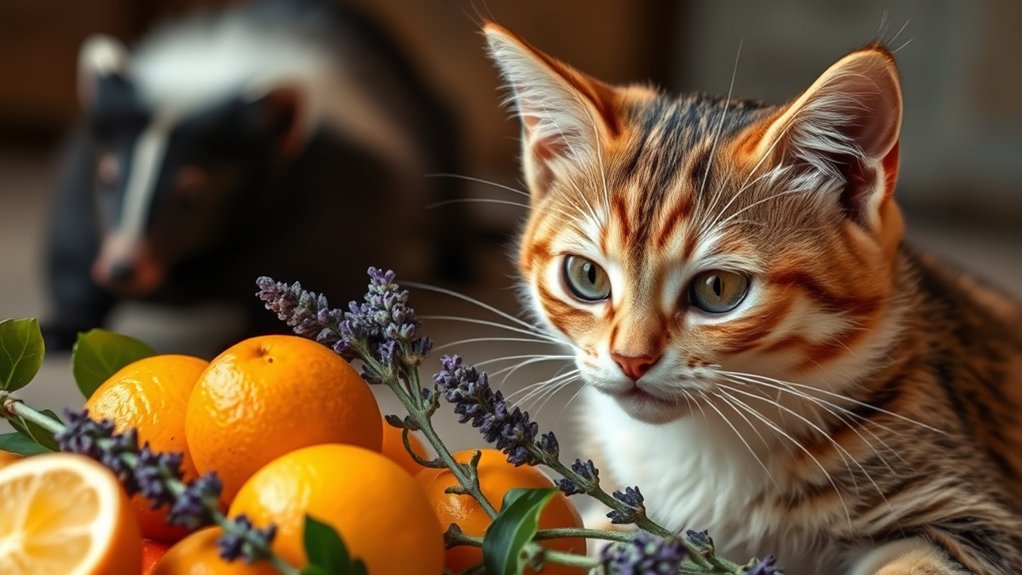
Although cats rely heavily on their keen sense of smell to navigate their environment, encountering the scents of other animals can greatly influence their behavior. Your cat’s powerful sense of smell picks up scents of unfamiliar animals that may trigger stress or avoidance behaviors.
Here’s what you should know about smells that cats hate related to other animals:
- Scents of predators like coyotes can instill fear and cause your cat to avoid certain areas.
- The scent marking of other animals can provoke territorial responses and defensive behaviors.
- Urine or feces from other animals often signal threats, prompting avoidance behaviors.
- Familiar pet scents provide comfort, reducing stress and territorial disputes.
Understanding these reactions helps you manage your cat’s environment effectively. It’s all about creating a space where your cat feels safe and calm.
Why Strong Perfumes and Laundry Scents Repel Cats
Because cats possess around 200 million scent receptors, their sense of smell is incredibly sensitive. This makes strong perfumes and laundry scents overwhelming to them.
When you use synthetic scents, like those in strong perfumes or heavily fragranced laundry products, you can unintentionally disrupt your cat’s olfactory system.
These overwhelming fragrances may mask familiar smells that provide your cat with comfort. That can cause anxiety or prompt avoidance behavior.
Also, strong perfumes can interfere with your cat’s ability to recognize their territory, which leads to stress.
To support your cat’s well-being, it’s best to keep environments unscented or use natural, mild scents instead.
Why Cats Avoid Dirty Litter Boxes and Spoiled Food
When you neglect to clean your cat’s litter box regularly, you’re likely to notice them avoiding it altogether. Cats instinctively steer clear of a dirty litter box because they prefer to eliminate away from their living space. This is a natural behavior meant to reduce exposure to predators and contamination.
The unpleasant smell of spoiled food also triggers a strong aversion in cats. Their acute sense of smell detects freshness instantly. Ignoring these scents can lead to stress and behavioral issues.
To prevent avoidance, focus on cleaning the litter box daily. Dispose of spoiled food promptly and store cat food properly.
Also, keep an eye on your cat’s behavior for signs of stress. Maintaining cleanliness supports your cat’s well-being and comfort.
It’s a simple way to keep them happy and healthy.
Smoke, Banana Peels, and Other Unpleasant Smells for Cats
You should know that smoke—whether it’s from cigarettes, vapes, or barbecues—is not just unpleasant for cats, but it can also harm their respiratory health.
On top of that, the strong smell of banana peels, which comes from something called ethyl acetate, often turns cats away. So, if you’re trying to keep them out of certain areas, banana peels might actually help.
And it’s not just smoke and banana peels. Other strong odors, like spoiled meat or harsh cleaning products, can really overwhelm your cat’s sensitive nose.
That usually makes them uncomfortable and eager to avoid those places.
Effects Of Smoke
Although cats rely heavily on their sense of smell, certain odors like smoke and banana peels can cause them significant discomfort.
Smoke, in particular, affects cats because of their sensitive olfactory systems. Exposure to smoke can lead to respiratory issues and heightened anxiety, as the unpleasant odors cling to their fur.
This often results in behavioral issues such as avoidance or stress.
To protect your cat, consider these points:
- Smoke irritates cats’ sensitive noses and lungs.
- Lingering smoke odors increase stress and anxiety.
- Smoke particles attach to fur, causing lasting discomfort.
- Maintaining a smoke-free environment prevents respiratory and behavioral problems.
Banana Peel Odor
Three key factors make the odor of banana peels particularly unpleasant to cats. First, banana peels contain ethyl acetate, a strong odor compound that many cats find repulsive.
Second, this strong odor acts as a natural deterrent, helping you keep cats away from specific areas when you place banana peels strategically.
Third, the decomposing banana peels emit a pungent smell, creating an unpleasant environment that cats instinctively avoid.
While the fleshy part of the banana is non-toxic and can be given cautiously, the peels’ scent is better avoided around cats to prevent discomfort.
By understanding these factors, you can use banana peels effectively as a non-toxic, scent-based deterrent without causing harm or distress to your feline companion.
It’s a simple way to keep your cat comfortable and your space cat-free where needed.
Other Unpleasant Smells
Beyond the distinct odor of banana peels, several other smells can strongly repel cats. Smoke, whether from cigarettes or fires, overwhelms their sensitive noses and can cause respiratory discomfort.
Similarly, vinegar and ammonia emit potent odors that irritate cats’ olfactory systems, prompting avoidance.
The smell of a dirty litter box is also particularly off-putting, as cats instinctively steer clear of areas that might signal danger or contamination.
Spoiled meat triggers their natural aversion to decay, influencing their feeding behavior negatively.
To summarize, here are four key unpleasant smells for cats:
- Smoke causes respiratory irritation
- Vinegar and ammonia irritate nasal passages
- Dirty litter box signals unsanitary conditions
- Spoiled meat triggers instinctual aversion
Managing these odors improves your cat’s comfort and wellbeing.
Natural and Safe Smells That Keep Cats Away
You can use natural and safe scents to keep cats away without harming them or your environment. For example, citrus-based repellents are a great choice because cats really dislike that smell.
Diluted vinegar is another option that works well and is easy to use around the house.
Then, there are certain herbal aromas like rosemary that not only smell nice to us but also help keep cats at bay.
The best part is, these methods are both humane and practical. If you know how to apply these scents properly, you can create a cat-free space with minimal effort.
It’s all about using the right ingredients in the right way!
Citrus-Based Repellents
Although cats are curious by nature, they tend to avoid citrus scents like lemon, lime, and orange because of their strong, astringent properties.
These scents that cats hate come from compounds in citrus fruits such as limonene and linalool, which irritate their sensitive noses.
Using citrus peels is a natural and safe cat deterrent that works pretty well. To keep cats away, try these simple methods:
- Scatter fresh citrus peels around areas you want to protect.
- Spray diluted citrus juice on furniture or garden spots.
- Reapply regularly since the scent fades quickly.
- Avoid concentrated oils to prevent any toxicity risks.
Give it a shot and see how it works for you!
Vinegar As Deterrent
When you want to keep cats away naturally, vinegar offers an effective solution because of its sharp, acidic scent that irritates their sensitive noses. This natural deterrent discourages unwanted behavior like scratching or marking in specific areas.
You can mix equal parts vinegar and water to create a spray and apply it where you want to keep cats away, like gardens or patios.
Vinegar not only repels cats but also neutralizes odors that might attract them. Since its acidic scent evaporates quickly, you’ll need to reapply it regularly, especially outdoors.
The good thing is vinegar is non-toxic and safe for both cats and plants when used properly.
Safe Herbal Scents
Five common herbs produce scents that cats find unappealing yet remain safe for use around them and your garden.
These safe herbal scents serve as a natural, non-toxic deterrent to keep cats away without causing harm. Their strong fragrance effectively discourages feline visitors while maintaining a pet-friendly environment.
Consider incorporating these herbs:
- Rosemary – Pine-like aroma that cats dislike and is easy to grow or dry.
- Thyme – Pungent scent that repels cats effectively.
- Basil – Strong fragrance useful for protecting specific areas.
- Sage – Robust scent beneficial for outdoor pest control.
Additionally, lemongrass’s citrusy scent is also a safe herbal scent cats avoid.
Using these herbs provides a reliable, natural method to deter cats while ensuring safety and harmony in your garden.
When Smells Cause Stress or Anxiety in Cats and What to Do
A cat’s sense of smell is incredibly acute, with around 200 million scent receptors that heighten their sensitivity to certain odors. Unpleasant scents like citrus, strong perfumes, and some essential oils can trigger stress and anxiety in your cat. This might lead to avoidance or defensive behaviors.
Even the scent of unfamiliar animals may provoke territorial stress. To spot if your cat is feeling this kind of anxiety, watch for signs like hiding, excessive grooming, or changes in eating habits. These clues can help you understand what’s bothering your furry friend.
You can reduce your cat’s stress by creating an environment with familiar, neutral odors and avoiding strong fragrances. Keeping a clean, scent-friendly space helps minimize environmental triggers. This promotes your cat’s sense of safety and well-being.
Managing these factors makes sure your cat stays comfortable and less prone to anxiety caused by overwhelming scents. It’s all about making their space feel calm and secure. When you do that, your cat will thank you with a lot less stress.
Frequently Asked Questions
Can Scent Repellents Harm My Cat’s Health?
Yes, scent repellents can harm your cat’s health if not used carefully. Because of their advanced feline olfactory capabilities, cats are highly sensitive. Exposure may trigger scent sensitivity signs or potential allergic reactions.
To protect your cat, choose natural repellent alternatives and follow safe application methods. Always monitor for distress.
Long-term effects can include respiratory or skin issues.
It’s a good idea to consult your vet. They can help you find the safest approach to managing unwanted behaviors.
Taking these steps will keep your furry friend safe and comfortable.
How Long Do Scent Deterrents Remain Effective?
Scent deterrents usually remain effective from a few hours up to a couple of days, depending on factors like humidity and wind. How you apply your repellent also plays a big role in how long the scent lasts.
It’s a good idea to do an environmental impact assessment to help predict when the scent might start to fade.
Cats’ behavior might change over time, so you may need to reapply the deterrent, especially if you’re using it outdoors.
The potency of scents can also vary with the seasons, which affects how well they work.
To get the best results, try combining scent deterrents with physical barriers. This approach can boost overall effectiveness and cut down on how often you need to reapply.
Are There Safe Homemade Scent Repellents for Cats?
You’ll be interested to know that up to 70% of cats avoid citrus scents, making natural alternatives effective homemade repellents.
You can safely use vinegar solutions or herbal mixtures like rosemary to deter them without harm.
When using essential oils, verify they’re safe and well-diluted, as some can be toxic.
Apply these repellents with spray bottles or by sprinkling them, adjusting your application methods for lasting results while keeping your cat safe.
Can Scent Repellents Be Used Indoors Without Issues?
Yes, you can use scent repellents indoors safely by choosing pet-safe options and considering your cat’s scent sensitivity.
Make sure to keep a close eye on their behavior to make sure they’re not stressed or having any breathing problems.
For repellent effectiveness, natural alternatives like diluted vinegar or citrus work well but need to be reapplied often.
Just avoid toxic essential oils to keep your indoor space safe.
Always think about the environmental impact and go for eco-friendly solutions that keep your cat comfortable and your home safe.
It’s all about finding the right balance for everyone.
Do Cats Eventually Get Used to Certain Repellent Scents?
Think of feline scent preferences like a well-worn path in a forest. Over time, cats habituate to odors, which makes the effectiveness of repellents shorter.
You’ll notice their behavioral responses change as their scent sensitivity varies and environmental factors come into play.
Conclusion
Now that you know which scents cats despise, imagine the power you hold to shape their behavior. Whether it’s to protect your plants or keep them out of certain rooms, you’ve got some control.
But be careful. Misusing these scents can cause stress or anxiety, which isn’t good for your feline friend.
So, choose natural and safe options wisely. Pay attention to how your cat responds.
Next time a scent wafts through your home, ask yourself: are you creating comfort or conflict for your cat?