Why Is My Cat Pooping Outside The Litter Box – Causes And Fixes
If your cat’s pooping outside the litter box, it’s often due to medical issues, stress, or litter box problems. Cats avoid dirty or poorly placed boxes. Health problems like pain or digestive issues can discourage use.
They’re sensitive to changes in environment, litter type, and box accessibility. You can help by keeping the box clean and choosing the right litter. Also, monitor their health and try to reduce stress.
Exploring these areas deeper can guide you to effective solutions. It’s all about making your cat feel comfortable and safe with their bathroom spot.
Why Cats Poop Outside the Litter Box
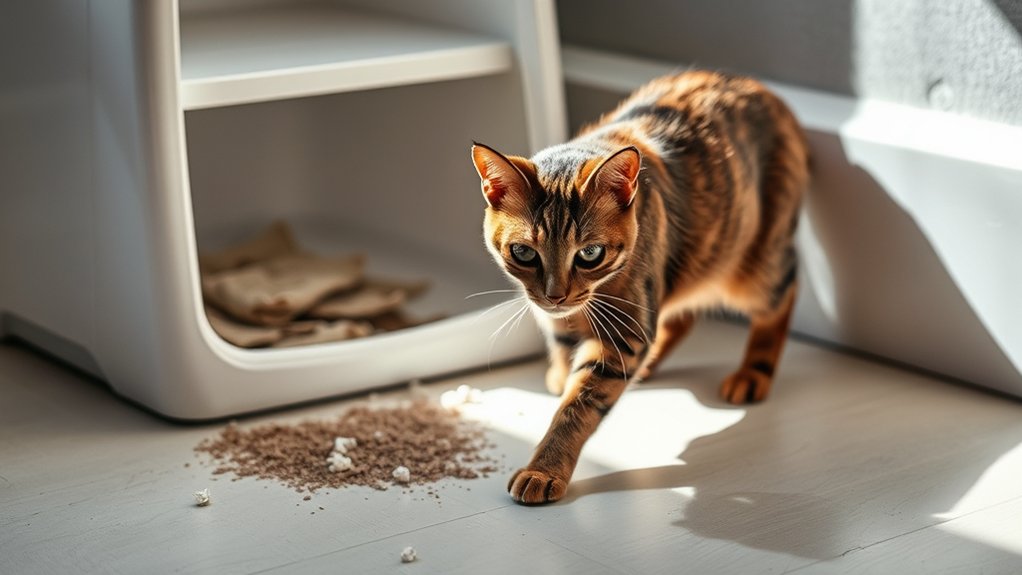
Why is your cat suddenly pooping outside the litter box? Several factors could be at play, from medical issues to behavioral problems.
First, check the litter box location. Cats prefer quiet, low-traffic spots.
Start by placing the litter box in a quiet, low-traffic area your cat feels comfortable using.
If the box isn’t clean, your cat might avoid it. So make sure to clean the litter box daily and give it a thorough cleaning each week.
Litter preferences matter too—many cats dislike scented or non-clumping litter.
Stress or anxiety from changes in your home can also cause litter box avoidance.
It’s important to keep an eye on any changes in your cat’s health and behavior.
If your cat keeps pooping outside the box despite these adjustments, it’s a good idea to consult a veterinarian.
They can help rule out any underlying medical problems and make sure your cat stays healthy and happy.
How Medical Problems Cause Litter Box Avoidance
If your cat is avoiding the litter box, it might be due to some medical issues. Things like digestive problems, pain from arthritis, or even anxiety can make using the box uncomfortable or confusing for your furry friend.
When a cat is in discomfort, they might associate the litter box with pain or stress, which can lead them to avoid it altogether.
Digestive Health Issues
When your cat experiences digestive health issues like constipation or diarrhea, they may start avoiding the litter box due to discomfort or urgency.
Conditions such as inflammatory bowel disease (IBD) can cause gastrointestinal problems that lead to sudden, urgent bowel movements. This can make it hard for your cat to reach the box in time.
Changes in stool consistency or shape often signal underlying health issues, so monitoring bowel movements closely is crucial.
Discomfort from these digestive issues can make your cat associate the litter box with pain or stress. As a result, they might avoid using it altogether.
If you notice these signs, a veterinary evaluation is essential to identify and treat any medical problems promptly.
This will help ensure your cat’s comfort and restore proper litter box habits.
Don’t wait too long—getting help early makes a big difference.
Mobility And Pain
Digestive troubles can make litter box use uncomfortable, but physical pain and mobility challenges often play an equally important role in your cat’s avoidance. Mobility issues like arthritis make it painful for older cats to access the litter box, leading to avoidance behaviors. Pain from matted fur or medical conditions can further reduce comfort, discouraging use.
Cognitive dysfunction may increase anxiety, which can make avoidance linked to pain even worse.
| Cause | Effect on Litter Box Use |
|---|---|
| Arthritis | Difficulty climbing in/out |
| Mobility issues | Limited access, discomfort |
| Pain from fur mats | Avoidance due to discomfort |
| Increased urination | Dislike of dirty litter |
| Older cats’ anxiety | Reluctance to use litter box |
Addressing pain and mobility is key to helping your cat return to the litter box comfortably. It’s worth taking the time to make changes so your furry friend feels better and uses the box again.
Cognitive And Anxiety
Because medical problems can affect both mind and body, cognitive dysfunction and anxiety often play a big role in why your cat might avoid the litter box.
Cognitive dysfunction can cause confusion and anxiety, which makes using the litter box uncomfortable for your cat. Anxiety, especially if you have multiple cats or there’s environmental stress, can lead to your cat having negative feelings about the litter box.
Here’s what to watch for:
- Cognitive dysfunction causing disorientation and litter box avoidance.
- Anxiety triggered by stress or changes leading to behavior issues.
- Underlying medical conditions increasing urination frequency, which affects litter box cleanliness.
- Pain or mobility problems that make anxiety worse and make it harder for your cat to get to the litter box.
Taking care of these issues with your vet’s help and keeping the litter box clean can really help lower your cat’s stress and improve their behavior.
Behavioral Reasons Cats Reject Their Litter Box
When your cat feels stressed by changes like new pets or family members, they might avoid the litter box as a way to cope.
It’s their way of dealing with all the new stuff happening around them.
Territorial disputes with other cats can also cause anxiety and make them reject the litter box.
Cats are pretty particular about their space, and when that gets disrupted, it shows in their behavior.
So, understanding these social and environmental triggers is really key.
Once you know what’s bothering your cat, you can work on fixing it and help them feel more comfortable again.
Stress-Induced Avoidance
Although cats generally prefer routine, even small changes in their environment can cause significant stress that leads them to avoid their litter box. Stress-induced avoidance is often triggered by anxiety or negative associations, causing litter box rejection.
You might notice this if you’ve introduced a new pet or experienced environmental stressors like loud noises.
To address stress-induced avoidance, consider these key factors:
- New pet arrivals can unsettle your cat, prompting avoidance.
- Territorial disputes may create anxiety around the litter box.
- Negative past experiences might cause long-term litter box aversion.
- Environmental stressors, such as unfamiliar smells or sounds, encourage alternative bathroom spots.
Maintaining a stable routine and minimizing stressors helps your cat feel secure and encourages consistent litter box use.
Just keep things calm and predictable, and your kitty will likely be happier using their box.
Territorial And Social Conflicts
Stress and anxiety don’t just come from environmental changes. They often stem from interactions within your cat’s social group. Territorial conflicts, especially after adding new pets or changing household dynamics, can cause significant stress. This stress can lead to litter box avoidance.
Dominant cats may guard the litter box and block access for others. This behavior can trigger social anxiety. Even a single negative interaction, like being startled during bathroom time, can create lasting aversions. It can also change your cat’s behavior.
Changes in social hierarchy can disrupt your cat’s comfort with shared litter boxes. This disruption increases stress-related avoidance. By closely watching litter box behavior and social interactions, you can spot territorial disputes or dominance issues.
Addressing these conflicts helps reduce stress. It also encourages your cat to get back to proper litter box use.
How Stress and Environment Affect Litter Box Use
Since cats are highly sensitive to changes in their surroundings, even small environmental shifts can cause them to avoid the litter box.
Stress from new pets, rearranged furniture, or strong odors can disrupt your cat’s routine and lead to litter box issues.
New pets, furniture changes, or strong smells can upset your cat’s routine and cause litter box problems.
To help your cat use their bathroom consistently, consider these points:
- Place litter boxes in quiet locations to minimize stress and encourage use.
- Maintain a consistent routine to reduce anxiety and prevent clean up accidents.
- In multi-cat households, provide multiple litter boxes to ease territorial conflicts.
- Avoid high-traffic or noisy areas that might deter your cat from the litter box.
How Litter Box Cleanliness Impacts Your Cat’s Habits
When a litter box isn’t kept clean, your cat will often look for a more pleasant place to relieve itself. A dirty litter box is a common cause of your cat avoiding using the litter, leading to behavioral issues like pooping outside the box.
Maintaining cleanliness is essential. Daily scooping and weekly deep cleaning help keep the environment hygienic and inviting.
Cats prefer unscented litter, especially clumping litter, which makes waste removal easier and keeps the box fresh. Also, providing one more litter box than the number of cats guarantees accessibility and reduces stress.
Ignoring these factors can increase your cat’s anxiety and worsen habits.
By prioritizing litter box cleanliness, you support your cat’s well-being and encourage proper bathroom habits. It really makes a difference in how comfortable and happy your cat feels.
Picking the Right Litter and Box Your Cat Will Use
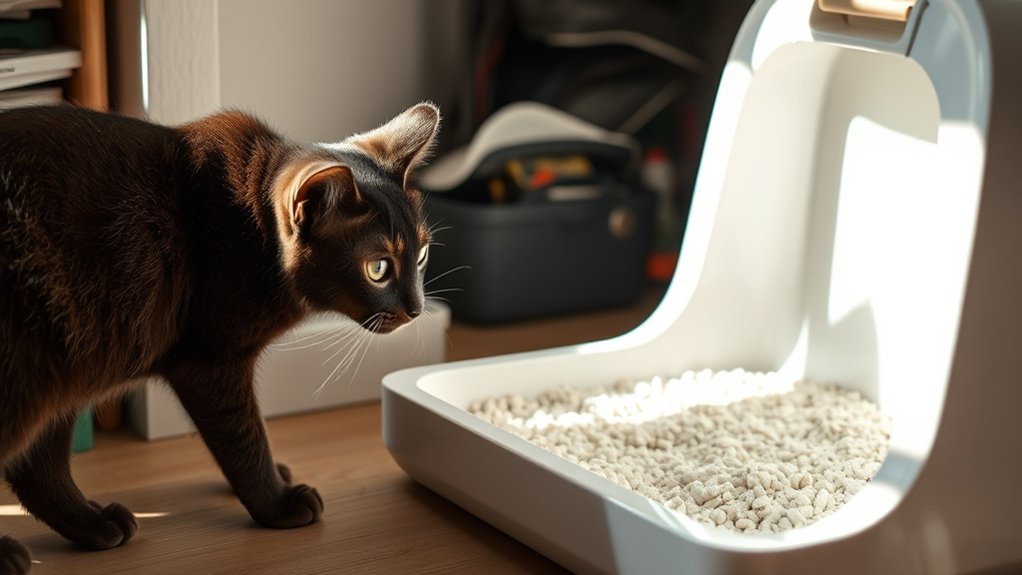
Choosing the right litter and box size is super important for your cat’s comfort and making sure they actually use the litter box.
You’ll want to go for an unscented, clumping litter that has a texture your cat likes.
At the same time, make sure the box is roomy enough for your cat to move around easily.
Don’t forget to think about your cat’s accessibility needs too, so they feel safe and comfortable every time they go.
Litter Type Preferences
Although cats can be particular about their litter, selecting the right type and box can greatly encourage consistent use. Cats generally prefer clumping, unscented litter with a medium to fine texture. This kind of litter appeals to their sensitive nose and natural instincts.
To help your cat avoid elimination problems, consider these steps:
- Offer different types of litter side-by-side to discover your cat’s preferred litter type.
- Maintain a depth of litter around two inches. This allows enough material for digging without discomfort.
- Clean the litter box regularly to keep it fresh and inviting.
- Avoid scented litters because they can deter cats from using the box.
Box Size And Accessibility
Finding the right litter type is just one piece of the puzzle; the size and accessibility of the litter box also play a big role in your cat’s willingness to use it consistently.
Confirm the box size is at least one and a half times your cat’s length from nose to tail to provide a comfortable space.
Provide a minimum of one litter box per cat plus one extra to avoid territorial issues and facilitate easy access.
Cats, especially older cats, prefer boxes with low sides for easier entry and generally avoid covered boxes.
Regular cleaning is essential. Scoop daily and clean thoroughly weekly to maintain a welcoming environment.
How Litter Box Location Influences Where Cats Poop
One key factor influencing where your cat chooses to poop is the location of the litter box itself. Cats prefer litter box locations in quiet areas that offer comfort and security. If your cat is pooping outside the box, it might be signaling dissatisfaction with the current setup.
Consider these points:
Place litter boxes in accessible, low-traffic areas to reduce stressors and encourage use. Avoid deep, dark corners that may feel unsafe or uncomfortable for your cat.
Observe your cat’s behavior to identify preferred spots that feel secure and inviting.
Provide multiple litter boxes in different locations, especially in multi-cat homes, to accommodate varying cat preferences and reduce conflicts.
Addressing litter box location can greatly improve your cat’s bathroom habits.
Practical Steps to Stop Your Cat From Pooping Outside
Adjusting the litter box location is a great starting point, but to effectively stop your cat from pooping outside the box, you’ll need to take additional practical steps.
First, verify the litter box is clean by scooping daily and cleaning weekly to prevent avoidance. Providing multiple boxes—one per cat plus an extra—placed in quiet, low-traffic areas improves accessibility.
Assess litter preferences by trying different unscented clumping litters, as some cats reject certain types.
Monitor for medical issues by observing changes in your cat’s bowel habits. Persistent problems may require veterinary attention.
Finally, identify stressors such as environmental changes or conflicts with other pets and address them to create a secure, comfortable space.
These steps help reduce clean accidents and encourage proper litter box use.
When Should You Consult a Veterinarian About Litter Box Issues?
How do you know when your cat’s litter box issues require a veterinarian’s attention? If your cat is pooping outside the litter box consistently for more than two days, it’s time to consult a veterinarian. Early intervention is key to preventing worsening behavioral issues or medical problems.
Watch for these signs:
- Persistent pooping outside the litter box beyond 48 hours.
- Changes in stool consistency, like diarrhea or constipation.
- Additional symptoms such as decreased appetite, difficulty defecating, or blood in stool.
- Unusual behaviors indicating stress, including hiding or excessive grooming.
Addressing these signs promptly helps identify underlying medical issues or stress.
This way, your cat can get the care they need for a healthier, happier life.
How to Clean and Remove Odors From Litter Box Accidents
Cleaning up litter box accidents promptly and effectively is essential to prevent your cat from returning to the same spot. Start by thoroughly cleaning the soiled area with warm water and an enzymatic cleaner designed specifically for pet odors. This type of cleaner breaks down the substances causing lingering odors, ensuring maximum elimination.
Avoid ammonia-based cleaners, as their scent can mimic urine and encourage your cat to repeat accidents.
After cleaning, place a litter box in the accident area to reinforce appropriate elimination behavior. Don’t forget to wash any fabrics or surfaces contaminated using hot water and pet-safe detergents to fully remove odors.
By maintaining a clean environment and addressing accidents properly, you’ll help your cat develop better litter box habits and reduce future issues.
It’s all about keeping things fresh and making sure your kitty knows where to go next time.
Frequently Asked Questions
Can Diet Changes Affect My Cat’s Litter Box Habits?
Yes, diet changes can impact your cat’s litter box habits. Alterations in nutritional balance or fiber intake might cause digestive upset, which can lead to behavioral changes like avoiding the litter box.
Food allergies or poor hydration levels can also trigger discomfort. Stress from sudden diet shifts may make this worse.
Paying attention to litter preferences and monitoring health issues helps you spot problems early.
It’s a good idea to consult your vet to ensure smooth dietary adjustments and keep your cat comfortable.
Do Certain Cat Breeds Avoid Litter Boxes More Than Others?
Yes, certain cat breeds show stronger litter box preferences due to breed behavior and stress response.
For example, sensitive breeds react to environmental factors and social dynamics, causing avoidance. Long-haired cats might face health concerns like matted fur affecting access.
Territorial issues also play a role.
You can improve habits using tailored training techniques and experimenting with litter types. Understanding these factors helps you create a comfortable, welcoming space for your cat.
How Does Aging Impact a Cat’s Litter Box Use?
Aging affects your cat’s litter box preferences because of mobility challenges and health issues like arthritis or kidney disease.
Senior cats often show behavioral changes and become more sensitive to scents. This means environmental factors and stress triggers can have a bigger impact on them.
You’ll need to make some routine adjustments, like providing accessible and quiet litter boxes to help your cat feel comfortable.
Understanding these changes can help you support your cat better. This way, you encourage consistent litter box use and improve their overall well-being.
Can Multiple Cats in One Home Cause Pooping Outside the Box?
Imagine Luna, who started pooping outside the box after a new cat joined your home. Yes, multiple cats can cause this because of territorial disputes and competition anxiety.
Stress factors like box cleanliness, litter preferences, and space limitations play a big role.
Changes in social dynamics and introductions can trigger avoidance too.
You’ll want to monitor health issues closely and provide extra litter boxes to ease tension and support peaceful coexistence.
Are There Natural Remedies to Encourage Litter Box Use?
Yes, you can use natural remedies to encourage litter box use. Focus on stress reduction through pheromone sprays and environmental enrichment to create a calm space.
Pay attention to litter box placement and offer litter with a preferred texture.
Maintain routine consistency and use natural attractants like catnip.
Keep the box clean with odor control methods, and apply positive reinforcement when your cat uses the box.
These steps help build trust and comfort.
Conclusion
Dealing with your cat pooping outside the litter box can be frustrating. But understanding the causes, from medical issues to stress, helps you address the problem effectively.
Have you considered how small changes in cleanliness or location might make all the difference? By staying patient and proactive, you can create a comfortable environment that encourages proper litter box use.
Remember, if problems persist, consulting your veterinarian guarantees your cat’s health and happiness come first.