Can Cat Have Mango – Safety And Serving Tips
You can give your cat small amounts of fresh mango safely if you remove the pit and peel first. Mango is non-toxic but high in sugar, so offer it only occasionally to avoid digestive upset or health issues, especially in diabetic or senior cats.
Start with tiny pieces and watch for any allergic reactions. Since mango provides minimal nutritional benefits and cats rely on meat, treats like mango should be rare indulgences.
Explore tips on preparation, serving, and suitable alternatives next.
Is Mango Safe For Cats To Eat?
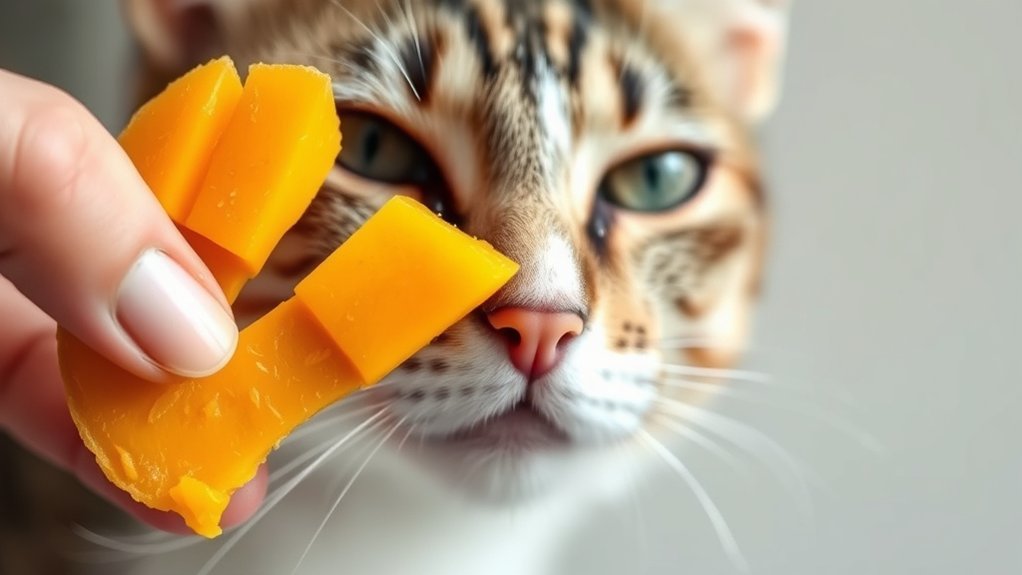
Wondering if mango is safe for your cat? Yes, the flesh of mango is generally safe for cats when given in small amounts, as it’s non-toxic. However, you must always remove the pit and peel before offering mango to your cat to avoid choking hazards and potential digestive issues.
Since cats produce their own vitamin C, mango doesn’t provide significant nutritional benefits. Be cautious with portion sizes because mango’s high sugar content can be harmful, especially for overweight or diabetic cats.
When introducing mango, watch closely for any signs of an allergic reaction or digestive upset, like vomiting or diarrhea. If you notice any adverse effects, stop feeding mango immediately and consult your vet.
Does Mango Offer Any Nutritional Benefits For Cats?
While mango can be a safe occasional treat for your cat when prepared properly, its nutritional value is quite limited.
You should consider these points before feeding mango:
Mango contains minimal Vitamin C and unusable Vitamin A for cats, so it offers limited benefits.
The dietary fiber in mango isn’t essential and might upset sensitive digestive systems if overfed.
Also, the high sugar content in mango can be harmful, especially for overweight or diabetic cats.
High sugar levels in mango may pose risks for overweight or diabetic cats.
Always serve mango in small pieces to make sure it’s safe for your cat to eat without choking risks.
How To Safely Prepare Mango For Your Cat
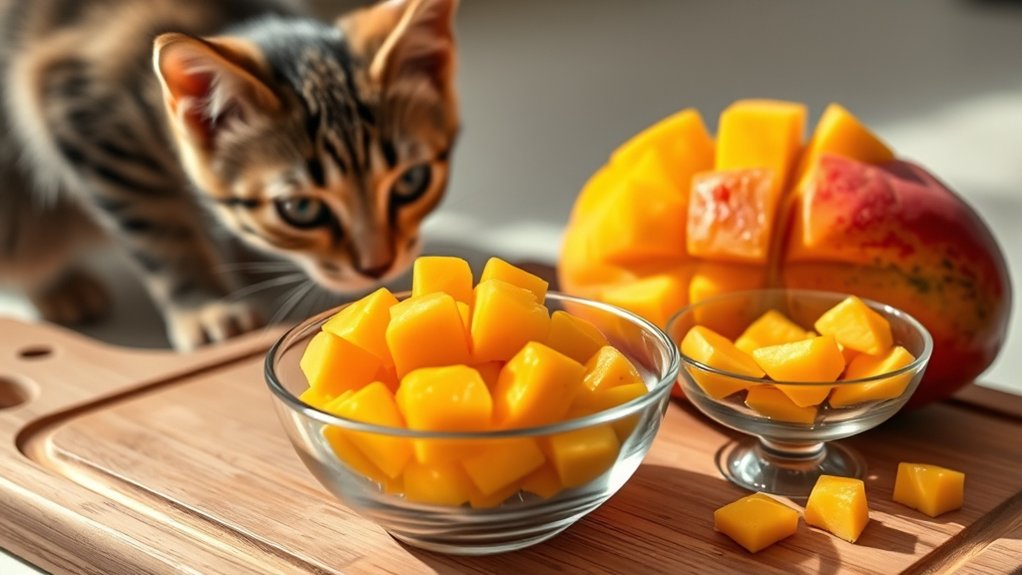
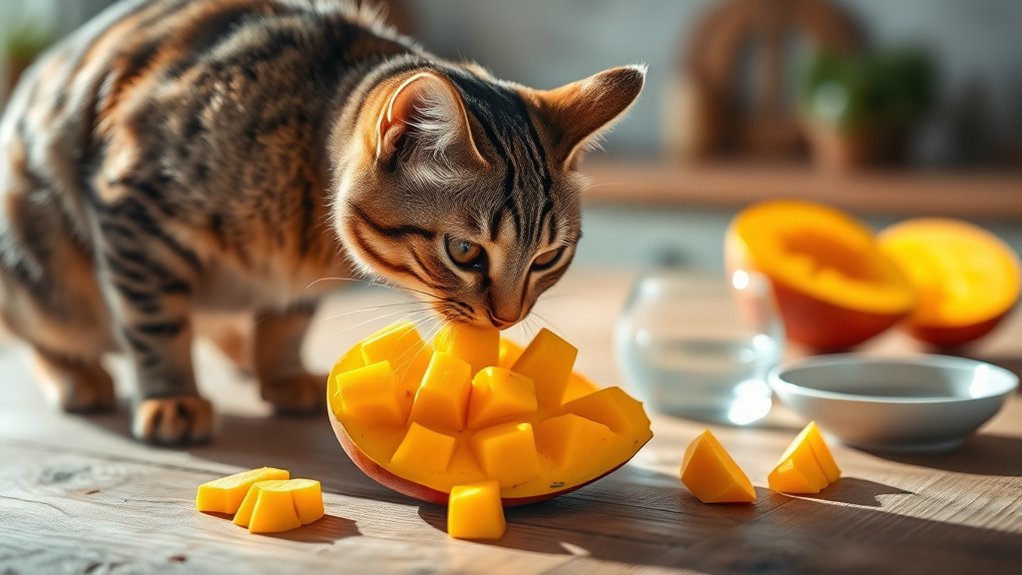
Because mango contains parts that can be harmful to cats, you need to prepare it carefully before offering it as a treat. Always remove the pit to avoid choking hazards and toxic exposure. Peel the mango to aid digestion and eliminate pesticide risk.
Cut the fruit into small pieces for safe consumption. Serve only fresh mango and avoid dried or syrupy types. After feeding, keep an eye on your cat for any adverse reactions.
| Step | Action |
|---|---|
| Remove pit | Eliminates choking hazard, toxins |
| Peel | Easier digestion, pesticide-free |
| Cut small pieces | Prevents choking, easy to eat |
| Serve fresh | Avoids sugars and preservatives |
This careful preparation helps make sure your cat enjoys mango safely.
How Much Mango Can You Give Your Cat?
If you decide to give your cat mango, start with a small amount. Typically, this is between half a teaspoon to one teaspoon, depending on their size. Remember, cats are obligate carnivores, so mango should only be an occasional treat.
Start your cat with a small mango amount—half to one teaspoon—since cats need mostly meat.
When feeding your cat mango, follow these guidelines:
- Serve a small piece, about half a teaspoon to one teaspoon, after peeling and pitting thoroughly.
- Limit feeding your cat mango to once or twice a week to prevent digestive upset.
- Always monitor your cat for any adverse reactions after introducing mango.
- Consult your veterinarian if you’re unsure about adding mango to your cat’s diet.
This cautious approach helps guarantee your cat enjoys mango safely without risking their health. Just keep an eye on them and make sure it stays a special treat.
Signs Your Cat May Be Allergic Or Intolerant To Mango
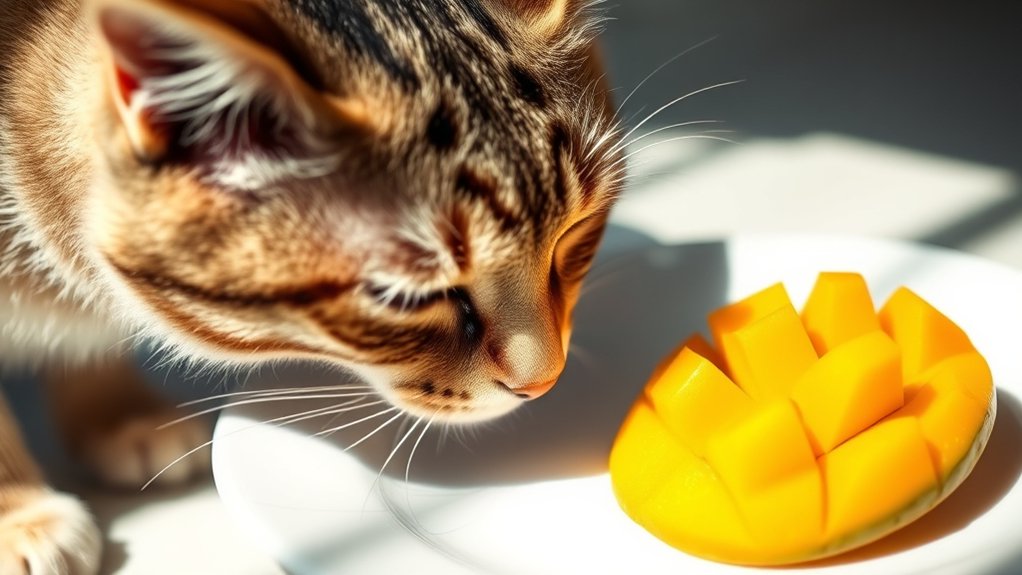
If you notice your cat vomiting, having diarrhea, or looking bloated after eating mango, these might be signs their tummy isn’t agreeing with it.
You might also see changes in their behavior, like them feeling really tired or suddenly not wanting to eat.
It’s a good idea to watch your cat closely during the first day or two after giving them mango.
And if you spot any of these symptoms, stop feeding them mango right away.
Digestive Upset Symptoms
When you introduce mango to your cat’s diet, watch closely for signs of digestive upset like vomiting, diarrhea, or bloating, as these can indicate intolerance.
You should monitor your cat carefully for any symptoms of gastrointestinal issues.
If you notice any negative reactions, stop feeding mango immediately and consult your veterinarian.
Key symptoms to watch for include:
- Vomiting or regurgitation shortly after eating mango
- Diarrhea or loose stools within 24-48 hours
- Bloating or abdominal discomfort
- Signs of allergic reactions such as skin irritations or excessive scratching
These digestive upset symptoms suggest your cat may be allergic or intolerant to mango.
Always introduce mango slowly and observe your cat’s reaction before offering it regularly.
Behavioral Changes Observed
Although digestive symptoms are the most obvious signs of mango intolerance in cats, behavioral changes can also signal a problem. You may notice lethargy or unusual agitation shortly after your cat eats mango, which could indicate a negative reaction.
Some cats might even refuse mango altogether, hinting at intolerance or dislike.
It’s important to monitor your cat closely for any behavioral changes alongside gastrointestinal upset such as vomiting or diarrhea for 24 to 48 hours after introducing mango.
If you observe persistent symptoms or signs of distress, discontinue feeding mango immediately.
To guarantee your cat’s safety, consult a veterinarian for proper evaluation and guidance.
Being cautious helps prevent worsening reactions and keeps your feline friend healthy.
Which Cats Should Skip Mango Treats?
If your cat has diabetes, it’s a good idea to avoid giving them mango. The high sugar content can really mess with their blood sugar levels.
Also, kittens should skip mango treats because their digestive systems aren’t fully developed yet and mightn’t handle it well.
On top of that, senior cats could be more sensitive, making mango a risky choice for their digestive health.
Diabetic Cats Avoidance
Since mango contains high levels of natural sugars, you should avoid giving it to diabetic cats to prevent dangerous spikes in their blood glucose.
Diabetic cats need careful diet management, and mango’s high sugar content can worsen insulin resistance. Even small amounts can disrupt their condition.
Follow these guidelines:
- Avoid mango and other high sugar content human foods for diabetic cats.
- Monitor blood glucose levels closely if you’re unsure about any new treat.
- Always seek consultation with a veterinarian before introducing any human foods.
- Opt for alternatives that are low in sugar, such as cooked chicken or diabetic cat treats.
Being cautious helps maintain your diabetic cat’s health and prevents complications related to their condition.
Kittens’ Dietary Restrictions
When you’re caring for a kitten, it’s important to avoid giving them mango until they reach about one year old. Their developing digestive systems need nutrient-rich, high-protein foods to support healthy growth.
Kittens have specific dietary restrictions because their bodies can’t properly digest fruit like mango. The sugar content in mango can cause stomach upset and nutrient imbalances for young cats.
Since kittens lack the enzymes needed to digest human food effectively, introducing mango too early can harm their health. It’s best to stick to a vet-approved diet designed specifically for kittens to guarantee balanced nutrition.
Before offering any human food, including mango, always check with your veterinarian. This helps prevent digestive issues and keeps your kitten safe and healthy.
It’s better to be cautious when it comes to your kitten’s diet!
Senior Cats Sensitivities
Although mango can be a tasty treat for some cats, senior cats often have more sensitive digestive systems that may not tolerate fruit well. You should be cautious when offering mango to older cats due to their unique health concerns.
Consider these points:
- Senior cats’ sensitive digestive systems may lead to gastrointestinal upset after eating mango.
- The high sugar content can worsen obesity or diabetes in older cats.
- Changes in appetite or taste may make mango unappealing to your senior cat.
- Always consult a veterinarian before introducing mango or new treats, and watch closely for signs of intolerance like vomiting or diarrhea.
If your senior cat shows any adverse symptoms, skip mango treats to keep them safe and healthy.
It’s better to be safe than sorry when it comes to your furry friend’s health.
Why Don’t Cats Need Mango In Their Diet?
Because cats are obligate carnivores, they rely almost exclusively on animal protein to meet their nutritional needs, making mango an unnecessary addition to their diet.
While cats can eat mango in small amounts, it offers minimal nutritional value since cats produce their own Vitamin C and require nutrients mainly from meat.
Cats can eat mango sparingly, but it provides little nutritional benefit since they synthesize their own Vitamin C.
Mango’s fiber isn’t essential and can cause digestive issues if overconsumed.
Also, the excessive sugar in mango poses risks, especially for overweight or diabetic cats.
Although mango is considered one of the safe fruits for cats, it shouldn’t replace a balanced diet focused on high-protein cat food.
So, while you can occasionally offer mango, it’s important to recognize that your cat doesn’t need it.
Animal protein remains crucial for their health.
Healthier Treat Alternatives To Mango For Cats
You have several healthier treat options that suit your cat’s dietary needs better than mango. Choosing treats safe for cats guarantees you support their health without unnecessary risks.
Consider these healthier treat alternatives:
- Cooked chicken: Small, unseasoned pieces provide essential protein aligning with obligate carnivore needs.
- Blueberries: These antioxidant-rich fruits are low-calorie and can be offered in moderation as a nutritious snack.
- Pumpkin: Plain, cooked pumpkin aids digestion with its fiber content and is completely safe for cats.
- Commercial cat treats: Opt for natural ingredient-based treats specifically formulated to complement your cat food.
These options are more suitable than mango, supplying nutrients cats need while minimizing digestive or allergic concerns.
Always introduce new treats carefully and in moderation.
Frequently Asked Questions
Can Cats Eat Dried Mango or Mango-Flavored Snacks?
You shouldn’t feed your cat dried mango or mango-flavored snacks because dried fruit often contains added sugars and preservatives.
These ingredients can harm your cat’s taste buds and digestion. While dried mango has benefits for humans, those don’t really apply to cats.
Instead, you might want to try mango snack alternatives like homemade mango treats made from fresh fruit.
Just be sure to consider your cat’s fruit preferences carefully before offering any new food.
When you compare nutritional values, fresh mango is definitely safer for cats.
But remember, always give it in moderation to keep your kitty healthy.
Is It Safe to Give Mango Juice to Cats?
Only about 5% of a cat’s diet should come from non-meat sources, so giving mango juice isn’t ideal.
Mango juice benefits are minimal for cats since fruit sugar content can cause feline digestion issues and potential allergies. Cats prefer meat flavors, and juice serving size must be tiny if offered.
Fresh vs. processed juice also matters. Fresh is slightly better, but hydration alternatives like water are safer for your cat.
Can Mango Cause Digestive Upset in Kittens?
Yes, mango can cause digestive upset in kittens because their fruit digestion is pretty sensitive. The natural sugars in mango might bother their stomachs, which could lead to symptoms like vomiting or diarrhea.
Kittens have very specific dietary needs, so it’s smart to introduce new foods like mango very cautiously. Always check with your vet before giving your kitten anything new.
It’s better to stick with safe fruit options and focus on what’s best for your kitten’s health to avoid any potential risks.
How Often Can Indoor Cats Have Mango Treats?
Think of mango serving frequency as a careful dance. You should offer indoor cat treats like mango only once or twice a week. This respects feline dietary needs and helps avoid digestive upset.
Keep treat portion sizes small, around ½ to 1 teaspoon. Make sure you follow fruit safety guidelines by serving peeled, pitted mango flesh.
Pay attention to your cat’s taste preferences. Also, consider healthy fruit options to provide nutritional benefits without overdoing it.
Are There Any Long-Term Effects of Feeding Mango to Cats?
You should be cautious about long-term mango feeding since mango toxicity concerns are minimal, but excess sugar can harm digestive health and cause allergic reactions.
Portion control is essential, especially considering your cat’s age and preferences.
Mango offers limited nutritional benefits for cats, so it’s better to offer alternative fruits occasionally.
Always monitor your cat for adverse reactions and prioritize species-appropriate diets to maintain overall health and prevent issues over time.
Conclusion
Think of mango as a bright, tropical sunbeam, inviting but not essential in your cat’s world. While it can add a splash of sweetness and some nutrients, it’s best to offer it sparingly and with care. Always watch for any signs of discomfort.
Remember, your cat’s true nourishment comes from a balanced diet designed just for them. Treat mango as an occasional gift, not a dietary staple. This way, you keep your feline friend safe and healthy.