Are Hydrangeas Poisonous To Cats – Safety Risks Explained
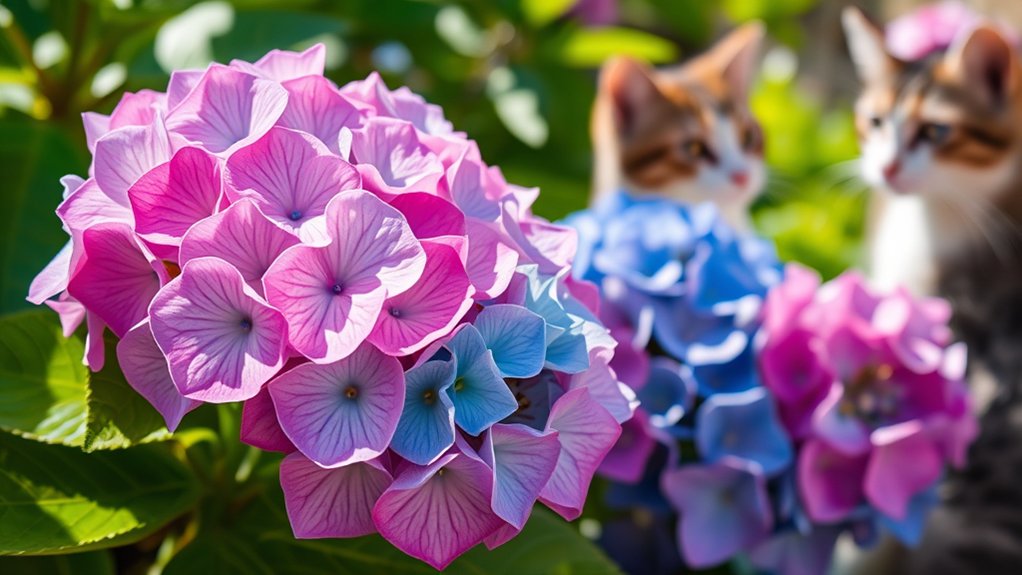
Yes, hydrangeas are toxic to your cat because they contain cyanogenic compounds, especially in the leaves and flowers. If your cat chews on any part, they can suffer vomiting, diarrhea, drooling, and lethargy. This means they’ll need prompt veterinary care.
Early treatment really helps improve their chances of recovery. So, it’s important to recognize the symptoms and take precautions at home.
You’ll find more details on care, prevention, and safer plant choices ahead.
Why Are Hydrangeas Poisonous to Cats?

Why exactly are hydrangeas poisonous to cats? Hydrangeas contain amygdalin, a cyanogenic compound that releases cyanide when ingested, making them toxic to your feline friend. Cats are especially vulnerable due to their smaller size and lower toxin tolerance.
When your cat chews on hydrangeas, they may experience symptoms like vomiting, diarrhea, lethargy, and loss of appetite. These are clear signs of distress. These symptoms indicate that the cyanogenic toxin is affecting their digestive system and overall health.
If you suspect your cat has ingested any part of a hydrangea, don’t wait. Seek immediate veterinary care. Prompt treatment is essential because the toxicity can worsen quickly.
Understanding this risk helps you keep your pet safe and healthy around these common garden plants. It’s always better to be cautious when it comes to what your cat might nibble on.
Most Dangerous Parts of Hydrangeas for Cats
Although all parts of hydrangeas contain toxins harmful to cats, the leaves and flowers carry the highest concentrations of cyanogenic glycosides. This makes them especially dangerous if your cat decides to chew on them.
Leaves and flowers of hydrangeas hold the most cyanogenic toxins, posing serious danger if chewed by cats.
These parts are the most poisonous and can quickly trigger toxic symptoms like vomiting, diarrhea, and lethargy.
Even small amounts of hydrangea ingestion can release cyanide, which disrupts your cat’s cellular oxygen use and poses serious health risks.
Stems also contain toxins but generally at lower levels than leaves and flowers.
If you notice your cat nibbling on any part of a hydrangea, watch closely for early symptoms of poisoning and seek immediate veterinary care.
Understanding which parts are most toxic helps you protect your cat from potential harm.
How Much Hydrangea Causes Poisoning in Cats?
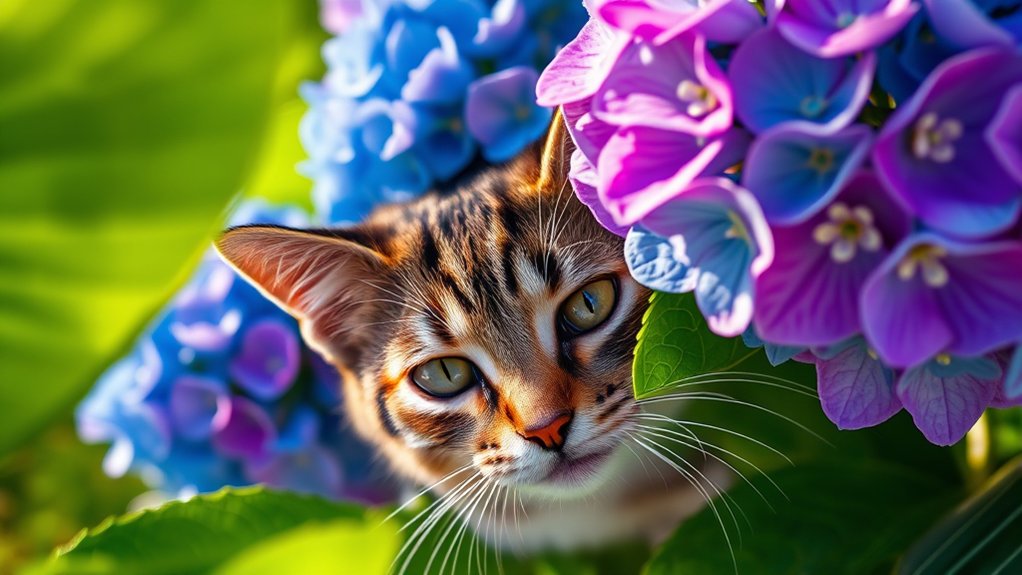
Knowing which parts of hydrangeas pose the greatest risk helps you stay alert. But you might wonder how much of the plant actually causes poisoning in cats. The truth is, the exact amount needed to trigger hydrangea poisoning in cats isn’t well-defined because sensitivity varies by individual.
Even a small amount of leaves or flowers, which contain cyanogenic glycosides, can cause mild symptoms. Larger ingestions raise the risk of severe symptoms.
Since cats are smaller and more vulnerable to toxic plants, any amount ingested should be taken seriously.
If your cat ingested any part of a hydrangea, seek prompt veterinary care immediately. Early intervention is essential to reduce toxin absorption and protect your feline friend’s health.
Don’t wait to get help—it could make all the difference.
Symptoms of Hydrangea Poisoning in Cats
When your cat ingests any part of a hydrangea, you may notice symptoms like vomiting, diarrhea, and lethargy as their body reacts to the toxins.
Hydrangea poisoning in cats often begins with gastrointestinal distress, including vomiting and loss of appetite. You might also see excessive drooling and signs of abdominal pain as your cat tries to rid itself of the toxins.
Hydrangea poisoning in cats starts with vomiting, loss of appetite, drooling, and abdominal pain as toxins take effect.
Symptoms can develop hours after ingestion, so it’s important to monitor your pet closely. In more severe cases, cats may exhibit weakness, pale gums, and rapid breathing.
Recognizing these symptoms early helps you provide the care your cat needs. Understanding these signs allows you to respond swiftly, ensuring your cat’s health and safety after potential hydrangea exposure.
When to Seek Emergency Care for Cats
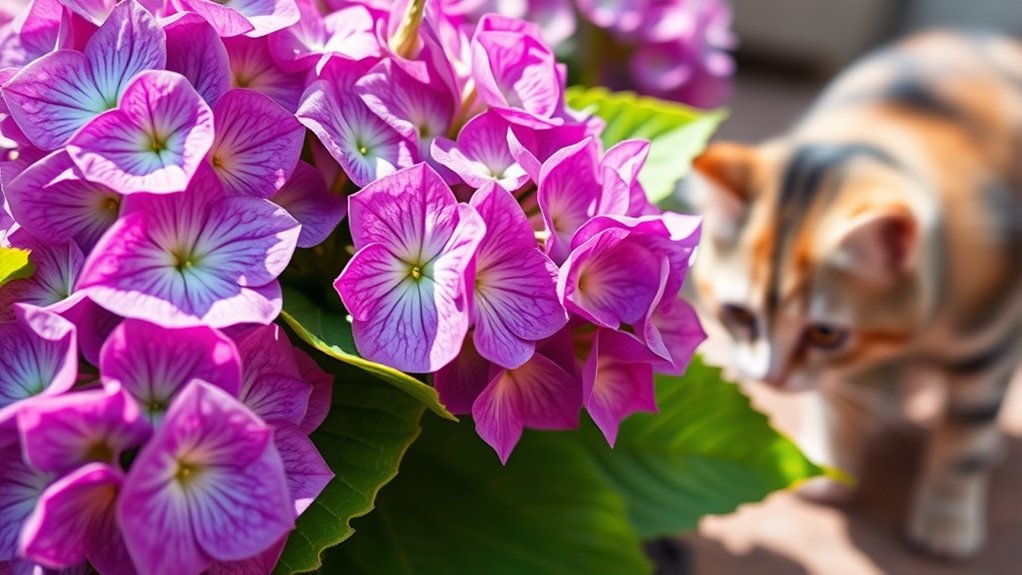
If you notice severe symptoms like pale gums, rapid breathing, or your cat collapsing, you need to get them to a vet right away.
Time is really important because the toxic effects from eating hydrangeas can get worse quickly. So, don’t wait—act fast.
And if you can, bring a sample of the plant with you to help the vet diagnose and treat your cat properly.
Recognizing Severe Symptoms
Although some symptoms of hydrangea poisoning in cats may seem mild at first, you should act quickly if your cat shows signs like repeated vomiting, diarrhea, extreme lethargy, or difficulty breathing.
These symptoms can indicate severe poisoning, especially if your cat has ingested parts of the plant.
Watch closely for symptoms of distress that require emergency care and veterinary attention.
Seek immediate help if you notice:
- Pale gums, rapid breathing, or collapse
- Loss of appetite lasting several hours combined with other symptoms
- Behavioral changes such as hiding or depression after exposure
Since symptoms may develop hours later, continuous monitoring is critical.
Prompt action can prevent complications and guarantee your cat receives the care it needs.
Immediate Veterinary Actions
Signs of severe hydrangea poisoning call for immediate veterinary attention to protect your cat’s health. If your cat has ingested any part of a hydrangea, don’t wait. Contact your veterinarian or the Pet Poison Helpline right away.
Watch closely for symptoms like vomiting, diarrhea, lethargy, or excessive drooling, as these indicate urgent poisoning risks.
Avoid inducing vomiting unless a professional advises it, since this could worsen your cat’s condition.
Prompt veterinary intervention is essential because hydrangea poisoning can lead to cyanide toxicity, which requires expert care. Acting immediately not only helps manage symptoms effectively but also greatly improves your cat’s chances for a full recovery.
Stay calm, gather information about the ingestion, and seek emergency care without delay.
Critical Time Window
When your cat consumes hydrangea, time becomes essential in preventing serious health issues. The vital time window for effective treatment is within two hours of ingestion. If your cat ingests hydrangea, prompt veterinary attention is important to manage hydrangea toxicity and provide supportive care.
Watch closely for symptoms such as vomiting, excessive drooling, or lethargy developing within hours. You might also notice a decreased appetite or unusual behavior. Any signs of distress could indicate cyanide poisoning, so keep an eye out.
If you suspect ingestion, don’t wait. Bring a sample of the plant to the vet for identification.
Early intervention within this vital time window can greatly improve your cat’s recovery and reduce risks associated with hydrangea toxicity.
How Do Vets Diagnose Hydrangea Poisoning?
When you take your cat to the vet because you think it might’ve gotten into some hydrangeas, the vet will begin with a thorough check-up.
They’ll ask about your cat’s symptoms and any recent history that might be relevant.
Next, they’ll likely run some blood tests and maybe do some imaging to confirm if it’s really hydrangea poisoning.
This also helps them rule out other possible problems.
Clinical Examination Process
Although diagnosing hydrangea poisoning in cats can be challenging, veterinarians follow a systematic clinical examination process to guarantee an accurate evaluation.
When you bring your cat to the veterinary clinic, the vet begins by gathering a detailed history of exposure. This includes when the cat ingested parts of the hydrangea and any symptoms like vomiting or dehydration you’ve noticed.
Then, they perform a thorough physical examination, focusing on signs of distress and hydration status.
Key steps in the clinical examination include checking for gastrointestinal symptoms such as vomiting and diarrhea.
They also evaluate dehydration by assessing gum color and skin elasticity. Monitoring lethargy or other signs of systemic distress is important too.
This clinical examination helps the vet determine the severity of hydrangea poisoning. It also guides prompt treatment decisions.
Diagnostic Testing Methods
Vets use several diagnostic testing methods to confirm hydrangea poisoning in cats and assess its severity. They start with a thorough physical examination and gather a detailed history of your cat’s exposure to hydrangeas.
Blood tests play an essential role, helping detect signs of cyanide poisoning by evaluating oxygen levels and identifying toxin impact. A complete blood count and biochemical profile reveal any underlying health issues worsened by the toxin.
Urinalysis may be performed to monitor kidney function and hydration, especially if your cat shows signs of systemic distress. Moreover, diagnostic imaging like X-rays can rule out other causes of symptoms, particularly if gastrointestinal issues are present.
These combined methods allow vets to diagnose accurately and tailor treatment to guarantee your cat’s best recovery chance. It’s all about getting the right info to help your furry friend as quickly as possible.
Treating Cats After Hydrangea Ingestion
Because hydrangea ingestion can lead to cyanide toxicity, you need to seek immediate veterinary care for your cat. Quick treatment is critical to reduce toxin absorption and manage symptoms effectively.
Seek immediate veterinary care if your cat ingests hydrangeas to prevent cyanide toxicity and manage symptoms quickly.
Your vet may induce vomiting or perform gastric lavage if ingestion was recent to remove cyanide from your cat’s system. They might also give anti-nausea medications and intravenous fluids to prevent dehydration and ease your cat’s discomfort.
Your vet will monitor your cat closely because symptoms can develop hours later and can vary in severity.
Prompt veterinary attention increases the chances of successful symptom management and recovery. Don’t wait if you suspect your cat has eaten hydrangeas. Early intervention is key to minimizing risks and making sure your feline friend gets the best outcome.
Recovery After Hydrangea Poisoning
You’ll usually notice your cat starting to bounce back pretty quickly if treatment gets underway within two hours of eating the hydrangea.
It’s really important to keep a close watch on them afterward because catching any leftover symptoms early can make a big difference.
Knowing what to expect during their recovery and sticking to the care instructions can really help them heal fully.
Recovery Timeline
Although hydrangea poisoning can be alarming, cats often recover well if treatment begins within a few hours of ingestion. Early veterinary intervention is key to managing symptoms and ensuring quick recovery.
Mild symptoms like a single vomiting episode or reduced appetite typically improve soon after treatment.
However, more severe cases require careful monitoring. Here’s what you can expect during the recovery timeline:
Treatment focuses on removing the toxin and managing symptoms. Cats with mild symptoms often show improvement within hours.
Continuous monitoring is essential if symptoms persist beyond two hours.
Post-Treatment Care
Once your cat has received treatment for hydrangea poisoning, it’s essential to monitor them closely for any signs of recurring symptoms like vomiting or lethargy over the next 24 to 48 hours.
Post-treatment care means providing a quiet, comfortable resting area and making sure your cat always has access to fresh water to prevent dehydration.
You’ll want to gradually reintroduce bland food to see if their appetite comes back without upsetting their stomach.
Be sure to follow your vet’s instructions carefully. Give any prescribed medications, like anti-nausea drugs or antibiotics, exactly as directed.
Also, keep your cat away from any toxic plants during recovery to avoid further risks.
Preventing Hydrangea Poisoning in Cats
Since hydrangeas pose a risk to your cat’s health, it’s important to take proactive steps to prevent poisoning. You can enhance your cat’s safety by preventing access to these poisonous plants and staying informed about the risks.
Here’s how to protect your feline friend: relocate hydrangeas to areas cats can’t reach or use physical barriers like fencing or elevated pots to restrict access. It’s a simple way to keep your cat safe without too much hassle.
Also, educate yourself and family members about hydrangea toxicity and the symptoms of poisoning. That way, if your cat is ever exposed, you can act quickly and effectively.
Regularly monitor your cat’s behavior and environment, especially during outdoor time. This helps make sure they avoid these toxic plants and stay healthy.
Safe Plant Alternatives for Cat-Friendly Gardens
When you want to create a beautiful garden that’s safe for your cat, choosing non-toxic plants is essential. Safe plant alternatives like spider plants not only purify indoor air but are also non-toxic to cats, making them perfect for cat-friendly gardens.
Catnip provides a natural stimulant that curious cats love, offering both fun and safety.
Catnip delights curious cats with natural stimulation, combining enjoyment and safety in your garden.
Boston ferns add lush greenery and thrive in humid spaces, remaining pet-safe. African violets brighten your home with vibrant blooms without health risks.
Herbs like rosemary and basil double as cooking ingredients and safe additions to your garden.
By selecting these pet-safe options, you create an environment where your feline friends can explore freely. They get to enjoy a garden that’s both beautiful and safe for curious cats.
It’s a win-win for you and your furry pals!
Frequently Asked Questions
Can Hydrangea Poisoning Affect Other Pets Besides Cats?
Yes, hydrangea poisoning can affect other pets besides cats. For dog safety, you should know that dogs experience similar reactions, including vomiting and lethargy.
Plant toxicity from hydrangeas causes poison symptoms in rabbits, guinea pigs, and livestock too.
If your pet shows any signs, seek veterinary advice immediately. Acting fast can prevent serious health issues and keep your furry friends safe from these harmful plants.
Are Hydrangeas Toxic to Cats if Only Touched, Not Eaten?
Like brushing past a soft cloud, touching hydrangeas won’t harm your cat. Hydrangea toxicity signs only appear if they ingest the plant. You don’t need to worry about cat health concerns from mere contact.
Still, it’s important to know the difference between touch and ingestion. Keep plants out of reach to avoid any risks.
Follow poisoning prevention tips by choosing safe garden plants. That way, your curious feline can explore without danger or distress.
How Long Does Hydrangea Poisoning Take to Show Symptoms in Cats?
You’ll usually see symptom onset of hydrangea poisoning in cats within 2 to 12 hours after ingestion.
The poisoning severity depends on how much your cat consumed. Their behavior changes, like vomiting or lethargy, can guide you.
Quick action is essential. Explore treatment options with your vet promptly to prevent serious complications.
To protect your cat, follow prevention strategies like keeping hydrangeas out of reach.
Also, monitor their environment closely.
Can Hydrangea Poisoning Cause Long-Term Health Issues in Cats?
Yes, hydrangea toxicity symptoms can sometimes lead to long-term health effects in cats, especially if untreated. You should act quickly and explore treatment options available, like veterinary care, to minimize risks.
Different hydrangea species vary in toxicity, so knowing which plants you have helps.
Prevention strategies for pets include keeping these plants out of reach and monitoring your cat closely after any exposure to avoid serious complications.
Are Dried Hydrangea Flowers Still Toxic to Cats?
Yes, dried hydrangea toxicity still poses a risk to your cat. Symptoms of poisoning include vomiting, diarrhea, and changes in your cat’s behavior like lethargy or loss of appetite.
If you suspect your cat has ingested any part of a hydrangea, seek emergency treatment immediately.
To keep your feline friend safe, consider safe flower alternatives such as roses or orchids.
Always keep an eye on your cat’s environment to prevent exposure. That way, you can help guarantee their health and happiness.
Conclusion
Think of hydrangeas as beautiful but deceptive blooms, like a charming mask hiding danger beneath. If your curious cat nibbles on these vibrant flowers, it can lead to serious health risks.
By understanding the symptoms and acting quickly, you protect your feline friend from harm. Remember, choosing safer plants is like planting a shield of care around your home.
Stay informed, stay vigilant, and let your garden be a safe sanctuary for your cat.