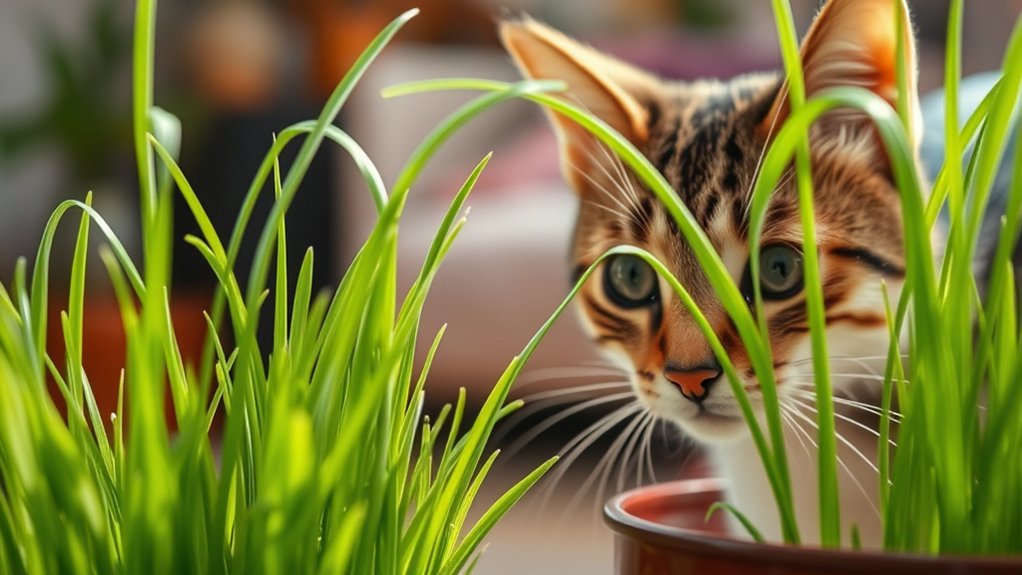
Can Animals Eat Cat Grass – Safe Pets And Feeding Guide
You can safely offer cat grass to cats, rabbits, guinea pigs, birds, dogs, and ferrets. It supports digestion, provides nutrients, and encourages natural grazing behaviors.
Just introduce it gradually and limit access to a few times weekly. Make sure it’s pesticide-free and mold-free.
Watch for signs of overconsumption like vomiting, and avoid toxic plants nearby. Proper feeding and care help maintain your pet’s health and well-being.
Exploring these details further reveals how to do it right.
Health Benefits of Cat Grass for Cats
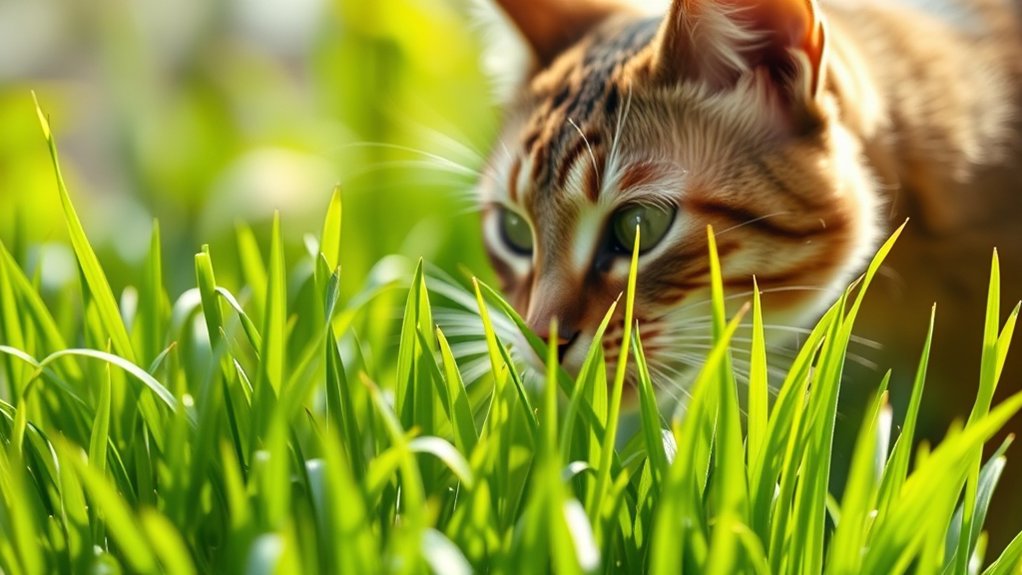
Cat grass offers several health benefits that can enhance your cat’s well-being. When cats eat grass like cat grass, they gain folic acid, which supports digestion and healthy blood circulation. This natural fiber also helps push out hairballs, especially in long-haired breeds, reducing discomfort.
Moreover, cat grass provides roughage that promotes regular bowel movements, potentially relieving mild constipation. Beyond fiber, cat grass contains trace minerals and micronutrients that help balance your cat’s diet by addressing subtle deficiencies.
Cat grass promotes regular digestion and supplies essential trace minerals to support your cat’s overall health.
The fibrous texture not only freshens your cat’s breath but also engages their instinct to graze, offering mental stimulation.
Adding cat grass to your cat’s routine can improve overall digestive health and contribute to a more balanced, contented feline.
How to Introduce Cat Grass to Your Cat
Introducing cat grass to your feline can be a simple process if you follow a few key steps. Start by placing a small pot of cat grass in an accessible area, allowing your cat to explore it at their own pace.
Monitor your cat’s initial reactions closely, as some will show immediate interest while others may take time. To encourage consumption, lightly rub the grass between your fingers to release its scent, making it more appealing.
Offer cat grass as an occasional treat, limiting access to a few times per week to prevent overconsumption. Always monitor your cat after feeding.
If frequent vomiting occurs, consult your veterinarian to rule out digestive issues. This careful approach guarantees a safe and positive introduction to cat grass.
Just take it slow and let your cat get used to it naturally.
Growing and Preparing Cat Grass Safely
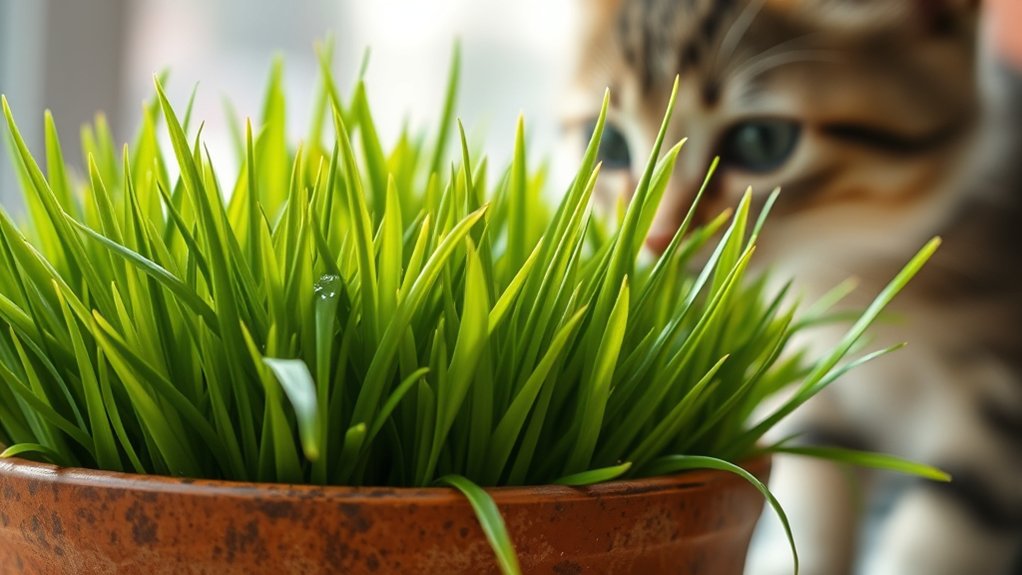
You can easily grow cat grass indoors by planting seeds in shallow, well-drained soil.
Just keep the soil moist until the seeds sprout.
Next, place the containers in a sunny spot.
It’s a good idea to rotate batches regularly so you always have a fresh supply.
When it’s time to offer the grass to your cat, cut it into small pieces and rinse it thoroughly.
This way, you make sure it’s safe and clean for your furry friend.
Planting Cat Grass
Although growing cat grass is pretty straightforward, making sure it thrives and stays safe for your pet takes a bit of attention. Start by picking quality grass seeds. Usually, a mix of wheat, oats, barley, and rye works well and is safer than outdoor grasses.
For planting, use shallow containers that have drainage holes. Fill them with regular potting soil. Keep the soil moist and, once you see sprouts, place the container somewhere sunny.
To keep a fresh supply going, rotate your planting batches every few weeks. Here’s a quick rundown:
- Use a shallow container with proper drainage
- Sow grass seeds evenly in moist potting soil
- Position the container in a sunny area after sprouting
- Rotate batches regularly for continuous cat grass availability
Following these steps will help you grow healthy, safe cat grass your pet will enjoy.
Safe Grass Preparation
When growing cat grass, ensuring safe preparation starts with maintaining consistent moisture in the soil and providing plenty of sunlight once the seeds sprout.
Use shallow containers with well-draining potting soil and a seed mix of wheat, oats, and barley to promote healthy growth.
To keep the grass safe, rinse it thoroughly before offering it to your cat, removing any dirt or contaminants.
Keep an eye on the grass regularly for mold, which can be harmful. If you spot any mold, toss those patches out right away.
Rotating planting batches every few weeks guarantees a fresh supply, maximizing the grass benefits for your pet’s digestion and enjoyment.
Signs Your Cat Is Eating Too Much Grass
If your cat frequently vomits after munching on grass, it could signal overconsumption that disrupts their digestive system. Recognizing signs your cat is eating too much grass helps prevent potential health issues like intestinal blockage.
Limit their eating grass sessions to a couple of times weekly and watch for:
- Persistent vomiting or retching after grass consumption
- Lethargy or noticeable changes in appetite
- Straining to defecate or abnormal stool consistency
- Excessive grazing that interrupts normal behavior
These signs may indicate digestive upset or early intestinal blockage, which means it’s time to see the vet.
Monitoring your cat’s grass intake guarantees their safety and well-being. If these symptoms persist, don’t wait—consult your vet promptly to rule out underlying conditions and adjust their diet accordingly.
Is Cat Grass Safe for Your Cat? Risks to Know
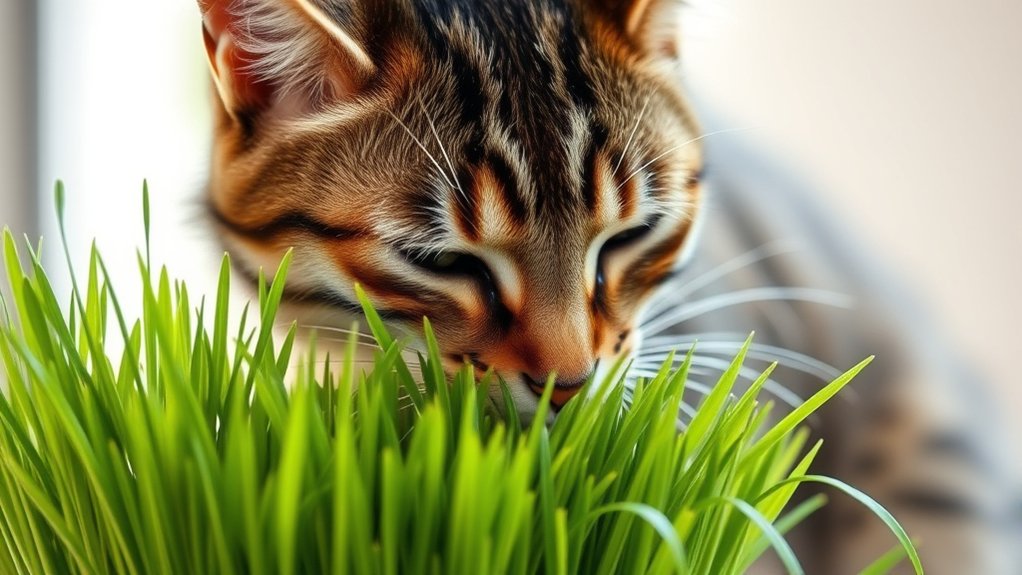
Cat grass is generally safe for your cat and can even help with digestion. That said, it’s a good idea to keep an eye on how much your cat is munching on it to prevent any issues like vomiting or blockages.
Also, make sure to keep the cat grass away from any toxic plants, such as philodendrons and aloe, since these can be dangerous if your cat happens to nibble on them.
If you notice your cat acting uncomfortable or eating a lot of grass more than usual, it’s best to check in with your veterinarian right away.
Potential Health Risks
Although cat grass is generally safe, consuming it in excess can cause your cat to vomit or even suffer from intestinal blockages. To minimize potential health risks, always offer cat grass in moderation.
Be sure to confirm the cat grass is free from pesticides and toxic plants to avoid health complications.
Also, keep an eye out for mold or spoilage, since moldy grass can pose serious health risks if your cat eats it.
Watch your cat’s behavior closely. If you notice frequent vomiting or other unusual symptoms, it’s a good idea to check in with your vet.
Remember, cat grass should supplement, not replace, a balanced diet and regular veterinary care.
Toxic Plant Avoidance
Since many common houseplants contain toxins harmful to cats, you should confirm that any grass your cat accesses is free from dangerous species like philodendrons and aloe.
Cat grass is a safe choice that provides digestive benefits without the risks associated with toxic houseplants.
Avoid mixing cat grass with other indoor plants, as accidental ingestion of toxic varieties can cause severe health issues.
Always verify the grass is fresh and mold-free, as moldy or pesticide-treated outdoor grass can harm your pet.
By selecting cat grass specifically grown for pets, you minimize exposure to harmful substances and create a safer environment.
Prioritize this safe choice to protect your cat from toxic plant ingestion and maintain their well-being.
If unsure, consult your veterinarian for guidance on safe plant options.
Monitoring Consumption Levels
Monitoring your pet’s consumption of cat grass is essential to confirm their safety and health. While grass provides beneficial fiber, too much can cause vomiting or intestinal blockages. So, keeping an eye on how much your cat eats is really important.
Start by introducing cat grass gradually. This way, you can see how your cat reacts and avoid overindulgence.
Make sure the grass is free from mold and pesticides, and keep it away from any toxic plants. Also, watch out for frequent vomiting or signs of distress. If you notice anything unusual, don’t hesitate to consult a veterinarian.
Lastly, scheduling regular vet check-ups helps assess your cat’s dietary needs and keeps their overall health in check.
It’s all about staying proactive and caring for your furry friend.
Which Other Pets Can Safely Eat Cat Grass?
Which other pets can safely enjoy cat grass besides cats? Small mammals like rabbits and guinea pigs benefit from cat grass’s fiber, which helps with digestion. Dogs can nibble on it occasionally, but you should keep it in moderation to avoid any stomach upset.
Birds, especially parrots, get nutrients from cat grass and also enjoy the mental stimulation it provides. Ferrets find cat grass helpful for their digestive health too. Just keep an eye on how much they eat to prevent any gastrointestinal issues.
| Pet Type | Benefits of Cat Grass |
|---|---|
| Rabbits & Guinea Pigs | Improved digestion with fiber |
| Dogs | Occasional nibbling, digestive care |
| Birds & Ferrets | Nutrients & digestive relief |
Alternatives to Cat Grass for Herbivorous Pets
When caring for herbivorous pets like rabbits and guinea pigs, offering a variety of safe, nutritious greens is vital to their health.
While cat grass is popular, you can provide a safe selection of alternatives that support digestion and nutrition. Consider these options:
Cat grass is popular, but safe alternatives also support your pet’s digestion and nutrition effectively.
Leafy greens such as kale, spinach, and romaine lettuce are rich in fiber and vitamins.
Fresh herbs like parsley, cilantro, and basil add flavor and nutrients.
Pet-safe grasses including oat and wheatgrass mimic cat grass’s digestive benefits.
Avoid toxic plants by researching and selecting only pet-safe varieties.
Introducing these alternatives gradually guarantees your herbivorous pets adjust well without adverse reactions.
This variety helps maintain their well-being while offering balanced nutrition beyond cat grass.
How to Feed Cat Grass Safely: Expert Tips
Offering cat grass as a supplement to your pet’s diet can provide digestive benefits, but it requires careful management to assure safety. Start by introducing cat grass gradually, monitoring their response to confirm they tolerate it well without overconsumption.
Limit access to once or twice a week to prevent digestive upset or vomiting. Always choose cat grass free from pesticides by purchasing commercially grown varieties or cultivating your own in clean conditions.
Cut the grass into smaller pieces before feeding to reduce gastrointestinal distress, as whole strands can cause vomiting. Stay vigilant for any adverse reactions, and consult your veterinarian if your pet consumes excessive amounts or shows signs of discomfort.
Following these expert tips helps you safely incorporate cat grass into your pet’s routine. It’s a simple addition but done right, it can be a great boost for your furry friend’s digestion. Just keep an eye on them and take it slow!
Frequently Asked Questions
Can Cat Grass Affect My Cat’s Medication Absorption?
Yes, cat grass can affect your cat’s medication absorption because of its digestive effects.
The high fiber content might change the digestive environment, which can cause medication interactions that reduce nutrient absorption.
To be safe, try to wait at least an hour after giving your cat medication before letting them eat cat grass. That way, you minimize any potential issues.
Always check with your veterinarian to make sure there are no adverse effects or interactions with your cat’s specific medications.
And keep a close eye on how your cat responds.
How Long Does Cat Grass Stay Fresh After Cutting?
Think of cut cat grass like fresh-cut flowers. They brighten your space but start fading after a week.
Once you cut cat grass, it usually stays fresh for 3 to 7 days if stored well.
Cat grass varieties do well in your fridge’s cool environment, so you can preserve their benefits longer.
When growing cat grass, cut only what you need. Mist it lightly and keep it sealed to maintain freshness and nutritional value for your pet.
Is Cat Grass Safe for Kittens Under Three Months Old?
Yes, cat grass is safe for kittens under three months old when offered in moderation.
You should introduce it gradually to support kitten digestion and avoid overwhelming their system. Cat grass offers benefits like aiding digestion and reducing hairballs.
Make sure the grass is pesticide-free and grown in a clean environment to keep it safe.
Always keep an eye on your kitten for any adverse reactions.
And it’s a good idea to check with your vet to make sure cat grass fits well with their overall diet and health needs.
Can Cat Grass Help With Feline Urinary Health?
It’s no coincidence that cat grass supports feline urinary health through improved feline hydration benefits and enhanced digestive health.
When your cat nibbles on this natural source, it encourages moisture intake and fiber digestion. This helps with hairball expulsion and reduces urinary tract risks.
Plus, cat grass offers natural stress relief, which can indirectly benefit urinary function.
Just monitor portions to avoid vomiting and guarantee your cat stays healthy and hydrated.
Does Cat Grass Have Any Impact on Cat Behavior?
Yes, cat grass benefits your cat by promoting behavior stimulation and aiding feline digestion. When your cat munches on cat grass, it engages natural instincts, reducing stress and encouraging exploration. This behavior stimulation keeps your cat mentally active and content.
Furthermore, cat grass helps with digestion by expelling hairballs and indigestible materials. This can improve your cat’s overall mood and reduce destructive tendencies like chewing on harmful plants.
It’s a simple way to support both their physical and mental well-being.
Conclusion
You now know cat grass isn’t just for cats. It can benefit some other pets too, but always introduce it carefully to avoid upset stomachs. Remember, moderation is key; too much can cause issues.
Growing it safely guarantees your furry friends enjoy fresh, healthy greens. So, whether you’re feeding your cat or a curious bunny, treat cat grass like the prized elixir it is. Just like a medieval apothecary would cherish his finest herb.