Should Cats Eat Fruit – Safe Fruits Guide
You can safely offer your cat small amounts of certain fruits like apples, blueberries, and cantaloupe as occasional treats, but they shouldn’t replace their animal-based diet. Always remove seeds, pits, and skins, and limit fruit to under 10% of their daily calories to avoid digestive issues.
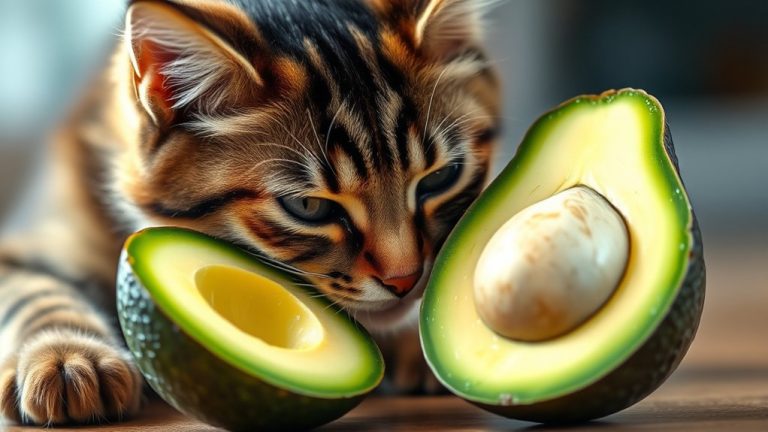
Avoid toxic fruits like grapes, citrus, and avocado. Introduce new fruits gradually and consult your vet if you have concerns. Exploring more on this can help keep your cat healthy and happy.
Reasons Cats Can Eat Fruit But Shouldn’t Rely On It
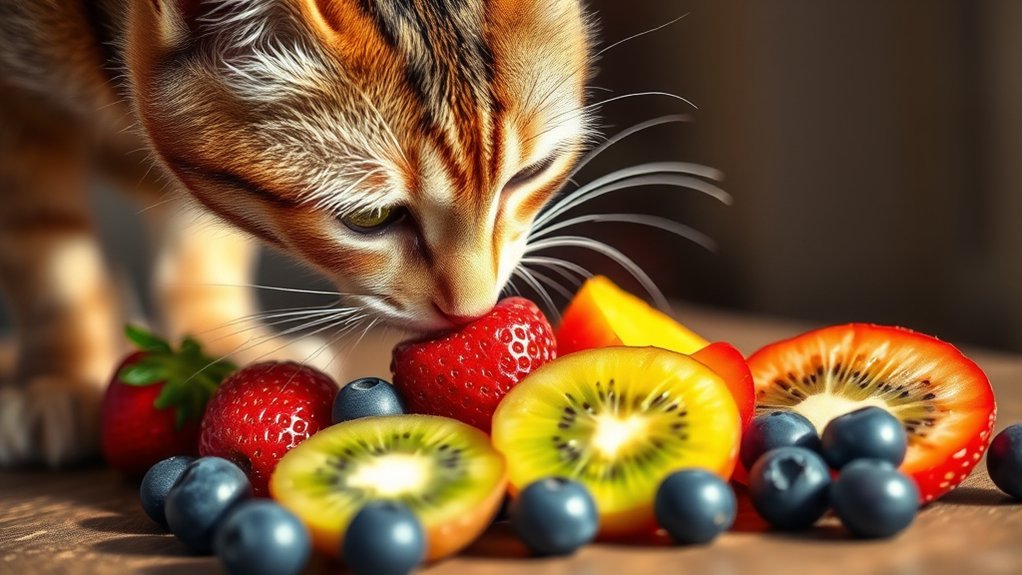
Although cats are obligate carnivores whose nutritional needs rely primarily on animal-based proteins, you can occasionally offer them small amounts of fruit.
Cats can benefit from safe fruits as occasional treats because these provide vitamins and hydration while being low in calories.
However, fruit should never replace their main diet since cats’ digestive systems aren’t designed to process high amounts of sugar found in many fruits. Overconsumption can disrupt digestive health, causing vomiting or diarrhea.
Since cats lack sweet taste receptors, they generally show little interest in fruit, which reduces the risk of overeating. Introducing fruit gradually lets you monitor any sensitivities.
Remember, fruits should make up less than 10% of your cat’s diet to support their health without compromising their nutritional needs.
Criteria for Choosing Safe Fruits for Cats
When you’re picking out fruits for your cat, it’s best to go for ones that are low in sugar and high in fiber. These choices help keep their digestion running smoothly.
Also, make sure to take out any seeds, pits, or skins. These parts can be toxic or cause choking, so it’s better to be safe.
Start by giving your cat just a little bit of the new fruit and watch how they react. This way, you can be sure it’s safe for them to enjoy.
Nutritional Benefits
Since cats have unique dietary needs, choosing safe fruits requires careful consideration of their nutritional benefits and potential risks. Fruits can provide hydration, essential vitamins like C and potassium, fiber, and antioxidants that support immune and digestive health.
However, because of the high sugar content in many fruits, you should offer them in small amounts to avoid digestive upset or weight gain.
| Fruit | Key Nutrients | Benefits |
|---|---|---|
| Watermelon | Vitamins A, C | Hydration, antioxidants |
| Blueberries | Fiber, antioxidants | Digestive aid |
| Apple | Fiber, vitamin C | Prevents hairballs |
| Cantaloupe | Potassium, vitamins | Immune support |
Choose safe fruits thoughtfully to enhance your cat’s diet without risks. It’s all about balance and keeping your furry friend happy and healthy!
Safety Precautions
To keep your cat safe while enjoying fruits, you need to carefully select and prepare them. Always remove seeds, pits, and skins to avoid choking hazards and potential toxicity.
Introduce new fruits gradually, starting with small portions to monitor for adverse reactions like vomiting or diarrhea.
Make sure fruits are fresh and free from added sugars or preservatives that could harm your cat. Limit fruit intake to no more than 10% of their daily calories to maintain a balanced diet.
Before adding any new fruit, consult a veterinarian, especially if your cat has health issues.
Remember to:
- Always remove seeds and pits
- Introduce new fruits gradually
- Choose fresh, additive-free fruits
- Monitor for any adverse reactions
These steps help protect your cat’s health and well-being effectively.
Best Fruits for Cats: Apples, Bananas, and Berries
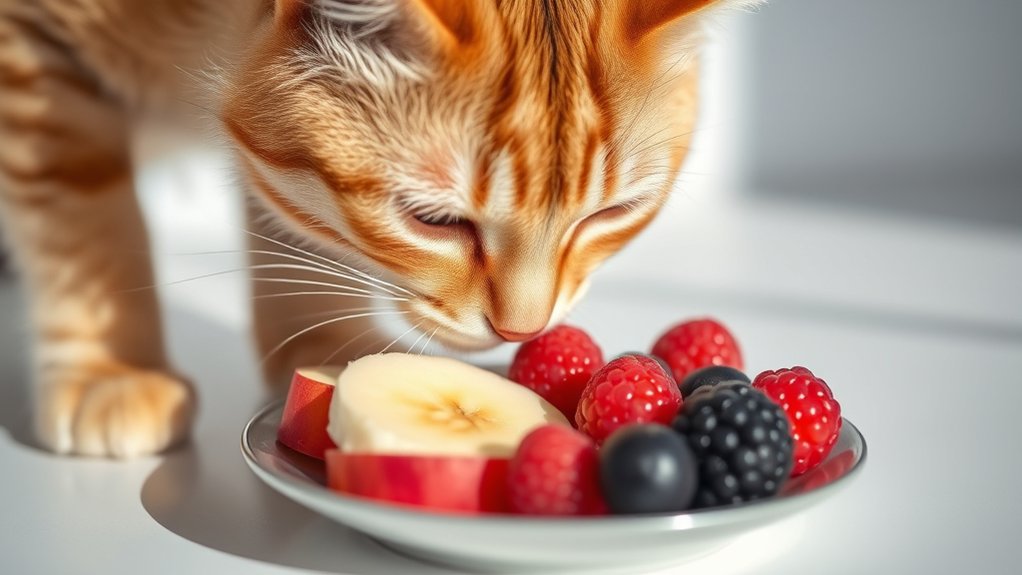
Although cats are obligate carnivores, you can safely offer certain fruits like apples, bananas, and berries as occasional treats to provide beneficial nutrients.
Cats can eat apples, but always remove seeds and stems to prevent toxicity. Apples are packed with nutrients, including fiber and vitamin C, making them a safe option.
Bananas, high in vitamins B6 and C, are nutritious but should be given in moderation due to their sugar content. Blueberries and strawberries are also safe options.
Blueberries are rich in antioxidants and fiber, supporting your cat’s immune system, while strawberries offer potassium and antioxidants.
Both should be washed thoroughly and served in small, bite-sized pieces to avoid choking. Incorporating these fruits occasionally adds variety while ensuring your cat receives high vitamin benefits safely.
It’s a nice way to mix things up for your furry friend without any worries.
Melons and Tropical Fruits Your Cat Can Enjoy
You can offer your cat certain melons and tropical fruits as hydrating, low-calorie treats that provide vitamins and digestive benefits.
Just be sure to remove seeds, rinds, and skins to keep these snacks safe and avoid any digestive upset.
Remember, moderation is key because some fruits contain natural sugars and fructose, which could affect your cat’s health if they eat too much.
Benefits of Melons
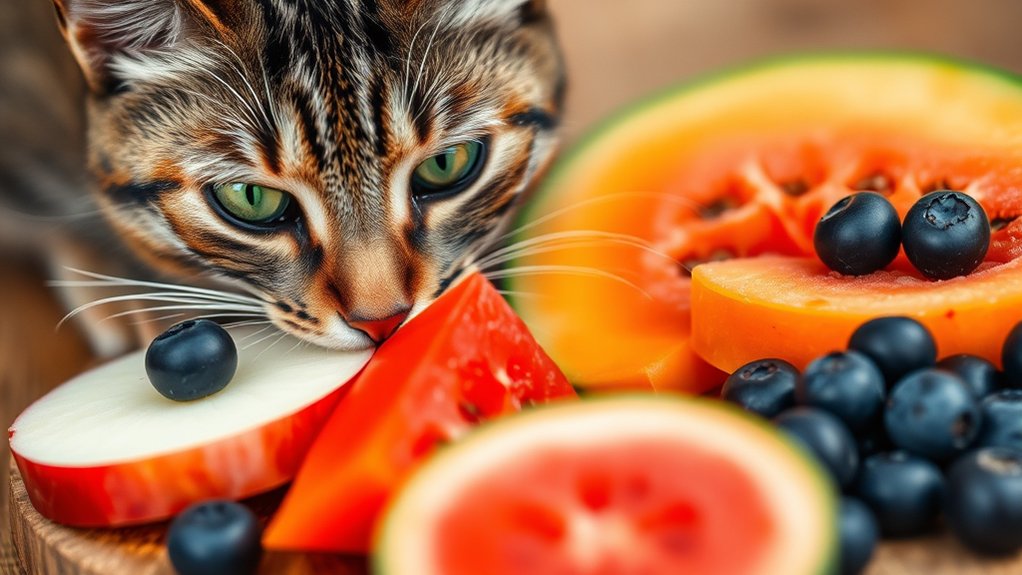
Melons like cantaloupe and watermelon offer a rejuvenating, hydrating treat for your cat thanks to their high water content.
These melons provide a safe source of essential vitamins A and C, supporting your cat’s immune system and overall health. When given in small pieces, they make a tasty snack that adds dietary variety without disrupting your cat’s nutritious balance.
Consider these benefits of melons for your feline friend:
- Hydrating fruit to help maintain fluid balance
- Low-calorie option rich in antioxidants
- Seedless, rind-free pieces reduce choking risk
- Adds a flavorful, nutritious twist to their diet
Tropical Fruit Safety
When offering tropical fruits to your cat, it’s important to make sure the pieces are small and free of skin, seeds, or pits. These can pose choking hazards or contain harmful substances.
Tropical fruits like cantaloupe and watermelon are hydrating and low-calorie treats that are safe for cats when prepared properly. Cantaloupe is high in fiber, while watermelon offers refreshing hydration once seeds and rind are removed.
Mango and papaya provide vitamins and hydration but should be given in small amounts with skin and seeds taken out. Pineapple supports digestion but should be offered in moderation because of its high fructose content.
Always serve tropical fruits in small, manageable pieces to keep your cat safe.
Adding these fruits occasionally can bring some variety and help with your cat’s hydration and nutritional needs.
Fruits Cats Should Never Eat
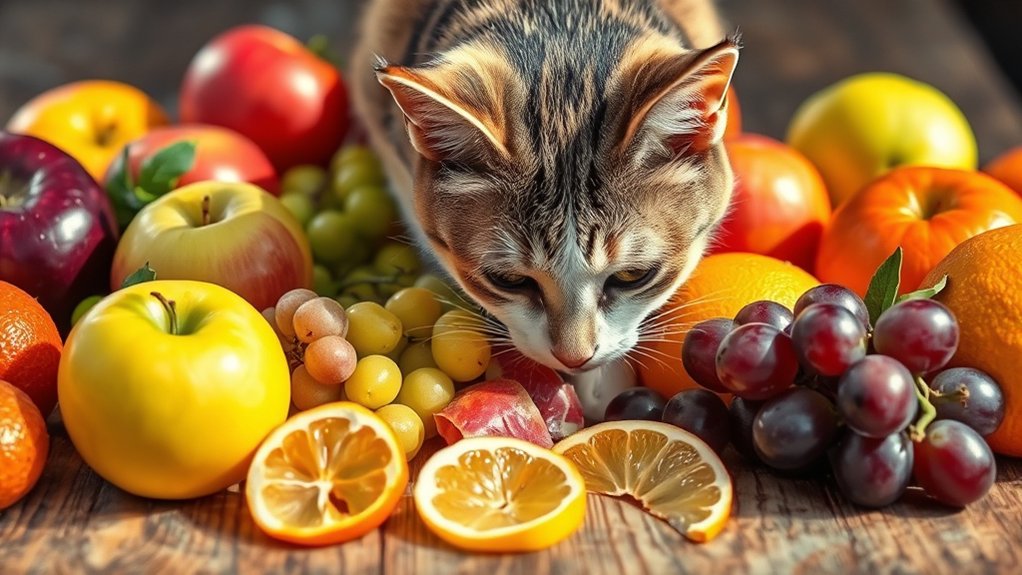
Although fruits can offer some health benefits, certain types pose serious risks to your cat’s well-being and should never be given. Some fruits are toxic to cats and can cause severe health issues, including gastrointestinal distress and even organ failure.
So, it’s best to avoid these harmful fruits at all costs:
- Grapes and raisins: Highly toxic, they can trigger acute kidney failure, even in small amounts.
- Citrus fruits: Contain essential oils and psoralen, causing vomiting and gastrointestinal upset.
- Unripe tomatoes: Contain solanine, a toxic compound leading to drooling, vomiting, and lethargy.
- Cherries and avocado: Cherries’ pits and stems have cyanogenic compounds; avocado contains persin, both harmful and potentially causing vomiting or respiratory distress.
Stay vigilant and keep these fruits away to protect your feline friend’s health. It’s always better to be safe than sorry!
How to Prepare Fruits Safely for Your Cat
Before you give fruit to your cat, make sure to wash it really well to get rid of any pesticides or dirt.
It’s important to clean it thoroughly so your kitty stays safe.
Also, don’t forget to take out all the seeds, stems, and pits.
These can be harmful or even cause choking, so it’s better to be safe than sorry.
Washing And Cleaning
Because fruit can carry pesticides and contaminants, you should always wash it thoroughly under running water before offering it to your cat. Proper washing guarantees the fruit is clean and safe, reducing the risk of harmful substances.
After washing, make sure to remove any seeds, stems, or pits to avoid choking hazards or toxins. Cut the fruit into small, bite-sized pieces for easier digestion and safety.
Also, avoid adding any additives like sugar or preservatives that could harm your cat.
Store leftover fruit properly in the refrigerator and discard any showing spoilage to maintain freshness. Following these steps emphasizes safety and helps protect your cat’s health when introducing fruits into their diet.
Clean preparation is key to responsible pet care.
Removing Seeds And Pits
When preparing fruit for your cat, removing seeds and pits is essential to keep them safe. Seeds and pits from fruits like apples, peaches, and cherries can pose choking hazards and might contain toxic substances that are harmful to cats.
Always wash fruit thoroughly to get rid of pesticides and contaminants before serving.
Cut the fruit into small, bite-sized pieces to make it easier for your cat to chew and digest. Avoid the skins of certain fruits, such as kiwi and mango, because they can be tough and hard to digest.
It’s a good idea to introduce new fruits gradually and watch for any reactions closely so you can spot any problems early.
How Much Fruit Is Too Much for Cats?
Although cats can enjoy fruit as an occasional treat, you should limit it to no more than 10% of their daily calorie intake to maintain a balanced diet. Knowing how much fruit is too much for cats helps prevent health issues. Most serving sizes should be about 2-3 small pieces or 5-10 grams per week.
Fruits cats can eat in excess may cause digestive upset. Since fruit has little nutritional value for cats, overfeeding can lead to vomiting or diarrhea.
Excess fruit can upset your cat’s digestion, causing vomiting or diarrhea due to limited nutritional value.
To keep your cat safe, introduce new fruits gradually. Monitor for any adverse reactions and stick to recommended serving sizes.
It’s also a good idea to consult your vet before making dietary changes. This approach guarantees your cat enjoys fruit safely without disrupting their nutrition.
Signs Your Cat May Have Eaten Too Much Fruit
Recognizing five key signs can help you determine if your cat has eaten too much fruit. Overconsumption of fruit often leads to digestive upset, including vomiting and diarrhea, which are clear warning signals.
You might also notice excessive drooling, indicating gastrointestinal discomfort.
Lethargy is another symptom, as the high sugar content can sap your cat’s energy.
Watch for signs of stomach pain, such as unusual postures or vocalizations, which show your cat is in distress.
If these symptoms persist for more than 24 hours, it’s crucial to contact a veterinarian for a thorough evaluation.
Prompt action guarantees your cat receives the care needed to recover safely from any adverse effects caused by eating too much fruit.
Can Kittens Safely Eat Fruit Treats?
How safe is it to give fruit treats to kittens? Kittens can eat small amounts of fruit treats safely, but you need to monitor their reaction closely because their digestive systems are pretty sensitive.
Always check with a vet before introducing any new fruit to make sure it’s okay for your kitten’s diet.
Consult your vet before adding any new fruit to your kitten’s diet to ensure safety.
When offering fruit treats, keep a few tips in mind. Limit fruit to no more than 10% of their daily calories to avoid digestive upset.
It’s best to start with safe options like mashed bananas or small pieces of seedless watermelon.
Also, always remove seeds and pits to prevent choking or toxicity.
Introduce fruits gradually and watch how your kitten handles them. That way, you’ll know what works best for your furry friend.
How to Introduce Fruit Into Your Cat’s Diet
When you introduce fruit into your cat’s diet, start with small amounts of safe options like blueberries or cantaloupe to see how your cat reacts.
Always remove seeds, pits, and skins to prevent choking hazards and digestive upset. Introducing fruit gradually is important. You should offer one new fruit at a time to identify any potential allergies or sensitivities.
Monitor your cat closely for signs of digestive upset, such as vomiting or diarrhea, especially during the initial stages.
Keep fruit treats limited to no more than 10% of your cat’s daily caloric intake to maintain a balanced diet and avoid overconsumption.
Frequently Asked Questions
Can Fruit Consumption Affect a Cat’s Hydration Levels?
Yes, fruit consumption can affect your cat’s hydration levels by providing hydration benefits through high-water-content fruit types like watermelon and cantaloupe.
You should consider your cat’s preferences and digestive effects, offering safe preparation and appropriate portion sizes.
Recommended fruits add nutritional value and extra moisture but shouldn’t replace water.
It’s important to monitor overall fluid intake to make sure your cat stays hydrated without digestive upset or overfeeding.
This way, you keep their health balanced and supported.
Are There Any Seasonal Fruits Cats Prefer or Avoid?
You’ll notice your cat’s seasonal preferences vary, often favoring berry varieties like strawberries in spring.
They tend to avoid tropical fruits that may cause fruit toxicity. Proper fruit preparation, like removing seeds, is really important to keep them safe.
Watch your cat’s reactions closely because their flavor preferences can differ a lot.
It’s best to limit how often you feed them fruit and stick to moderate amounts to avoid any tummy troubles.
How Does Fruit Intake Impact a Cat’s Dental Health?
Fruit intake offers limited dental benefits because most fruit types are high in sugar content, which can promote plaque buildup.
While fresh fruits like apples provide some texture that may support chewing habits, they don’t replace proper dental care or oral hygiene routines.
You should use fruit only as occasional treats and rely on treat alternatives designed for dental health.
Regular brushing and veterinary check-ups remain essential to maintain your cat’s teeth. It’s really important not to skip those!
Can Fruit Treats Interfere With Feline Medication?
Yes, fruit treats can cause medication interactions in cats, especially if served in large portions or high-acid varieties.
You should practice portion control and offer safe servings to avoid digestive issues, allergic reactions, or fruit toxicity.
Maintaining nutritional balance is essential, so always seek veterinary advice before giving fruit to your cat, particularly when they’re on medication.
This guarantees you minimize risks and support your cat’s overall health effectively.
Is Fruit Safe for Cats With Diabetes or Other Health Issues?
Coincidentally, managing diabetes in your cat means you can still offer safe fruits like blueberries and cantaloupe, but portion control is key to avoid blood sugar spikes.
These fruits provide nutritional benefits without overwhelming their system. Always follow vet recommendations and consider alternative treats if your feline prefers.
Monitor how your cat reacts, as preferences and sensitivities vary.
Balancing treats with diabetes management keeps your cat healthy and happy.
Conclusion
While cats are obligate carnivores, about 10% of their diet can safely include fruits like apples and berries. These fruits offer valuable vitamins and fiber, which can be good for your kitty. However, you shouldn’t rely on fruit as a main food source.
Always avoid toxic fruits and introduce treats gradually to prevent digestive upset. It’s important to choose safe options and keep an eye on portions. Doing this helps add variety to your cat’s diet without compromising their health.
Remember, moderation is key for a happy, healthy feline. So, go slow and enjoy mixing things up for your furry friend!