Can A Cat Eat Cottage Cheese – Benefits, Risks, And Tips
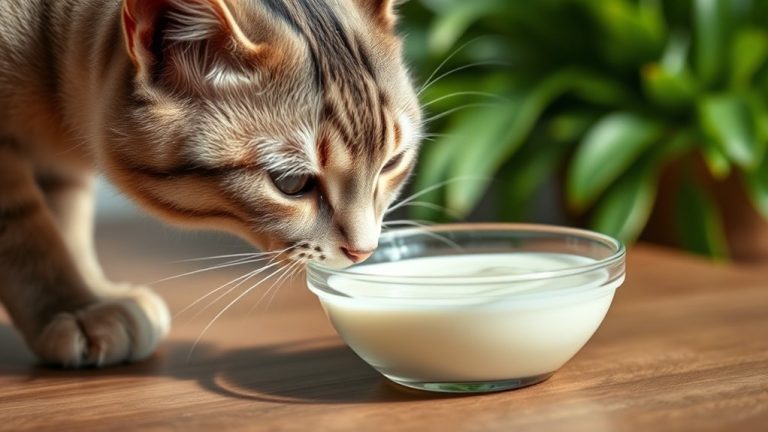
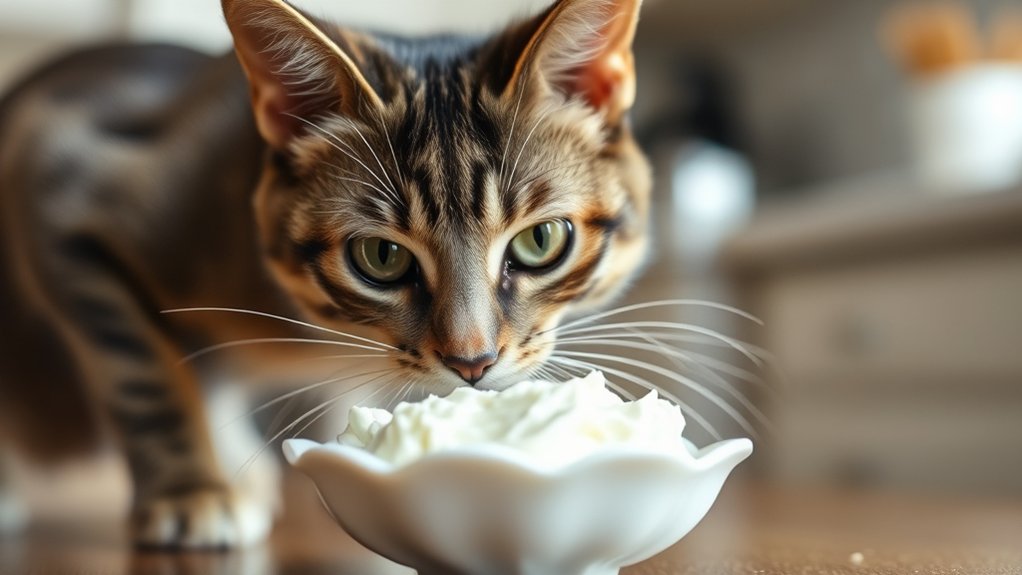
You can give your cat small amounts of plain cottage cheese as an occasional treat, but it’s important to watch for lactose intolerance. This can cause diarrhea or vomiting, so keep an eye on how your cat reacts.
Choose unsalted, additive-free varieties and limit portions to half a teaspoon every few weeks. Cottage cheese offers protein and calcium but isn’t a substitute for a meat-based diet.
Being aware of risks and proper feeding tips helps keep your cat healthy and happy. If you want, you can explore more on safe serving and alternatives.
Is Cottage Cheese Safe for Cats?
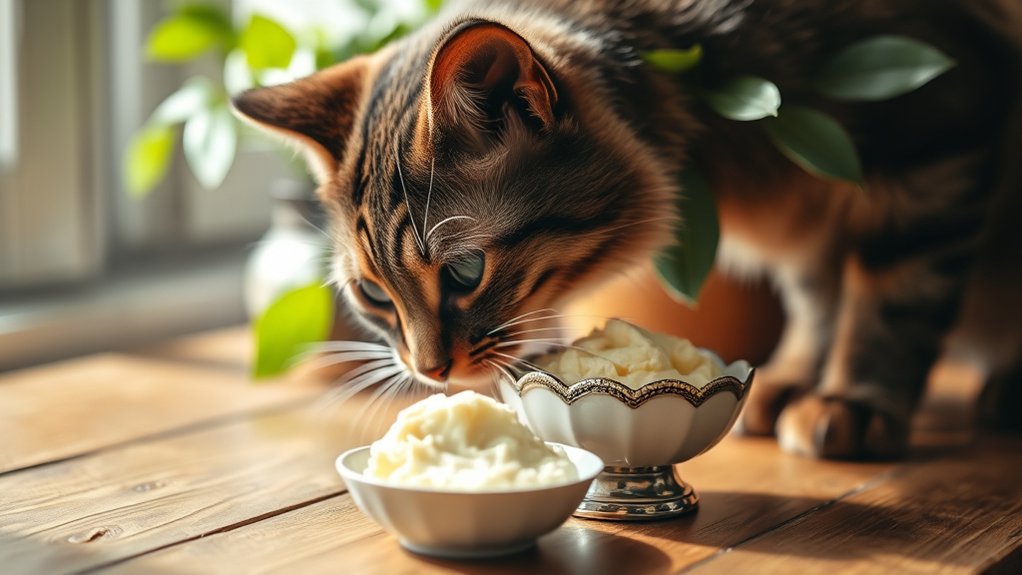
Is cottage cheese safe for your cat? While cottage cheese isn’t toxic and can be safe for cats in small amounts, it contains lactose, which many felines struggle to digest.
Feeding cottage cheese regularly may cause digestive issues like diarrhea, gas, and vomiting due to lactose intolerance.
Regularly feeding cottage cheese can lead to diarrhea, gas, and vomiting from lactose intolerance.
Also, some cottage cheese brands include added salt, which can negatively impact your cat’s health, especially if they’ve kidney or heart conditions.
Full-fat varieties are high in calories and saturated fat, increasing the risk of obesity and related health problems if given excessively.
To keep your cat’s health in check, offer plain, unsalted cottage cheese only as an occasional treat.
Limit the portion to no more than half a teaspoon to avoid digestive upset and keep things safe.
What Is Cottage Cheese?
You’ll find that cottage cheese is a fresh, soft cheese made by curdling milk and draining the whey. This process keeps its moisture higher than in aged cheeses.
It comes in various fat levels—like low-fat, reduced-fat, and full-fat—so there’s something to suit different dietary needs. Knowing these basics can help you figure out if it’s a good fit for your cat’s diet.
Cottage Cheese Definition
Cottage cheese offers a fresh, soft texture created by curdling milk and removing the whey, resulting in a mild flavor and creamy consistency.
From a nutritional perspective, cottage cheese contains a high protein content, making it a popular choice for health-conscious individuals.
This soft cheese is made by curdling milk, then draining excess liquid, which keeps it low in lactose compared to aged cheeses.
You’ll find cottage cheese available in various fat levels, including high-fat and low-fat options, catering to different dietary needs.
It often includes additional ingredients like salt or flavorings, which can affect its suitability for pets.
Understanding these elements helps you evaluate cottage cheese’s role in your or your pet’s diet effectively.
Production Process Overview
Understanding how cottage cheese is made helps clarify why it has its distinctive texture and flavor. The production process starts by curdling milk, which separates the solid curds from the liquid whey. After draining most of the whey, you get a fresh cheese with a high moisture content that remains soft and creamy.
Unlike aged cheeses, cottage cheese isn’t matured, giving it a mild taste that many find appealing. You’ll find cottage cheese in various fat levels, including low-fat options, making it a versatile choice. Often, salt or flavorings are added during production to enhance taste.
Thanks to its high protein content and fresh quality, cottage cheese serves as a popular nutritional snack for humans, valued for both its health benefits and unique texture. It’s a great option if you want something tasty but not too heavy.
Common Varieties Available
Several common varieties of cottage cheese cater to different tastes and dietary needs. You’ll find low-fat, reduced-fat, and full-fat options, allowing you to choose based on your preferences or nutritional goals.
Cottage cheese is widely recognized as a high-protein snack for humans due to its mild taste and soft texture.
However, many commercial brands include added salt or flavorings, which aren’t suitable for cats and can pose risks, especially for those with kidney or heart problems.
While cottage cheese provides protein and calcium, it’s important to remember that it’s not nutritionally necessary for your cat.
Cats primarily thrive on meat-based foods, which meet their unique dietary requirements more effectively than dairy products like cottage cheese.
Nutritional Benefits of Cottage Cheese for Cats
Although cats primarily get their protein from meat, cottage cheese can offer some nutritional value through its high protein content and calcium, which supports bone health. Cottage cheese provides additional protein and essential amino acids.
But it’s important to remember that these benefits don’t replace a balanced, meat-based diet.
Since many cats are lactose intolerant, feeding cottage cheese may cause gastrointestinal upset, such as diarrhea or vomiting. It’s also calorie-dense, especially full-fat varieties, which could contribute to weight gain if given excessively.
Many cats are lactose intolerant, so cottage cheese can cause digestive upset and contribute to weight gain if overfed.
So, you want to be careful with how much you give.
While cottage cheese has some nutritional benefits, you should weigh these against potential health risks. Use it sparingly as an occasional treat rather than a dietary staple to avoid negative effects on your cat’s overall well-being.
Risks of Feeding Cottage Cheese to Cats
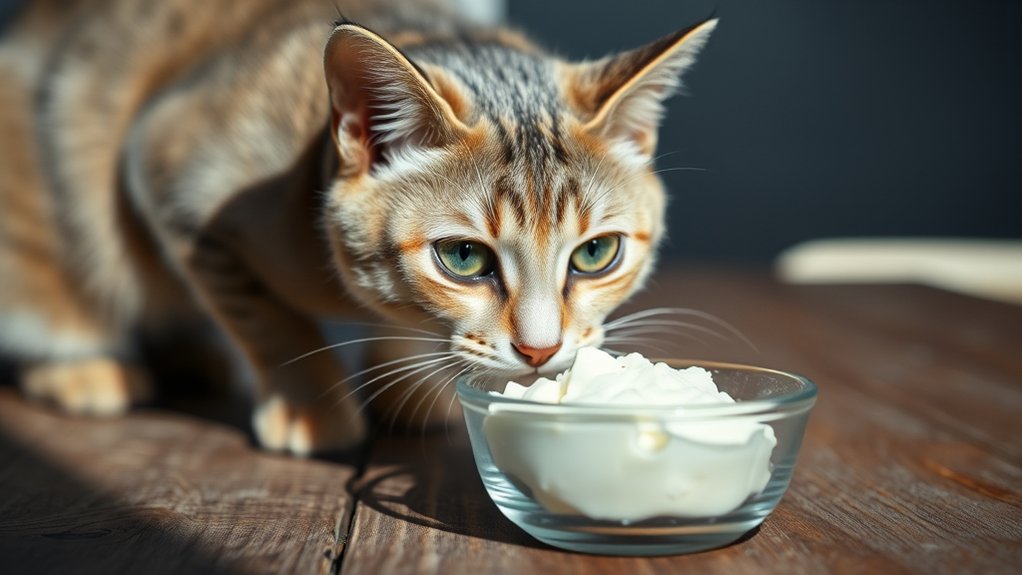
While cottage cheese can offer some nutritional benefits, it also carries risks that you should carefully consider before feeding it to your cat. Many cats are lactose intolerant, and cottage cheese’s lactose content can trigger digestive upset, such as diarrhea and gas.
Furthermore, cottage cheese is high in calories, especially full-fat versions, which may contribute to obesity and related health problems. If your cat has pre-existing digestive issues or chronic conditions, it’s best to avoid feeding cottage cheese altogether.
Other risks include added salt in some brands, which can be harmful to cats with kidney or heart conditions. There’s also the potential for nutritional imbalances if your cat eats too much cottage cheese.
Keep in mind that cottage cheese lacks essential nutrients found in a meat-based diet and could worsen pre-existing health problems. So, always weigh these risks before introducing cottage cheese to your cat’s diet.
Signs Your Cat Is Lactose Intolerant to Cottage Cheese
How can you tell if your cat is lactose intolerant to cottage cheese? Since cats lack sufficient lactase enzyme, they’re generally lactose intolerant. Feeding them cottage cheese can cause digestive issues.
Key signs of lactose intolerance include diarrhea, vomiting, gas after eating, and bloating. These symptoms usually appear within 8 to 12 hours of consumption.
You might also notice changes in your cat’s appetite, excessive grooming, or hiding behavior. Because tolerance varies from cat to cat, even small amounts of lactose can trigger these symptoms.
If your cat consistently shows digestive distress after eating cottage cheese or other dairy, it’s best to avoid these foods.
And of course, consult your veterinarian. Catching lactose intolerance early helps prevent your cat’s discomfort and guides you toward safer dietary choices.
How to Introduce Cottage Cheese to Your Cat
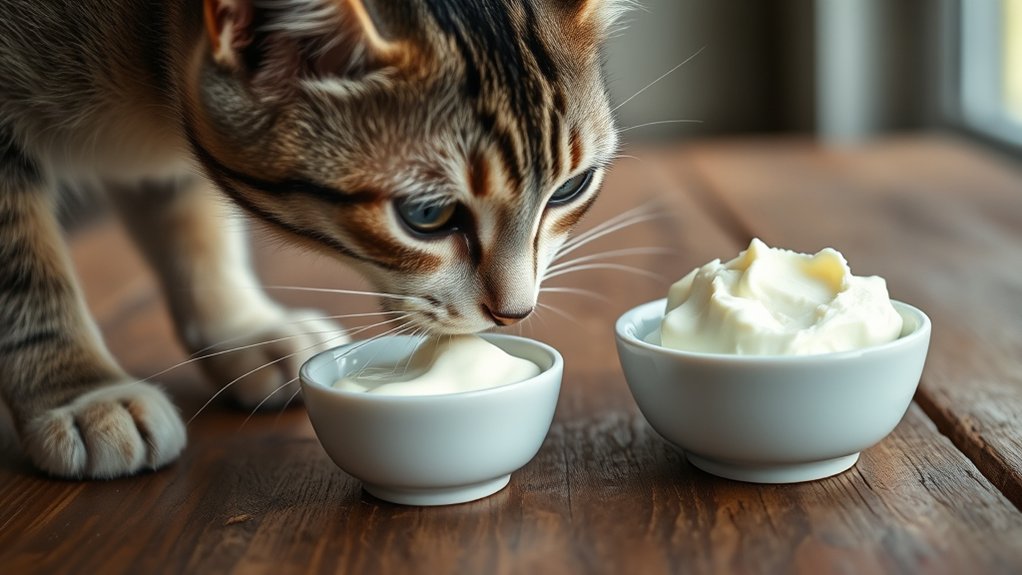
Start by offering your cat a tiny bit of plain, unsalted cottage cheese—no more than half a teaspoon.
Keep a close eye on how they react, especially their digestion. If everything seems fine, you can slowly increase the amount over a few days.
Just watch out for any signs of tummy trouble like vomiting or diarrhea.
Taking it slow like this helps make sure your cat handles the new food safely.
Gradual Portion Increase
Although many cats tolerate small amounts of dairy, you should introduce cottage cheese gradually by offering just a pea-sized portion at first. This gradual portion increase helps minimize the risk of digestive upset and allows you to monitor reactions closely.
Stick to plain, unsalted cottage cheese without additives to guarantee safety.
Keep these guidelines in mind:
- Start with a pea-sized amount and increase slowly, never exceeding half a teaspoon.
- Limit cottage cheese as an occasional treat, ideally once every couple of weeks.
- Watch for signs of lactose intolerance, such as vomiting or diarrhea.
- Observe your cat for 24 hours after each new portion to detect adverse reactions.
Monitor Digestive Response
When you introduce cottage cheese to your cat, offer just a small amount, around half a teaspoon, to carefully monitor their digestive response.
Choose plain, unsalted cottage cheese without any additives to reduce health risks.
After feeding, watch closely for signs of gastrointestinal upset like vomiting or diarrhea within 8 to 12 hours. If your cat shows no adverse reactions, you can consider offering cottage cheese as an occasional treat. Just limit it to once every couple of weeks.
If any negative symptoms appear, stop feeding cottage cheese immediately.
And if digestive issues persist, be sure to consult your veterinarian. Keeping an eye on your cat’s digestive response helps keep them safe and lets you know if cottage cheese is a good fit for their diet.
Tips to Feed Cottage Cheese Without Digestive Issues
If you decide to introduce cottage cheese to your cat’s diet, selecting plain, unsalted varieties without additives is essential to minimize health risks.
To reduce the chance of digestive upset, start with small amounts and observe your cat’s reaction closely.
Begin with tiny portions and watch your cat carefully for any digestive issues.
Follow these tips to feed cottage cheese safely: limit portions to no more than half a teaspoon at a time. Offer it as an occasional treat, ideally once every couple of weeks.
Make sure to monitor your cat for any adverse reactions such as vomiting or diarrhea.
And it’s always a good idea to consult your veterinarian before introducing cottage cheese, especially if your cat has kidney disease, obesity, or other health concerns.
Safer Treats Than Cottage Cheese for Cats
Five safer treat options than cottage cheese can provide your cat with nutrition and enjoyment without risking digestive issues. While some cats eat cottage cheese without problems, it may cause gastrointestinal distress in others.
Safer treats include plain cooked chicken, which offers high protein and aligns with your cat’s carnivorous needs. Small amounts of cooked fish like salmon provide nutritional benefit but should be occasional to limit mercury exposure.
Commercial cat treats formulated for felines guarantee balanced nutrition and easy digestion.
Catnip offers mental stimulation without digestive risks, and plain canned pumpkin aids digestion safely when given moderately.
Choosing these safer treats supports a balanced cat diet and reduces the likelihood of digestive upset compared to dairy-based options like cottage cheese.
Frequently Asked Questions
Can Cottage Cheese Help With a Cat’s Urinary Health?
Cottage cheese won’t help with your cat’s urinary tract health directly. While it offers a protein source and calcium content, it lacks essential nutrients for feline nutrition.
It may also contain lactose, which can affect digestive health if your cat isn’t lactose tolerant.
Relying on cottage cheese could disrupt weight management and reduce dietary variety.
Instead, focus on moisture-rich, meat-based foods to support your cat’s urinary health and overall well-being effectively. This approach works much better for keeping your furry friend healthy.
Does Cottage Cheese Affect a Cat’s Hydration Levels?
Cottage cheese can slightly contribute to your cat’s hydration needs because of its moisture content, but you shouldn’t rely on it as a primary source. Use it sparingly as a dairy alternative, and make sure to control portions and feeding frequency. This helps maintain protein balance and supports weight management.
Also, keep an eye on your cat’s digestive health since overfeeding cottage cheese might cause an upset stomach.
It’s always best to prioritize fresh water because that’s the most effective way to meet your cat’s hydration needs. Plus, fresh water is key for getting the right amount of calcium too.
Can Kittens Eat Cottage Cheese Safely?
You might think cottage cheese is a safe treat, but kittens shouldn’t eat it regularly because they’ve limited lactose tolerance and sensitive digestion.
While cottage cheese does offer protein and calcium benefits, it’s not the best protein source for kittens.
If you do decide to try it, make sure to follow strict feeding guidelines with small portion sizes.
Keep a close eye out for any allergic reactions or digestive issues.
It’s better to focus on a balanced diet that’s mainly meat-based to support your kitten’s healthy growth.
That way, you can avoid any tummy troubles and give them the nutrients they really need.
How Does Cottage Cheese Compare to Other Dairy for Cats?
Cottage cheese nutrition differs from other dairy alternatives; it has higher lactose, which can trigger lactose intolerance issues in cats.
Compared to hard cheeses, it offers less protein content and a different calcium benefits overview.
Its higher moisture can affect digestive health impact, sometimes causing upset.
For weight management considerations, its added salt can be problematic.
While flavor preferences assessment shows some cats like it, cottage cheese isn’t the best dairy choice for your cat’s health.
Is Cottage Cheese Suitable for Cats With Kidney Problems?
Is cottage cheese truly suitable for cats with kidney problems? Given its high protein content and phosphorus levels, it often strains kidney function and may conflict with dietary restrictions those cats need.
While calcium benefits and lactose tolerance vary, portion control is essential. You shouldn’t introduce cottage cheese without vet recommendations, as it might worsen kidney issues.
Always prioritize your cat’s specialized diet for best health and avoid risks linked to inappropriate foods.
Conclusion
Feeding your cat cottage cheese can be a creamy delight or a digestive dilemma, like watching a tightrope walker balance between treat and tummy trouble. While its protein and calcium offer benefits, lactose intolerance risks are real.
Introduce it slowly, watch for signs, and keep portions small to avoid upset. Remember, there are safer treats that satisfy without the risk.
When in doubt, choose wisely to keep your feline friend happy and healthy.