How Long Can A Cat Go Without Pooping – When To Worry
Your cat can generally go up to 48 hours without pooping, but if it’s longer, especially beyond 72 hours, you should be concerned. Kittens need more frequent bowel movements, ideally within 24 hours.
Watch for straining, discomfort, or a swollen belly. These signs suggest constipation or blockage that needs vet attention. Ensuring proper diet, hydration, and litter box care helps prevent issues.
Keep an eye on changes, and you’ll find useful tips to support your cat’s digestive health ahead.
Safe Duration Cats Can Go Without Pooping
Anyone who cares for a cat should know how long it’s safe for them to go without pooping. For healthy adult cats, the safe duration is generally up to 48 hours without a bowel movement.
Kittens, however, shouldn’t exceed 24 hours, as their digestive systems are more sensitive.
Senior cats may have longer intervals due to slower metabolism, but they still need careful monitoring.
If your cat hasn’t pooped in over 72 hours or shows signs of discomfort like straining, vocalizing, or a swollen belly, seek veterinary attention immediately to prevent serious complications such as obstipation or megacolon.
Regularly monitoring your cat’s litter box habits helps you spot health issues early. This way, you can ensure timely care and keep your cat feeling their best.
Common Causes of Cat Constipation and Blockages
You should know that your cat’s diet plays a big role in preventing constipation. This is especially true if their food doesn’t have enough water or fiber.
On top of that, physical obstructions like hairballs or things they’ve swallowed can block their digestive tract, which can lead to serious problems.
Also, underlying medical conditions might affect their bowel health, so it’s really important to keep an eye on any changes in their behavior or routine.
Dietary Factors
Although it might seem straightforward, your cat’s diet plays an essential role in preventing constipation and blockages. A low-fiber diet slows stool movement time, increasing the risk of cat constipation by producing hard stools that are tough to pass.
If your cat’s water intake is insufficient, dehydration worsens this issue, especially when feeding mostly dry kibble without added moisture.
High-fiber diets can promote regular bowel movements and support a healthy digestive system.
Be mindful of sudden dietary changes because they can disrupt your cat’s digestive system and lead to constipation or blockages. Gradually adjust their diet to avoid upsetting their bowel routine.
Physical Obstructions
Diet plays a significant role in your cat’s digestive health, but physical obstructions can also cause constipation and blockages that diet alone can’t fix.
Physical obstructions like fecal impaction, hairballs, or swallowed foreign objects can lead to intestinal blockages, causing severe constipation.
Watch for signs of constipation such as frequent litter box visits without producing stool, abdominal swelling, and signs of pain or discomfort.
Conditions like megacolon, where the colon enlarges and stops functioning properly, can worsen blockages.
If your cat shows these signs, it’s vital to monitor the litter box closely and seek prompt veterinary intervention.
Left untreated, intestinal blockages can lead to obstipation, where your cat can’t defecate at all.
Medical Conditions
When medical conditions affect your cat, they can really disrupt normal bowel movements and lead to constipation or blockages.
Common issues like dehydration cause hard, dry stools that are tough to pass, which increases constipation in cats. Chronic illnesses such as kidney disease and diabetes make dehydration worse, raising the risk of obstipation.
Nerve or muscle problems may also interfere with bowel control, making it harder for your cat to poop.
On top of that, environmental factors like stress from changes in routine or dirty litter boxes can make constipation worse.
It’s important to recognize these medical conditions and stressors to prevent serious health problems.
If your cat has trouble pooping for a long time, be sure to check with your vet quickly. Getting to the root cause early means your cat can get the treatment they need to stay healthy.
Signs Your Cat Is Constipated or Facing Obstipation
Recognizing the signs of constipation or obstipation in your cat is essential for their health and comfort. You might notice infrequent bowel movements, with your cat going over 48 hours without pooping. Straining during defecation, hard feces, or even absence of stool in the litter box are clear signs of constipation.
Behavioral changes such as avoiding the litter box or excessive grooming can also indicate trouble. Your cat may seem lethargic, lose appetite, or show abdominal discomfort, all of which signal distress.
Obstipation, a severe form of constipation, often involves persistent straining or vocalizing. If your cat hasn’t pooped in 72 hours or shows severe symptoms like vomiting, seek immediate veterinary attention to prevent complications and guarantee their well-being.
Natural Home Remedies for Cat Constipation
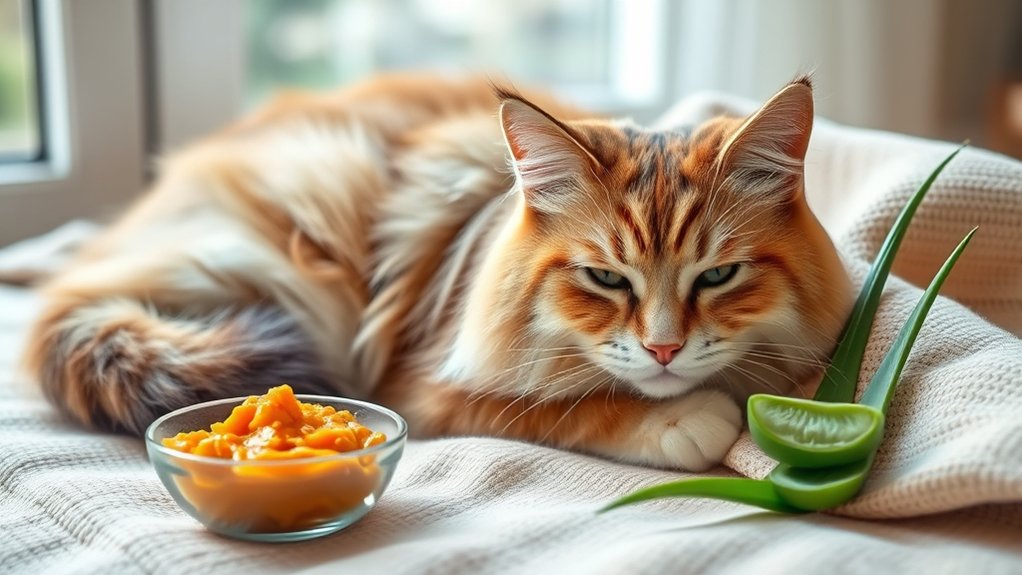
If your cat shows signs of constipation, you can try several natural remedies at home to ease their discomfort. Start by increasing fiber in their diet. Adding canned pumpkin or switching to high-fiber cat food can soften stool and promote regular bowel movements.
Make sure your cat drinks plenty of fresh water. Mixing in tuna juice or low-sodium broth can encourage hydration, which helps prevent constipation.
Regular exercise and playtime also stimulate intestinal activity, making it easier for your cat to pass stool. You can try gently stroking your cat’s belly or applying a warm, damp cloth to their abdomen to encourage bowel movements.
Just remember, before making any dietary changes or using over-the-counter treatments, it’s best to check with your veterinarian. That way, you ensure the best care for your cat’s constipation.
When to Call the Vet for Cat Constipation
How do you know when your cat’s constipation needs professional attention? If your cat is pooping less frequently and goes 48 hours without a bowel movement, you should consult your veterinarian promptly.
Keep an eye on their litter box for any changes in habits or signs of constipation, like straining to defecate or vocalizing in distress.
If you notice blood in the stool or your cat shows changes in appetite or behavior, these could be signs of serious health issues. In that case, seek immediate medical attention.
Kittens need even closer monitoring since going over 24 hours without pooping is concerning.
By watching these signs and litter box habits closely, you can make sure your cat gets timely care and avoid complications from getting worse.
It’s all about staying alert and acting quickly when something feels off.
How to Care for Kittens and Senior Cats’ Digestion
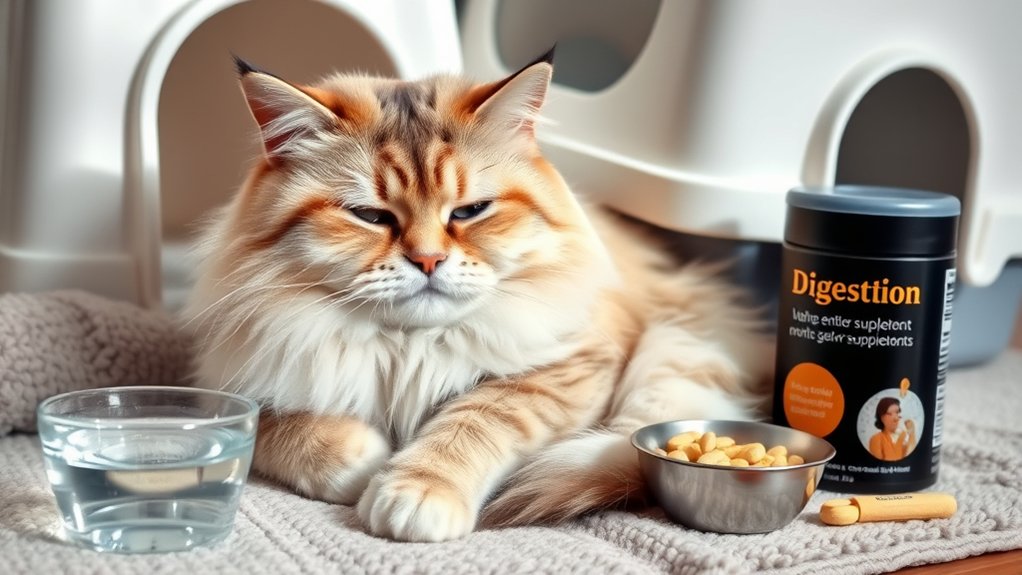
Because kittens and senior cats have unique digestive needs, you’ll want to pay close attention to their bowel habits and overall comfort.
Kittens should have bowel movements every 24 to 36 hours, but they can’t eliminate independently until about three weeks old. So, careful monitoring is crucial.
Senior cats often poop less frequently due to slower metabolism and activity. To prevent constipation and other digestive issues, provide a clean litter box that’s easy to access, especially for senior cats with mobility challenges.
Keep fresh water available at all times to avoid dehydration, which is a common cause of constipation in both age groups.
Watch for signs like straining or discomfort, and maintain regular monitoring. That way, you can make sure your kitten’s and senior cat’s digestive health stays on track.
Normal Cat Pooping Frequency and Healthy Patterns
Most adult cats have a bowel movement about once every 24 hours. Kittens tend to go more frequently, sometimes two to four times daily, especially during nursing or when adjusting to solid food.
Understanding your cat’s normal bowel patterns helps you spot any changes early.
Adult cats can safely go up to 48 hours without pooping. But kittens shouldn’t exceed 24 hours. Senior cats might poop less often due to slower metabolism, so monitoring changes is essential.
Here’s what to watch for in healthy patterns and litter box habits:
- Regular pooping frequency within 12–36 hours
- Consistent stool size and texture
- No straining or discomfort during elimination
- Absence of signs of constipation like hard, dry stools
Keep a close eye on these to support your cat’s digestive health.
Preventing Constipation: Diet, Hydration, and Litter Box Tips
Three key areas: diet, hydration, and litter box management play an essential role in preventing constipation in your cat.
Start by providing a high-fiber diet, like adding canned pumpkin, to support healthy bowel movements.
Always make sure your cat has access to fresh water. Pet water fountains can encourage better hydration, which is super important for preventing constipation.
For litter box tips, clean the boxes regularly.
If you have several cats, offer multiple boxes to reduce stress and promote regular use.
Keep an eye on your cat’s litter box habits and stool consistency.
If you notice any significant changes, don’t hesitate to consult your veterinarian promptly.
Following these steps helps keep your cat comfortable and supports their digestive health, making constipation prevention manageable and effective.
Frequently Asked Questions
Can Certain Medications Cause Constipation in Cats?
Yes, certain medications can cause constipation in cats as a medication side effect.
To support feline digestive health, you should consider dietary fiber sources, cat hydration tips, and probiotic benefits.
Laxatives for cats might help but only under vet guidance.
Keep stress relief techniques in mind, especially for older cats, and schedule regular vet checkups.
If you notice changes, discuss dietary changes or alternative treatments with your vet to keep your cat comfortable.
How Does Stress Impact a Cat’s Bowel Movements?
Stress triggers major shifts in your cat’s bowel movements, causing constipation or avoidance of the litter box.
Behavioral changes, like anxiety symptoms and disrupted routines from environmental factors or social interactions, can lead to irregular defecation.
Dietary influences and physical health also play roles.
You’ll notice coping mechanisms like excessive grooming that worsen constipation.
Monitoring these signs helps you protect your cat’s health before stress causes serious issues.
Are Specific Cat Breeds More Prone to Constipation?
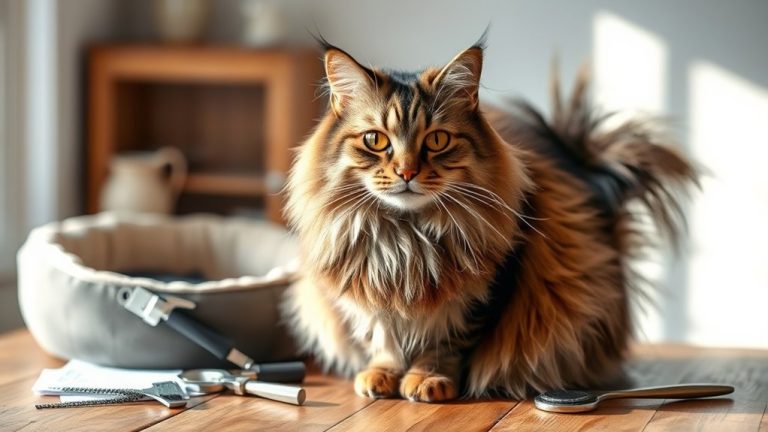
Yes, certain cat breeds like Persians and Maine Coons are more prone to constipation because their grooming habits can cause hairballs.
You should keep an eye on their hydration levels, dietary fiber, and exercise routines.
Age and health issues also play a part in constipation.
Plus, things like changes in their environment, medication side effects, and how clean their litter box is can affect their bowel movements.
So, it’s a good idea to adjust their diet and care to help prevent constipation.
That way, you can make sure they stay comfortable and healthy.
What Are the Long-Term Effects of Untreated Constipation?
Untreated constipation can seriously harm your cat’s digestive health, causing discomfort and pain. You might notice constipation symptoms like hard stool consistency or straining.
Ignoring these signs risks megacolon and bowel damage.
To prevent this, follow vet recommendations on feline diets, increasing fiber intake and hydration. Use laxative options and home remedies cautiously.
Prevention strategies keep your cat comfortable and healthy, so act early to protect their well-being.
Can Dehydration Alone Cause a Cat to Stop Pooping?
Yes, dehydration alone can cause your cat to stop pooping by slowing feline digestion and worsening constipation.
Watch for dehydration symptoms like lethargy and dry gums.
To support bowel health, improve fiber intake and make hydration tips part of your routine.
Offer fresh water sources, fountains, or wet food.
Adjust cat diets with dietary changes if needed.
If constipation persists, seek vet advice for effective constipation remedies and tailored care.
Conclusion
You should watch your cat’s bathroom habits closely. Recognize signs of constipation early and address mild issues with natural remedies promptly.
You must prioritize hydration, a balanced diet, and a clean litter box to prevent problems. It really makes a difference in keeping things regular.
You need to act quickly if your cat shows severe symptoms or goes too long without pooping. By staying attentive, informed, and proactive, you’ll help your cat stay healthy, comfortable, and happy every day.