

How To Tell If A Cat Is Pregnant – Signs And Timeline
You can tell if your cat is pregnant by watching for early signs like pinking up of nipples around three weeks. You might also notice behavioral changes, like your cat becoming more friendly. Sometimes, mild morning sickness shows up too.
A growing belly usually appears by week five. Closer to delivery, your cat may start nesting more. Pregnancy lasts about 63 days, and you’ll see physical and appetite changes throughout.
If you want confirmation, your vet can do ultrasounds or blood tests. Just keep an eye on labor signs and care tips to make sure everything goes smoothly.
Recognize Early Signs of Cat Pregnancy

Although it can be subtle at first, recognizing early signs of cat pregnancy is crucial for providing proper care. One of the earliest indicators is “pinking up,” where your cat’s nipples enlarge and turn pink around three weeks into pregnancy.
You might also notice behavioral changes, such as increased friendliness and docility, or signs of morning sickness, including occasional vomiting or reduced appetite.
As pregnancy advances, weight gain and a growing belly become more apparent, typically by week five. Closer to the due date, nesting behavior emerges, with your cat seeking quiet, secluded spots.
To guarantee accurate care, schedule a vet visit to confirm pregnancy and discuss your cat’s needs.
Early recognition helps you prepare and support your cat throughout her pregnancy journey. So keep an eye out for these signs—they make all the difference in giving your cat the best care possible.
Physical and Behavioral Changes During Pregnancy
Once you’ve noticed the early signs of pregnancy, you’ll start seeing more distinct physical and behavioral changes as the weeks go by. A pregnant cat’s belly gradually enlarges, her appetite increases, and she may begin nesting behaviors as labor approaches.
Behavioral changes include increased calmness, more grooming, and restlessness just before giving birth. These signs can help you understand what stage your cat is in and prepare accordingly.
| Timeline (Days) | Physical Changes | Behavioral Changes |
|---|---|---|
| 16-20 | Nipple pinking, slight gain | Increased friendliness, morning sickness |
| 21-42 | Visible belly, enlarged nipples | Calmness, more grooming |
| 42-63 | Significant belly swelling | Nesting, increased appetite |
| Pre-Labor | Belly tightens | Restlessness, genital licking |
| Labor | Delivery of kittens | Protective, attentive |
Confirm Cat Pregnancy With Your Veterinarian
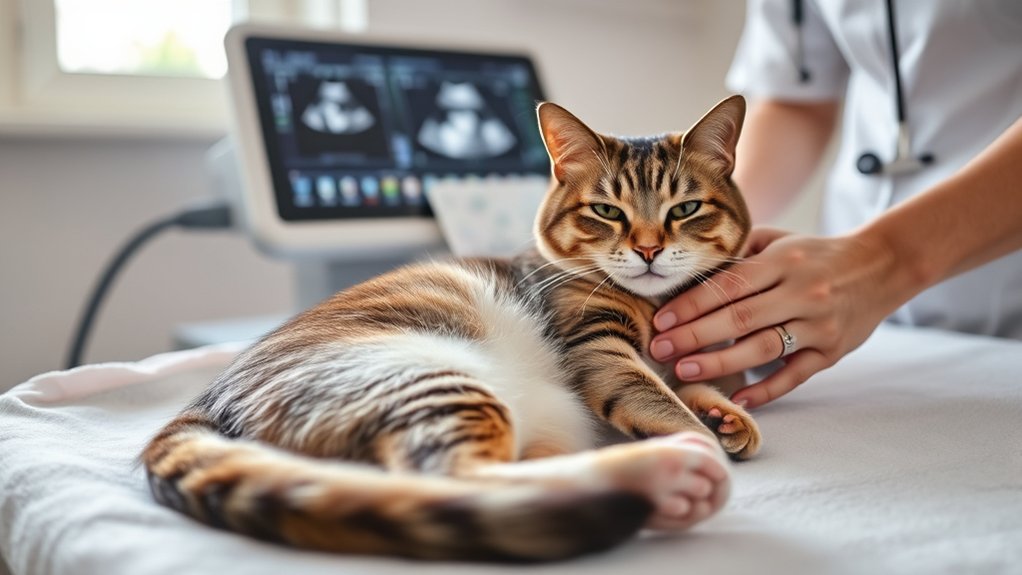
A veterinarian can confirm your cat’s pregnancy as early as 17 days after conception by palpating her abdomen to detect developing fetuses.
To confirm pregnancy sooner or with greater certainty, your vet may recommend an ultrasound test around 14 days post-conception. This can reveal fetuses and detect heartbeats after 21 days.
Blood tests can also measure hormone levels to support an accurate diagnosis.
Later in pregnancy, typically after 42 days, X-rays help assess the number of kittens and estimate the due date.
Consulting your vet is essential not only to confirm pregnancy but also to monitor your cat’s health and address any complications early.
Relying on professional evaluation guarantees you correctly interpret signs of pregnancy and provide appropriate care.
Cat Pregnancy Stages and Timeline
Cat pregnancy usually lasts around 63 to 65 days, and it’s broken down into three trimesters. Each stage brings its own unique physical and behavioral changes that you can actually notice.
As your cat enters the final trimester, you’ll start to see obvious signs like her belly swelling up and her getting into nesting mode. This is her way of getting ready for labor.
Knowing these stages and spotting early labor signs can really help you get everything set up for a safe and smooth delivery.
Trimester-by-Trimester Changes
Although early pregnancy signs may be subtle, you’ll notice gradual changes as your cat progresses through each trimester.
In the first trimester (Days 1-21), cats may show a slight increase in appetite or mild morning sickness, but physical changes are minimal.
By the second trimester (Days 21-42), the belly enlarges, nipples darken, and your cat often becomes calmer.
During the third trimester (Days 42-63), the belly grows considerably, appetite increases, and nesting behaviors become apparent as your cat prepares for labor.
As the due date nears, signs like increased grooming and affection appear.
Sometimes, your cat might have a decreased appetite just before labor begins.
Monitoring these trimester-specific changes helps you anticipate your cat’s needs and the approaching labor.
Labor Signs And Stages
As your cat’s due date approaches, recognizing the signs and stages of labor helps you provide timely support. The gestation period for cats averages 63 days, with early labor marked by initial contractions that aren’t visibly noticeable but coincide with a drop in rectal temperature below 100°F.
Watch for physical signs like restlessness, nesting behavior, and decreased appetite.
During the second stage, visible signs of labor emerge, including straining and the delivery of kittens, usually headfirst in their amniotic sacs.
The third stage involves placenta expulsion, where one greenish-black placenta passes per kitten. Labor typically lasts 12 to 24 hours.
Be alert for complications in labor. If no kitten is delivered after 10 minutes of straining or within 20 minutes once visible labor starts, seek veterinary assistance immediately.
Signs Labor Is Near and What to Expect

When labor is near, you’ll notice your queen becoming restless and spending more time in her chosen nesting spot. Signs of cat pregnancy shift to clear signs labor is near, including restlessness, increased licking of her genital area, and nesting behavior.
Her appetite may increase initially but often decreases shortly before delivery.
Expect her appetite to rise at first, then drop just before she delivers.
A critical sign is a temperature drop below 100°F, signaling labor within 24 hours.
Visible signs of contractions emerge as she actively strains to deliver kittens, usually headfirst. If a kitten isn’t born within 20 minutes of visible contractions, complications may be occurring.
In such cases, seek immediate veterinary assistance to guarantee the health and safety of both the queen and her kittens. It’s better to be cautious and get help quickly to avoid any serious problems.
Prepare a Nesting Area for Your Cat
After recognizing the signs that labor is approaching, your next step is to prepare a comfortable nesting area for your cat. Choose a quiet, secluded spot where she can feel safe and undisturbed during birthing.
Use soft blankets, towels, or old sheets to create a cozy environment that encourages rest. Make sure the nesting area remains clean and dry, maintaining proper hygiene for the health of both mother and kittens.
Keep the temperature between 85 to 90°F for the first week after birth to provide warmth. Position the nesting area so you can monitor behavior from a distance without causing stress.
Avoid high-traffic locations to minimize disturbances. By providing a safe space that’s quiet, comfortable, and easily observable, you support a smoother birthing process and promote your cat’s well-being.
It’s all about making her feel secure and cared for during this important time.
When to Seek Veterinary Help During Pregnancy
How do you know if your pregnant cat needs veterinary assistance? You should seek veterinary help if you notice any abnormal vaginal discharge. This may indicate infection or miscarriage.
Prolonged labor lasting more than 20 minutes without delivering a kitten is another urgent sign to consult a veterinarian.
Also, keep an eye out for excessive vomiting that goes beyond typical pregnancy symptoms. This could signal health problems.
If your cat appears lethargic or depressed, these potential complications warrant veterinary evaluation.
To guarantee a healthy pregnancy, schedule regular check-ups. This allows for thorough health assessments and to confirm the number of kittens once the pregnancy surpasses 42 days.
How to Care for Your Cat After Birth
Keeping a clean, warm, and comfortable environment plays a major role in supporting your cat’s recovery and the wellbeing of her kittens. After birth, focus on these key aspects of care:
Maintain the nesting area’s hygiene by replacing soiled linens regularly.
Keep the temperature between 85 to 90°F to guarantee warmth for newborn kittens.
Monitor the cat closely for any abnormal signs, like unusual discharge or refusal to nurse.
Make sure she’s access to fresh water and a clean litter box.
Feed her high-quality, high-calorie food to support her increased appetite and milk production.
At the same time, let her naturally bond with her kittens.
Common Issues During Cat Pregnancy to Watch For
You should keep an eye out for signs of pregnancy complications, such as abnormal discharge, excessive vomiting, or prolonged labor.
If your cat seems unusually tired, has persistent bleeding, or appears to be in distress, don’t hesitate to contact your veterinarian right away.
Catching these warning signs early can really make a difference in keeping both the mother and her kittens healthy and safe.
Pregnancy Complications Signs
Although many cat pregnancies progress smoothly, recognizing signs of complications early can make a critical difference in your queen’s health.
Pregnancy complications require your close attention, especially when you notice:
- Abnormal vaginal discharge that’s greenish-black or foul-smelling. This could signal a possible infection and means you need to get urgent veterinary care.
- Excessive vomiting beyond typical pregnancy symptoms or signs of distress like lethargy. These might indicate underlying health issues that demand a vet visit.
- Prolonged labor without delivering a kitten after 20 minutes of active straining. Or persistent bleeding from the vulva for over 10 minutes after delivery—both situations need immediate veterinary intervention.
Keeping an eye on these signs helps ensure timely treatment and keeps your cat safe throughout pregnancy and delivery.
Don’t hesitate to reach out to your vet if something seems off.
When To Seek Help
Recognizing signs that warrant veterinary attention can greatly improve outcomes for your pregnant cat. You should monitor for signs like abnormal vaginal discharge, persistent bleeding, or excessive vomiting. These often indicate health issues requiring immediate veterinary care.
Prolonged labor, where your cat strains for over 20 minutes without delivering, also demands urgent intervention. Furthermore, watch for signs of distress such as lethargy or depression. If you notice any of these, seek veterinary assistance without delay to guarantee the safety of both queen and kittens.
| Issue | Sign to Monitor | Required Action |
|---|---|---|
| Vaginal Discharge | Abnormal or persistent | Seek veterinary assistance |
| Labor | Prolonged labor >20 minutes | Immediate veterinary care |
| Vomiting | Excessive beyond morning sickness | Consult vet promptly |
| General Health | Signs of distress (lethargy, depression) | Urgent veterinary help |
Tips for Supporting a Healthy Pregnancy and Delivery
When supporting a healthy pregnancy and delivery, creating a quiet and comfortable nesting area is essential. Pregnant cats need a clean area with soft blankets or towels to encourage a safe birthing environment.
To care for your pregnant cat effectively, provide a high-calorie diet with frequent, small meals to meet increased energy needs for the growing kittens.
Monitor the cat’s health daily, watching for signs of distress, unusual discharge, or vomiting. If anything seems off, don’t hesitate to consult your vet.
Maintain the nesting area temperature between 85–90°F for the first week after birth.
Also, keep the litter box clean and accessible to promote hygiene for both mother and kittens. Following these steps helps guarantee your cat delivers healthy kittens and can safely sustain up to kittens a year.
Frequently Asked Questions
Can a Cat Get Pregnant Again Immediately After Giving Birth?
Yes, a cat can get pregnant again immediately after giving birth due to post birth mating during her feline reproductive cycle. You should watch for cat pregnancy signs like maternal behavior changes and monitor breeding intervals carefully.
Remember, gestation duration lasts about 63 days. Prioritize kitten care essentials and consider spaying options to avoid health risks involved with frequent pregnancies.
Fostering kittens may help if the mother’s health declines. It’s important to keep an eye on her wellbeing to ensure both mom and babies stay healthy.
How Many Kittens Does a Cat Usually Have per Pregnancy?
Back in the days of knights and castles, you’d expect a queen to have around six kittens per pregnancy. Your cat’s kitten count varies with pregnancy stages, health implications, and breed.
First-time mothers often have fewer kittens.
You’ll notice nesting instincts and behavioral changes as delivery nears. Veterinary care helps monitor dietary needs and social dynamics.
Postnatal care is essential for both mom and kittens during the delivery process and beyond.
Is It Safe to Give Vitamins or Supplements to a Pregnant Cat?
It’s safest to consult your vet before giving any vitamins or supplements to your pregnant cat.
Proper pregnant cat nutrition usually comes from a balanced diet with natural dietary sources providing essential vitamins.
Safe supplements like folic acid or omega-3s can help but require vet guidance to avoid vitamin overdose risks.
Keep feline health concerns in mind, focusing on diet adjustments and prenatal care tips.
Always prioritize recommended products approved by your veterinarian.
When it comes to your cat’s health, a vet’s advice is the best way to keep both mom and kittens safe and healthy.
Can Male Cats Detect if a Female Is Pregnant?
You might wonder if male cats truly sense pregnancy detection. Thanks to their keen scent sensitivity, they pick up on hormonal influences and pheromone release from a pregnant female. This triggers male instincts, causing noticeable behavioral changes like increased social interactions or territory marking.
While they don’t consciously understand pregnancy, their feline communication reacts to nesting behavior cues. This makes them more protective or attentive around the expectant queen.
It’s pretty interesting how their behavior shifts without them really knowing what’s going on.
How to Handle a Cat’s Pregnancy if She Is Feral or Stray?
When handling a feral cat’s pregnancy, focus on feral cat care by providing safe shelter and feeding pregnant strays nutritious meals.
Watch for signs of pregnancy and seek veterinary assistance to ensure both the mother and kittens stay healthy.
It’s important to plan for spaying options after the birth to prevent future litters.
If you’re involved in feral rescue or stray kitten adoption, support kitten socialization. Engaging community support can really help integrate the kittens safely.
This approach promotes wellness for both the mother and her kittens, making sure everyone gets the care they need.
Taking these steps can make a big difference in their lives.
Conclusion
Watching your cat’s pregnancy unfold is like reading a delicate, beautiful story written in whispers and gentle changes. By recognizing the early signs, understanding each stage, and partnering with your vet, you’re the steady anchor in this journey.
Stay alert for labor signals and care attentively afterward. Nurture both mom and kittens with love and patience. With your support, this miracle of life will flow smoothly.
You’ll help ensure a healthy, joyful beginning for your growing feline family. It’s all about being there every step of the way.