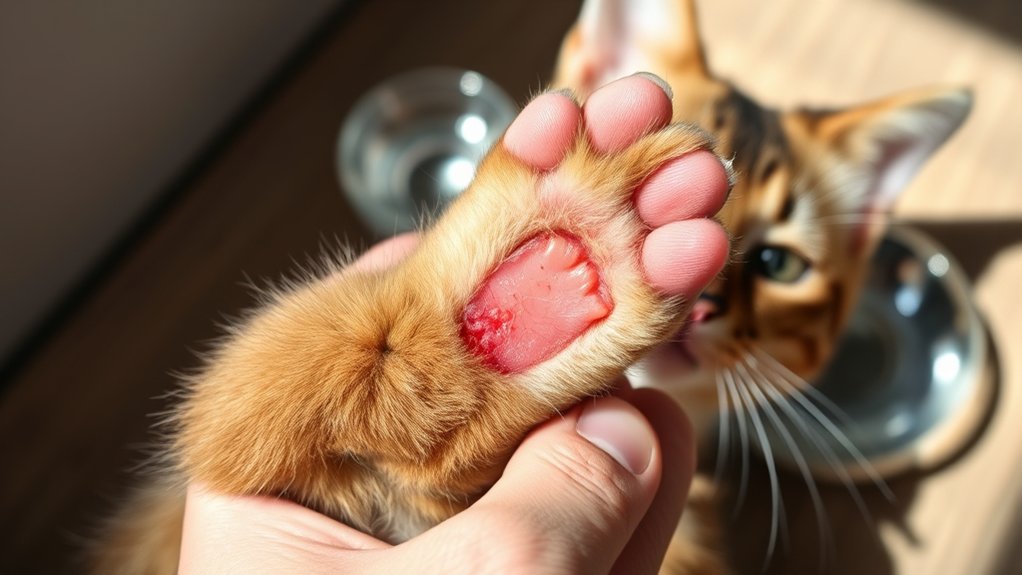
Can You Use Peroxide On A Cat Wound – Why Vets Warn Against It
You shouldn’t use hydrogen peroxide on your cat’s wounds because it damages healthy tissue and delays healing. It causes chemical burns, increases infection risks, and disrupts the natural repair process. Using peroxide can actually make wounds worse instead of better.
Instead, go for pet-safe antiseptics and always check with your vet for the best care. If your cat’s wound shows signs of infection or doesn’t get better, it’s really important to see a vet right away.
Knowing safer ways to care for wounds can make a big difference in your cat’s recovery. So, don’t rely on peroxide — there are better options out there to keep your furry friend safe and healthy.
Why You Should Avoid Hydrogen Peroxide on Your Cat’s Wounds
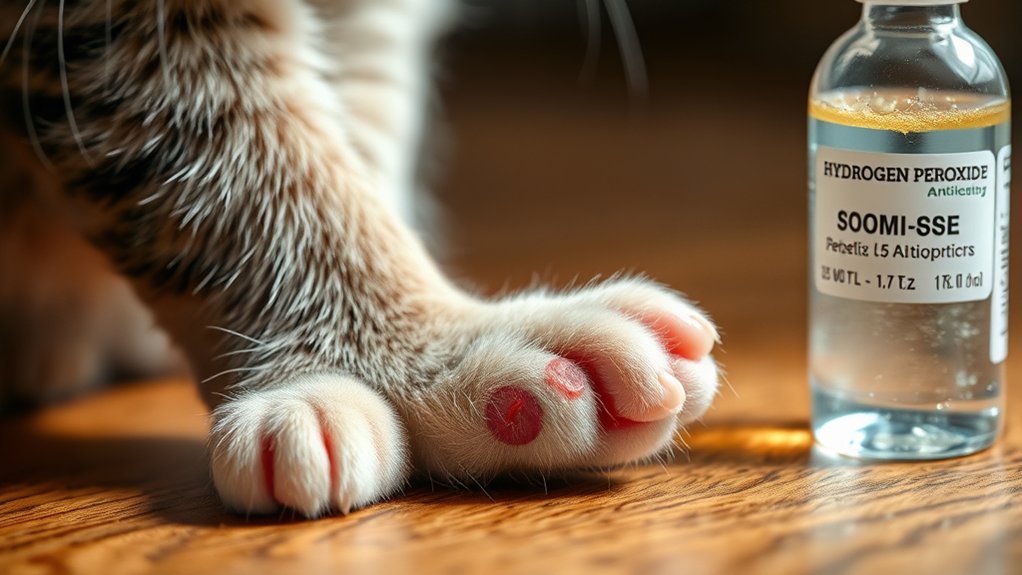
Although hydrogen peroxide is commonly used for cleaning wounds in humans, you should avoid using it on your cat’s injuries. It’s not hydrogen peroxide safe for cats, as it can damage healthy tissue and interfere with the natural healing process. This can lead to delayed wound care recovery, increased risk of infection, and potential scarring.
Cats are especially sensitive, and ingestion may cause irritation in the mouth or more serious gastrointestinal issues.
Veterinarians recommend using pet-safe antiseptics or saline solutions instead, which clean wounds effectively without harming surrounding tissue.
Always consult your veterinarian before treating your cat’s wounds to guarantee you support a safe, efficient healing process and avoid complications associated with inappropriate wound care products.
It’s better to be safe and make sure your furry friend heals properly!
How Hydrogen Peroxide Harms Cat Tissue and Delays Healing
When you use hydrogen peroxide on your cat’s wounds, it doesn’t just target bacteria. It also damages healthy tissue. This damage can delay healing and cause further complications.
Here’s how hydrogen peroxide harms your cat’s wounds: It destroys healthy tissue, which increases pain and irritation rather than helping recovery. The bubbling reaction disrupts the natural healing process. This causes delays and can promote scarring.
It may also cause chemical burns, which worsen the wound. That increases the risk of infections because tissue regeneration gets impaired.
Veterinarians usually advise against using hydrogen peroxide for wound care. Instead, mild saline solutions or pet-safe antiseptics are recommended. These support healing without harming healthy tissue.
Using safer alternatives helps your cat’s wounds heal faster and reduces the chance of infections. It’s a better way to take care of your furry friend’s injuries.
Common Side Effects of Hydrogen Peroxide Exposure in Cats
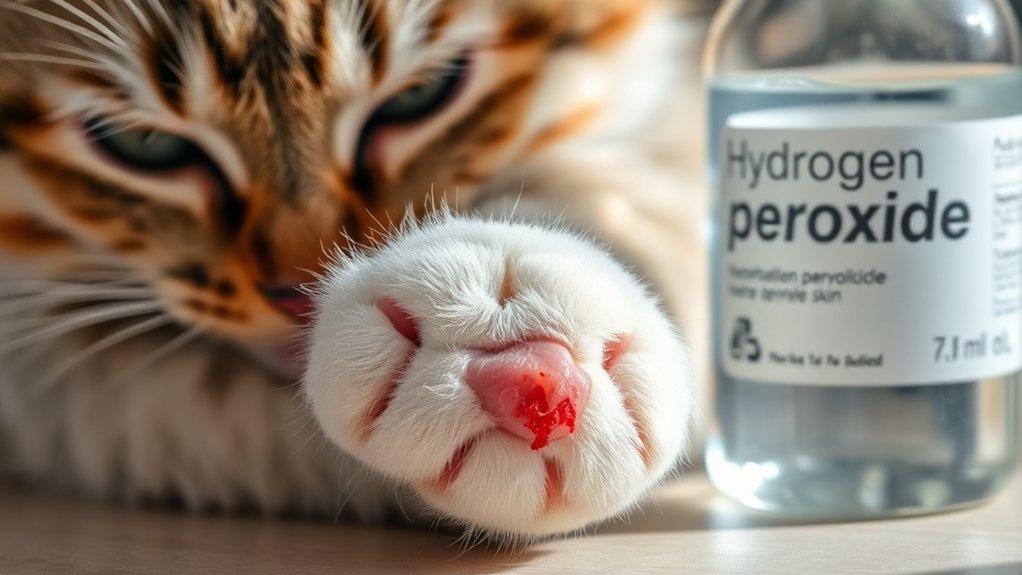
When your cat comes into contact with hydrogen peroxide, you might see them start vomiting or having diarrhea.
It can also cause some stomach irritation, which is never fun for your furry friend.
If your cat breathes in or accidentally inhales the hydrogen peroxide, they could have trouble breathing or other respiratory issues.
On top of that, you might notice changes in their behavior, like becoming really lethargic or grooming themselves way more than usual.
These signs usually mean your cat needs some quick attention from a vet.
Gastrointestinal Irritation Symptoms
If your cat has ingested hydrogen peroxide, you might notice signs of gastrointestinal irritation such as vomiting and diarrhea.
Hydrogen peroxide acts as a toxic substance that can inflame the stomach lining, causing discomfort and loss of appetite. You should watch closely for these key symptoms:
- Persistent vomiting, which may lead to dehydration, a serious risk for cats.
- Diarrhea, indicating irritation in the digestive tract.
- Foaming at the mouth, a sign of throat irritation from peroxide exposure.
Because these symptoms can worsen quickly, seeking professional care is essential.
Avoid using peroxide on cat wounds, as it may cause more harm internally.
Prompt veterinary attention helps prevent complications and guarantees your cat’s safety after any hydrogen peroxide exposure.
Respiratory And Behavioral Effects
Although hydrogen peroxide is commonly used as a disinfectant, it can cause serious respiratory and behavioral effects in cats if they’re exposed to it. The chemical’s irritation can inflame your cat’s throat and esophagus, leading to respiratory distress.
If inhaled, hydrogen peroxide poses a risk of aspiration pneumonia, which is a severe and potentially life-threatening complication. You might notice your cat showing vomiting, excessive foaming at the mouth, or other signs of digestive irritation.
Behavioral changes such as lethargy, weakness, and loss of appetite can also occur as your cat experiences discomfort from the exposure.
Even small amounts can trigger these symptoms, so it’s essential to avoid using hydrogen peroxide on or near your cat to protect their respiratory health and overall well-being.
Safer Alternatives to Hydrogen Peroxide for Cleaning Cat Wounds
Since hydrogen peroxide can irritate your cat’s skin and delay healing, it’s important to choose safer alternatives for cleaning wounds.
Avoid alcohol and peroxide to prevent further tissue damage.
Instead, consider these safer options. Use a mild saline solution to gently clean wounds without harming healthy tissue, which helps promote better healing.
You can also opt for pet-safe antiseptics that are specifically formulated for animals. These ensure safety and effectiveness.
And remember, always seek veterinary guidance to pick the best cleaning methods and products tailored to your cat’s needs.
It’s the best way to keep your furry friend safe and comfortable.
Signs Your Cat’s Wound May Be Infected
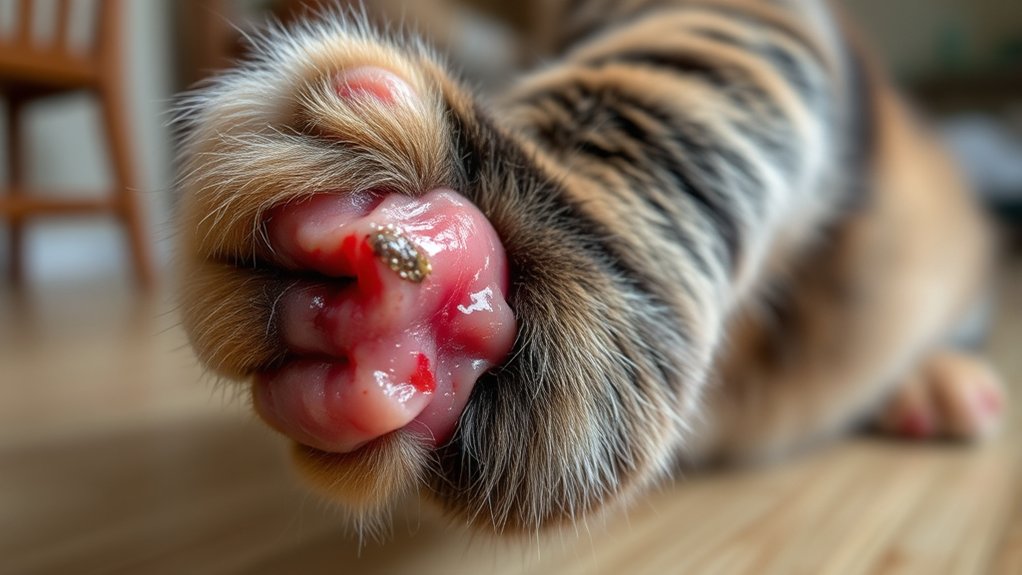
You’ll want to keep an eye out for signs that your cat’s wound might be infected.
Look for swelling, redness, or pain around the area.
Also, pay attention to any changes in your cat’s behavior.
If they seem more tired than usual or are grooming the wound a lot, that could be a sign something’s wrong.
And if you notice any unusual discharge or a bad smell coming from the wound, don’t hesitate—contact your vet right away.
Recognizing Wound Infection
Several key signs can help you recognize if your cat’s wound has become infected. As a pet owner, it’s important to monitor the healing process closely and seek veterinary care if you notice any concerning symptoms.
Watch for these three critical indicators:
- Swelling, redness, warmth, and tenderness around the wound suggest local infection and tissue inflammation.
- Lethargy, reduced appetite, or fever may signal the infection is affecting your cat’s overall health.
- Excessive grooming or worsening of the wound indicates discomfort and delayed healing.
Puncture wounds from fights can appear healed yet be vulnerable to infection beneath the surface. If the wound doesn’t improve or seems to worsen, consult your veterinarian promptly to prevent complications such as abscess formation and guarantee proper healing.
It’s always better to be cautious when it comes to your furry friend’s health.
Behavioral Changes Indicating Infection
Noticing changes in your cat’s behavior can provide important clues about the state of a wound infection. Behavioral changes like increased lethargy, hiding, or refusing to eat often signal discomfort from infected wounds.
You might also see your cat excessively grooming the injured area, trying to soothe pain or irritation. Pay close attention if you notice swelling or warmth around the wound site, as these often accompany infection and can cause fever.
A cat in pain may react negatively when you touch the affected area or show signs of limping. These behavioral cues, combined with physical symptoms, indicate your cat needs prompt veterinary care to prevent complications and guarantee proper healing.
Always monitor your cat closely to address infections early and avoid worsening conditions. It’s better to be safe and catch any issues before they become serious.
Physical Signs To Monitor
Although behavioral changes can hint at infection, closely monitoring your cat’s wound for physical signs is vital to catch problems early. You should carefully check the wound site daily to spot any signs of infection promptly.
Here are three critical physical signs to watch for:
- Swelling and redness around the wound, which often signal inflammation or infection.
- Discharge, especially pus or any unusual fluid, indicating bacterial growth.
- Changes in your cat’s behavior like lethargy or a decreased appetite, suggesting the infection may be affecting their overall health.
If you notice excessive licking or a fever, these also warrant veterinary attention.
Catching these signs early helps prevent complications and ensures your cat gets the care they need quickly.
Immediate Care for Infected Cat Wounds
When your cat shows signs of an infected wound, like swelling, redness, or pus discharge, you should seek veterinary care right away. This helps prevent complications such as abscesses or infections that spread throughout the body.
Immediate care is really important to avoid internal damage and to help your cat heal faster.
A vet will give the right treatment, which usually means prescribing antibiotics and guiding you on how to manage the wound properly. You should clean the wound regularly with pet-safe antiseptics or saline.
Make sure the wound drains properly if it’s left open.
Try not to use harsh substances like peroxide because they can slow down healing.
Keep a close eye on your cat for signs like lethargy, fever, or ongoing pain. These might mean the infection is getting worse.
Getting professional help quickly is key to your cat’s recovery and feeling better.
When to Seek Veterinary Help for Cat Wounds
If your cat sustains a puncture wound, you should seek veterinary help promptly since these injuries can easily become infected and may not be visible at first. Knowing when to consult a veterinarian is essential for proper wound care and infection prevention.
Watch for these signs: swelling, redness, or discharge around the wound, which could mean infection or an abscess is forming.
Also, be alert if your cat shows lethargy, loss of appetite, or fever after an injury. These signs suggest a systemic infection and need immediate care.
Persistent bleeding or difficulty breathing are serious and require urgent veterinary attention.
Additionally, if your cat is excessively grooming the wound, it might be making things worse. This behavior shows discomfort and means your pet needs professional evaluation.
Getting prompt veterinary intervention ensures your cat gets the treatment they need to heal safely and avoid complications.
Don’t wait too long to reach out for help!
How to Prevent Wound Infections and Promote Healing in Cats
To prevent wound infections and help your cat heal effectively, maintaining a clean environment is essential. Keep your pet’s living area free from hazards that may cause injuries. Regularly check your cat for wounds, especially after outdoor activities or fights.
Proper nutrition supports your cat’s immune system, which promotes faster healing. When cleaning a wound, use pet-safe antiseptics recommended by your veterinarian. This helps avoid tissue damage and reduces the risk of infection.
Make sure to monitor the wound closely for signs of infection such as swelling, discharge, or increased pain. If you notice any of these symptoms, don’t wait—seek veterinary care promptly to prevent complications.
Frequently Asked Questions
Can Hydrogen Peroxide Be Used Internally for Cats?
You shouldn’t use hydrogen peroxide internally for your cat. It’s unsafe and can cause severe stomach irritation or worse.
For cat wound care and feline first aid, always seek veterinary advice to guarantee pet safety.
Instead, look for peroxide alternatives recommended by vets that promote proper wound healing without harmful side effects.
Following professional guidance helps you protect your cat and manage wounds effectively and safely.
It’s the best way to keep your furry friend healthy and comfortable.
Is It Safe to Use Peroxide on Cat Mouth Wounds?
You shouldn’t use peroxide on cat mouth wounds. It actually hinders wound healing despite its antibacterial properties.
For proper feline first aid and cat oral hygiene, vets recommend safe cleaning solutions like saline or pet-specific antiseptics.
Using peroxide can irritate tissue and delay recovery.
Always follow vet recommendations to guarantee effective care and avoid complications when treating your cat’s wounds.
Safe cleaning supports quicker, less painful healing for your pet.
How Does Hydrogen Peroxide Compare to Alcohol for Cat Wounds?
When choosing between hydrogen peroxide and alcohol for wound cleaning on your cat, alcohol generally causes less tissue damage and evaporates quickly. This helps prevent infection with less irritation.
However, both can disrupt the healing process and cause pain.
For your cat’s safety, vets usually recommend antiseptic alternatives like saline solutions instead. These are better treatment options that support healing without added harm.
It’s always best to check with your vet before applying any antiseptic.
That way, you can make sure you’re helping your cat heal effectively and safely.
Can Small Amounts of Peroxide Cause Poisoning in Cats?
Yes, even small amounts of peroxide can cause poisoning in cats. You need to watch for signs of peroxide toxicity like vomiting, diarrhea, and lethargy.
These symptoms can be serious, so it’s important to stay alert.
To protect your cat’s health, follow your veterinarian’s recommendations and avoid using peroxide for wound care. Instead, use alternative antiseptics that are safer for cats.
When it comes to cat first aid, focus on safe wound cleaning methods.
And always consult your vet promptly to prevent serious health risks for your cat. It’s better to be safe than sorry!
Are There Any Home Remedies Better Than Peroxide for Cat Wounds?
When nature whispers healing, you should listen. Yes, there are better home remedies than peroxide for cat wounds.
Natural antiseptics like honey, with its antibacterial benefits, and aloe vera, known for soothing properties, are excellent choices.
Herbal remedies such as chamomile tea can reduce inflammation, while coconut oil offers gentle antimicrobial effects.
These options support healing safely, but always consult your vet to guarantee the best care tailored to your cat’s unique needs.
Conclusion
Think of your cat’s wound like a delicate garden. Using hydrogen peroxide is like pouring harsh chemicals that scorch the soil, stopping new life from growing. Instead, choose gentle, vet-approved remedies that nurture healing without harm.
Watch closely for signs of infection. And don’t hesitate to call your vet if needed. By treating wounds carefully, you’re tending to your cat’s garden with the care it deserves.
This way, you help ensure a healthy, speedy recovery.