Can A Cat Eat French Fries – Safety And Health Risks
You shouldn’t feed your cat French fries because their high fat, salt, and potential toxic seasonings like garlic or onion powder pose serious health risks. These can cause digestive issues, dehydration, obesity, and even pancreatitis.
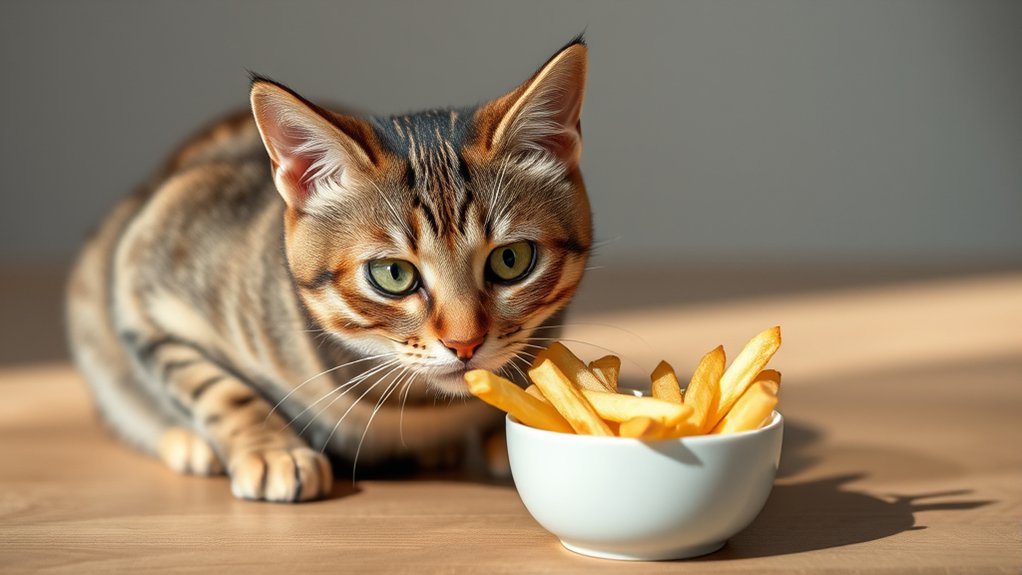
While your cat may be curious about the fries’ crunchy texture and aroma, they offer no nutritional value and can harm your pet’s wellbeing.
Understanding these risks and safe alternatives can help you protect your feline friend from avoidable health problems.
Can Cats Safely Eat French Fries?
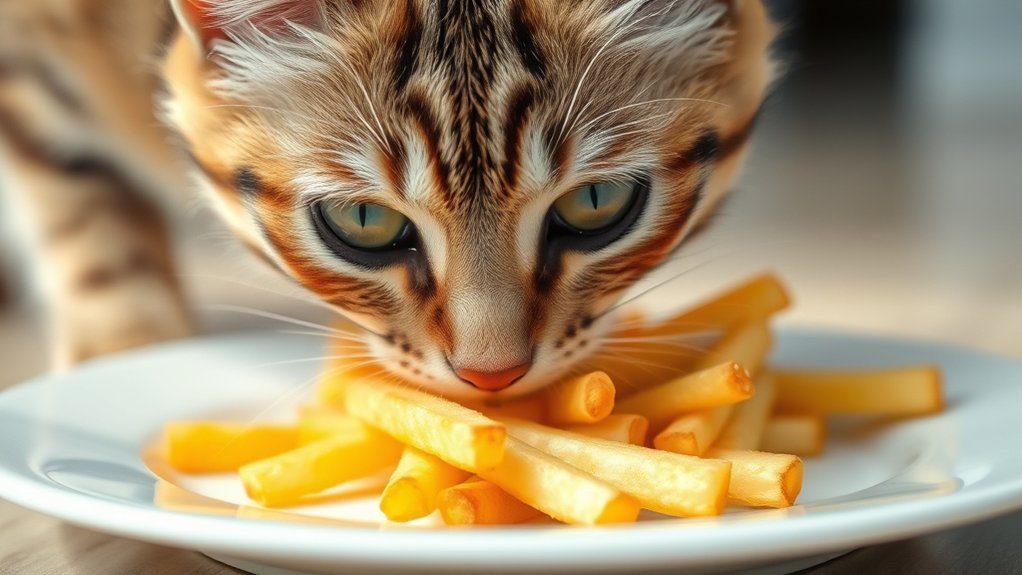
How safe is it for your cat to eat French fries? While cats can consume very small amounts, French fries pose significant health risks.
Their high fat and salt content can lead to obesity and digestive issues, including pancreatitis, a severe inflammation of the pancreas that causes gastrointestinal distress.
High fat and salt in French fries can trigger obesity and serious digestive problems like pancreatitis in cats.
Moreover, many French fries contain toxic additives like garlic and onion powder. These can induce anemia and organ failure in cats.
French fries offer little to no nutritional value, providing only empty calories that don’t support your cat’s dietary needs.
If your cat does eat French fries, closely monitor symptoms such as vomiting or diarrhea.
Should any concerning signs arise, promptly consult a veterinarian to safeguard your cat’s health and address potential complications effectively.
Why Cats Are Attracted to French Fries and the Risks Involved
You might notice your cat being drawn to the crispy texture and strong aroma of French fries. It’s pretty natural since these smells can really pique their curiosity.
But here’s the thing — those fries are packed with fat and salt, which can lead to some serious health issues like obesity and kidney problems.
On top of that, many fries have ingredients like garlic and onion powder, and those are actually toxic to cats.
French Fries’ Appeal
Although cats are obligate carnivores, they often find French fries appealing because of their crispy texture and strong aroma. These qualities can stimulate their natural hunting instincts and curiosity about human foods. You might notice your cat drawn to the salty, crunchy snack despite its lack of nutritional value.
However, French fries’ high-fat content and salt levels present significant health risks for cats, including dehydration and kidney strain.
Plus, toxic ingredients like garlic and onion powder, which are commonly used in seasoning French fries, can cause severe issues such as anemia or organ failure.
So, while the crispy texture and enticing smell trigger your cat’s interest, it’s important to understand that these treats provide no real benefits. In fact, they could harm your cat’s health if consumed regularly.
It’s best to keep French fries out of your cat’s reach.
Health Risks For Cats
Because French fries have a crispy texture and strong aroma, they naturally attract your cat’s attention by stimulating its hunting instincts and curiosity about new foods.
However, feeding your cat French fries poses significant health risks. Their high fat content increases the risk of obesity and pancreatitis, serious conditions affecting your cat’s digestive and overall health.
Excessive sodium in French fries can lead to dehydration, kidney strain, and potentially sodium poisoning.
Plus, harmful additives like garlic and onion powder found in many French fries can cause anemia and organ failure. Consuming French fries often results in gastrointestinal distress, including vomiting and diarrhea.
Given all these dangers, it’s really best to avoid offering French fries to your cat.
Keeping your furry friend safe and healthy should always come first. So, when your cat looks interested, it’s better to stick to treats made just for them.
How French Fries Impact Your Cat’s Health
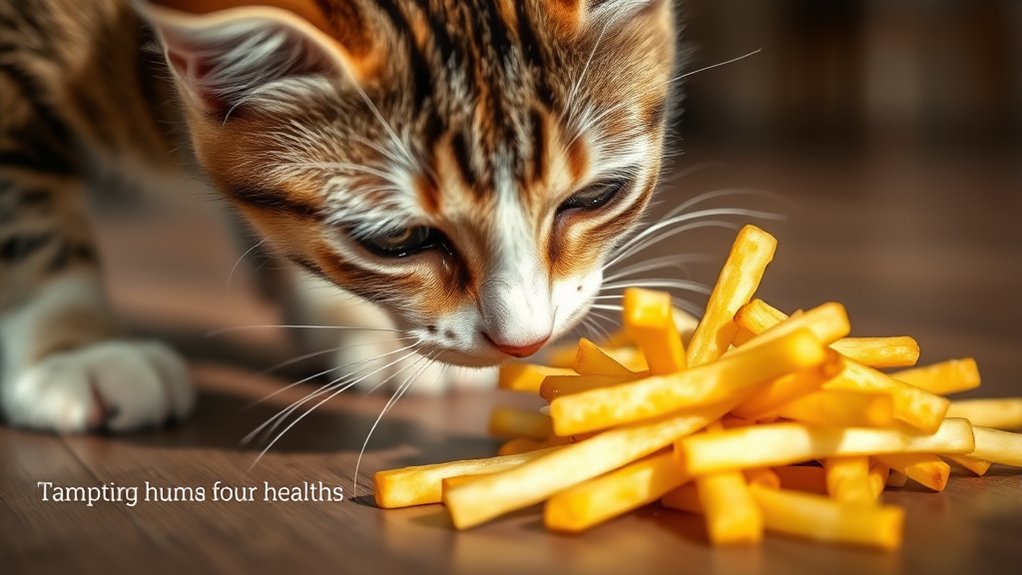
You should know that the high fat content in French fries can put a strain on your cat’s pancreas and lead to obesity.
Plus, the salt and seasonings—especially if they’ve garlic or onion—can be seriously toxic.
On top of that, greasy fries often upset your cat’s digestive system, which might cause vomiting or diarrhea.
Fat Content Concerns
When cats consume French fries, the high fat content poses significant health risks that you should be aware of. French fries are high in fat and offer empty calories, lacking essential nutrients that obligate carnivores like cats need.
Feeding your cat fatty foods can disrupt their digestive system and lead to serious conditions.
Specifically, you should consider these risks:
- Pancreatitis in cats: Excessive fat intake can inflame the pancreas, causing vomiting and loss of appetite.
- Gastrointestinal disturbances: High-fat foods often result in diarrhea and upset stomach.
- Obesity and related health risks: Regular consumption increases the chance of obesity, diabetes, and heart disease.
To protect your cat’s health, avoid French fries and provide a balanced, protein-rich diet tailored for obligate carnivores.
It’s always best to stick to foods that meet your cat’s unique dietary needs.
Salt and Seasoning Risks
Beyond the fat content, the salt and seasonings found on French fries present additional health hazards for cats. High levels of salt can cause dehydration and strain your cat’s kidneys. Excessive sodium intake may lead to sodium ion poisoning, with symptoms like increased thirst and urination.
Plus, many fries contain garlic and onion powder, both toxic to cats, risking anemia and organ failure. The high-fat content in fries makes these salt and seasoning risks even worse by increasing the chances of pancreatitis.
If you regularly feed your cat salty, seasoned fries, it can promote obesity. And obesity raises the likelihood of serious health complications such as diabetes and heart disease.
To keep your cat safe and healthy, it’s best to avoid offering French fries altogether and be mindful of these significant hazards.
Digestive Health Effects
Although French fries might seem like an occasional treat, their high fat and salt content can seriously disrupt your cat’s digestive system. The greasy texture and excessive sodium in fries pose significant health risks to your cat’s diet.
Here are three key digestive health effects to take into account:
- Digestive Upset and Gastrointestinal Disturbances: High fat in French fries often leads to vomiting, diarrhea, and discomfort due to poor digestion.
- Pancreatitis Risk: The fat content can trigger pancreatitis, marked by abdominal pain and loss of appetite. This is a serious condition that requires veterinary care.
- Obesity and Related Issues: Regular consumption promotes obesity, which increases the likelihood of diabetes and further digestive complications.
What Happens If Cats Eat Too Many French Fries?
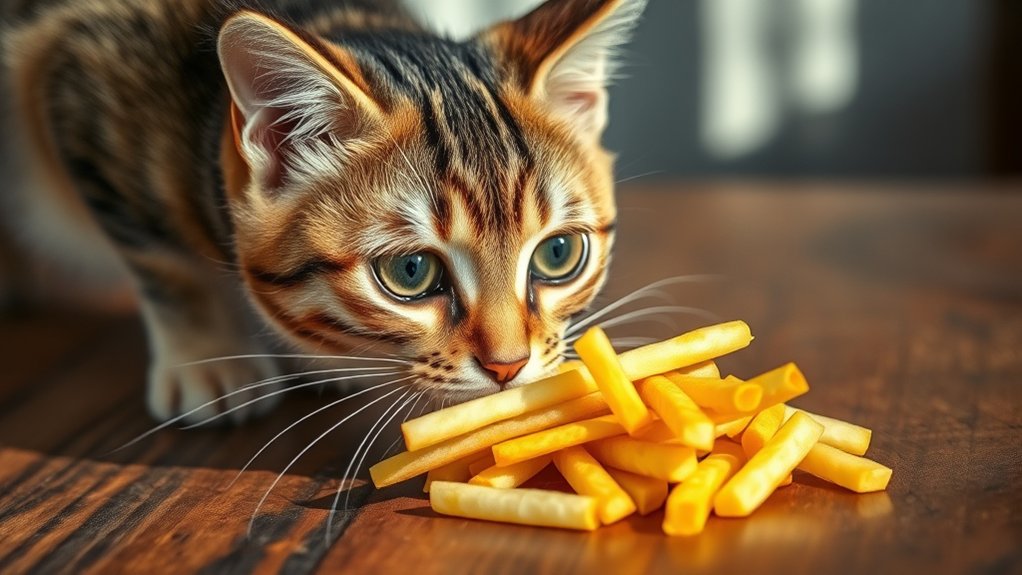
If your cat consumes too many French fries, it can quickly lead to serious health problems due to their high fat and sodium content. The high fat content promotes obesity and increases the risk of diabetes, while excess sodium strains the kidneys and may cause dehydration or salt poisoning.
Also, some French fries contain toxic additives like garlic or onion powder that can induce anemia and organ failure. Overindulgence often triggers digestive upset, including vomiting and diarrhea, because greasy, salty ingredients cause gastrointestinal issues.
Since French fries provide empty calories with no nutritional value, frequent consumption disrupts your cat’s balanced diet and overall health.
French fries offer empty calories that harm your cat’s balanced diet and overall well-being.
It’s really important to understand these health risks to keep your cat safe and prevent long-term complications linked to eating too many French fries.
Emergency Steps If Your Cat Eats French Fries
When your cat eats French fries, your immediate priority is to identify any harmful ingredients such as garlic or onion powder, which can be toxic.
If your cat accidentally eats French fries, follow these emergency steps:
- Check for toxic ingredients and remove any remaining fries to prevent further ingestion.
- Provide fresh water to help flush out toxins and keep your cat hydrated.
- Monitor your cat closely for symptoms such as vomiting, diarrhea, or an upset stomach over the next 24 hours.
If you notice any concerning signs, contact your veterinarian promptly for advice and possible treatment.
These emergency steps are vital to guarantee your cat’s safety and help prevent future incidents by maintaining a secure environment.
It’s always better to be safe than sorry, so keep an eye on your furry friend and act quickly if something seems off.
How to Prevent Your Cat From Eating French Fries
Preventing your cat from eating French fries reduces the risk of digestive upset and toxic exposure.
To protect your cat’s health, you should educate all household members about the health risks associated with sharing high-fat, salty foods like French fries. Secure storage is essential. Keep French fries out of reach to prevent curious cats from accessing them.
Use training techniques with positive reinforcement to teach your cat to ignore unhealthy foods, rewarding them with approved treats instead.
Redirect your cat’s attention during your meals by offering cat-friendly alternatives that satisfy their curiosity without compromising their diet. These steps help prevent the ingestion of harmful foods.
They ensure your cat maintains a balanced, safe diet free from the dangers posed by human snacks like French fries.
It’s all about keeping your furry friend healthy and happy!
Healthy Treats to Replace French Fries
Although French fries might seem like a tempting snack, you can offer your cat healthier treats that support their nutritional needs. Providing nutritional alternatives guarantees your cat maintains a protein-rich diet and ideal feline health.
French fries may look tempting, but healthier treats ensure your cat’s nutritional needs and overall health are met.
Consider these three healthy treats:
- Lean meats like chicken, turkey, and fish supply essential protein and are way better than fried foods.
- Boiled vegetables such as carrots or green beans, plus safe fruits like cucumbers or blueberries, add hydration and crucial nutrients when given in moderation.
- Commercial cat treats and catnip-infused treats satisfy cravings while delivering balanced nutrition and a crunchy texture cats really enjoy.
When Should You Call the Vet About Your Cat’s French Fry Eating?
How quickly you respond after your cat eats French fries can greatly impact their health.
If your cat ate fries containing toxic additives like garlic or onion powder, seek immediate veterinary consultation due to potential serious health issues.
Keep an eye out for signs of dehydration caused by the high salt content, including excessive thirst or dry gums.
Gastrointestinal upset such as vomiting, diarrhea, or lethargy also means you should contact your veterinarian right away.
Watch your cat closely for 24 to 48 hours and note any unusual behavior or symptoms.
Make sure to inform your vet about the type and amount of fries your cat ate to help assess risks and guide treatment.
Taking action early lowers the chance of lasting health problems and ensures your cat gets the care they need.
Don’t hesitate to reach out if you’re unsure—better safe than sorry!
Frequently Asked Questions
Can French Fries Cause Allergies in Cats?
Yes, French fries can cause cat food allergies because they often contain common allergens like onion or garlic powder and other additives.
While potato toxicity in cats is pretty rare, the high fat content and seasonings in fries might upset your cat’s digestive system. This can trigger allergy symptoms such as vomiting or itching.
Cats can be super sensitive to certain foods, so it’s best to avoid giving them fries altogether. Instead, offer safe snacks that are specifically made for cats.
And if your kitty shows any signs of allergies or digestive troubles, always check with your vet for the best advice.
Are Baked Potatoes Safer Than French Fries for Cats?
You should know that over 90% of a cat’s diet needs to be protein, so baked potatoes offer minimal benefits.
Baked potatoes are safer than French fries because they’ve fewer harmful fats and salts. But there are still some ingredient concerns, like the skin and solanine, which can pose risks.
Cooking methods matter a lot. Plain, peeled potatoes in small portion sizes are better for your cat.
It’s important to monitor your cat’s digestive health closely. Also, consider what your cat prefers and always seek veterinary advice before offering them as safe treats.
How Many Calories Are in French Fries Compared to Cat Food?
When you compare caloric content, a medium serving of French fries has about 365 calories. It’s higher in fats and carbohydrates than typical cat food, which offers 300-400 calories mainly from protein sources.
Paying attention to serving sizes and fat levels is essential for weight management. Given the nutritional content and feline health needs, French fries don’t really align with dietary guidelines.
You should consider healthier snack alternatives that support balanced protein intake and overall well-being.
It’s all about choosing options that keep your cat happy and healthy.
Can Cats Digest Potatoes at All?
You might think your cat’s digestive system is a potato-processing machine, but it’s not! Cats struggle with starch breakdown because they’ve limited enzymes, so digesting potatoes isn’t very efficient for them.
Cooking can reduce potato toxicity, but the nutritional value still stays pretty minimal. Small amounts might give your cat some dietary fiber and a few benefits, but you’ve got to keep an eye out for allergic reactions or other health issues.
It’s always better to be cautious since potatoes usually come with more risks than rewards in your cat’s diet.
Do French Fries Affect a Cat’s Hydration Levels?
Yes, French fries can negatively affect your cat’s hydration due to their high sodium content. This causes a thirst response and increases the risk of dehydration.
Plus, the fat content and unhealthy additives might lead to digestive issues and nutrient imbalance.
Compared to healthier options, fries pack in excessive calories without any real benefits.
While an occasional treat probably won’t cause severe harm, it’s best to avoid feeding them regularly. This helps protect your cat’s hydration and overall health from sodium concerns and related complications.
Conclusion
You might think a few French fries won’t hurt your cat, but even a tiny bite can turn their tummy into a swirling storm of trouble. French fries are loaded with salt, grease, and harmful additives that can cause serious health issues.
Don’t risk turning your feline friend into a crispy catastrophe. Stick to vet-approved treats instead. If you suspect fries have made their way into your cat’s diet, act fast and call your vet immediately!