When Do Cats Open Their Eyes – Growth Timeline
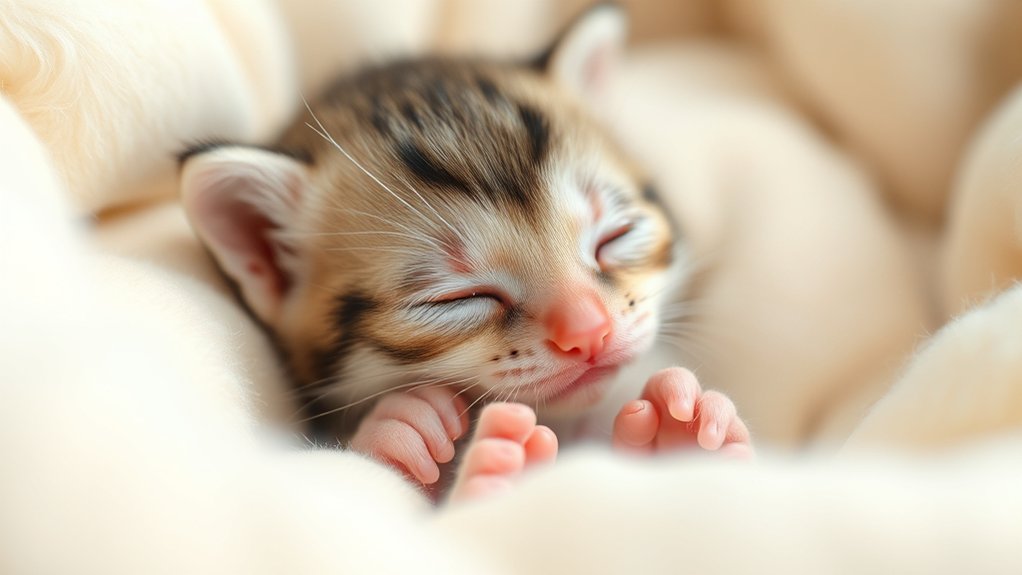
You’ll notice your kitten’s eyes start to open between 7 and 14 days after birth, usually around 10 to 14 days, often unevenly. At first, their eyes appear cloudy blue with dilated pupils, as their vision is still developing.
By 4 to 5 weeks, their eyesight improves considerably, and permanent eye color forms around 8 weeks. Proper light exposure and care during this period are essential for healthy development.
Keep exploring to understand how their eye growth reflects overall kitten health. It’s pretty amazing to see how much they change in just a few weeks!
When Do Kittens Typically Open Their Eyes?
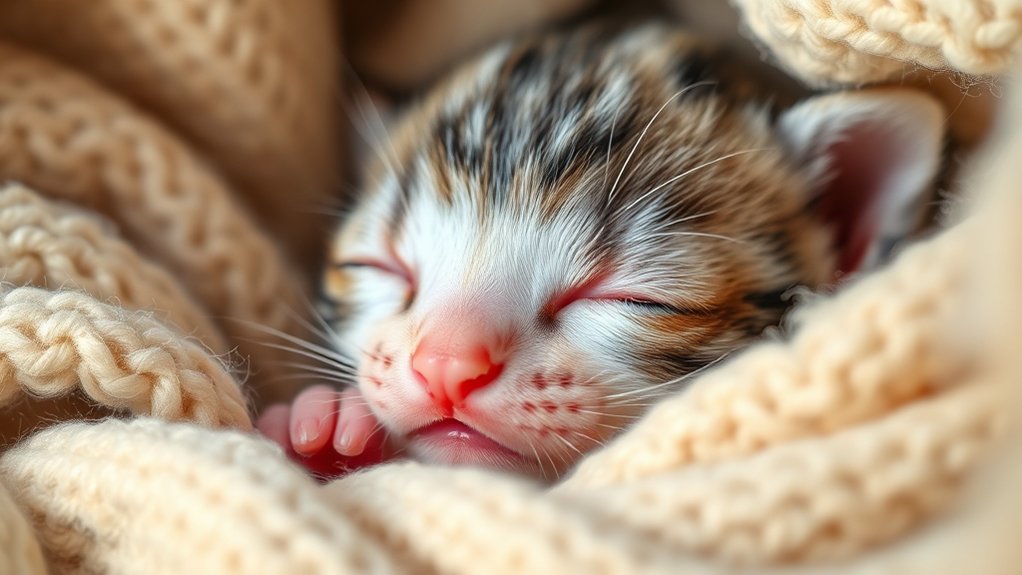
Although kittens are born with their eyes closed, they typically start opening them between 7 and 14 days after birth, with most doing so around 10 to 14 days.
When kittens’ eyelids begin to open, you might notice one eye opening slightly before the other. At this stage, their eyes often appear cloudy blue because their iris pigment hasn’t developed yet.
Kittens’ eyes may open unevenly and appear cloudy blue before their iris pigment fully develops.
This blue coloration is temporary and common among newborn kittens. As their vision improves, usually by three weeks, kittens start responding more effectively to light and movement around them.
Understanding this timeline helps you monitor their healthy development and guarantees you provide the care they need during this sensitive phase of growth.
What Do Newborn Kitten Eyes Look Like at First Opening?
When newborn kittens first open their eyes, you’ll notice a cloudy blue color. This happens because their iris pigment isn’t fully developed yet, and their vision is still a bit blurry.
Around 2 to 3.5 weeks, their eyes might look almost black. That’s mostly because their pupils are dilated wide open, hiding the irises underneath.
It’s totally normal to see different colors and levels of clarity during this early stage since their eyesight is just starting to come together.
Initial Eye Appearance
Since newborn kittens keep their eyes tightly shut for the first week or two, you’ll only see their eye color start to reveal itself around days 8 to 12.
When kittens’ eyes open, their initial eye appearance is marked by a cloudy, bluish tint caused by underdeveloped iris pigmentation. At this stage, the eyes may look almost black due to dilated pupils, making the iris difficult to distinguish.
By the time they’re about two weeks old, their vision remains limited, but their eyes gradually become more responsive to light.
The permanent eye color won’t emerge until around 8 weeks, evolving from the initial bluish hue to final shades like green, yellow, or brown.
Understanding these developmental stages helps you track your kitten’s growth accurately.
Color and Clarity
Newborn kitten eyes usually begin to open between 7 and 14 days, revealing a cloudy blue color with pupils so dilated that the irises appear nearly black. As kittens’ eyes develop, this baby blue hue dominates, but clarity is limited.
By three weeks old, the eyes start to clear, improving vision and light response. The permanent eye color, ranging from green to orange, typically sets by eight weeks.
| Stage | Eye Characteristics |
|---|---|
| First Opening | Cloudy blue, dilated pupils |
| Three Weeks Old | Clearer vision, blue eyes remain |
| Eight Weeks Old | Permanent eye color established |
Understanding these changes helps you monitor your kitten’s healthy development. It’s pretty amazing to watch, isn’t it?
Common Eye Variations
Although kittens generally open their eyes between 7 and 14 days, the appearance of their eyes at this stage can vary considerably. You’ll notice that kittens start with blue eyes, but this blue is often cloudy due to underdeveloped iris pigments.
Here’s what you can expect:
At first opening, pupils are dilated heavily, making eyes look almost black as kittens adjust to light. Between 3.5 and 6 weeks, the baby blue color becomes clearer as the pupillary reflex matures and irises form.
By around 8 weeks, permanent eye color typically develops, but changes can continue beyond this. Adult eye color can range from green to yellow or brown depending on the breed.
Understanding these variations helps you track your kitten’s healthy eye development. It’s pretty fascinating to watch how their eyes change as they grow!
How Does Kitten Eye Development Progress in the First Few Weeks?
You’ll notice kittens begin opening their eyes sometime between 7 and 14 days, though they don’t always do it all at once.
At first, their vision is pretty blurry, but it gets a lot clearer by the time they’re 4 to 5 weeks old.
During this period, their eye color also changes—from the baby blue they’re born with to their permanent shade, which usually happens between 6 and 8 weeks.
Eye Opening Timeline
Within the first two weeks of life, kittens gradually open their eyes, starting between days 7 and 14 depending on genetics and environment. As newborn kittens go through this vital phase, their eye development follows a pretty clear timeline.
First, their eyes start opening around 7 to 14 days. By two weeks old, you’ll notice their eyes reveal a cloudy blue hue, but their vision remains blurry.
Next, between 3 and 5 weeks, their eyesight sharpens. They begin responding better to light and movement, which helps boost their confidence to explore.
Finally, around eight weeks old, their eye color shifts from that initial blue to permanent shades like green, yellow, or brown. This change depends on their breed.
Understanding this timeline makes it easier to keep an eye on your kitten’s healthy development during these important early weeks.
Vision Clarity Development
As kittens open their eyes between days 7 and 14, their vision starts off quite limited. During the first two weeks, kittens begin to adjust to light and shapes, but their eyesight remains blurry due to underdeveloped retinas and cloudy irises.
By the end of this period, their vision clarity improves noticeably, allowing them to detect movement and light contrast more effectively.
Around three to five weeks, their vision sharpens further, enabling more confident exploration of their environment. Though kittens’ eyes are still maturing, they’re far from fully developed at this stage.
It takes several more weeks for their visual system to reach full functionality.
Understanding this gradual process helps you appreciate how kittens evolve from limited sight to the clearer vision necessary for independent interaction.
It’s pretty amazing to watch how quickly they grow and learn.
Color Changes Progress
Although kittens open their eyes between 7 and 14 days old, their eye color doesn’t stay the same. The color changes in developing eyes progress a lot during the first few weeks.
By 3.5 weeks, their initial cloudy blue eyes become clearer as their vision sharpens.
Then, around 6 to 7 weeks, melanin production starts. This brings in the first hints of permanent eye color with small patches of gold or green.
By 8 weeks, the permanent eye color is usually set, shifting from the original blue to shades like green, yellow, orange, or brown.
Keep in mind, some breeds like Siamese and Ragdolls might keep their blue eyes longer. They show unique variations in eye color development even after 12 weeks.
Knowing these stages helps you keep track of your kitten’s healthy growth.
Why Are Kittens Born With Their Eyes Closed?
Because kittens’ nervous and sensory systems are still underdeveloped at birth, their eyes remain closed to protect them during this fragile stage. When kittens are born, their eyelids stay fused shut to shield the delicate retinas from potential damage, especially during the vulnerable birthing process. This natural protection supports gradual eye development, allowing their visual system to mature safely.
The closed eyes also reflect their altricial state, meaning they rely heavily on maternal care for survival.
Typically, kittens’ eyes begin to open between 7 and 14 days, but this varies with genetics and environmental conditions. Keeping their eyes closed initially guarantees a safer shift as they slowly adjust to the world, building essential visual skills necessary for healthy growth and interaction.
How Does Light Exposure Affect Kitten Eye Development?
You need to understand that newborn kittens are super sensitive to light. That’s actually why their eyes stay closed at first.
If you expose them to bright light too early, it can cause damage. So, it’s really important to keep the lighting dim during those early days.
This kind of gentle environment helps their eyes grow properly and lets them slowly get used to seeing the world around them.
Light Sensitivity In Newborns
Newborn kittens spend their first 7 to 14 days with their eyes closed to protect their sensitive retinas from bright light. During this period, light sensitivity plays a critical role in ensuring proper eye development. Exposing newborns to bright lights too early can hinder their visual progress.
Here’s what you need to know:
- The closed eyes shield underdeveloped nervous systems from overwhelming light stimuli.
- Gradual light exposure after around a week helps kittens’ pupils adjust, promoting healthy eye function.
- Proper light management supports clear eyesight as their vision matures over the next two months.
Risks Of Early Exposure
While gradual light exposure supports healthy eye development in kittens, exposing their eyes to bright light too soon can cause serious harm. The risks include permanent damage to their developing retinas, which are highly sensitive during the first two weeks of life. Bright light can trigger photophobia or lead to abnormal eye development, compromising their long-term vision.
Since kittens’ eyes are closed at birth to protect these delicate structures, forcing them open or exposing them to harsh lighting disrupts the natural adjustment process. The tapetum lucidum, essential for night vision, also requires gradual adaptation to light to maintain eye health.
To minimize risks, you should guarantee a dim environment, allowing their eyes to open and adjust naturally without unnecessary exposure to bright light that could impair their visual growth.
It’s really about letting nature take its course gently.
Optimal Lighting Conditions
Although kittens’ eyes remain closed for their initial days, gradual exposure to soft, natural light plays an essential role in stimulating healthy visual development.
When kittens open their eyes, typically between 7 and 14 days, maintaining ideal lighting conditions is critical. Avoid bright light during the first weeks to protect their sensitive retinas.
To support your kitten’s eye growth, introduce dim, indirect natural light gradually. This encourages visual stimulation without causing damage.
Keep their environment softly lit, avoiding harsh artificial or direct sunlight exposure.
Make sure to monitor their response to light and adjust intensity as their eyesight improves around three weeks.
It’s all about creating a gentle environment that helps their eyes develop comfortably.
What Are Common Eye Issues in Newborn Kittens?
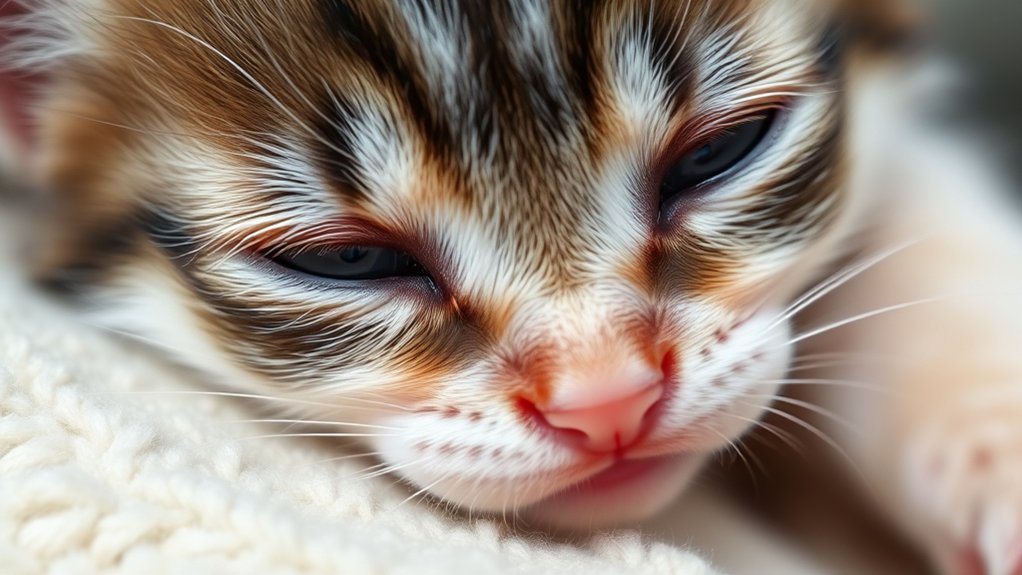
If your kitten’s eyes remain closed beyond two weeks or show signs of redness and discharge, these could indicate common eye issues like conjunctivitis or entropion.
Newborn kittens are vulnerable to these conditions, which can affect their eyes’ health and comfort.
Conjunctivitis causes inflammation and discharge, while entropion involves the eyelids curling inward, irritating the cornea. You might also notice excessive tearing or crusty eyelids, signaling infections or irritations.
Another condition, epiphora, leads to watery eyes due to underlying health or environmental factors.
To support your kitten’s eye health, gently clean their eyes with a warm, damp cloth.
While routine care helps prevent problems, any persistent abnormalities mean you should consult a vet promptly to guarantee your newborn kitten’s eyes develop properly and stay healthy.
When Should You Consult a Vet About Your Kitten’s Eyes?
Because your kitten’s eye health can quickly affect their overall well-being, you should consult a vet promptly if their eyes remain closed beyond two weeks or show signs of swelling, redness, or crusting.
Persistent eye closure past two weeks often indicates underlying health issues that need professional care.
You should consult a vet if you observe:
- Eyes remain shut beyond two weeks, indicating delayed eye opening or infection.
- Swollen, red, or crusty eyelids, which may signal conjunctivitis or other infections.
- Excessive tearing or abnormal discharge, suggesting irritation or illness.
Early veterinary intervention prevents complications and guarantees your kitten’s eyes develop healthily.
Don’t delay if you notice these symptoms. Timely diagnosis and treatment are vital for your kitten’s overall eye health and comfort.
How Does Kitten Eye Color Change Over Time?
As your kitten grows, you’ll notice their eye color gradually shifting from the initial blue to their permanent shade. Kittens are born with blue eyes because their iris pigment hasn’t developed yet, and this usually lasts until they’re around 6 to 8 weeks old.
Starting around 6 to 7 weeks, melanin production increases, which causes the eye color to change. By the time your kitten is about 8 weeks old, their eye color, whether green, yellow, orange, or brown, is usually set.
However, some breeds like Siamese and Ragdolls may keep their blue eyes beyond this period.
Remember, genetics mainly determine eye color in cats, but health factors can influence changes later in life. Keeping an eye on your kitten’s eye color helps you track their growth and well-being.
It’s pretty neat to watch this little transformation happen!
How Can You Care for Your Kitten’s Eyes During Early Growth?
Watching your kitten’s eyes change color is fascinating, but caring for their eyes during those early weeks is just as important. During the critical growth phase up to two weeks, you should gently clean your kitten’s eyes with a warm, damp washcloth using clean water to remove any crust or discharge.
Also, try to avoid exposing their developing eyes to bright lights. Their eyes are super sensitive right now, and too much light can cause discomfort or even damage.
Keep a close eye out for signs of eye infections like excessive tearing, redness, or if their eyes stay closed for a long time. If you notice anything like this, it’s best to contact your veterinarian right away.
Maintaining a warm, safe environment helps support proper eye development. Taking these careful steps makes sure your kitten’s vision grows healthy and strong during this vulnerable period.
How Do Eye Development Milestones Reflect Overall Kitten Growth?
When kittens open their eyes between 7 to 14 days, it marks an essential stage in their sensory and overall development. This eye-opening milestone shows their sight is getting better and links directly to improved mobility and social interactions.
By two weeks, you can see their overall health advancing as they start responding to light and movement. This response indicates important neural growth. Keeping track of these milestones helps you check how well their physical and sensory skills are maturing.
| Age Range | Eye Development Stage | Related Growth Aspect |
|---|---|---|
| Birth to 7 days | Eyes closed | Dependent, limited senses |
| 7 to 14 days | Eye opening begins | Sensory system activation |
| 2 to 3 weeks | Improved sight | Increased awareness, movement |
| 8 weeks | Permanent eye color | Full sensory and social growth |
Frequently Asked Questions
Can Kittens See Immediately After Their Eyes Open?
You can’t expect kittens to see clearly right after the eye opening process. Their vision development stages mean they initially perceive only blurry shapes and light. This shows how kitten eyesight is different from adults.
Early visual experiences are really important as their eyes and brain adjust. Over time, their clarity and depth perception gradually get better.
Do All Cat Breeds Have the Same Eye-Opening Timeline?
No, all cat breeds don’t follow the same eye-opening timeline. Surprise, right?
Eye development variations are real and are influenced heavily by genetic factors and breed-specific traits.
You’ll notice some breeds, like Siamese, take their sweet time, while others open their eyes sooner.
Environmental influences, like light and care, also play a role but usually don’t override genetics.
How Does a Mother Cat Protect Her Kittens’ Eyes?
A mother cat protects her kittens’ eyes by using specific eye protection techniques like keeping their eyelids closed to shield the sensitive kittens’ eye anatomy from bright light and debris.
Her behavior includes providing a safe, dark environment that reduces exposure to pathogens.
Moreover, she encourages gentle socialization, allowing kittens to gradually open their eyes and explore safely.
This process is essential for their healthy development and vision.
Are There Specific Nutrients That Support Kitten Eye Health?
You should focus on eye nutrition to support your kitten’s visual development. Essential vitamins like A, C, and E play key roles in protecting and developing their eyes.
Dietary sources rich in omega-3 fatty acids, especially DHA, and taurine are vital for retinal health and preventing degeneration.
Providing a balanced diet with these nutrients guarantees your kitten grows with strong, healthy vision. It also reduces the risk of future eye issues.
When Do Kittens Develop Night Vision Abilities?
Night vision development in kittens kicks off around six weeks, marking an essential stage in their visual acuity progression.
Like a dawn breaking through darkness, their retinas mature, and sensory adaptations such as the tapetum lucidum enhance low-light vision.
Environmental influences, like dim surroundings, further sharpen their ability to perceive shapes and movement.
Conclusion
As you watch your kitten’s eyes slowly open, you’ll notice their growth mirrors their overall development. Both unfold in perfect timing. It’s no coincidence that their curiosity sparks just as their vision sharpens, guiding them into a world full of new experiences.
By understanding this timeline and caring attentively, you’ll support healthy eye development. You’ll also help guarantee your kitten thrives, ready to explore with confidence and clear sight.