Can A Cat Eat Dog Treats – What Happens If They Do
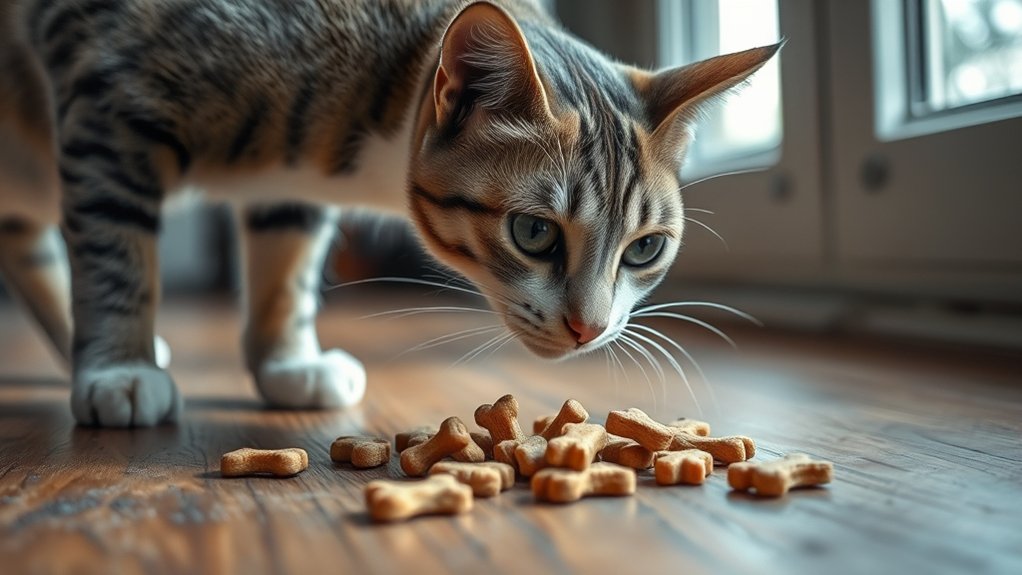
You shouldn’t feed your cat dog treats because their nutritional needs differ greatly. Dog treats often lack essential nutrients cats require, like taurine, and may contain harmful ingredients such as garlic or onion. Regular consumption can cause digestive upset, nutritional deficiencies, and long-term health issues.
An occasional accidental treat usually isn’t harmful, but it’s best to avoid them. If you want to keep your cat healthy, understanding the risks and safer alternatives is essential.
Key Nutritional Differences That Affect Cats’ Health
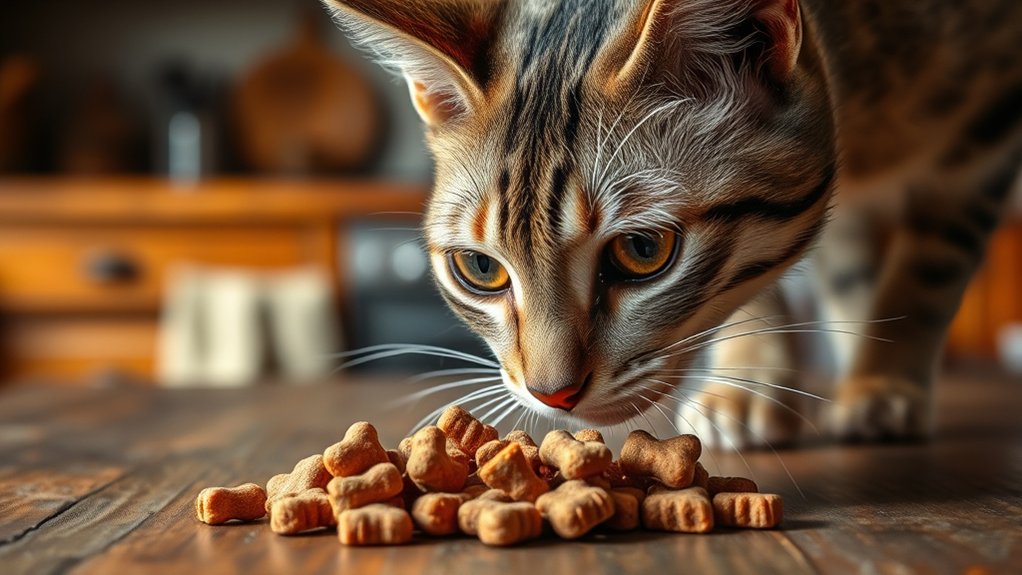
Although dog treats might seem like a convenient snack, they don’t meet your cat’s unique nutritional needs. Cats are obligatory carnivores, requiring diets rich in animal-based proteins that dog treats often lack.
Dog treats don’t meet cats’ unique needs; cats require animal-based proteins that dog treats often lack.
These treats typically contain higher carbohydrates and fewer essential nutrients like taurine and arachidonic acid, which are critical for your cat’s heart health and vision.
Giving your cat dog treats risks nutritional imbalances since the necessary components to support their wellbeing are missing.
Plus, harmful ingredients such as propylene glycol and certain preservatives found in dog treats can pose health threats. The carbohydrate content may also cause digestive upset, including nausea and diarrhea, because cats can’t properly digest those components.
Why You Should Avoid Giving Your Cat Dog Treats Regularly
Because cats have very specific dietary requirements, regularly giving them dog treats can harm their health in several ways. Dog treats often lack essential nutrients like taurine, which is critical for your cat’s wellbeing. This can lead to nutritional deficiencies.
They don’t meet your cat’s specific nutritional needs, especially when it comes to protein levels. Protein is super important for their overall health.
Plus, some dog treats contain harmful ingredients that might upset your cat’s stomach or cause other health issues. Feeding dog treats consistently can also introduce higher carbohydrate levels. This can mess with your cat’s digestion and increase the risk of obesity.
To keep your cat healthy and thriving, it’s best to avoid dog treats and choose products made just for cats. Your cat deserves treats that support their unique health needs.
Health Risks of Feeding Dog Treats to Cats
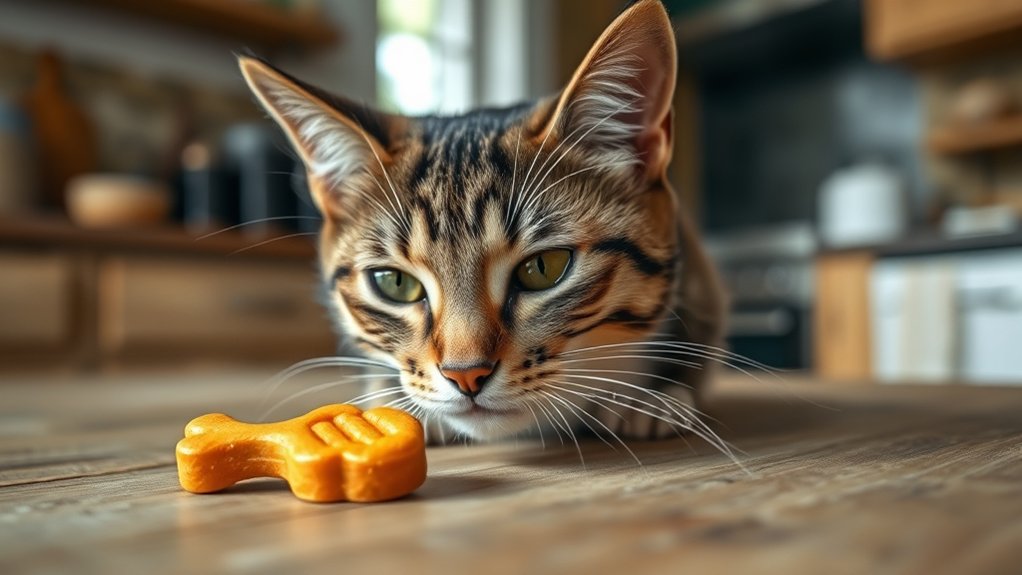
When you feed your cat dog treats, you risk exposing them to several health problems that can affect their wellbeing. Since cats are obligate carnivores, they require specific nutrients like taurine and preformed vitamin A, which dog treats often lack. This can lead to nutritional deficiencies over time.
Also, many dog treats contain higher carbohydrate levels, which can cause gastrointestinal distress such as nausea or diarrhea. This is especially true for cats with sensitive stomachs.
Some dog treats may include toxic ingredients like onion or garlic, which pose serious health risks.
Plus, regularly feeding dog treats can result in weight gain and obesity because their caloric content is designed for dogs, not cats.
To keep your feline friend healthy, stick to treats that are safe for your cat and formulated to meet their unique dietary needs. It’s always better to choose treats made just for cats to avoid any unnecessary risks.
What If Your Cat Eats Dog Treats by Accident?
You might worry if your cat sneaks a dog treat, but a single accidental snack usually won’t cause immediate harm.
Dog treats lack essential nutrients like taurine, which cats need for heart and eye health, so regular consumption can lead to nutritional deficiencies. The higher carbohydrate content in dog treats may cause digestive upset, including nausea or diarrhea.
It’s important to monitor your cat for any signs of discomfort after eating dog treats. If you notice symptoms, consult your veterinarian promptly to prevent potential health issues.
Although an occasional dog treat won’t seriously harm your cat, it’s best to keep dog treats out of reach.
That way, you can make sure your cat gets the proper diet with all the essential nutrients for long-term well-being.
What Dog Treats Do to Cats With Sensitive Stomachs
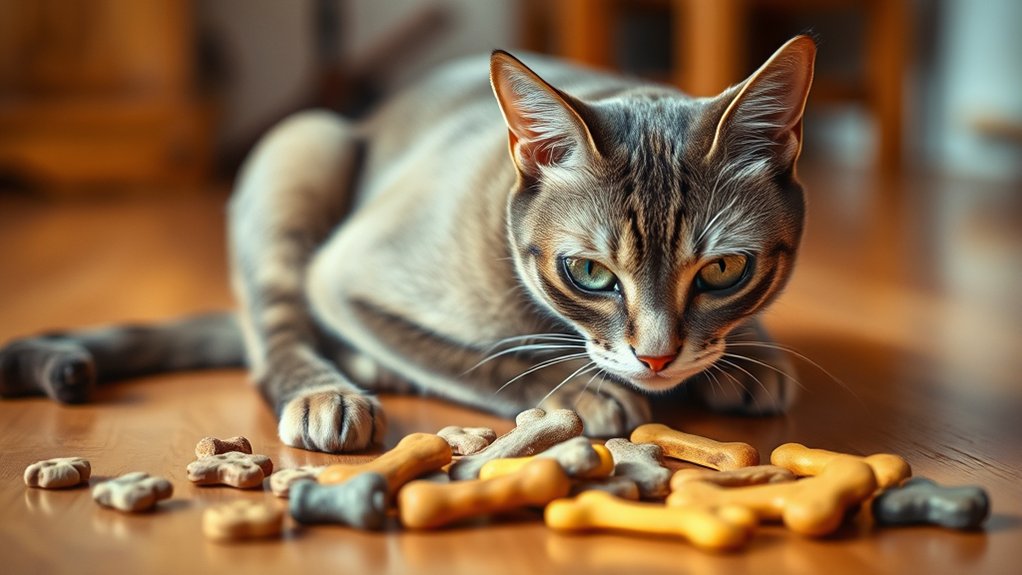
A cat’s sensitive stomach can react poorly to the carbohydrates commonly found in dog treats, causing symptoms like nausea, diarrhea, and bloating.
When cats eat dog treats, their delicate digestive health may suffer because these treats don’t meet their high protein dietary needs. Especially for cats with sensitive stomachs, this can lead to gastrointestinal upset.
Here’s what you might notice:
- Vomiting or increased bloating after eating dog treats
- Diarrhea caused by disrupted gut flora
- Fatigue and loss of appetite from blood sugar spikes
- General digestive discomfort due to carbohydrate overload
To protect your cat’s health, it’s best to avoid dog treats and stick to cat-specific treats designed for their unique dietary needs and digestive system.
It’s really important to keep their diet tailored just for them.
Are There Dog Treats That Are Safe for Cats?
While most dog treats aren’t made with cats in mind, some options on the market are safe to offer your feline friend occasionally. Certain dog treats, like Shameless Pets, are considered safe for cats when given in moderation.
However, you must carefully check the ingredients, avoiding harmful substances like onion, garlic, or propylene glycol.
Always review ingredients to avoid harmful substances like onion, garlic, and propylene glycol in treats.
Some treats, such as freeze-dried raw chicken hearts, are specifically formulated to suit both dogs and cats, helping prevent nutritional imbalances.
Despite this, it’s crucial to prioritize treats for cats to meet your cat’s diet needs properly. Before introducing any dog treats, always seek a consultation with your veterinarian to guarantee safety and maintain your cat’s health.
Tips to Prevent Your Cat From Eating Dog Treats
If you want to stop your cat from munching on dog treats, try setting up separate feeding spots.
That way, each pet has their own space to eat without getting distracted by the other’s food.
Also, be sure to store dog treats in secure containers or somewhere your cat just can’t get to.
These easy little changes can really help prevent accidental snacking and keep both your furry friends safe and happy.
Separate Feeding Areas
When you designate separate feeding areas for your cat and dog, you greatly reduce the chances of your cat sneaking dog treats.
To minimize temptation and prevent accidental consumption, try these steps:
Set up distinct feeding stations for each pet. You can use pet gates or elevated feeding stations to keep dog treats out of your cat’s reach.
Scheduling regular mealtimes and promptly removing food bowls after eating helps discourage snacking.
Supervise mealtimes closely so you can catch any sneaky behavior and redirect your cat if needed.
Another good idea is feeding your cat and dog in different rooms. This further reduces your cat’s access to dog treats.
Secure Treat Storage
Although your cat’s curiosity might be hard to resist, securing dog treats properly can greatly reduce their chances of sneaking a snack. To keep both cats and dogs safe, store dog treats in sealed containers and place them in elevated spaces or cabinets out of your cat’s reach.
Treats formulated specifically for dogs often contain nutritional elements not suitable for cats, so preventing access is crucial. Use pet gates or barriers to separate feeding areas, and always supervise feeding times to guarantee your cat doesn’t steal dog treats.
Promptly remove any uneaten food to minimize temptation. By maintaining careful treat storage and managing feeding routines, you protect your pets’ health and maintain harmony between your cats and dogs.
Choosing Healthy Treats That Meet Your Cat’s Nutritional Needs
Because cats rely heavily on animal protein, you’ll want to choose treats that prioritize high-quality meat as the main ingredient.
Dog treats often lack essential nutrients your cat needs, so sticking to cat treats designed for their nutritional needs is vital.
To select healthy treats, follow these steps:
- Confirm high-quality animal protein is the primary ingredient.
- Look for essential nutrients like taurine, arachidonic acid, and vitamin A.
- Avoid harmful additives such as onion, garlic, and excessive fillers.
- Consider your cat’s age and dental health when choosing treat size and texture.
Always seek veterinary consultation to tailor treat choices to your cat’s individual health.
That way, you provide healthy treats that support your feline’s well-being without risking harm from dog treats.
Frequently Asked Questions
Can Dog Treats Cause Allergic Reactions in Cats?
Yes, dog treats can cause allergic reactions in cats due to ingredient sensitivity or protein sources like chicken or beef.
Grain reactions and artificial additives may trigger your cat’s immune response, leading to digestive upset or symptoms of cat allergies.
If you notice vomiting, itching, or diarrhea after your cat eats dog treats, seek veterinary advice promptly.
Always monitor new treats closely to protect your cat’s health and well-being. It’s better to be safe than sorry when it comes to your furry friend’s health.
How Do Dog Treats Affect a Cat’s Dental Health?
Think of your cat’s mouth as a garden. Dog treats are like weeds that sneak in unnoticed. They don’t have the dental benefits cats need and can disrupt healthy chewing habits.
The ingredients in dog treats often feed oral bacteria, which leads to plaque buildup and tooth decay. This can harm gum health and lower the nutritional value your cat gets from food.
To keep your cat’s dental garden flourishing, choose treats made specifically for cats. These treats help nurture their unique teeth and prevent dental issues more effectively.
Are There Flavors in Dog Treats That Cats Dislike?
Yes, you’ll find that cats often dislike certain dog treat ingredients because their feline taste buds differ markedly from yours.
Cats prefer meat-based flavors, so common additives like sweet potato or peanut butter in dog treats don’t appeal to them.
The scent attraction and texture issues also matter.
Cats might reject treats with grains, herbs, or spices like garlic, which can have health implications.
Understanding nutritional differences helps you choose better options for your cat.
Can Feeding Dog Treats to Cats Affect Their Behavior?
Yes, feeding dog treats to your cat can affect their behavior. Digestive issues from unsuitable ingredients may lower their playfulness levels and change their stress response.
These treats don’t meet a cat’s nutritional needs, leading to appetite changes and altered feeding habits.
Over time, your cat’s treat preferences might shift toward carbs, causing further behavioral shifts. Watching for these signs helps you maintain your cat’s well-being and balanced diet.
It’s always a good idea to stick to treats made specifically for cats to keep them happy and healthy.
How Long Does It Take for Dog Treats to Digest in Cats?
Dog treats can take 12 to 24 hours to fully pass through your cat’s digestive process because cats have a unique metabolism. Ingredients like fats, fiber, and artificial additives often slow down digestion. This can increase the chances of gastrointestinal issues.
To keep your cat healthy and make sure they get the right nutrition, it’s best to follow feeding guidelines. Avoid giving your cat dog treats regularly.
Instead, try treats that are specially made for cats. These cat-specific treats support their digestive system and overall well-being much better.
It’s a simple way to keep your furry friend happy and healthy!
Conclusion
Think of your cat’s diet like a finely tuned orchestra. Every ingredient plays a crucial role. Feeding dog treats can throw off this harmony and risk their health and well-being.
An accidental nibble is usually harmless, but regular dog treats aren’t designed for your cat’s unique needs. To keep your feline friend healthy and happy, stick to treats made just for them.
Also, take steps to prevent unwanted snacking. Your cat deserves the best care you can provide.