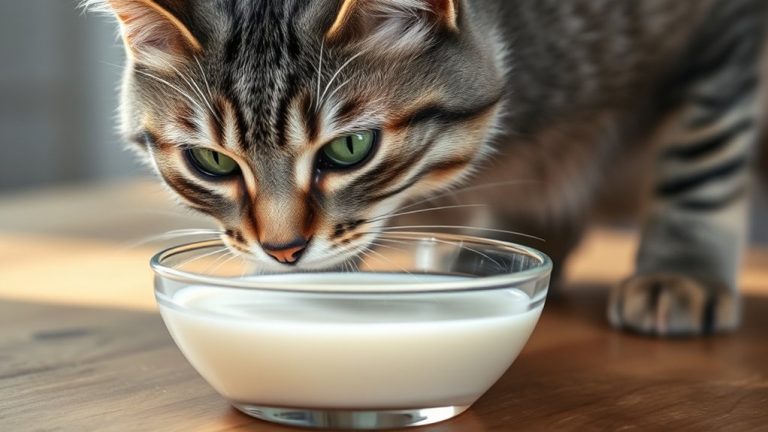
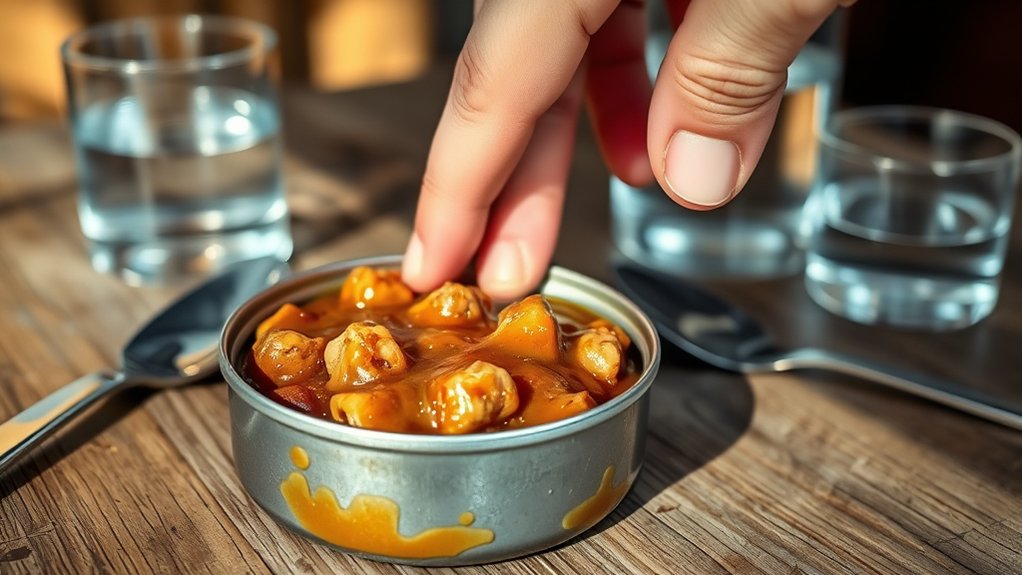
Can Humans Eat Canned Cat Food – Safety And Risks Explained
You shouldn’t eat canned cat food because it’s made for cats, not humans, and lacks essential nutrients like Vitamin C and fiber. Eating small amounts occasionally might not harm you, but it can cause nausea, stomach upset, or allergic reactions due to its high protein, fat, and additives.
There’s also a risk of foodborne illness from animal by-products. Regular consumption could strain your kidneys and heart. If you want to understand the full risks and safety tips, keep exploring the details.
Is It Safe To Eat Small Amounts Of Canned Cat Food?
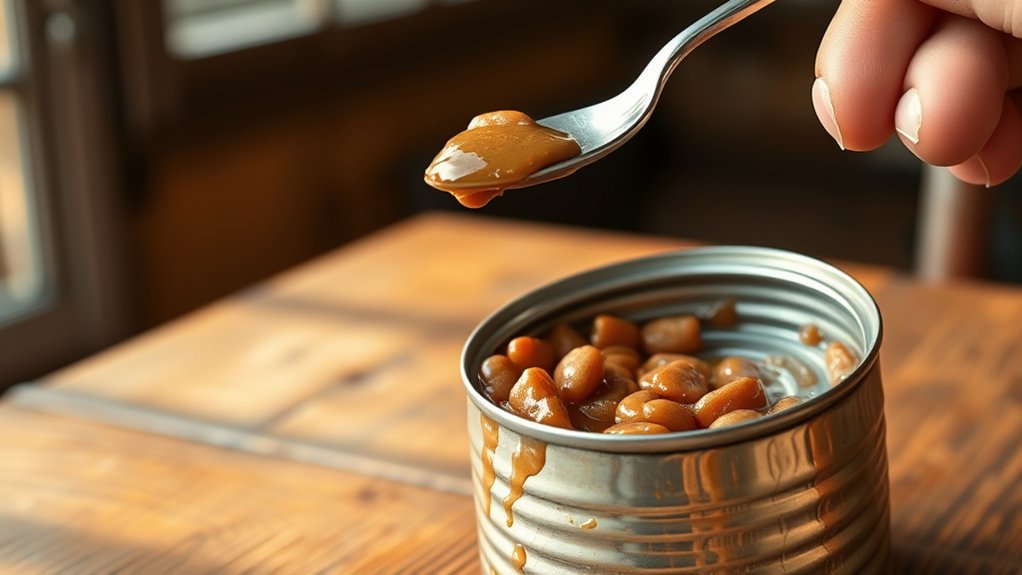
Wondering if it’s safe to eat small amounts of canned cat food? While occasional human consumption of canned cat food is generally not harmful, it does carry some health risks you should keep in mind.
Canned cat food has high protein and fat levels designed for cats, which might upset your stomach. Also, it doesn’t have important nutrients like Vitamin C and fiber that humans need. Eating it regularly could lead to nutritional deficiencies.
Plus, the ingredients in canned cat food mightn’t meet human food safety standards, so there’s a risk of contamination from bacteria like Salmonella or E. coli.
Ingredients in canned cat food may not meet human safety standards, risking contamination from bacteria like Salmonella or E. coli.
That said, eating small amounts now and then probably won’t cause serious harm. But if you do it a lot, it could strain your kidneys and affect your heart health.
Immediate Effects Of Eating Canned Cat Food
Although eating canned cat food may seem harmless in small amounts, you could experience immediate effects such as nausea and stomach upset because of its high protein and fat content. The unpleasant taste, especially in fish-based formulas, can be pretty off-putting.
Also, consuming cat food risks exposure to pathogens like Salmonella if the product is contaminated. So, it’s not just about taste or digestion—it’s about your safety too.
Here are three immediate effects to take into account:
- Immediate gastrointestinal discomfort: High protein and fat content, along with ingredients like taurine and arachidonic acid, may cause digestive issues in humans.
- Allergic reactions: If you’re allergic to seafood or grains often found in cat food, even a small amount can trigger symptoms.
- Foodborne illness risk: Contaminated cat food can harbor bacteria, increasing your chance of Salmonella infection.
Be cautious about eating canned cat food to avoid these risks. It’s better to stick to food made for humans!
What Is Canned Cat Food Made Of?
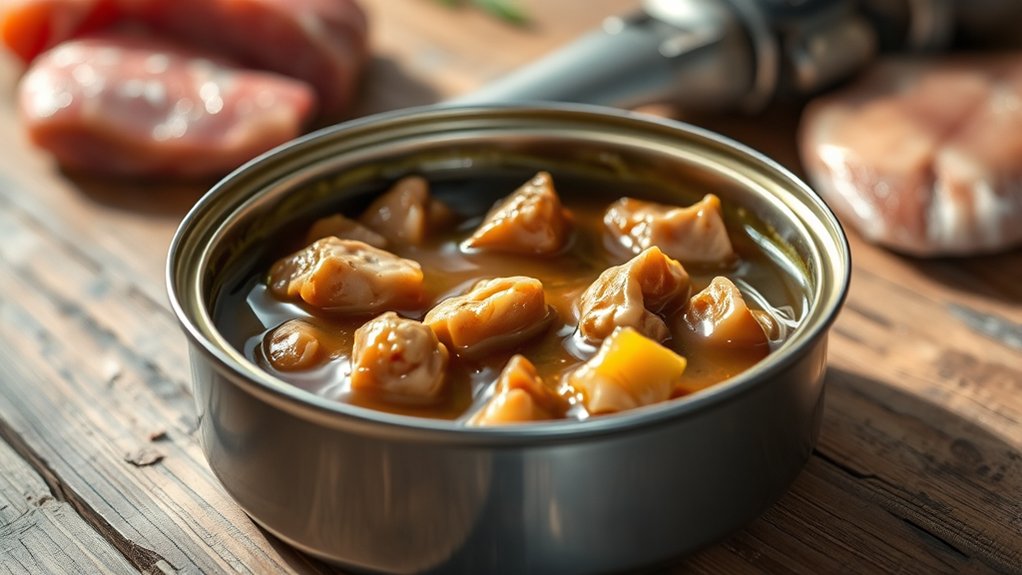
You’ll find that canned cat food mostly contains meat, meat by-products, grains, and added vitamins specifically tailored for cats.
It’s packed with high protein and fat to meet a feline’s needs.
But, it’s not really made with humans in mind, so it’s not the best choice for people to eat.
Knowing what’s inside helps explain why cat food is formulated differently from the stuff we eat every day.
Common Ingredients Overview
Canned cat food contains a blend of ingredients designed to meet feline nutritional needs, but many of these components aren’t suitable for human consumption. Its common ingredients include a mix of protein sources like chicken, beef, or fish, along with animal by-products such as organs and bones, which aren’t meant for you.
Furthermore, fillers like corn, wheat, or soy provide carbohydrates but may cause allergies in some people. High moisture content makes canned cat food appealing to cats but can cause digestive discomfort for you due to its rich fat and protein levels.
Taurine, an essential amino acid for cats, is added but unnecessary and potentially harmful in excess for humans. Preservatives keep the food fresh but may not be safe or digestible for you.
Nutritional Composition Details
While designed to meet the unique dietary needs of cats, the nutritional composition of canned cat food contains elements that may not be suitable or safe for humans.
Canned cat food typically features a high protein content, often exceeding 30%, and is formulated specifically to support feline health. It includes meat by-products, fish, poultry, and animal fats, which are generally considered unsuitable for human consumption.
Moreover, canned cat food is fortified with taurine and contains essential nutrients for cats, like arachidonic acid. The moisture content is high, around 75-80%, which is beneficial for cats but unusual in human diets.
Some products also have high levels of Vitamin A, which can be toxic to humans if consumed regularly.
All these factors make canned cat food nutritionally inappropriate and potentially risky for you to eat.
Health Risks From Ingredients And Contaminants In Canned Cat Food
You should definitely be cautious about the ingredients in canned cat food. A lot of them contain animal by-products and fillers that aren’t safe for you to eat.
On top of that, contaminants like Salmonella and E. coli can sometimes be present, which can cause serious health problems if the food isn’t handled the right way.
Ingredient Safety Concerns
Although some ingredients in cat food might seem harmless, they often don’t meet human safety standards and can carry harmful contaminants like Salmonella and E. coli. You should be aware of key ingredient safety concerns before considering consumption.
For example, animal by-products and fillers in canned cat food may harbor contaminants, posing health risks not suitable for humans.
Also, high levels of protein and fat can strain your kidneys and increase cardiovascular risks if eaten regularly.
Plus, preservatives and allergens, such as seafood and grains, may cause gastrointestinal discomfort or severe allergic reactions.
These factors make canned cat food unsafe for human consumption.
So, being cautious about these ingredient safety concerns helps protect you from potential health complications linked to contaminants, allergens, and unsuitable additives.
It’s really important to think twice before trying it yourself.
Contaminant Health Hazards
Because canned cat food often contains pathogens like Salmonella and Listeria, consuming it can expose you to serious health risks, especially if the food is raw or undercooked. These contaminants can lead to foodborne illnesses, posing significant food safety concerns.
Furthermore, canned cat food may include animal by-products and fillers with contaminants such as aflatoxins, which aren’t regulated as strictly as human food ingredients. The high protein and phosphorus levels can strain your kidneys, increasing risks like hyperphosphatemia.
Allergens found in canned cat food, including seafood and grains, might trigger allergic reactions in sensitive individuals. Regular consumption also risks gastrointestinal issues such as nausea and chronic digestive problems, partly due to low dietary fiber.
What To Do If Someone Eats Canned Cat Food
If someone accidentally eats canned cat food, it’s important to keep an eye on them for any signs of digestive upset like nausea, vomiting, or stomach discomfort.
Canned cat food is generally processed and usually poses less immediate health risk than raw varieties. But it’s still not meant for humans.
Canned cat food is processed and safer than raw but remains unsuitable for human consumption.
Here’s what you should do: first, watch out for symptoms such as nausea, vomiting, or allergic reactions, especially if they’re sensitive to ingredients like seafood or grains.
If things get worse or vomiting lasts a long time, don’t hesitate to get medical help and contact Poison Control for advice.
Also, avoid letting anyone eat cat food regularly. It’s not formulated for human nutritional needs and could lead to deficiencies or other health problems.
Just act quickly and carefully to keep any bad effects to a minimum.
Why Canned Cat Food Is Nutritionally Unsuitable For Humans
When you consider the nutritional makeup of canned cat food, it becomes clear why it’s unsuitable for human consumption.
Canned cat food is nutritionally imbalanced for humans because it’s designed to meet the specific dietary needs of cats, including higher protein levels and added taurine. It lacks essential nutrients like Vitamin C and dietary fiber, which are critical for your health. This can lead to potential deficiencies if consumed regularly.
The high-fat content in canned cat food can strain your kidneys and increase cardiovascular risks. Plus, it may contain animal by-products and fillers that raise the risk of foodborne illness. Eating this kind of food regularly isn’t a good idea for humans.
You could also face gastrointestinal problems like nausea and diarrhea because of the high fat and low fiber content.
Comparing Canned, Dry, And Raw Cat Food For Humans
Understanding the nutritional drawbacks of canned cat food for humans prompts a closer look at how it compares to other types like dry and raw cat food. When considering human consumption, safety and nutrient content vary greatly.
Canned cat food undergoes sterilization, which helps reduce pathogens and contamination risks. But its high protein and fat content can cause gastrointestinal issues.
Plus, it lacks essential nutrients like vitamin C and fiber.
Dry cat food has lower moisture, making it more susceptible to bacterial contamination. This poses moderate safety concerns.
Raw cat food carries the highest risk because it often contains common pathogens such as Salmonella and Listeria. That makes it unsafe for humans.
Each type presents unique safety and nutritional challenges, so none are advisable for human diets.
Why Eating Canned Cat Food Regularly Is Risky
Although canned cat food is designed to meet the nutritional needs of cats, regularly eating it can pose serious health risks for you. Its high protein and fat content can cause nutritional imbalances since these levels don’t align with human dietary requirements.
Plus, canned cat food lacks essential nutrients like Vitamin C and dietary fiber. Over time, this can lead to deficiencies and malnutrition.
The ingredient composition isn’t really suitable for humans either. It can trigger gastrointestinal problems such as nausea and vomiting, especially if you eat it often.
On top of that, canned cat food may harbor contaminants like Salmonella, which can be a big health risk. This is especially true if your immune system is compromised.
All in all, regularly consuming canned cat food can jeopardize your wellbeing because of these combined health risks. So, it’s best to avoid relying on it as a food source for humans.
Frequently Asked Questions
Can Canned Cat Food Cause Allergic Reactions in Humans?
Yes, canned cat food can cause allergic reactions in humans, especially if you have food sensitivities or allergies to common ingredients like seafood, beef, or grains found in cat food.
The protein sources and nutritional content are designed for cats, not humans, so they might trigger digestive issues.
Even though there are safety regulations and pet food labeling, cross-contamination can happen.
Plus, if you have dietary restrictions, it’s important to be cautious and always check the ingredients carefully before any exposure.
Better safe than sorry, right?
How Should Canned Cat Food Be Stored After Opening?
You should treat canned food storage like handling a ticking time bomb to avoid contamination risks.
Once opened, always follow refrigeration guidelines by properly sealing the can with a lid or plastic wrap to manage odors and retain nutrients. Store it in the fridge and use within 3 to 5 days. Watch expiration dates closely.
Serve appropriate portions and reheat leftovers to room temperature.
Discard any uneaten food left out over 2 hours to stay safe.
Are There Any Safe Human Foods Similar to Cat Food?
Yes, you can find human food alternatives similar to cat food when it comes to protein sources like cooked chicken or fish.
These options are often safer because they meet stricter pet food regulations and ingredient safety standards.
When you think about flavor profiles and feeding practices, it’s best to choose fresh, minimally processed foods.
Taste testing and dietary preferences do matter.
These human foods usually offer better health benefits without the risks linked to pet food processing.
Can Pets Eat Human Food Leftovers Safely?
Think of pet food safety as a carefully guarded gate between you and your pet’s health. You can feed your pet human food leftovers, but only if you follow strict feeding guidelines.
Always consider your pet’s dietary needs and avoid foods that cause allergies or food contamination.
Proper leftovers storage is essential to prevent health risks. Remember, nutrition comparison shows pet food is tailored differently, so meal sharing requires caution.
Keeping your furry friend safe means being mindful about what and how you feed them.
Is Canned Cat Food Safe for Children or Pregnant Women?
You shouldn’t feed canned cat food to children or pregnant women due to contamination risks and unsuitable nutritional content.
Ingredient sourcing and food additives in cat food don’t meet human dietary restrictions, which could cause health issues.
Taste preferences aside, vets recommend following feeding guidelines meant for pets, not people.
If ingestion happens in an emergency, get medical advice right away.
Always make sure to prioritize safe, balanced nutrition that’s tailored to your specific health needs.
Conclusion
While eating small amounts of canned cat food once in a blue moon might not harm you, it’s far from a smart choice. The ingredients and nutritional content aren’t designed for humans, and regular consumption could lead to health issues. Don’t bite off more than you can chew. Stick to food meant for you.
If you accidentally eat some, monitor yourself and seek medical advice if needed. Your health deserves better care.