Do Cats Actually Have 9 Lives – Myth Explained
You might wonder if cats truly have nine lives, but it’s just a myth based on their impressive survival skills and cultural symbolism. Cats’ agility, righting reflex, and flexible bodies help them avoid serious harm, making them seem “immortal.” The number nine carries mystical significance in many cultures, which adds to the legend.
While cats aren’t immortal, understanding their resilience and care needs gives you a clearer picture of why this myth endures. It also helps you know how to support your feline friend’s health better. So, even though they don’t have nine lives, they sure are amazing at bouncing back!
What Does the Phrase “Cats Have Nine Lives” Mean?
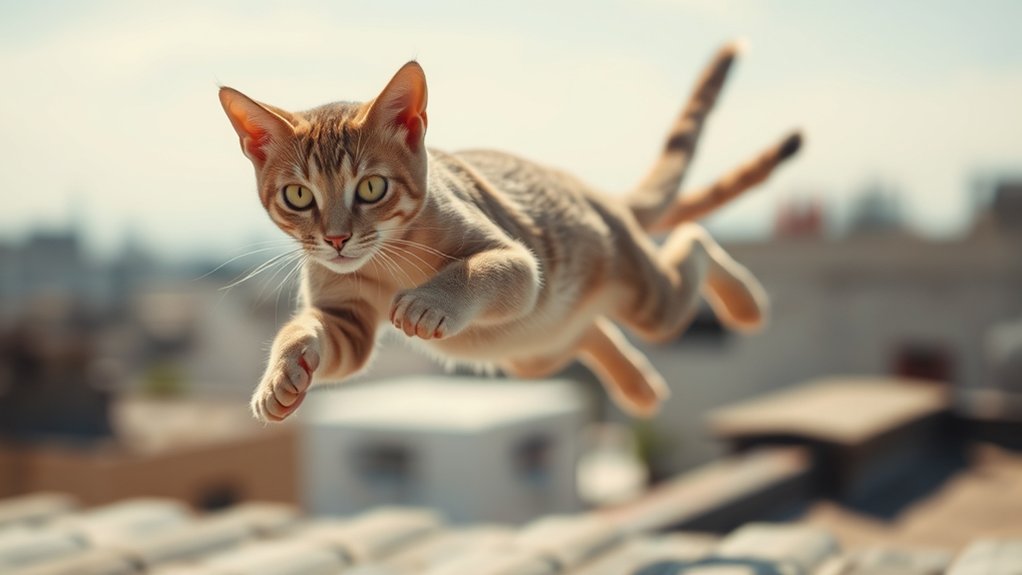
The phrase “cats have nine lives” reflects a long-standing belief in cats’ extraordinary resilience and survival skills. You’ve likely heard this idea of cats possessing multiple lives tied to their remarkable ability to survive falls and dangerous situations. This belief dates back to ancient Egypt, where cats were revered and linked to divine protection, emphasizing their almost mystical endurance.
Scientifically, cats have an innate agility and a righting reflex that lets them land on their feet, enhancing their survival chances. When you consider the phrase, it symbolizes more than just myth; it acknowledges cats’ incredible physical adaptations.
Understanding this helps you appreciate why people have long admired cats’ toughness. And honestly, it’s pretty cool why the idea of cats having nine lives continues to captivate us. It’s not just some old saying—it’s a nod to their amazing nature and the way they bounce back from tricky situations.
Where Did the Myth of Nine Lives Originate?
You’ll find the myth of cats having nine lives rooted in ancient cultural beliefs, especially from Egypt, where cats were linked to powerful gods.
It’s pretty fascinating how these creatures were seen as more than just pets—they were almost magical.
And it’s not just ancient Egypt. Historical literary references, like Shakespeare’s works, also show how this idea has been part of human storytelling for centuries.
So, the myth has really been around for a long time.
Understanding these origins helps explain why the myth remains so enduring today.
It’s like the story just stuck with us through the ages.
Ancient Cultural Beliefs
Although many cultures have their own versions of the myth, the idea that cats have nine lives likely originated in ancient Egypt. There, cats were deeply revered and linked to the sun god Atum-Ra. He symbolically created eight other gods, making nine in total. This connection elevated cats as symbols of resilience and protection.
Across ancient cultures, the number nine held mystical significance. That helped reinforce the belief in cats’ extraordinary survival abilities.
In Turkish and Arabic traditions, cats are said to have six lives. Meanwhile, Spanish-speaking cultures often say cats have seven lives, showing some cultural variation.
Your understanding of these ancient beliefs shows how deeply cats were respected for their agility and endurance. This respect helped shape the enduring myth of nine lives in human history.
It’s pretty fascinating how these stories have lasted so long!
Historical Literary References
Several historical texts and proverbs have helped cement the myth that cats have nine lives. You’ll find this idea rooted in ancient cultures where cats were seen as divine creatures, such as in Egypt, where the god Atum-Ra birthed eight gods, symbolizing nine lives.
Shakespeare further popularized this belief by referencing it in *Romeo and Juliet*, embedding the myth within English literature.
An old English proverb captures the essence: “A cat has nine lives; for three, he plays, for three, he strays, and for the last three, he stays.” This proverb highlights the resilience and mystery attributed to cats.
Understanding these historical and literary references helps you see how the myth blends cultural significance with divine symbolism. It explains why it persists scientifically and culturally even today.
Why Is the Number Nine So Special in This Myth?
Nine holds a unique place in many cultures as a symbol of total perfection and mystical power. This helps explain its role in the myth that cats have nine lives. You’ll find this number popping up in various mythologies, reinforcing the idea of resilience and supernatural strength attributed to cats.
Understanding this cultural significance gives you insight into why the myth persists globally, even with variations.
| Culture | Significance of Nine | Connection to Cats |
|---|---|---|
| Greek | Nine Muses, divine power | Symbolizes resilience |
| Norse | Nine Worlds, cosmic order | Linked to survival |
| Anglo-Saxon | Auspicious, supernatural | Reflects cats’ agility |
| Spanish-speaking | Seven lives (variation) | Highlights cultural difference |
The number nine’s mystical status across cultures really adds to the enduring myth about cats’ extraordinary lives.
How Do Cats’ Physical Abilities Feed the Myth?
You’ve probably noticed how quickly cats react to sudden movements. That’s all thanks to their super agile reflexes.
Plus, they’ve this amazing righting reflex that lets them twist in mid-air to land safely on their feet. On top of that, their flexible spine acts like a cushion, softening any hard impacts.
These incredible physical abilities help explain why cats often survive dangerous falls, which is a big reason behind the whole myth of them having nine lives.
Agile Reflexes Explained
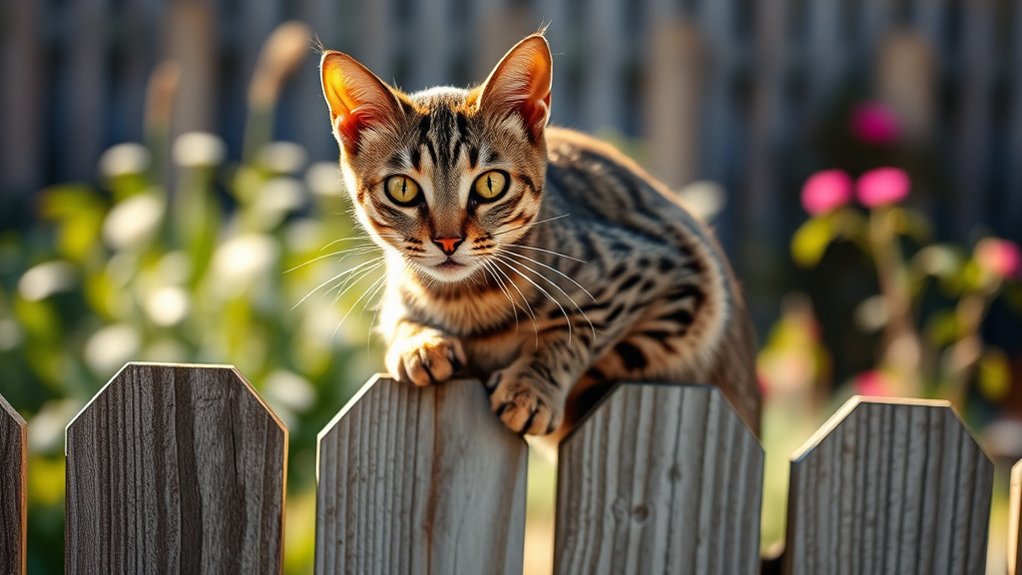
Cats’ remarkable agility plays a key role in shaping the myth of their nine lives. You’ll notice that a cat’s righting reflex allows it to twist mid-air and land on its feet. This is an essential survival skill that helps reduce injury during falls.
Their flexible spines and lightweight bodies absorb impact forces, which lets them survive drops from impressive heights. This agility, combined with the large surface area of their bodies slowing their descent, really boosts their resilience in dangerous situations.
Plus, cats can sprint up to 30 miles per hour and rely on acute hearing and sharp vision to detect threats early.
All these physical traits work together, showing off their extraordinary survival abilities. It’s no wonder people believe they’ve multiple lives!
Righting Reflex Mechanism
One key factor behind the myth of cats having nine lives is their extraordinary righting reflex. This reflex enables them to twist their bodies mid-air and land safely on their feet. It helps cats survive against the odds during a fall by allowing rapid body rotation.
Here’s how the righting reflex works:
Cats detect their orientation quickly and use flexible spines to twist their front and back halves independently. They spread their limbs to increase air resistance, which slows the fall.
Their body structure also reduces impact forces, enhancing their chances of survival.
This righting reflex develops within weeks of birth. It equips cats with a remarkable survival tool, which feeds the myth that they’ve multiple lives because they can escape life-threatening falls.
Flexible Spine Advantage
Although many animals possess agility, the flexible spine of a cat sets it apart by enabling remarkable mid-air twists and turns. This unique skeletal feature allows cats to rotate their bodies swiftly, helping them land on their feet even after high falls.
Their spine, with fewer vertebrae than humans, works in concert with lightweight bones and a broad body surface area to cushion impacts.
You’ll see how this flexibility, combined with acute survival instincts, allows cats to survive falls that would seriously injure other animals.
This impressive agility not only aids their physical survival but also fuels the myth that cats have multiple lives.
Understanding the flexible spine advantage shows you how evolution equips cats with extraordinary abilities rather than supernatural luck.
What Survival Skills Make Cats Seem “Immortal”?
When you watch a cat’s amazing ability to survive falls and dodge danger, it’s clear that they’ve some pretty special survival skills. These skills help them avoid getting hurt and keep going strong in tough situations.
First, there’s their righting reflex. Cats can twist their bodies in mid-air to land on their feet, which really boosts their chances of surviving a fall.
Then, their flexible spine and lightweight body work together to absorb impact, so even big drops don’t hurt them as much.
On top of that, cats have super sharp senses. Their hearing, sight, and smell are all finely tuned, helping them spot threats early and react fast.
All these abilities combined make cats seem almost immortal. It’s a great example of how evolution has perfectly equipped them with incredible survival skills.
Are There Different Numbers of Lives in Other Cultures?
You might be surprised to learn that different cultures actually assign different numbers of lives to cats. It’s pretty interesting because these numbers reflect unique regional beliefs.
For example, in Spanish and Iranian traditions, cats are often said to have seven lives. Meanwhile, Turkish and Arabic stories usually suggest that cats have six lives.
These numbers aren’t random—they carry symbolic meanings connected to luck, magic, and survival. So, they really shape how people see cats’ resilience in different parts of the world.
Cultural Variations Worldwide
Because cultural beliefs shape how we view animals, the number of lives attributed to cats varies worldwide. You’ll find fascinating cultural variations in how cats have multiple lives.
Spanish-speaking cultures often believe cats have seven lives, linking this to the lucky number seven.
In Turkish and Arabic legends, cats are said to have six lives, highlighting their agility and survival skills.
Anglo-Saxon traditions emphasize the number nine, associating it with magic and perfection, which popularized the myth that cats have nine lives.
These differences show how deeply cultural symbolism influences perceptions of cats’ resilience.
Understanding these variations helps you appreciate the global fascination with cats and their seemingly mysterious nature.
Symbolic Numbers Explained
The numbers assigned to cats’ lives carry deep symbolic meaning that varies across cultures. These symbolic numbers reflect the cultural variations embedded in the myth of multiple lives, with each number carrying unique significance.
For example, nine lives are linked to mystical qualities in Greek and Hindu traditions. Meanwhile, seven lives in Spanish-speaking cultures symbolize luck and magic. Turkish and Arabic folklore attributes six lives to cats, highlighting their resilience.
| Culture | Number of Lives | Symbolic Meaning |
|---|---|---|
| Greek/Hindu | 9 | Mystical qualities |
| Spanish-speaking | 7 | Luck and magic |
| Turkish/Arabic | 6 | Resilience and adaptability |
Understanding these symbolic numbers helps you appreciate the diverse cultural perceptions behind the myth of multiple cat lives. It’s pretty fascinating how a simple number can carry so much meaning depending on where you are in the world!
Regional Life Beliefs
Although many cultures share the idea that cats possess multiple lives, the specific number varies considerably across regions.
These regional differences highlight how cats are said to embody resilience and mystique differently worldwide.
For example, in Turkish and Arabic cultures, cats are said to have six lives, a unique variation that emphasizes local beliefs.
Spanish-speaking countries often claim cats have seven lives, with seven symbolizing luck and magic.
English-speaking cultures popularized the idea of nine lives. This is linked to mystical significance and ancient Egypt’s reverence for cats, connected to the sun god Atum-Ra.
Understanding these beliefs helps you appreciate the cultural respect and symbolism cats hold.
It reflects their enduring legacy across societies.
Why the Nine Lives Myth Still Persists
When you observe a cat effortlessly escaping harm, you start to understand why the myth of nine lives persists. Cats’ remarkable survival skills and agility allow them to evade dangers that would seriously injure other animals. This physical prowess fuels the enduring belief in their multiple lives.
Historically, cats have been revered in cultures like ancient Egypt, where they were associated with gods. This reverence further embedded the myth into human consciousness.
Around the world, variations of the nine lives myth, sometimes seven or six, highlight humans’ fascination with feline resilience.
Literary references, including Shakespeare’s works, have also kept this idea alive.
Scientifically, cats’ righting reflex and ability to survive falls reinforce their reputation as creatures that defy death.
All of this makes the nine lives myth both compelling and widely accepted.
Can Cats Really Cheat Death? Real-Life Stories
How do cats manage to survive situations that would be fatal for most animals? Their reputation for having nine lives comes from some pretty extraordinary abilities rooted in biology and instinct.
You’ll find these key factors behind their remarkable survival skills:
- Extraordinary righting reflex: Cats can twist mid-air to land on their feet, which helps reduce the impact of a fall.
- Keen senses and adaptability: Their sharp awareness helps them avoid danger and navigate tricky environments.
- Real-life stories: Cats like Jack, who survived a fall at an airport, and Jessie, who trekked 1,865 miles home, really show how resilient they are.
These scientific insights and true stories show that while cats don’t literally have nine lives, they do have some incredible traits that let them “cheat death” more often than you might think.
How Proper Care Helps Cats Live Their One True Life
Proper care plays an essential role in helping your cat enjoy a long, healthy life by addressing their physical, mental, and emotional needs.
Providing proper nutrition supports your cat’s immune system and prevents obesity-related diseases that can shorten lifespan.
Scheduling regular veterinary check-ups allows you to detect health issues early and begin timely treatment.
Ensuring mental and physical enrichment through interactive play and toys fosters cognitive function and reduces stress.
Creating a safe and stimulating environment minimizes anxiety, improving overall well-being.
By understanding and meeting these needs, you actively contribute to your cat’s longevity and quality of life.
Your consistent care helps your feline companion thrive, enabling them to live their one true life to the fullest, far beyond the mythical nine lives.
It’s all about giving them the best chance to enjoy every moment with you.
Preventing Boredom to Keep Cats Happy and Healthy
Why does your indoor cat sometimes seem restless or irritable? Cats need mental and physical enrichment to stay happy and healthy. Without it, pet cats can develop Boring Life Syndrome, showing excessive grooming or irritability.
Indoor cats need mental and physical stimulation to prevent restlessness and irritability from boredom.
Preventing boredom is essential for their well-being.
So, what can you do? Here are three effective ways to enrich your cat’s environment:
- Provide interactive toys and climbing structures to stimulate physical activity.
- Use puzzle feeders to engage their hunting instincts during mealtime.
- Introduce new toys or scents regularly to create varied experiences.
Frequently Asked Questions
How Can I Tell if My Cat Is in Pain or Distress?
You can tell if your cat is in pain or distress by watching for behavioral signs like withdrawal or aggression.
Changes in vocalization, such as increased meowing or unusual sounds, can also be a clue.
Physical symptoms might include limping, difficulty jumping, or an altered posture.
Sometimes environmental stressors, like new surroundings or loud noises, can trigger distress too.
It really helps to pay close attention to these indicators.
That way, you can respond quickly and compassionately.
This ensures your cat gets the care it needs.
What Are Common Health Issues That Shorten a Cat’s Lifespan?
Common health issues that shorten your cat’s lifespan include age-related diseases like chronic kidney disease and hyperthyroidism. These problems are often influenced by your cat’s genetics and the environment they live in.
Dental disease and obesity also play major roles because they can lead to other serious health complications. It’s important to keep an eye on these conditions to help your cat live longer.
By prioritizing preventive care, such as regular vet visits and a balanced diet, you can manage these risks effectively.
Early detection and intervention are really the keys to extending your cat’s healthy years in a compassionate and scientific way.
How Does a Cat’s Diet Impact Its Longevity?
Your cat’s diet directly impacts its longevity through balanced nutrition types that supply essential nutrients like taurine.
Using appropriate dietary supplements can address specific health needs, enhancing vigor. Feeding frequency matters too; regular, controlled meals help maintain weight management, preventing obesity-related diseases.
By tailoring diet to your cat’s age and health, you support its immune system and organ function.
This way, you’re not just feeding your cat—you’re helping it live a longer, healthier life with fewer complications.
It’s all about giving your furry friend the right fuel at the right time.
Can Indoor Cats Live Longer Than Outdoor Cats?
Of course, your indoor cat is basically living the high life indoors, where safety reigns supreme. Outdoor risks like predators and accidents only exist in stories.
Thanks to indoor safety, consistent food, and environmental enrichment, your feline friend avoids many dangers that outdoor cats face.
Lifestyle differences play a huge role here. Indoor cats experience less stress and fewer fights, which boosts their longevity.
What Vaccinations Are Essential for a Cat’s Health?
You should focus on core vaccines like rabies, feline distemper, herpesvirus, and calicivirus to guarantee feline vaccination benefits.
Following a proper vaccination schedule is essential, starting at six to eight weeks with boosters every three to four weeks until 16 weeks old.
The importance of boosters can’t be overstated. They maintain immunity and protect your cat from serious diseases.
Always consult your vet to tailor the vaccination plan to your cat’s lifestyle and health needs.
Conclusion
Imagine your cat landing gracefully after a daring leap, its agile body defying danger with ease. While cats don’t truly have nine lives, their remarkable reflexes and survival skills often make it seem that way.
Understanding this myth helps you appreciate your feline’s resilience. It also reminds you that providing proper care and a stimulating environment is key to helping your cat live its one precious life to the fullest. Keep your cat safe, healthy, and truly alive.