
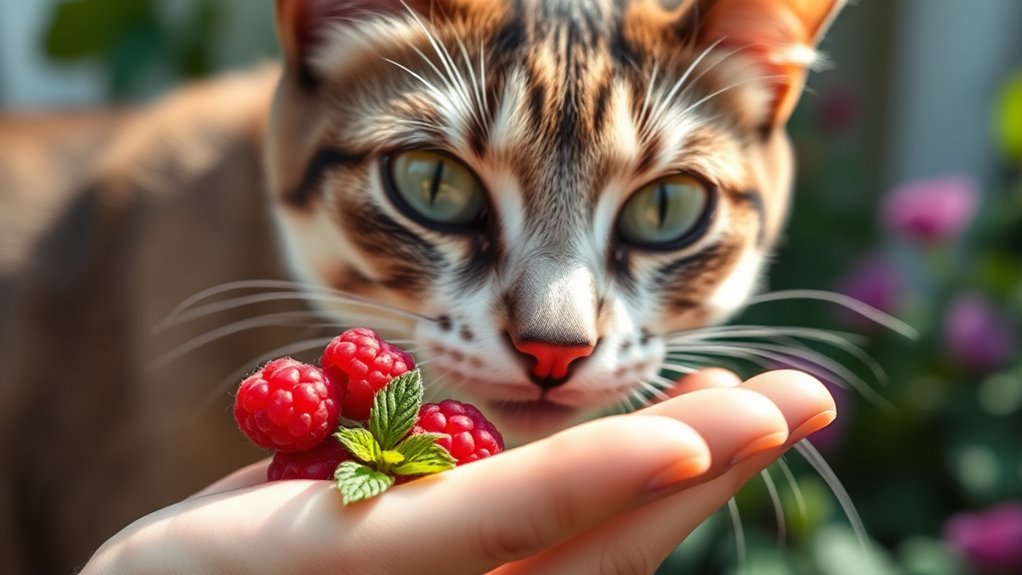
Can Cat Eat Raspberries – Safety And Feeding Advice
You can safely offer your cat a small amount of raspberries occasionally, limiting it to 1-2 berries once or twice a week. Always wash them thoroughly and serve in small pieces to avoid choking.
Be cautious of overfeeding since raspberries contain fiber and trace xylitol, which may cause digestive upset or toxicity. Monitor your cat closely for any signs of adverse reactions.
For more on serving tips, health benefits, and alternatives, keep exploring this topic.
Are Raspberries Safe for Cats?

Although cats are obligate carnivores and don’t need fruit in their diet, you can safely offer them raspberries in moderation. When feeding cats raspberries, limit portions to 1-2 berries once or twice a week to avoid digestive upset.
Raspberries contain valuable nutrients like antioxidants, vitamins C and K, and dietary fiber, which support digestive health and hydration. However, eating too many can cause bloating or diarrhea because of their high fiber content.
Keep in mind that while the raspberry fruit is safe, avoid giving cats leaves or stems. These parts may cause digestive issues and could be harmful, especially for pregnant cats.
Why Raspberries Can Be a Healthy Treat for Your Cat
When you offer raspberries to your cat in moderation, you provide a treat packed with antioxidants, including vitamin C. These nutrients can help strengthen their immune system and reduce oxidative stress. Cats can eat raspberries as an occasional treat, benefiting from their immune function support without overloading on sugars.
Raspberries are low in sugar compared to many fruits, making them a safer, healthy treat option. This helps minimize risks like weight gain or diabetes. Their high water content also promotes hydration, which is especially important for cats that don’t drink enough water.
Plus, raspberries are high in fiber, which supports digestive health and can help prevent mild constipation. By incorporating raspberries occasionally, you offer nutritional benefits that complement your cat’s primary meat-based diet effectively and safely.
It’s a nice way to add a little variety to their treats!
Nutritional Benefits of Raspberries for Cats
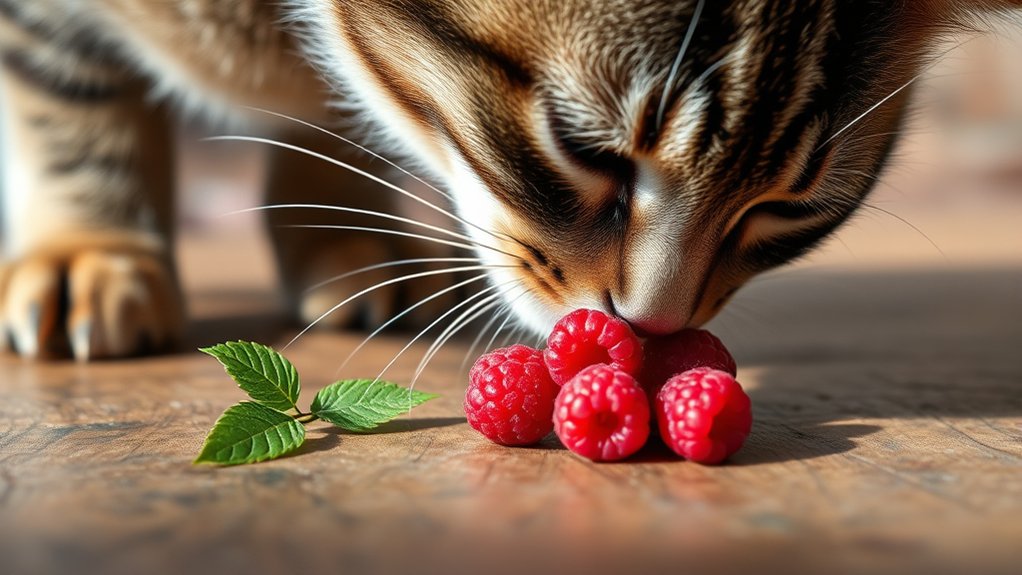
Offering raspberries to your cat not only adds variety to their diet but also delivers a range of important nutrients. Raspberries provide significant nutritional benefits, including antioxidants like vitamin C that support immune health. Their dietary fiber promotes healthy digestion and can help prevent constipation.
With about 85% water content, raspberries contribute to hydration, especially in cats that may not drink enough water. They contain essential vitamins such as vitamin K and minerals like manganese, which aid overall feline health.
Plus, raspberries are low in sugar compared to many fruits, making them a safer occasional treat. By incorporating raspberries thoughtfully, you can enhance your cat’s diet with natural nutrients that support health and well-being without compromising their health.
It’s a nice way to mix things up and give your furry friend something a bit different now and then.
Health Risks of Feeding Raspberries to Cats
Because raspberries contain natural sugars and fibers, feeding them to your cat requires careful moderation to avoid health risks. Cats shouldn’t eat large quantities of raspberries, as their high sugar content can contribute to weight gain and increase the risk of diabetes.
The fiber in raspberries may cause digestive issues, including gas, bloating, vomiting, or diarrhea, resulting in an upset stomach.
Raspberry fiber can trigger gas, bloating, vomiting, or diarrhea, upsetting your cat’s stomach.
Furthermore, trace amounts of xylitol found in raspberries are toxic to cats, making portion control critical for safety. Overconsumption of vitamin C can disrupt your cat’s digestive tract balance, leading to further health problems and adverse reactions.
To guarantee your cat’s well-being, avoid feeding raspberries frequently and always monitor for signs of digestive distress. It’s better to be safe and keep an eye on how your feline friend reacts if you decide to share this treat.
How Much Raspberry Can Your Cat Eat?

You should limit your cat’s raspberry intake to just one or two pieces per week.
Try to keep it under 5-10% of their daily calories.
It’s best to serve raspberries in small, manageable pieces so your cat doesn’t choke.
Appropriate Serving Size
While raspberries can be a safe treat for your cat, it’s important to limit the serving size to 1-2 berries once or twice a week.
When feeding raspberries, always wash the fruit thoroughly to remove any pesticides or contaminants. To avoid choking hazards, especially for smaller cats, cut the berries into halves or quarters.
Treats for cats, including raspberries, should make up no more than 5-10% of their daily caloric intake to maintain a balanced diet.
When you introduce raspberries, offer only small amounts initially and monitor your cat for any signs of digestive upset, such as gas or diarrhea.
Remember, feeding raspberries in appropriate serving sizes keeps your cat safe and healthy while enjoying this fruity treat.
Just take it slow and watch how your furry friend reacts!
Frequency And Moderation
Limiting your cat to 1-2 raspberries once or twice a week helps prevent digestive upset and guarantees their diet remains balanced. Raspberries, while safe in moderation, should only make up 5-10% of your cat’s daily caloric intake as treats.
Overfeeding can cause gastrointestinal issues like bloating, vomiting, or diarrhea due to their high fiber content.
Although raspberries have relatively low sugar, you still want to keep an eye on your cat’s overall sugar intake. This helps avoid risks like weight gain or diabetes.
It’s a good idea to introduce raspberries gradually, watching for any adverse reactions to make sure they’re safe for your cat.
Keeping the feeding frequency and moderation in check really aligns with the best advice out there. That way, your cat can enjoy raspberries safely without compromising their health or digestive comfort.
How to Introduce Raspberries Safely
You can start by giving your cat a small bit of raspberry to see how they react to it.
Keep a close eye on them afterward to watch for any digestive problems or signs of allergies.
It’s always a smart move to check with your vet before introducing any new food, just to make sure it’s safe for your furry friend.
Start With Small Portions
Offering your cat half a raspberry initially helps you gauge their tolerance and prevents digestive upset. When introducing raspberries as a treat alongside their regular cat food, start with small portions and observe their reactions carefully.
Make certain to wash raspberries thoroughly to remove any pesticides or contaminants. Cut the berry into manageable pieces to reduce choking hazards, especially since cats aren’t accustomed to this texture.
Follow these feeding advice steps to keep it safe for cats:
- Offer half a washed raspberry piece first.
- Observe for any vomiting, diarrhea, or allergic reactions.
- If no issues arise, gradually increase to 1-2 berries per week.
- Keep raspberry treats below 10% of their overall diet.
This approach guarantees your cat can safely eat raspberries without digestive upset. Just take it slow and watch how they respond!
Monitor Digestive Reactions
Once your cat tries a small portion of raspberry, keep a close eye on their digestive reactions. Monitoring for adverse symptoms like vomiting or diarrhea is essential to guarantee safety when feeding raspberries.
Introduce raspberries gradually, limiting treats to 1-2 berries once or twice weekly. Always wash and cut raspberries into small pieces before offering. Use the table below to track your cat’s digestive responses during the introduction phase:
| Day | Portion Given | Digestive Reactions Observed |
|---|---|---|
| 1 | Half a berry | None |
| 2 | 1 berry | Mild diarrhea (if any) |
| 3 | 1 berry | No symptoms |
| 4 | 2 berries | Vomiting (if any) |
| 5 | None | Monitor ongoing symptoms |
If adverse symptoms persist, consult your veterinarian promptly.
Consult Veterinarian First
Why is it important to consult your veterinarian before introducing raspberries to your cat?
Every cat has unique dietary needs and health conditions. Consulting your veterinarian guarantees the safety of feeding raspberries as treats and helps prevent potential digestive upset or adverse reactions.
When introducing raspberries, follow these guidelines:
- Consult your veterinarian to confirm raspberries fit your cat’s diet and health profile.
- Start with a small portion, like a quarter of a berry, to monitor tolerance.
- Closely observe your cat for any signs of digestive upset, such as vomiting or diarrhea.
- Limit feeding to 1-2 raspberry treats per week to maintain balanced nutrition and safety.
Prioritizing professional advice safeguards your cat’s health while enjoying occasional fruit treats.
It’s always better to be safe than sorry!
Signs of Adverse Reactions to Raspberries
Although raspberries are generally safe in small amounts, you should watch for signs of adverse reactions when your cat eats them. Vomiting, diarrhea, and digestive upset are common indicators. Lethargy or behavioral changes may also point to intolerance.
Gastrointestinal issues like gas and bloating can happen because of the high fiber content. Allergic reactions, though rare, might cause skin irritations or itching. If you notice these, stop feeding raspberries right away.
If symptoms last more than 24 hours, be sure to consult your veterinarian promptly.
| Signs | Description | Action Required |
|---|---|---|
| Vomiting & Diarrhea | Digestive upset | Stop feeding raspberries |
| Lethargy & Behavior | Discomfort or illness | Monitor closely |
| Skin Irritations | Allergic reactions | Discontinue & consult vet |
| Gastrointestinal Issues | Gas, bloating | Reduce quantity |
Safe Fruit Alternatives to Raspberries for Cats
When you want to offer your cat a fruity treat without the risks associated with raspberries, several safe alternatives stand out. Including safe fruit alternatives in your cat’s diet can provide a nutritious treat that supports healthy digestion and adds natural vitamins.
Here are four excellent options:
- Apples – Remove seeds and core. The fiber helps promote healthy digestion, and vitamin C boosts immunity.
- Blueberries – These are non-toxic to cats, rich in antioxidants, and a low-calorie, nutritious treat.
- Cantaloupe – It contains vitamins A and C, offers hydration, and can be served in small amounts.
- Strawberries – They provide vitamin C and fiber. Just wash them thoroughly and serve without added sugars.
These fruits and vegetables are safe in moderation. They can complement your cat’s diet with natural sugars and essential nutrients.
Frequently Asked Questions
Can Raspberries Help With a Cat’s Urinary Tract Health?
Yes, raspberries can support your cat’s urinary tract health by providing antioxidant benefits and vitamin boosts that help reduce inflammation.
Their fiber content promotes digestive health and regularity. Plus, the hydration boost helps flush the urinary system and acts as a natural diuretic.
Including raspberries in moderation also contributes to weight management. It offers a holistic approach to your cat’s well-being and supports overall urinary tract function.
Just remember, this doesn’t replace veterinary care.
Are Frozen Raspberries Safe for Cats to Eat?
Frozen raspberries can be a fantastic, fresh fruit treat for your feline when fed in moderation. Their antioxidant properties support cat digestive health.
But you should stick to small berry serving sizes, like 1-2 berries once or twice weekly.
Always follow safe food practices, like washing berries and monitoring your cat’s taste preferences.
Homemade raspberry snacks are great during seasonal fruit availability. Just make sure to consult your vet to guarantee frozen raspberry benefits align with your cat’s unique needs.
Can Raspberries Cause Allergies in Cats?
Yes, raspberries can cause cat allergies, though it’s uncommon. You should watch for raspberry reactions like vomiting, itching, or diarrhea, which signal feline sensitivities or food intolerances.
Since raspberries are allergenic fruits for some cats, introduce them cautiously as safe snacks.
If your cat shows common symptoms, stop feeding raspberries immediately and seek veterinary advice.
Keeping dietary restrictions in mind supports your cat’s holistic health and well-being.
Should Kittens Be Given Raspberries?
Think of kittens like delicate flowers needing careful nurturing. You should be cautious when offering raspberries, as kittens’ dietary needs focus on protein-rich foods.
While fruit nutrition benefits are tempting, raspberries must be given sparingly, respecting kitten digestion health and feeding frequency guidelines.
Introduce new foods slowly and watch for potential fruit risks. Also, consider safe fruit options that match kitten taste preferences.
Always prioritize overall kitten health and consult your vet for proper raspberry serving sizes.
Can Raspberry Leaves or Stems Be Harmful to Cats?
Raspberry leaves and stems have low raspberry toxicity levels but can cause digestive reactions in cats if ingested in large amounts.
The stems, in particular, might cause some gastrointestinal discomfort because of their tough texture.
While the leaves offer minimal nutritional value, they’re not really ideal for your cat to eat regularly.
If you want to keep your garden safe for your feline friend, it’s a good idea to use a plant identification guide.
You might also want to consider safe herb alternatives or pet-safe berries as natural remedies for your cat.
Always keep your cat’s dietary needs in mind to make sure they stay healthy and happy.
Conclusion
You can safely share raspberries with your cat as an occasional treat, but moderation is key. Think of it as a tiny drop in a vast ocean of their regular diet. These berries offer some nutritional perks, but too many might upset your feline friend’s tummy.
Introduce raspberries slowly and watch for any signs of discomfort. Always prioritize your cat’s health. When in doubt, just consult your vet to keep your pet purring happily and safely.