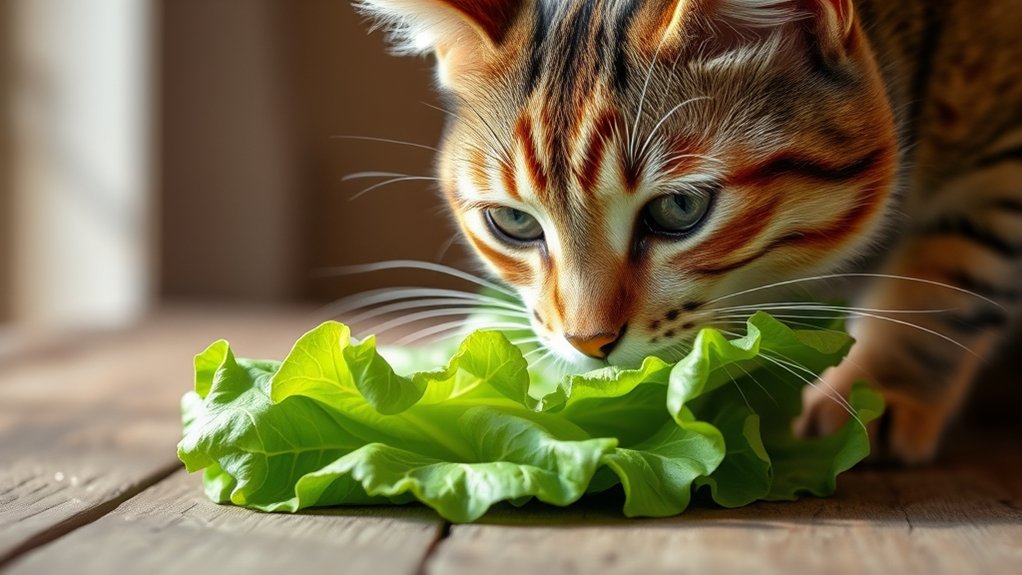
Can Cats Eat Lettuce – Is It Safe Or Not
You can safely give your cat small amounts of lettuce occasionally, but it shouldn’t replace their meat-based diet. Lettuce is non-toxic and hydrating, offering vitamins and fiber, but cats need essential animal proteins that plants lack.
Introduce lettuce gradually, serve it fresh and chopped, and watch for any digestive issues. Overfeeding can cause health problems, so moderation is key.
If you’re curious about the best way to include greens and avoid risks, there’s more to contemplate.
Can Cats Eat Lettuce Safely?
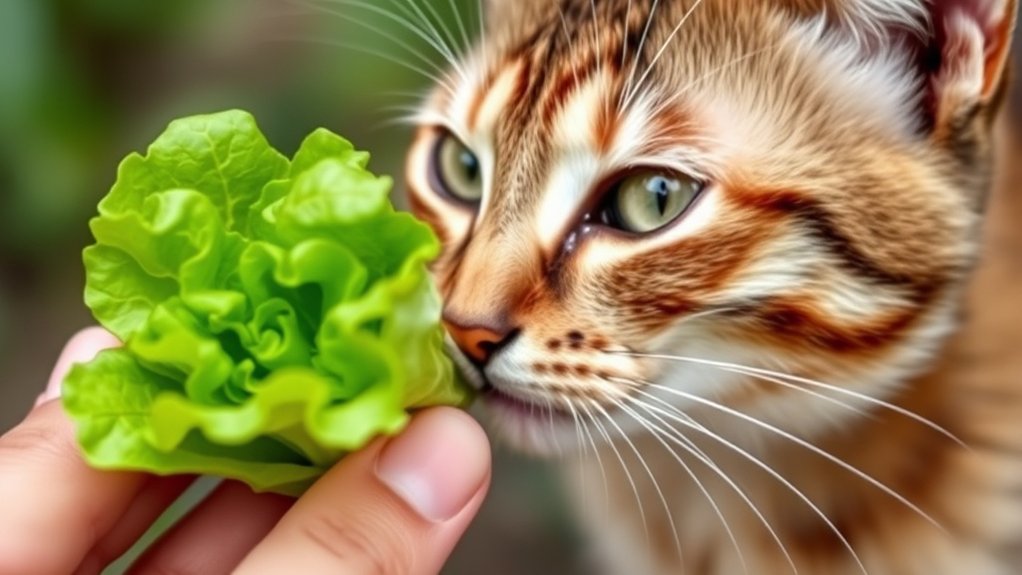
How safe is it to give your cat lettuce? Cats can eat lettuce safely when it’s offered in moderation as a safe addition to their diet.
Lettuce is non-toxic and mostly made up of water, which can help keep your cat hydrated—especially if they don’t drink enough fluids.
It also has some vitamins like A, C, and K, but lettuce doesn’t have the essential animal-based proteins your cat really needs.
To keep things safe, make sure to wash the lettuce thoroughly and cut it into small pieces. Then, watch your cat for any signs of digestive upset.
Always wash and chop lettuce finely, then monitor your cat for any digestive issues.
Try not to overfeed lettuce because too much can cause stomach problems.
Why Cats Don’t Need Lettuce in Their Diet
You don’t really need to add lettuce to your cat’s diet because cats are obligate carnivores. That means they need nutrients mostly found in animal proteins.
Lettuce might’ve some vitamins and fiber, but it doesn’t provide the important nutrients that cats get from meat.
Sure, lettuce is safe for your cat to nibble on in small amounts, but it definitely shouldn’t replace the high-quality protein that’s crucial for their health.
Obligate Carnivore Requirements
Because cats are obligate carnivores, they rely almost exclusively on animal-based proteins to fulfill their nutritional requirements.
You should understand that cats can’t meet their essential nutritional needs with plant-based foods like lettuce.
Key reasons include:
- Cats require taurine and arginine, amino acids found primarily in animal tissues.
- They’ve limited digestive enzymes for breaking down plant matter.
- Lettuce lacks the crucial nutrients necessary for feline growth and health.
- Inadequate animal protein intake can cause serious health issues.
Given these facts, incorporating lettuce into a cat’s diet doesn’t provide meaningful benefits.
Instead, prioritizing meat-based sources guarantees you meet your cat’s specific dietary demands safely and effectively.
Always focus on what obligate carnivores truly need to thrive.
Limited Nutritional Value
Although lettuce is often considered a healthy snack for humans, it offers limited nutritional value for cats because of its high water content and low levels of essential nutrients.
While lettuce is safe for cats in small amounts, it doesn’t have the vitamins and proteins that cats need to thrive on their obligate carnivore diet. Feeding lettuce won’t meet your cat’s dietary needs. Plus, giving them a lot might cause some digestive issues.
| Nutrient | Lettuce Content | Cat’s Requirement |
|---|---|---|
| Vitamin A | Low | High |
| Protein | Minimal | High |
| Water | High | Moderate |
Essential Meat Nutrients
Obligate carnivores like cats rely heavily on animal-based proteins to get essential nutrients such as taurine, arginine, and methionine.
These nutrients are fundamental for maintaining heart health, muscle function, and overall well-being. Cats need them because they can’t make enough from plant sources.
While lettuce might provide some hydration and fiber, it lacks the essential components cats require for survival.
Key nutrients found exclusively in meat include:
- Taurine: vital for cardiac and retinal health
- Arginine: important for ammonia detoxification
- Methionine: supports metabolism and antioxidant functions
- High protein levels: necessary for muscle maintenance
Since cats are obligate carnivores, their diet has to be meat-based to prevent serious health issues.
Lettuce just doesn’t meet these nutritional demands.
What Nutritional Benefits Does Lettuce Offer Cats?
When you introduce lettuce to your cat’s diet, you provide a source of hydration due to its high water content. This can be especially helpful if your cat tends to drink little water.
Beyond hydration, lettuce offers limited nutritional value for cats. It contains small amounts of vitamins A, C, and K, but these contribute minimally to your cat’s overall nutrient needs.
Lettuce provides minimal vitamins A, C, and K, offering limited nutritional benefits for cats.
Lettuce’s fiber content can aid digestion by helping regulate bowel movements. However, most commercial cat foods already supply adequate fiber.
As a low-calorie vegetable, lettuce can serve as a safe option among occasional treats, especially for weight management.
But keep in mind, while lettuce can add variety and a small fiber boost, it shouldn’t replace the essential meat nutrients your cat needs for optimal well-being.
How Lettuce Can Help Keep Cats Hydrated
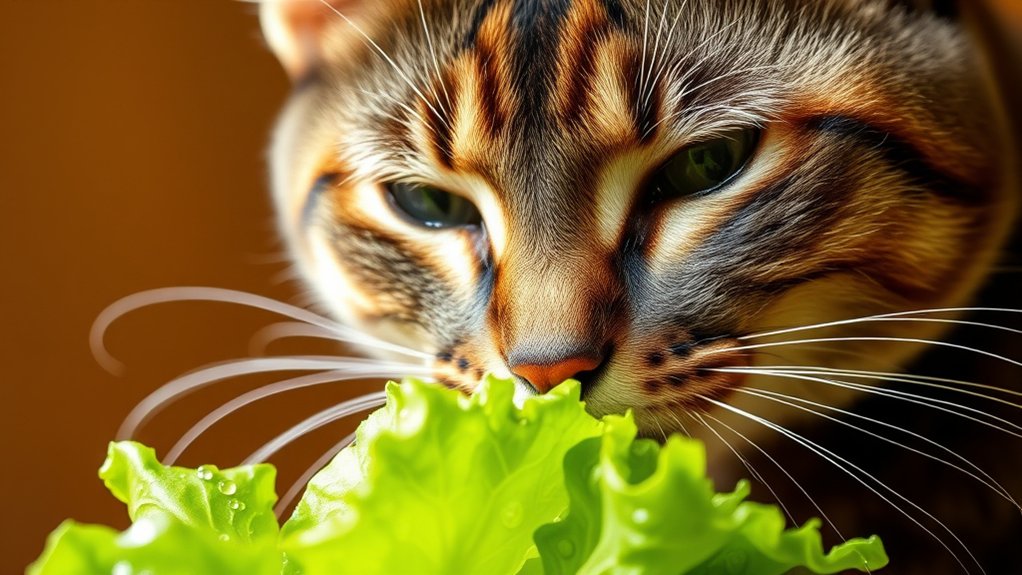
Since lettuce contains about 95% water, it can help boost your cat’s hydration levels, especially if they don’t drink enough fluids on their own.
Lettuce offers a supplementary source of moisture, which is vital for maintaining cellular function and overall health in cats.
But it’s important to remember that lettuce should never replace fresh water. Water remains essential for proper hydration.
When considering lettuce for your cat’s hydration, keep in mind:
- Lettuce can increase overall water intake.
- It supports bodily functions by promoting hydration.
- Cats in warm climates may benefit more from its water content.
- Moderation is key to avoid digestive upset.
How Much Lettuce Is Safe for Cats?
Although cats can enjoy lettuce as a crunchy treat, you should limit their intake to small amounts, such as one or two leaves at a time. Understanding how much lettuce is safe for cats is crucial to prevent digestive issues.
Introduce lettuce gradually, starting with tiny pieces, and observe your cat for any adverse reactions. Always give cats fresh, thoroughly washed lettuce cut into manageable pieces to avoid choking.
Moderation is key to prevent gastrointestinal upset or diarrhea, so make sure lettuce doesn’t exceed 10% of your cat’s daily caloric intake. By controlling portion size and frequency, you can safely incorporate lettuce as an occasional treat without disrupting your cat’s balanced diet or health.
Which Types of Lettuce Are Best for Cats?
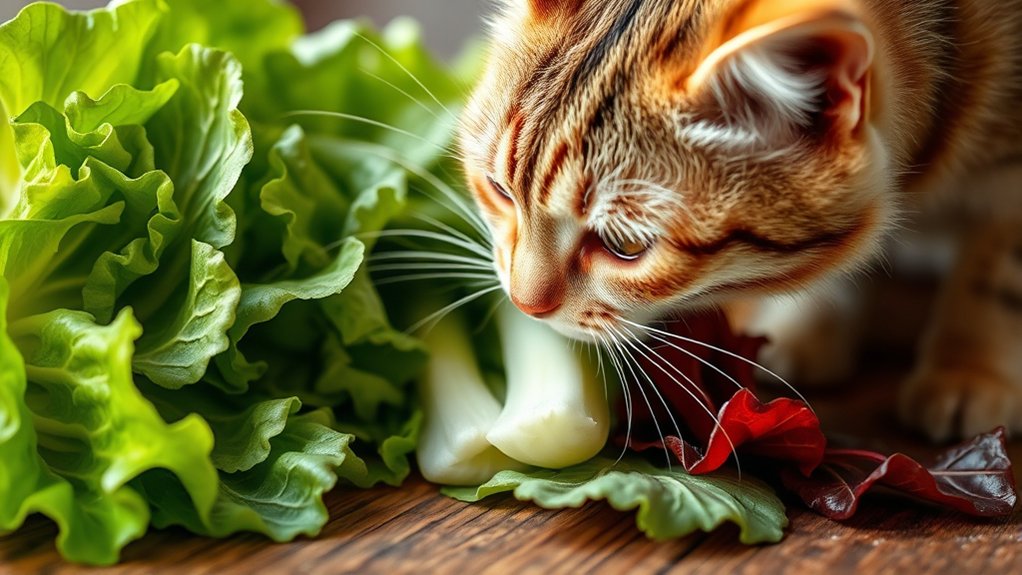
Choosing the right type of lettuce makes a difference in your cat’s nutritional intake and overall enjoyment. Not all lettuce offers the same benefits or textures, so selecting a safe and nutritious variety is essential.
Here are the best types of lettuce for your cat:
- Romaine lettuce: high in nutrients, a safe and beneficial choice
- Butterhead lettuce: soft texture, easy for cats to chew and safe to feed
- Leaf lettuce: provides hydration and fiber but low in nutrition, so feed sparingly
- Iceberg lettuce: safe but minimal nutritional value, mostly water, less beneficial
Always make sure any lettuce is thoroughly washed to remove pesticides and contaminants.
How to Prepare Lettuce for Your Cat
You should always wash lettuce thoroughly to remove any pesticides or contaminants before offering it to your cat.
It’s super important to make sure it’s clean!
Then, cut the leaves into small, manageable pieces.
This helps your cat chew and digest it more easily.
Start with just a tiny portion at first.
Keep an eye on your cat’s reaction to make sure it tolerates the new food safely.
Better safe than sorry!
Washing And Cutting
Before offering lettuce to your cat, make sure to wash it thoroughly. This helps remove any pesticides and contaminants that could be harmful to their health. Proper washing is really important to ensure the lettuce is safe for your furry friend to eat.
After washing, cut the lettuce into small, manageable pieces. This reduces the risk of choking and makes it easier for your cat to digest. Try to avoid the tough parts like the core because those can be hard for your cat to chew and digest properly.
To sum it up, when preparing lettuce for your cat, just follow these simple steps:
- Wash lettuce under running water to get rid of residues
- Cut into small, bite-sized pieces
- Exclude the tough core and hard stems
- Serve only fresh, raw lettuce without any additives
Doing these things helps keep your cat safe and makes introducing this leafy treat a healthy experience.
Serving And Monitoring
Serving lettuce to your cat requires careful attention to portion size and observation. Always introduce lettuce gradually, starting with small pieces to monitor any digestive reactions. Serve lettuce as an occasional treat, never replacing essential meat-based nutrition.
Keep an eye on your cat after serving lettuce for signs like vomiting or diarrhea. If you notice anything unusual, it’s a good idea to consult your veterinarian.
| Step | Action | Reason |
|---|---|---|
| 1 | Wash lettuce thoroughly | Remove pesticides, contaminants |
| 2 | Cut into small pieces | Easier chewing and digestion |
| 3 | Introduce gradually | Monitor for adverse reactions |
| 4 | Serve occasionally | Maintain balanced nutrition |
Signs Your Cat Isn’t Tolerating Lettuce
Although lettuce is generally safe in small amounts, some cats may not tolerate it well. Recognizing the signs of intolerance is really important. You should keep a close eye on your cat after feeding them lettuce to catch any adverse reactions early.
Signs of intolerance often involve gastrointestinal upset, like persistent vomiting or diarrhea. Allergies might also show up, so it’s important to act quickly if you notice anything unusual.
Watch for these key indicators:
- Repeated vomiting or diarrhea after eating lettuce
- Suddenly refusing food or having less appetite than usual
- Lethargy or a clear drop in energy levels
- Itching, skin irritations, or strange behaviors like excessive grooming
If you see any of these symptoms, stop giving your cat lettuce right away. And don’t hesitate to check in with your vet to make sure your furry friend is okay.
Can Lettuce Help Manage Your Cat’s Weight?
You can use lettuce as a low-calorie snack to help manage your cat’s weight because it’s high in water and fiber.
These qualities might help with digestion and make your cat feel full.
Just remember, portion control is really important to prevent any nutritional imbalances.
And of course, it’s always a good idea to check with your veterinarian before adding lettuce regularly to your cat’s diet.
Low-Calorie Snack Option
Because lettuce contains mostly water and very few calories, it can serve as a low-calorie snack option that helps manage your cat’s weight. Incorporating lettuce into your cat’s diet can aid hydration and provide a crunchy treat without adding unnecessary calories.
However, it’s vital to remember lettuce should complement, not replace, essential animal-based proteins.
Consider these points when offering lettuce:
- Provides hydration due to high water content
- Acts as a low-calorie alternative to fatty snacks
- Should be given occasionally to avoid gastrointestinal upset
- Doesn’t fulfill nutritional protein requirements
Use lettuce cautiously as part of a balanced diet. Keep an eye on your cat’s response to make sure it supports weight management without compromising overall health.
Fiber Aiding Digestion
When offered in moderation, lettuce provides a small amount of fiber that can help regulate your cat’s bowel movements and support digestion. This fiber promotes a healthy digestive tract, which is vital for nutrient absorption and overall well-being.
Furthermore, lettuce’s high water content may aid hydration, indirectly supporting weight management by encouraging fluid intake.
However, it’s important to remember that lettuce is low in calories and nutrients significant for cats, who require a protein-rich diet.
Using lettuce as a fiber supplement can be safe, but only as an occasional treat. Overfeeding lettuce might cause gastrointestinal upset, negating its benefits.
Always observe how your cat responds to lettuce and consult your veterinarian to confirm it fits safely within your cat’s dietary needs.
Portion Control Importance
Although lettuce is low in calories and high in water content, offering it in controlled portions can support weight management in cats without compromising their nutritional needs.
Practicing portion control guarantees your cat benefits from lettuce’s hydration and low-calorie nature while maintaining a balanced diet.
Remember, moderation is key to avoid gastrointestinal issues.
When incorporating lettuce for weight management, keep these points in mind:
- Limit lettuce treats to 10-15% of daily caloric intake
- Introduce small portions gradually to monitor tolerance
- Use lettuce as a low-calorie snack alternative
- Avoid excessive feeding to prevent digestive upset
Safe Leafy Greens to Try Instead of Lettuce
If you’re looking to offer your cat leafy greens safely, several alternatives to lettuce provide valuable nutrients while minimizing health risks.
Safe leafy greens like cooked spinach, kale, Swiss chard, collard greens, and bok choy can enrich vegetables in a cat’s diet with essential vitamins and minerals. However, you should serve these greens cooked and in moderation to improve digestibility and reduce compounds like oxalates that may interfere with nutrient absorption.
Introduce each new green gradually and monitor for any adverse reactions such as digestive upset or allergic responses. This cautious approach guarantees your cat benefits from these nutrient-dense vegetables without compromising health.
Always consult your veterinarian before adding new vegetables to your cat’s diet to maintain their well-being.
Frequently Asked Questions
Can Kittens Eat Lettuce Safely?
Yes, kittens can eat lettuce safely, but only in small amounts and as an occasional treat.
You need to remember kittens’ dietary needs focus on high-protein foods, so lettuce shouldn’t replace kitten food alternatives rich in essential nutrients.
If you want to offer safe vegetable options, introduce lettuce gradually and watch for any digestive issues.
Always wash it thoroughly and consult your vet before adding new foods to make certain your kitten stays healthy.
Is Iceberg Lettuce Harmful to Cats?
Iceberg lettuce isn’t harmful to cats if given in small amounts, but it offers limited nutritional benefits.
Because feline taste preferences lean toward meat, your cat may show little interest in iceberg lettuce.
If you want to introduce leafy greens alternatives, consider safer options like spinach or kale, but always in moderation.
Remember to wash and cut any greens finely to avoid choking, and watch for any digestive upset after feeding.
Can Lettuce Cause Digestive Issues in Cats?
Think of your cat’s stomach as a delicate machine. Lettuce can sometimes gum up its gears. While lettuce offers some digestive benefits because of its fiber, too much might cause issues like bloating or diarrhea.
Since cats are obligate carnivores, it’s safer to give fiber through specialized cat foods or safe alternatives like pumpkin.
Always introduce any new plant material carefully. Keep an eye on your cat’s response to avoid any discomfort.
How Often Can I Give My Cat Lettuce Treats?
You should give your cat lettuce treats no more than once or twice a week to avoid digestive upset.
Stick to small portion sizes, about the size of a fingernail, to guarantee safe consumption. Lettuce benefits include hydration and fiber, but it shouldn’t exceed 10-15% of their diet.
If you want to vary greens, consider safe alternative greens like spinach or kale.
Just make sure to introduce them cautiously and keep an eye on your cat’s reaction. It’s always best to go slow when trying new foods with your furry friend.
Can Lettuce Interact With My Cat’s Medication?
Lettuce generally doesn’t cause medication absorption effects that interfere with your cat’s treatment.
While lettuce’s nutritional benefits are minimal, its fiber could slightly affect digestion, so watch for any changes.
Always consult your vet before adding it, especially if your cat takes medication.
If you’re cautious, consider safe vegetable alternatives like steamed carrots or pumpkin. These have clearer nutritional profiles and pose minimal risk of affecting medication efficacy.
Conclusion
While lettuce isn’t a must-have in your cat’s diet, a small, crisp leaf can gently refresh and hydrate like a morning dew drop. Just remember, cats are obligate carnivores, so lettuce should flutter in as a rare treat, not a staple.
Watch carefully for any tummy troubles, and keep portions light. When offered with care and preparation, lettuce can be a safe, occasional green whisper in your feline’s balanced nutritional symphony.