Can Cats Eat Yogurt – Benefits And Risks
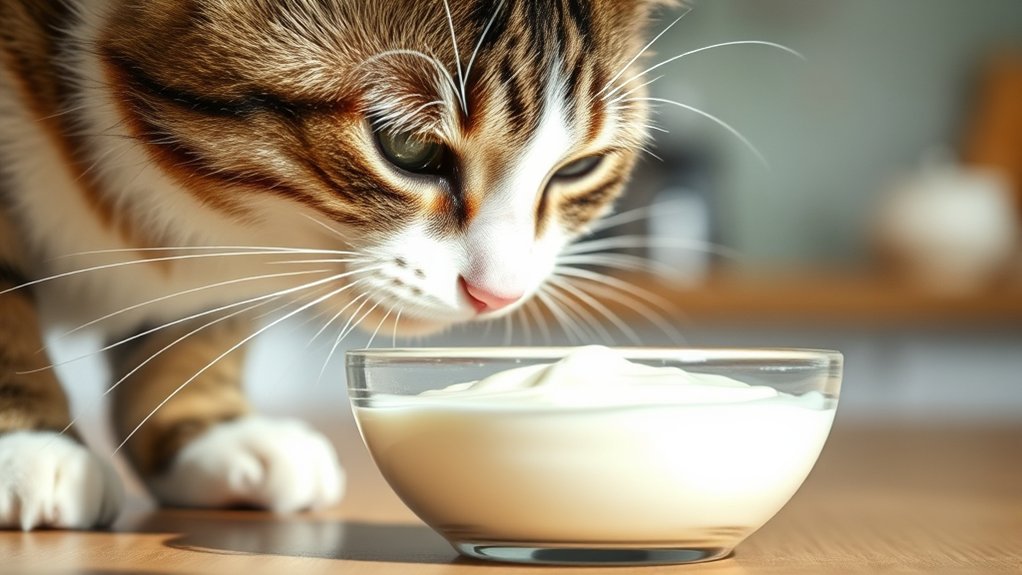
You can give your cat small amounts of plain Greek yogurt safely. It provides protein, calcium, and probiotics that support digestion and overall health. But keep in mind, many cats are lactose intolerant.
So, start with just a teaspoon and watch for any upset stomach or allergies. Avoid yogurts with sugars or toxic additives like xylitol.
Keep servings minimal, under 10% of daily calories, and be sure to consult your vet first. If you want to understand the full benefits and risks, keep exploring.
Can Cats Eat Yogurt Safely?
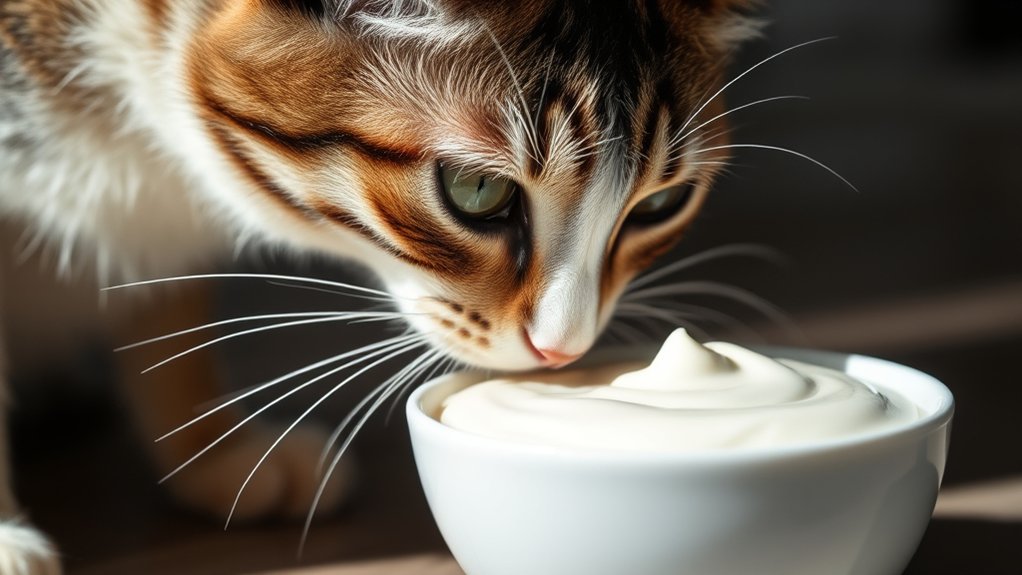
Wondering if you can safely share yogurt with your cat? Yes, cats eat yogurt safely when you choose plain Greek yogurt without added sugars or harmful ingredients like xylitol.
Start with a small serving, about one teaspoon, to watch for any digestive problems.
Many adult cats are lactose intolerant, so even plain yogurt can cause gastrointestinal upset. Yogurt should only make up about 10% of your cat’s daily calories, keeping their main diet balanced and appropriate for feline needs.
Always consult a veterinarian before introducing yogurt to verify it fits your cat’s health profile.
When given cautiously, plain Greek yogurt can be a healthy snack that supports digestion, but your cat’s specific tolerance is key to avoiding any issues.
Nutritional Benefits of Yogurt for Cats
You’ll find that yogurt offers key nutrients like protein, calcium, and essential vitamins that support your cat’s overall health.
Plus, it contains probiotics, which can help improve digestion and reduce digestive discomfort.
Just make sure to introduce yogurt gradually and in moderation to see how your cat tolerates it.
Key Nutrients Overview
Yogurt provides several key nutrients that can benefit your cat’s health when given in moderation. It’s a good source of protein, supporting muscle growth and energy. Yogurt also contains calcium, which is crucial for strong bones, and probiotics that aid digestion.
However, many cats have lactose intolerance, so you should introduce yogurt cautiously. Remember, yogurt isn’t a substitute for a balanced diet but a supplement that can add nutritional value.
| Nutrient | Benefit | Note |
|---|---|---|
| Protein | Muscle support | Essential in cat diets |
| Probiotics | Gut health | Helps nutrient absorption |
| Calcium | Bone strength | Crucial for skeletal health |
| Vitamins B2 & B12 | Energy & cognition | Supports overall vitality |
| Minerals | Muscle & nutrient function | Potassium, magnesium included |
Probiotics And Digestion
Among the nutrients in yogurt, probiotics play a significant role in supporting your cat’s digestive health. These beneficial bacteria help promote nutrient absorption and can reduce gastrointestinal issues, such as diarrhea.
The live cultures in yogurt may also restore your cat’s gut flora after antibiotic treatments or dietary changes.
However, if your cat has lactose intolerance, yogurt might cause digestive upset rather than relief. While yogurt provides probiotics, it isn’t the most efficient source. Specialized veterinary probiotic supplements often offer more targeted benefits for your cat’s diet.
If you decide to introduce yogurt, monitor your cat closely for any adverse reactions. Always prioritize your cat’s comfort and health when considering probiotics as part of their digestive health regimen.
How Does Yogurt Affect Cats With Lactose Intolerance?
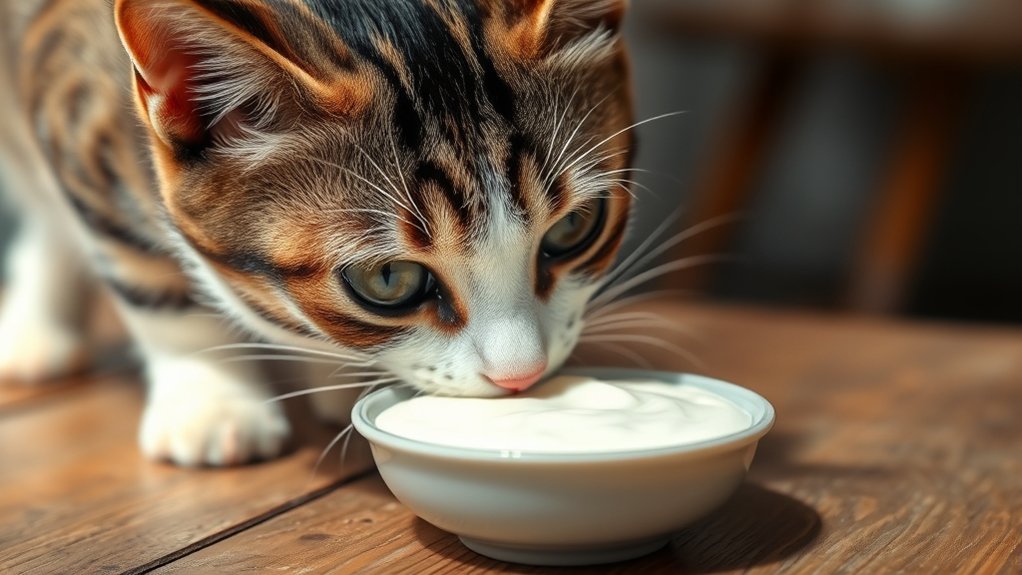
Although many adult cats lack the enzyme lactase needed to digest lactose, some can still tolerate small amounts of yogurt because fermentation reduces its lactose content.
If your cat is lactose intolerant, yogurt’s probiotics might actually help with digestion, but you should still be careful.
Here’s what to keep in mind: individual tolerance varies a lot. Some cats handle yogurt just fine, while others might’ve digestive upset.
Watch out for symptoms like diarrhea, gas, or vomiting—these mean your cat can’t digest lactose properly.
It’s best to introduce yogurt gradually, starting with tiny amounts to see how your cat reacts.
And always pick plain, unsweetened yogurt without any additives that could be harmful.
What Risks Does Yogurt Pose to Cats?
Because many cats lack the enzyme needed to digest lactose, feeding them yogurt can cause digestive issues like diarrhea and vomiting. Since cats are lactose intolerant, even small amounts might trigger discomfort.
Also, yogurt can cause problems if it contains toxic ingredients such as artificial sweeteners like xylitol, which are harmful to cats.
Overfeeding yogurt can lead to obesity due to its calorie and fat content, so you should keep it under 10% of your cat’s daily intake.
Some cats may develop an allergic reaction to dairy, showing symptoms like skin infections or more digestive issues.
Be cautious with the type and quantity of yogurt you offer, as these risks highlight why yogurt isn’t always a safe treat for your feline friend.
When Should You Avoid Giving Yogurt to Your Cat?
- Your cat has lactose intolerance, as yogurt can cause digestive upset like diarrhea or vomiting.
- Your cat suffers from food allergies, especially dairy-related reactions, so it’s safer to avoid yogurt.
- The yogurt contains added sugars, artificial sweeteners, or flavors such as vanilla, which can be harmful.
- You’re uncertain about your cat’s tolerance.
Always consult a veterinarian before introducing yogurt or any new food.
Can Kittens Safely Eat Yogurt?
You probably shouldn’t give yogurt to kittens because their sensitive stomachs mightn’t handle dairy very well.
Kittens have different nutritional needs compared to adult cats, so they need specialized food to grow properly.
Plus, feeding them yogurt could upset their digestion and won’t really help with their development.
It’s better to stick with food made just for kittens to keep them healthy and happy.
Kittens’ Sensitive Stomachs
Although yogurt might seem like a harmless treat, kittens have sensitive stomachs that often can’t handle dairy products. Feeding yogurt to kittens can cause digestive upset, as their digestive systems aren’t yet equipped to process dairy properly.
Yogurt also doesn’t offer the nutritional benefits kittens need for healthy growth. So, to guarantee your kitten’s ideal health, it’s best to avoid yogurt and other dairy products altogether.
Here’s what you should keep in mind:
- Kittens’ sensitive stomachs react poorly to dairy products like yogurt.
- Yogurt lacks essential nutrients required for kitten development.
- Digestive upset from dairy can lead to discomfort and health issues.
- Kittens thrive on mother’s milk, formula, or specialized kitten food.
Avoiding yogurt safeguards your kitten’s digestive health and supports ideal growth. It’s really the best choice for your little one.
Nutritional Needs Differences
Because kittens lack the digestive enzymes needed to break down lactose, feeding them yogurt can cause digestive upset and discomfort. Unlike adult cats, kittens’ nutritional needs demand specialized care. Yogurt doesn’t provide essential nutrients for their growth and may trigger gastrointestinal upset like diarrhea or vomiting.
You should rely on balanced kitten food or mother’s milk to meet their dietary requirements safely. It’s really important to stick to what’s designed for them when it comes to feeding. This way, you avoid any unnecessary tummy troubles and support their healthy development.
| Aspect | Kittens |
|---|---|
| Digestive Enzymes | Insufficient for lactose |
| Nutritional Needs | Require balanced kitten food |
| Risks from Yogurt | Gastrointestinal upset possible |
Is Greek Yogurt Better for Cats Than Regular Yogurt?
How does Greek yogurt compare to regular yogurt when it comes to feeding your cat? Greek yogurt often proves to be a healthier choice because of its unique composition. Here’s why:
- Lower Lactose Content: Greek yogurt contains less lactose, which can be easier for your cat to digest.
- Higher Protein: It offers about 9 grams of protein per 6 oz, supporting your cat’s nutritional needs.
- Plain and Safe: Always select plain, unsweetened Greek yogurt without harmful additives like xylitol.
- Moderation is Key: Even with benefits, keep Greek yogurt to under 10% of your cat’s daily calories.
So, while Greek yogurt can be a tasty treat and a good source of protein for your cat, just remember to introduce it slowly and keep portions small.
That way, your furry friend can enjoy the benefits without any tummy troubles.
How Should You Introduce Yogurt to Your Cat?
When you decide to introduce yogurt to your cat, start by choosing plain, unsweetened Greek yogurt to reduce lactose intake and avoid harmful additives like xylitol.
Introduce yogurt in small amounts, about one teaspoon, to see how your cat tolerates it. Serve it on a plate or spoon rather than directly from the container to keep things hygienic and control portions.
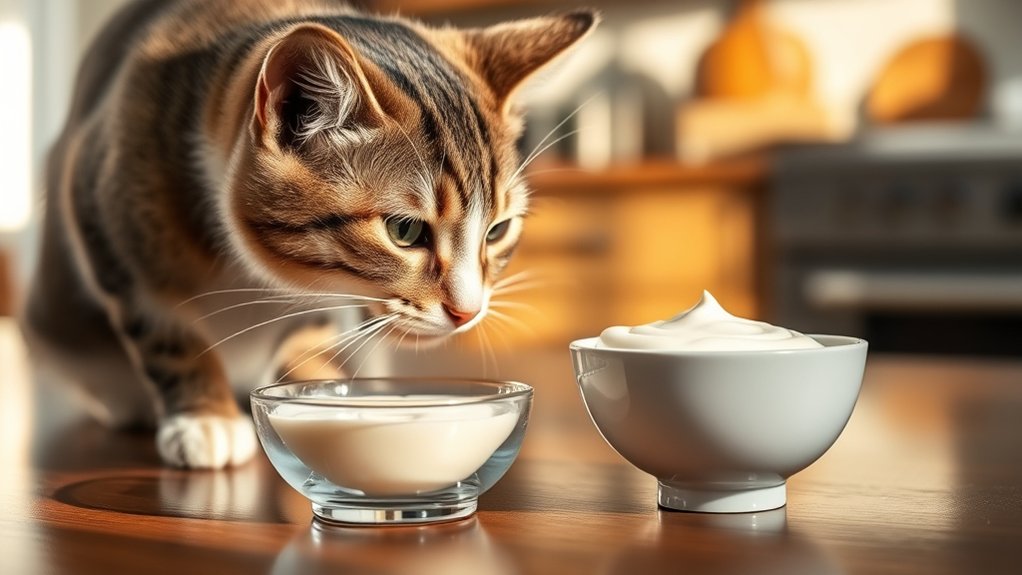
Start with a teaspoon of yogurt on a plate to monitor your cat’s tolerance and maintain hygiene.
Always watch your cat closely for any signs of digestive upset, like vomiting or diarrhea.
Keep yogurt servings limited to no more than 10% of your cat’s daily calorie intake to help prevent health issues such as obesity.
If you notice any adverse reactions or have concerns, be sure to check with your vet before continuing yogurt as a treat.
How Much Yogurt Is Safe to Feed Your Cat?
You can start by giving your cat about one teaspoon of plain yogurt.
Just make sure it stays under 10% of their daily calories.
It’s best to limit this treat to two or three times a week to avoid any digestive problems.
And of course, keep an eye out for any adverse reactions, especially if it’s their first time trying yogurt.
Recommended Serving Size
Anyone considering adding yogurt to their cat’s diet should start with just one teaspoon to watch for any adverse reactions. The recommended serving size helps guarantee your cat’s safety while introducing this new treat.
Keep these guidelines in mind:
- Always choose plain unsweetened yogurt, avoiding flavors or additives harmful to cats.
- Monitor for any adverse reactions such as digestive upset during the initial trial.
- Limit yogurt to a maximum safe amount of 3 to 5 tablespoons per week, respecting your cat’s daily caloric intake.
- Consult a veterinarian before starting yogurt to tailor recommendations based on your cat’s health and dietary needs.
Following these steps helps you introduce yogurt safely and responsibly to your feline friend.
It’s all about making sure your cat enjoys this treat without any problems. Just take it slow and watch how they respond!
Treat Calorie Limits
Although yogurt can be a tasty treat for your cat, it’s essential to keep its calorie content within safe limits. Treat calorie limits shouldn’t exceed 10% of your cat’s daily caloric intake to maintain a balanced cat food regimen.
Overfeeding yogurt may cause digestive upset and contribute to obesity due to its fat and calorie content. Offering about one teaspoon helps in monitoring their tolerance while ensuring yogurt remains a supplemental treat.
Remember, regular cat food should provide 90% of your cat’s nutritional needs, so it’s vital to avoid replacing meals with treats. Always consult your veterinarian to determine appropriate treat portions tailored to your cat’s specific dietary requirements.
This way, you can manage their health responsibly and safely.
Monitoring Cat Reactions
Introducing yogurt to your cat’s diet calls for careful observation, starting with just one teaspoon of plain, unsweetened yogurt. You need to focus on monitoring cat reactions closely to detect any signs of lactose intolerance or adverse reactions.
Offer a small amount of plain yogurt initially to see how your cat tolerates it. Watch for symptoms like vomiting, diarrhea, or gas that suggest lactose intolerance.
Limit yogurt to no more than 10% of your cat’s daily caloric intake to avoid overfeeding.
If you don’t see any adverse reactions, you can gradually increase the serving. But remember, always keep it plain yogurt.
And if you notice anything unusual or feel unsure, it’s best to check with your vet before continuing.
How Can You Tell If Your Cat Is Allergic or Intolerant to Yogurt?
Lactose intolerance often causes digestive issues like diarrhea, vomiting, or gas, which can range from mild discomfort to severe upset.
Allergic reactions are less common but might include itching, skin infections, or additional digestive symptoms. Since each cat’s tolerance varies due to their digestive health and genetics, reactions can differ markedly.
If you notice any of these symptoms, it’s important to stop feeding yogurt immediately.
To guarantee your cat’s safety and get personalized advice, consult a veterinarian who can assess whether your cat has lactose intolerance or an allergy and recommend appropriate dietary adjustments.
Frequently Asked Questions
Can Flavored or Sweetened Yogurts Harm My Cat?
Yes, flavored yogurt risks your cat’s health because of the dangers from sweetened yogurt like high sugar and artificial sweeteners.
One big concern is xylitol, which is toxic to cats. Since cats often have trouble digesting lactose, these yogurts can cause digestive upset.
You should avoid giving these types of yogurt. If you do offer plain yogurt, make sure to follow moderation guidelines.
Instead, choose alternative treats made specifically for cats. This way, you keep them safe and healthy without any unnecessary risks.
Is Yogurt a Good Alternative to Cat Treats?
You might find it’s a neat coincidence that yogurt’s nutritional value aligns well with some cat treat alternatives.
While yogurt can support your cat’s digestive health thanks to probiotics, you should keep the yogurt serving size small, under 10% of daily calories.
Remember, feline taste preferences vary. Potential allergy concerns mean you should introduce it cautiously.
Yogurt can be a good occasional treat but shouldn’t replace balanced cat food or specialized treats.
How Does Yogurt Compare to Other Probiotic Sources for Cats?
Yogurt’s nutritional value offers some probiotic benefits, but compared to other fermented food options like kefir or specialized supplements, it’s less potent for your cat’s digestive health impact.
Since many cats face lactose intolerance factors, yogurt might cause upset.
You’ll find probiotic benefits comparison favors dairy-free, targeted supplements that align better with cat dietary preferences.
Can Yogurt Help Improve My Cat’s Coat and Skin Health?
Yes, yogurt can help improve your cat’s coat and skin health because of its nutritional value, including protein, calcium, and probiotics.
These nutrients contribute to making the coat shinier and help with skin hydration.
However, since cats’ tolerance to lactose varies, you should introduce yogurt slowly and keep the serving size small to avoid any digestive issues.
The digestive benefits of yogurt can support nutrient absorption, which indirectly enhances your cat’s skin and coat condition when given in moderation.
Are There Any Long-Term Effects of Feeding Yogurt to Cats?
Funny enough, if you’re thinking about yogurt digestion effects for your cat, you’ll want to be careful. Long-term feeding can cause lactose intolerance concerns, leading to upset stomachs or diarrhea.
Over time, it might impact nutrient absorption and gastrointestinal health implications.
Follow long term feeding guidelines closely, keeping yogurt under 10% of their diet.
Consider alternative probiotic options like specially formulated cat supplements to keep your feline’s gut happy without risks.
Conclusion
Think of giving your cat yogurt like offering a small scoop of sunshine. When done right, it can brighten their day with probiotics and calcium.
But just as too much sun can cause a burn, too much yogurt or the wrong kind can upset their tummy. Start small and watch for any signs of intolerance. Choose plain, unsweetened varieties.
With care and attention, yogurt can be a safe, occasional treat that supports your feline friend’s health.