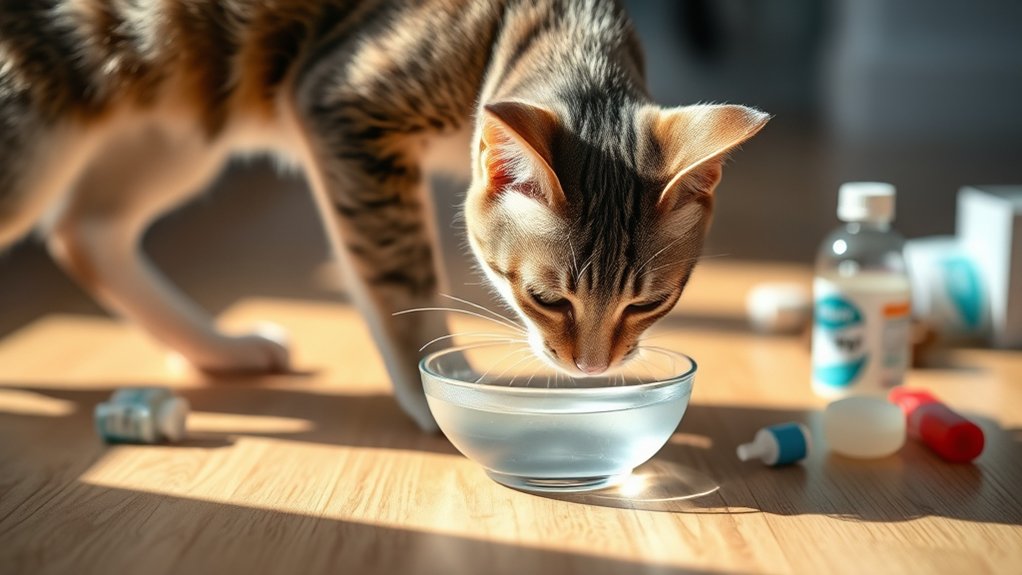
Can You Give A Cat Pedialyte – When It Helps And Risks
You can give your cat unflavored Pedialyte to help with mild dehydration from vomiting or diarrhea, but only as a short-term solution and under your vet’s guidance. Using the flavored kind or too much can harm your cat, causing stomach upset or electrolyte imbalances.
Pedialyte isn’t a cure and won’t replace professional care if symptoms worsen. Understanding proper dosing, risks, and signs for veterinary care will help you support your cat safely.
What Is Pedialyte and How Does It Help Cats?
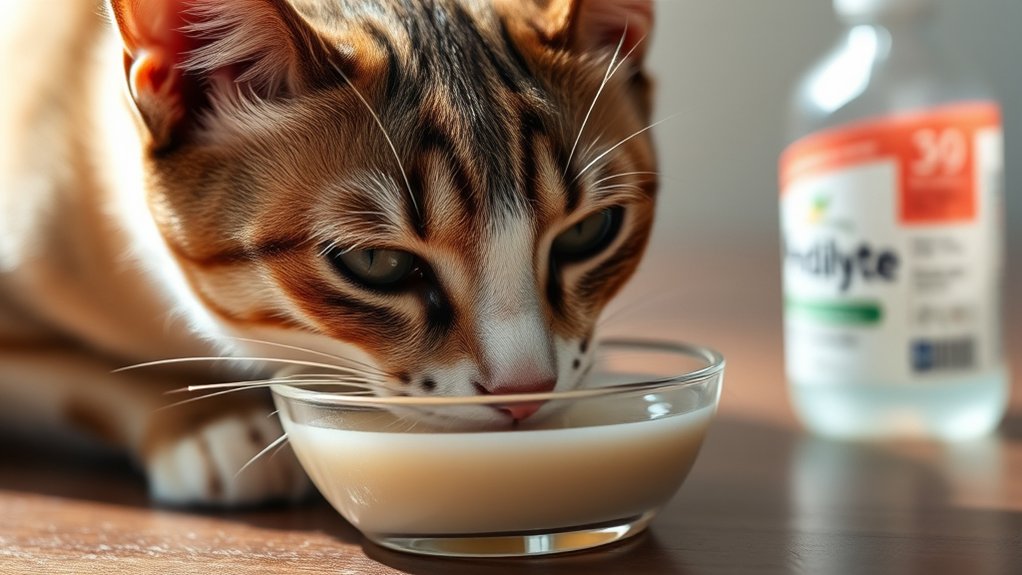
Pedialyte is an oral rehydration solution designed to restore essential electrolytes like sodium and potassium. It can help rehydrate your cat if they’re mildly dehydrated.
When your cat experiences dehydration due to vomiting or diarrhea, Pedialyte replenishes lost fluids and crucial minerals to support recovery.
It’s important to use the unflavored version to avoid sugars or artificial sweeteners that might harm your pet.
However, Pedialyte should never replace professional care. Always seek veterinary advice before administering it to guarantee proper dosing and to exclude serious health issues.
Remember, Pedialyte serves as a temporary aid for mild dehydration. Severe cases require immediate veterinary attention to keep your cat safe and healthy.
When Is Pedialyte Safe for Cats?
How do you know when it’s safe to give your cat Pedialyte? Pedialyte is safe for cats only in specific situations, mainly mild dehydration caused by vomiting or diarrhea. You should use the unflavored, classic version to avoid harmful additives.
Before you start, always consult a veterinarian to confirm your cat’s symptoms aren’t severe and to get guidance on proper use.
Always check with your vet first to ensure your cat’s symptoms are mild and to learn proper Pedialyte use.
Pedialyte is intended for short-term relief and shouldn’t replace professional care for serious dehydration.
Remember, giving the wrong type or amount can cause electrolyte imbalances or digestive issues.
If your cat shows signs of dehydration, such as lethargy or dry gums, seek veterinary advice promptly to decide if Pedialyte is an appropriate temporary aid.
How to Properly Dose Pedialyte for Cats
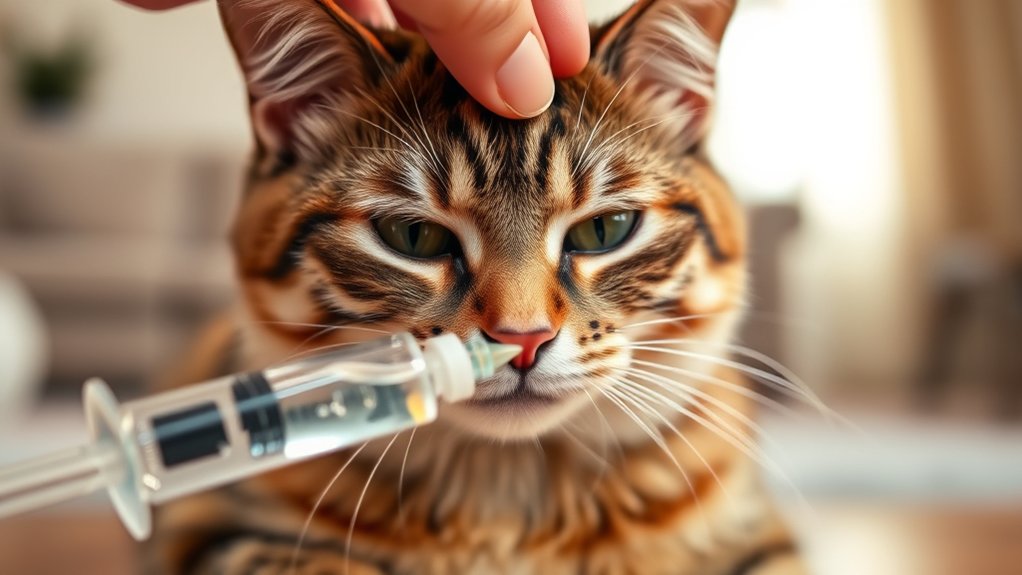
When should you give your cat Pedialyte, and how much is safe? To properly dose Pedialyte for cats, follow these guidelines to prevent dehydration effectively while minimizing risks.
For cats over 5 pounds, administer 1 to 2 milliliters hourly; for smaller cats under 5 pounds, give ½ to 1 milliliter per hour.
Neonatal kittens can have drops every 30 minutes to an hour, possibly mixed with kitten milk replacer (KMR).
Always deliver Pedialyte slowly into the cheek pouch to avoid aspiration. Limit usage to less than 12-24 hours and monitor closely.
Consult your veterinarian before starting Pedialyte for cats. Use unflavored Pedialyte only. Administer in small increments hourly.
Watch for adverse reactions and discontinue if necessary.
What Are the Risks and Side Effects of Pedialyte?
You’ve got to watch out for what’s in Pedialyte before giving it to your cat. Flavored versions can have harmful ingredients like xylitol, which is definitely something to avoid.
Even the plain, unflavored kind isn’t completely risk-free. If your cat gets too much or you give it too often, it might lead to stomach issues like diarrhea.
Potential Toxic Ingredients
Although Pedialyte is often considered a quick fix for dehydration, it contains several ingredients that can pose serious risks to your cat’s health. You need to be cautious because artificial sweeteners like xylitol, found in some Pedialyte products, are highly toxic to cats and can cause liver failure.
Furthermore, electrolyte imbalance from excess sodium may lead to salt poisoning, resulting in vomiting or seizures. Pedialyte also lacks veterinary approval for feline use, so its safety isn’t guaranteed.
Key risks include:
- Xylitol toxicity causing severe health complications
- Electrolyte imbalance leading to salt poisoning
- Potential zinc overload affecting gastrointestinal health
- No FDA or veterinary approval for cats
Always consult your vet before offering Pedialyte to avoid these dangerous side effects.
Gastrointestinal Upset Risks
If your cat has a sensitive stomach, administering Pedialyte can trigger gastrointestinal upset such as vomiting or diarrhea, especially when given in large amounts.
You should always use the unflavored classic Pedialyte, as flavored versions contain sugars or artificial sweeteners that may worsen digestive issues.
Be cautious of the high sodium levels in Pedialyte, which can cause salt toxicity, leading to vomiting, diarrhea, and even neurological symptoms.
It’s important to monitor your cat for signs of electrolyte imbalance, like lethargy or abnormal heart rhythms, after giving Pedialyte.
Overusing Pedialyte might mask underlying health problems, delaying necessary veterinary care for serious conditions such as kidney disease or infections.
Always consult your vet before administering Pedialyte to guarantee your cat’s safety and proper treatment.
Which Pedialyte Ingredients Can Harm Your Cat?
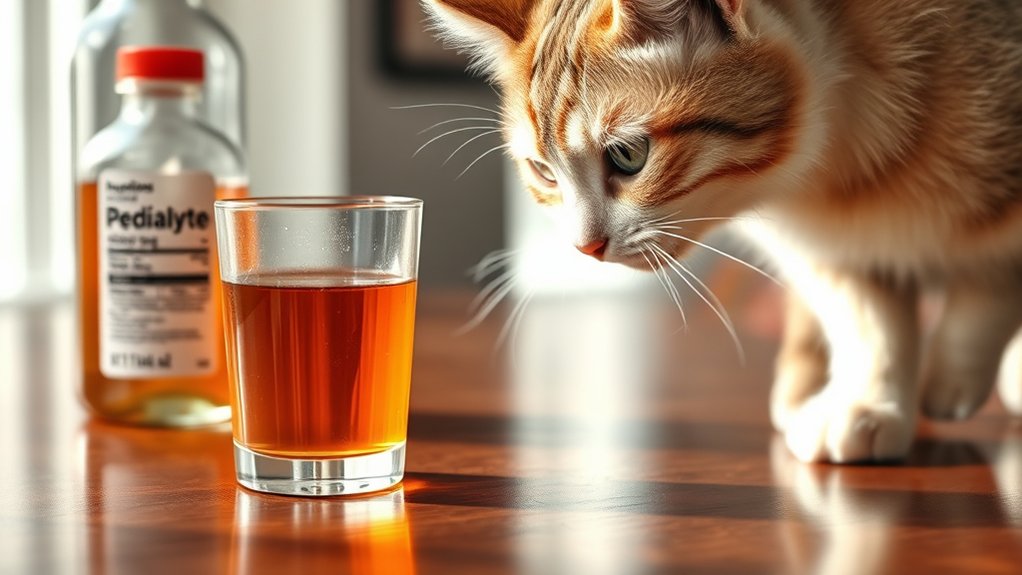
You definitely need to watch out for artificial sweeteners like xylitol because they can be deadly to cats, even in tiny amounts.
Also, some Pedialyte formulas have high sugar content, which might actually make dehydration worse and upset your cat’s stomach.
On top of that, too much zinc can cause serious health issues.
Artificial Sweetener Dangers
Why should you be cautious when choosing Pedialyte for your cat? Some formulations contain artificial sweeteners like xylitol, which are highly toxic to cats and can cause serious health issues, including liver failure.
To keep your feline safe, you must read labels carefully and avoid flavored versions that often contain harmful additives.
Keep these points in mind:
- Artificial sweeteners are toxic to cats and must be avoided.
- Flavored Pedialyte often contains harmful sugars and additives.
- Always opt for unflavored, veterinary-approved products.
- Consult your vet before giving Pedialyte to guarantee safety.
High Sugar Content
Beyond artificial sweeteners, the sugar content in Pedialyte can also pose risks for your cat’s health. Flavored Pedialyte often contains high sugar content, which may worsen gastrointestinal issues and even contribute to dehydration rather than relief.
That’s why the unflavored classic Pedialyte is considered safe for cats. It has lower sugar levels and fewer additives that could harm them.
When choosing Pedialyte, it’s essential to avoid formulas with excessive sugar, as it can upset your cat’s digestive system and delay recovery.
Always read labels carefully and consult your veterinarian before offering Pedialyte to make sure the product is safe for cats. Prioritizing low sugar content helps protect your feline friend while supporting their hydration needs effectively.
Excessive Zinc Risks
Although zinc is an essential mineral, excessive amounts found in Pedialyte can pose health risks for your cat. Zinc toxicity in cats may cause vomiting, diarrhea, and lethargy. These symptoms are signs to seek immediate veterinary care.
To prevent excessive zinc risks, you should choose unflavored Pedialyte to avoid added sugars and artificial sweeteners.
Also, monitor total Pedialyte intake carefully to avoid zinc accumulation. Be especially cautious if your cat has health conditions affecting mineral metabolism.
Always seek consultation with a veterinarian before giving Pedialyte. Following these steps helps you safely support your cat’s hydration without risking zinc toxicity.
How to Know When Your Cat Needs a Vet Instead of Pedialyte
How can you tell when your cat needs a vet instead of just Pedialyte? If your cat shows signs of illness that last more than a day, or if you notice dehydration symptoms, it’s important to get veterinary care right away.
Prolonged vomiting, diarrhea, or refusal to eat can quickly make your cat’s condition worse. So don’t wait too long to take action.
| Signs to Watch For | When to Seek Veterinary Care |
|---|---|
| Persistent vomiting/diarrhea | More than 24 hours |
| Dehydration signs (sunken eyes, lethargy) | Immediately |
| No food intake | After 24 hours |
If your cat looks weak or lethargic, don’t hesitate to see a vet. These signs often point to serious health problems that Pedialyte alone can’t fix.
What Are the Alternatives to Pedialyte for Cat Hydration?
If your cat isn’t responding well to Pedialyte or you’re looking for other ways to keep them hydrated, several effective alternatives can help. These hydration solutions provide safe, cat-friendly options beyond sports drinks, which often contain harmful additives.
Consider these alternatives to sports drinks for your cat’s hydration: fresh water and wet cat food, which contains up to 80% moisture, naturally boost hydration.
You can also try a homemade electrolyte solution made with water, a pinch of salt, and a bit of sugar. It’s a safe, simple option.
Unsalted bone broth encourages fluid intake while providing nutrients. Plus, veterinary-approved oral rehydration solutions formulated specifically for cats guarantee a safe electrolyte balance.
Using these alternatives to Pedialyte supports your cat’s hydration safely and effectively. It’s all about finding what works best for your furry friend!
How to Prevent Dehydration in Cats at Home
To keep your cat healthy and avoid dehydration, you need to make water readily accessible and appealing. Place fresh water bowls in multiple locations to encourage regular drinking.
Ensure your cat stays hydrated by providing fresh water bowls in several spots around your home.
You might also consider using water fountains or filtered water to attract picky drinkers.
Incorporate wet cat food into your pet’s diet, as its higher moisture content really helps prevent dehydration. You can also add water or low-sodium broth to dry food to boost fluid intake during meals.
Pay close attention to your cat’s litter box habits and energy levels. Changes in these areas might signal dehydration or other health issues.
Frequently Asked Questions
Can Pedialyte Be Used for Kittens or Only Adult Cats?
You can use Pedialyte for kittens, but you need to be very careful with kitten hydration and safe dosage. Kittens require smaller amounts, usually ½ to 1 milliliter hourly, to maintain proper electrolyte balance without risking aspiration.
Mixing Pedialyte with kitten milk replacer can help boost hydration safely.
Always check with your vet first to confirm the dosage fits your kitten’s specific needs and health status. It’s better to be safe and make sure your little one is getting exactly what they need.
How Quickly Does Pedialyte Work in Rehydrating Cats?
You’ll usually see Pedialyte start working within 1-2 hours during the rehydration process, depending on how severe your cat’s dehydration symptoms are.
To be safe, follow dosage recommendations carefully. Small, frequent doses like ½ to 2 milliliters hourly help avoid complications.
Keep a close eye on hydration signs, such as skin elasticity and gum moisture.
This way, you can assess if Pedialyte is effectively helping your cat recover.
Is Flavored Pedialyte Safe for Cats?
A cat once got sick after drinking flavored options of Pedialyte, which contained harmful sweeteners.
You shouldn’t give flavored Pedialyte to cats since it can cause toxicity or worsen their condition.
Instead, focus on unflavored Pedialyte or other hydration alternatives your cat prefers.
Always check with your vet first to make sure it’s safe and appropriate for your cat’s needs.
Your pet’s health comes first.
Can Pedialyte Interfere With Other Medications for Cats?
Yes, Pedialyte can cause medication interactions in cats. You need to follow strict dosage guidelines and consult your veterinarian before giving it, especially if your cat takes meds affecting sodium, potassium, or blood sugar.
Pedialyte may alter hydration, which can impact how medications work. Watch for signs of dehydration or any unusual reactions, and adjust treatment as needed.
Your vet’s guidance guarantees safe hydration without compromising your cat’s medication efficacy. So, always check with them first to keep your furry friend safe and healthy.
How Should Pedialyte Be Stored for Pet Use?
Think of Pedialyte storage guidelines as guarding a treasure chest. Keeping it cool and dry, away from sunlight helps preserve its power.
You should refrigerate opened Pedialyte for up to 48 hours and seal it tightly to avoid contamination.
Following dosage recommendations carefully is really important when treating signs of dehydration.
Always discard any Pedialyte that changes color, odor, or taste. This protects your cat’s health and makes sure the rehydration is effective.
Conclusion
If your cat’s dehydrated, Pedialyte can be a helpful quick fix but only when used correctly and in safe doses. You’ve got to watch out for harmful ingredients and know when it’s time to see the vet instead.
After all, isn’t your cat’s health worth more than a quick DIY solution? Always prioritize professional care and consider safer hydration options to keep your furry friend happy and healthy.