Can Ferrets Use Cat Litter – Safe Options And Risks
You shouldn’t use traditional clumping cat litter for your ferret because it creates dust that can irritate their lungs and risks dangerous intestinal blockages if ingested. Avoid scented, dusty, or oily litters, which can cause respiratory and digestive issues.
Instead, choose low-dust, unscented options like paper-based, wood pellets, or compressed pellets that are safe and biodegradable. Proper litter placement and regular cleaning also support your ferret’s health and training.
More details will help you create the best litter environment.
Why Traditional Cat Litter Isn’t Safe for Ferrets
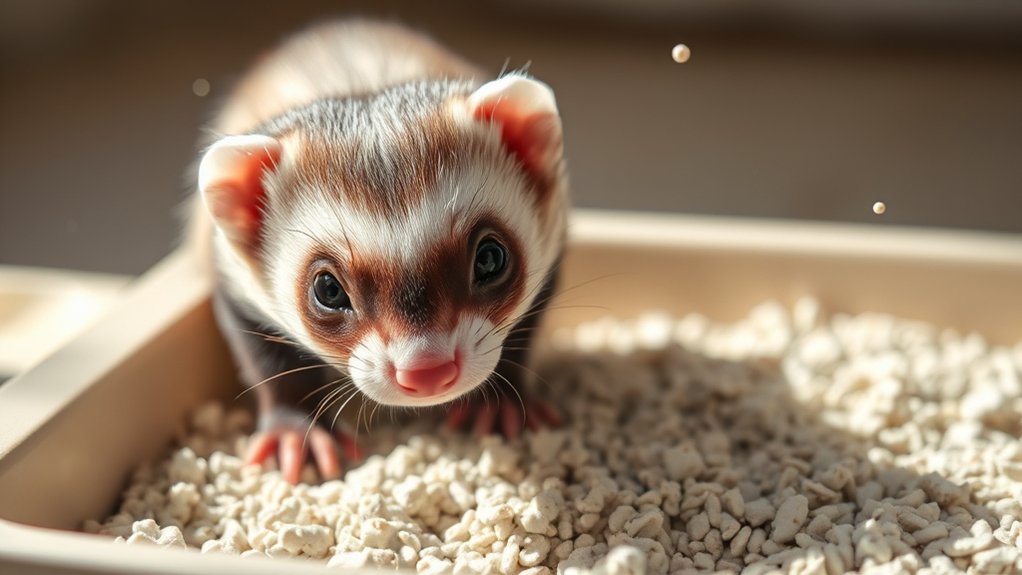
Although it might seem convenient to use traditional cat litter for your ferret, it poses several health risks you should be aware of. Traditional clumping clay cat litter creates dust that can irritate your ferret’s delicate respiratory system, leading to breathing difficulties.
Also, scented cat litter isn’t safe for ferrets because the fragrances often cause respiratory discomfort or damage. Ferrets are curious creatures and may ingest litter; clumping varieties risk causing dangerous intestinal blockages.
Scented litters can harm ferret lungs, and clumping types may cause dangerous intestinal blockages if ingested.
To keep your ferret safe, avoid cat litter types that produce dust or contain added fragrances. Instead, look for litter specifically formulated to be safe for ferrets, focusing on low-dust, unscented options that minimize respiratory risks and ingestion hazards.
Prioritizing these choices helps protect your ferret’s health and wellbeing.
Unsafe Litter Types and Health Risks
You’ll want to steer clear of litter types that produce dust or strong fumes because these can be harmful to your ferret’s really sensitive respiratory system.
Also, clumping and scented litters might cause blockages or irritation if your ferret happens to ingest or inhale them.
Knowing about these risks makes it easier to pick safer options that keep your ferret healthy and happy.
Respiratory Hazards
When selecting litter for your ferret, recognize that certain types pose serious respiratory hazards due to dust and harmful chemicals. Dusty litters like clay cat varieties can irritate your ferret’s respiratory system, leading to breathing difficulties and long-term health issues. Avoid litters that create airborne particles, which ferrets inhale easily.
Consider these risks carefully:
- Clumping and clay cat litters produce dust that compromises ferrets’ health by causing sinus and lung irritation.
- Non-kiln-dried wood shavings, especially cedar and pine, release oils harmful to the respiratory system.
- Scented and corncob litters emit strong odors and dust that stress ferrets and may trigger respiratory problems.
Choosing dust-free, unscented, and kiln-dried litters protects your ferret’s delicate respiratory system and promotes overall well-being.
It’s really worth taking the time to pick the right one for your furry friend.
Ingestion Dangers
Beyond respiratory concerns, the types of litter you choose can pose serious ingestion hazards for ferrets. Clumping and clay litters are particularly dangerous, as their dust irritates the respiratory system.
Plus, accidental ingestion can cause intestinal blockages. Scented and oily litters might repel your ferret. That can lead to inappropriate elimination and expose them to harmful chemicals.
Corncob litter isn’t safe either because it can harbor molds that cause gastrointestinal issues if ingested. Wood shavings, especially pine and cedar, contain oils harmful to both the respiratory system and overall health.
To avoid these ingestion dangers, stick to safe options like paper-based or specially formulated ferret litters. These are designed to minimize dust and toxins.
Choosing the right litter safeguards your ferret’s health by reducing both respiratory and ingestion risks effectively. It really makes a difference in keeping your furry friend safe and comfortable.
Key Criteria for Choosing Safe Ferret Litter
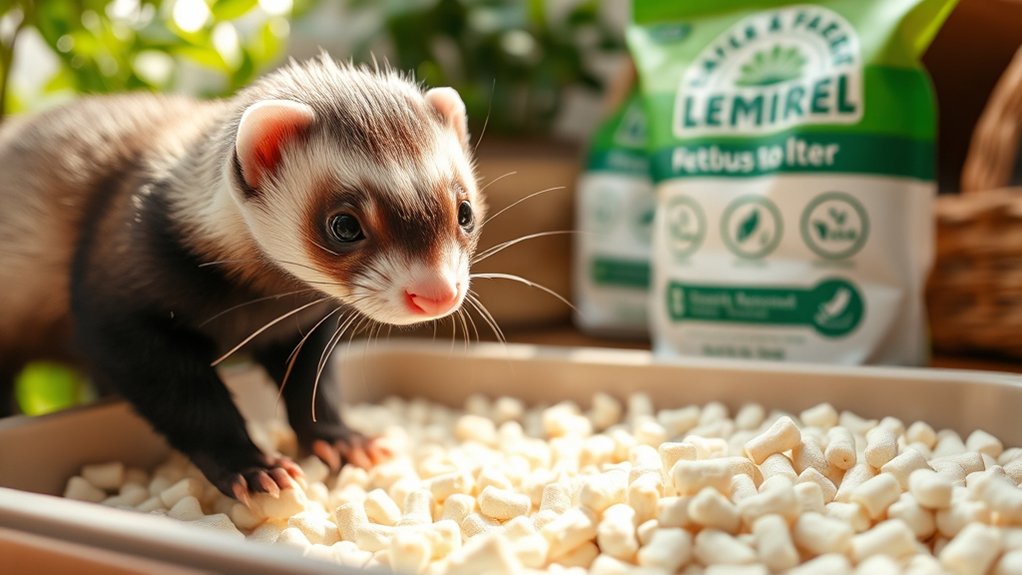
When you’re picking out litter for your ferret, it’s important to choose non-toxic materials that won’t harm their health. You want to make sure the litter is safe for them to be around.
Also, think about their respiratory health. Avoid litters that create a lot of dust or have strong scents because those can be irritating for your ferret’s sensitive nose.
And don’t forget about absorbency. Good absorbency helps control odors and keeps your ferret’s space clean and fresh.
It makes life easier for both you and your furry friend.
Non-Toxic Material Selection
Although choosing the right litter might seem straightforward, selecting non-toxic materials is super important for your ferret’s health.
You want to avoid anything that could harm their respiratory system or cause digestive issues. So, focus on safe, unscented options to keep your ferret comfortable and healthy.
When choosing litter, consider these key points:
- Use non-toxic materials like recycled paper or wood pellets that produce minimal dust.
- Avoid clumping and clay litters, as they can irritate the respiratory system and pose ingestion risks.
- Choose unscented and biodegradable litters to prevent respiratory irritation and guarantee safety.
Respiratory Safety Considerations
Since ferrets are prone to respiratory problems, you need to choose litter that produces minimal dust and avoids harmful chemicals. The ferrets’ respiratory system is highly sensitive, so avoid clumping clay and silica litters. Their dust can cause irritation and potential blockages if ingested.
Also, stay away from scented and oily types of cat litter, which ferrets often reject. Wood shavings from pine and cedar contain oils that are harmful to respiratory health. Though kiln-dried alternatives are less risky, it’s best to be cautious.
Opt for low-dust options like paper pellets or recycled newspaper to keep your ferret safe. Regularly cleaning the litter box helps maintain odor control and reduces airborne irritants. This all supports your ferret’s respiratory health.
Choosing the right litter is essential for their well-being and comfort. It’s worth taking the time to pick the best option for your furry friend.
Absorbency And Odor Control
Beyond minimizing dust and harmful chemicals, you also need to focus on how well the litter absorbs moisture and controls odor.
Absorbency is crucial since ferrets eliminate frequently, and you want a litter that keeps the environment dry and clean.
Odor control matters just as much to prevent unpleasant smells and maintain your ferret’s comfort. Choose non-toxic, unscented litter options to avoid respiratory issues from harmful fumes.
Here are key points to reflect on:
- Use absorbent materials like recycled paper or wood pellets that crumble when wet, making cleaning easier.
- Opt for litter with strong odor control properties, such as paper pellets, to reduce smell without added chemicals.
- Scoop daily to prevent odor buildup and guarantee a healthy, fresh habitat for your ferret.
Safe Litter Options: Paper, Wood & Pellets
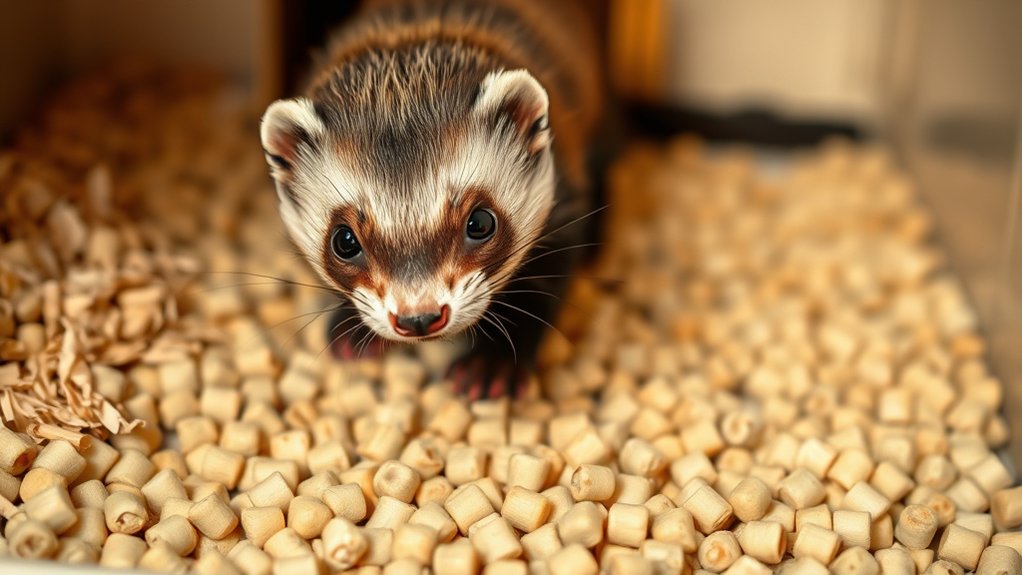
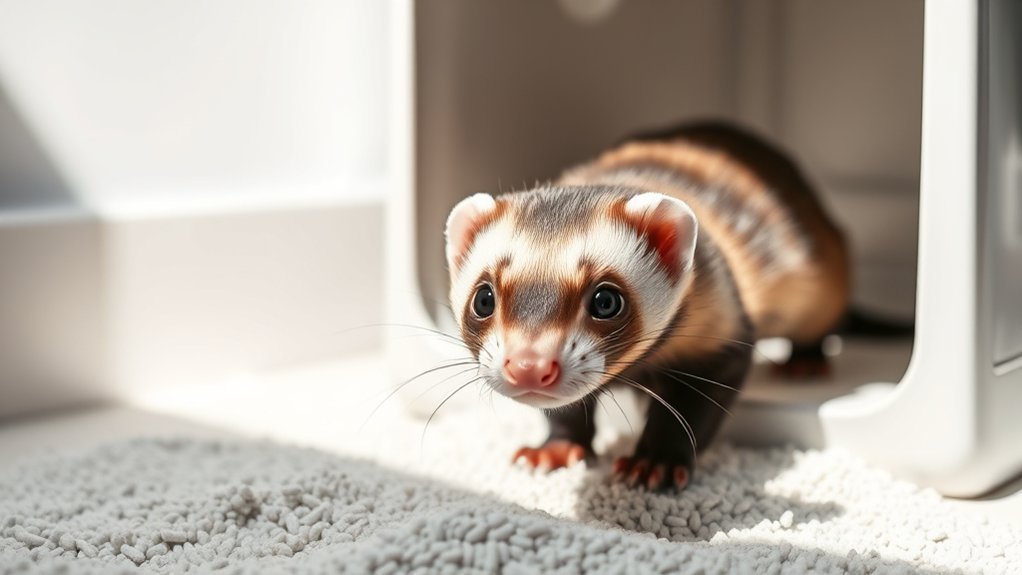
When choosing litter for your ferret, you’ll want to prioritize materials that are safe, low in dust, and effective at controlling odor. Paper, wood, and pellet litters fit these criteria well. Paper pellets are absorbent, biodegradable, and gentle on sensitive ferret noses.
Wood pellets are cost-effective and odorless, crumbling when wet for easy cleaning. Both options avoid harmful clumping or scented chemicals that can irritate your ferret’s respiratory system.
| Litter Type | Benefits | Maintenance Tips |
|---|---|---|
| Paper Pellets | Low dust, absorbent | Scoop daily, replace often |
| Wood Pellets | Odorless, economical | Remove crumbled pellets |
| Compressed Pellets | Biodegradable, safe | Clean box regularly |
Stick to these safe options to keep your ferret healthy and comfortable.
How Ferret Behavior Affects Litter Placement
Although ferrets can adapt to litter training, their natural behaviors really influence where you should put their litter boxes. Ferrets tend to use cat litter in specific corners, so it’s important to watch and learn their preferences.
Ferrets naturally prefer specific corners for their litter, so observe their habits to place boxes effectively.
Placement matters a lot for training success and keeping things hygienic.
Think about these tips for litter box placement:
- Put boxes in corners where your ferret naturally goes, usually after eating, playing, or sleeping.
- Have multiple litter boxes—one for each ferret plus an extra. This helps because ferrets go often and can have accidents otherwise.
- Keep the boxes in the same spots and clean them regularly. Leftover smells can make ferrets avoid the box or go back to old spots.
Tips for Litter Training and Box Setup
Since ferrets have specific elimination habits, setting up their litter boxes correctly is vital for successful training. Place litter boxes in corners your ferret naturally prefers, especially after eating or playing, to encourage use.
Choose low-sided, sturdy litter boxes to guarantee easy access and prevent tipping, as ferrets may dig or burrow.
For safe litter training, use pelleted litters made from recycled paper or wood to reduce dust and protect respiratory health. Consistently reinforce litter box use with positive feedback, like praise or treats, to build good habits.
Daily Litter Cleaning Practices to Keep Ferrets Healthy
Daily scooping of your ferret’s litter box is essential to prevent odor buildup and maintain a clean environment, given their frequent elimination habits.
Because ferrets may not cover their stools, you must refresh the litter daily to avoid unsanitary conditions.
Using absorbent materials like paper or wood pellets helps control odors but still requires daily cleaning.
Follow these daily cleaning practices to keep your ferret healthy:
- Scoop waste from the litter box every day to minimize odors and discourage repetitive elimination spots.
- Replace or top up absorbent litter materials regularly, making sure the box stays dry and fresh.
- Clean the litter box weekly with pet-safe disinfectants to reduce illness risk and keep things hygienic.
Consistent daily cleaning really helps support your ferret’s health and makes litter training more successful.
How to Switch Your Ferret to Safe Litter
How do you successfully switch your ferret to a safer litter option without causing stress?
Start by mixing the new litter with the old gradually, giving your ferret time to adjust. Choose the right litter for your ferret, preferably absorbent, low-dust types like recycled paper or wood pellets.
Refer to Tootle’s pdf on Choosing litter for detailed guidance.
Monitor your ferret’s behavior closely; some resistance is normal, so be patient. Place multiple litter boxes where your ferret usually eliminates to encourage use.
Maintain a consistent cleaning routine by scooping daily and changing litter regularly. This fosters a positive association with the new litter, helping your ferret adapt smoothly while protecting their respiratory health and overall well-being.
Frequently Asked Questions
How Often Should I Replace My Ferret’s Litter Completely?
You should replace your ferret’s litter completely every 1 to 2 weeks, depending on the type of litter and how often you clean it.
Paper pellet and wood pellet litters might need changing sooner if they get damp.
Daily scooping helps keep things fresh, but thorough changes prevent bacteria buildup and keep your ferret healthy.
Always clean the litter box with pet-safe disinfectants during full replacements to maintain good hygiene.
If you have multiple ferrets, expect to replace the litter more often to keep everyone healthy.
It’s all about staying on top of it so your ferret stays happy and comfortable!
Can Ferrets Develop Allergies From Safe Litter Options?
Yes, ferrets can develop allergies even from safe litter material options. You should always perform a litter material comparison, watching closely for signs on your allergy symptoms checklist like sneezing, itching, or changes in stool.
These symptoms can signal adverse ferret health impacts. To protect your ferret, introduce new litter gradually and monitor their reaction carefully.
This helps ensure their environment stays comfortable and free from irritants that could harm their well-being. Just keep an eye out and take it slow to keep your ferret happy and healthy.
Are Scented Litters Safe for Ferrets?
Scented litter types aren’t safe for ferrets because their sensitive respiratory systems can react badly to the strong fragrances.
You’ll notice ferret preferences lean toward unscented options, which help avoid respiratory issues and keep them comfortable.
Using scented litters can also disrupt litter box training. Ferrets tend to avoid the unpleasant smells and might eliminate elsewhere.
To keep your ferret healthy and well-trained, stick to unscented, non-toxic litter options. It’s really the best way to go.
What Signs Indicate My Ferret Dislikes Its Litter?
Oh, your ferret loves digging through its litter. What a surprise!
Actually, behavioral signs like avoiding the litter box, digging anxiously, or not covering stools clearly reveal its litter preferences.
Excessive sneezing or choosing cage corners over the box signals discomfort with the material.
If you notice these signs, it’s a good idea to explore alternative substrates that are safer and more comfortable for your ferret’s sensitive respiratory system.
Can I Use Litter Additives to Control Odor Safely?
You can use litter additives cautiously to control odor, but you must prioritize your ferret’s litter preferences since they’re sensitive to irritants.
Compared to other litter material options, natural odor control methods like baking soda are safer and less likely to cause respiratory issues.
Avoid scented additives, and always monitor your ferret closely for discomfort or avoidance.
Regular cleaning combined with safe additives offers the best balance for effective odor control.
Just keep an eye on how your ferret reacts, and you should be good to go!
Conclusion
Choosing the right litter for your ferret is like building a safe little oasis in their world. Avoid traditional cat litters that can harm their sensitive lungs and digestive system. Instead, opt for paper, wood, or pellet litters that meet safety criteria.
Remember, your ferret’s health hinges on careful litter choices, thoughtful placement, and consistent cleaning. With patience and care, you’ll create a comfy, safe spot your ferret will gladly call their own.