How Long Can A Cat Go Without Water – Dangerous Time Limits
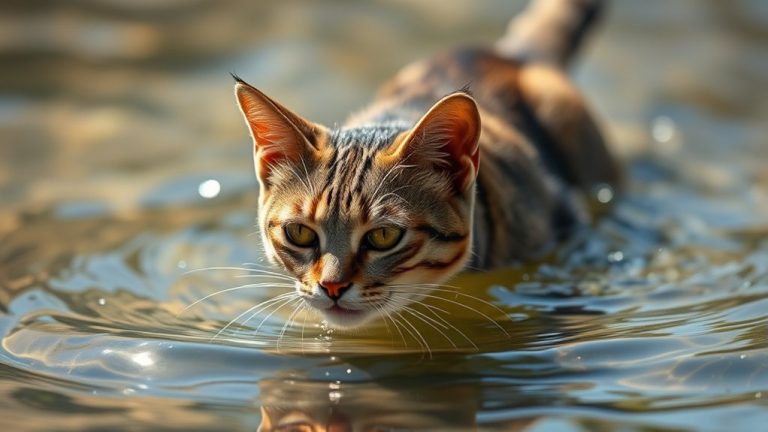
Your cat can survive only 2 to 4 days without water before severe dehydration puts its life at risk. Dehydration begins within 24 hours and can quickly damage critical organs. Signs like dry gums, sunken eyes, and lethargy mean you need to act fast.
Cats, especially those on dry food or with health issues, need consistent hydration. Keeping your cat healthy means understanding these limits and knowing how to support its water needs. You’ll find essential tips to help right away.
How Long Can Cats Survive Without Water?
How long can your cat survive without water? Cats can typically last 2-4 days without water, but dehydration begins within 24 hours. This early dehydration poses significant health risks, including kidney failure and organ stress.
Since an average 10-pound cat needs about 7-9 ounces of water daily, it’s really important to make sure they always have fresh water available.
If your cat goes more than 24 hours without drinking, keep a close eye out for signs of dehydration. You might notice symptoms like lethargy or dry gums. If you do, it’s best to get veterinary help quickly to avoid serious complications.
Keeping your cat hydrated isn’t just about comfort; it’s crucial for their overall health and how long they live.
Signs of Cat Dehydration You Should Know
Once your cat goes without water for a day, dehydration can quickly set in and cause serious health problems. You should watch for key signs like decreased skin elasticity.
Dehydration can develop rapidly if your cat misses water for a day—watch for skin elasticity changes.
If you gently pinch the skin and it doesn’t snap back quickly, that’s a warning.
Check your cat’s gums, too. Dry or sticky gums instead of moist pink ones indicate dehydration. Sunken eyes are another visible sign that demands immediate veterinary attention.
You might also notice lethargy, reduced urination, or darker urine. All of these signal worsening dehydration and potential health issues.
If you observe any of these signs, don’t wait. Seek veterinary attention right away to prevent severe complications and keep your cat safe and healthy.
Why Cats Get Dehydrated So Fast
Because cats naturally have a low thirst drive, they often don’t drink enough water to stay properly hydrated, which can lead to rapid dehydration. The cat’s body is about 70% water, so meeting hydration needs is essential for cats’ overall health.
Environmental conditions like heat and low humidity, plus a cat’s activity level, increase water intake demands. Dry food diets also reduce moisture intake. Health conditions such as kidney disease worsen dehydration risk.
You must provide clean and fresh water consistently to support your cat’s hydration.
| Factor | Impact on Hydration | What You Can Do |
|---|---|---|
| Low thirst drive | Less voluntary water intake | Encourage drinking, offer wet food |
| Environment | Increases water loss | Keep water accessible, cool environment |
| Activity level | Raises water requirement | Monitor activity, increase water availability |
| Dry food diet | Low moisture intake | Supplement with wet food or water |
| Health conditions | Causes excess water loss | Regular vet check-ups |
How Age and Health Affect Cat Hydration
You’ll notice that a cat’s age plays a big role in their hydration needs. Kittens, for example, require more water to support their rapid growth.
On the other hand, senior cats often drink less, which can put them at risk of dehydration.
Health conditions like diabetes or kidney disease can also change how much water your cat needs.
That’s why it’s important to keep a close eye on their water intake. Understanding these factors helps you provide the right care to keep your cat well-hydrated throughout their life.
Hydration Needs By Age
Understanding how age and health affect your cat’s hydration needs is essential to keeping them healthy.
Kittens have higher hydration needs and can become dehydrated within hours without water, so you must provide constant access.
Adult cats typically need about 3.5 to 4.5 ounces of water per 5 pounds of body weight daily, but this varies with environmental factors like heat and activity.
Senior cats often have a reduced thirst response, increasing their dehydration risk, so you should monitor water intake closely.
While health conditions affect hydration too, focusing on age-related needs helps you prevent issues.
Impact Of Health Conditions
Although age plays a significant role in your cat’s hydration needs, health conditions can have an even greater impact.
Cats with underlying health issues like kidney disease, diabetes, or hyperthyroidism often face altered hydration levels that require your close attention. Dehydration can set in rapidly, especially if your cat experiences vomiting or diarrhea, making timely veterinary attention essential.
Senior cats, in particular, may have a reduced thirst drive, increasing their risk.
Environmental factors such as heat or humidity can worsen these risks, so monitoring becomes even more critical.
Understanding how your cat’s health affects their water intake helps you catch dehydration early and provide the care they need to stay safe and comfortable.
Senior Cats’ Water Intake
As your cat ages, their water needs change considerably due to natural declines in kidney function and a reduced thirst drive. Senior cats often require more water to avoid dehydration, especially if they have health conditions like kidney disease or diabetes. Because their thirst drive weakens, you must monitor water intake closely.
Offering wet food can help improve hydration and supplement their fluid needs. Dehydration in senior cats can cause a rapid health decline, so timely intervention is essential.
| Factor | Impact on Senior Cats |
|---|---|
| Kidney Function | Decreases, increasing water need |
| Thirst Drive | Reduced, lowers voluntary drinking |
| Health Conditions | Raise water requirements |
| Wet Food | Helps maintain hydration |
How Diet and Environment Impact Cat Dehydration
Because your cat’s diet and environment directly influence its hydration levels, it’s essential to consider both when preventing dehydration.
Cats on a dry food diet need more water since kibble lacks moisture compared to wet food. Wet food naturally boosts hydration, so it’s a great option for keeping your cat hydrated.
Your cat’s environment plays a big role too. High temperatures and low humidity increase water loss, making hydration even more critical during warm months.
Plus, your cat’s health, age, and activity level affect how much water it needs to stay healthy.
Providing clean, fresh water in accessible spots helps your cat drink enough to avoid dehydration.
How to Encourage Your Cat to Drink More Water
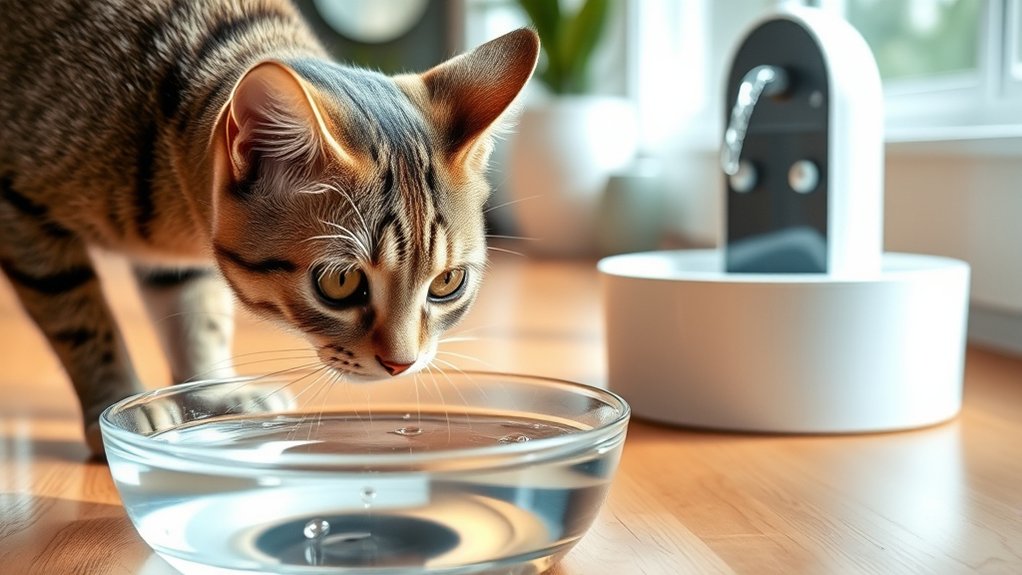
Understanding how diet and environment affect your cat’s hydration is just the first step. Encouraging your cat to drink more water takes some proactive effort.
To keep your feline friend healthy, provide fresh water in multiple clean water bowls around your home. This encourages exploration and makes drinking more appealing.
Many cats prefer running water, so a cat water fountain can really help. It can stimulate thirst and increase moisture intake.
Here are three practical steps to help:
- Place several clean water bowls in quiet, accessible spots.
- Use a cat water fountain to offer running water.
- Incorporate interactive play to boost activity and thirst.
Together, these strategies promote hydration and make sure your cat drinks regularly. This supports their overall health and helps prevent dehydration.
When to Get Emergency Help for a Dehydrated Cat
If your cat is showing signs like sunken eyes, dry gums, or is extremely lethargic, it’s important to act fast.
These symptoms usually mean your cat is severely dehydrated and needs immediate veterinary attention.
Don’t wait around—getting professional help right away can make all the difference and could save your cat’s life.
Recognizing Severe Dehydration
When your cat shows signs like lethargy, dry or sticky gums, or sunken eyes, you need to act quickly and seek emergency veterinary care. These symptoms indicate severe dehydration and urgent health risks.
Cats can develop dehydration after just 24 hours without water, so recognizing the signs early is vital.
Watch for these key symptoms:
- Lethargy and weakness, showing your cat’s energy is dangerously low.
- Dry or sticky gums and sunken eyes, clear indicators of fluid loss.
- Reduced or dark urine, signaling worsening dehydration.
If your cat goes over 48 hours without water, emergency veterinary attention is essential to prevent life-threatening complications like kidney failure.
Don’t delay. Prompt action can save your cat’s life.
Immediate Veterinary Intervention
Recognizing severe dehydration is just the first step. You need to act quickly to protect your cat’s health. If your cat shows symptoms like dry gums, lethargy, or sunken eyes, urgent veterinary care is essential.
Water deprivation beyond 24 hours can cause serious health issues, including acute kidney failure and organ stress. Don’t wait to seek intervention. Dehydration worsens rapidly and can become life-threatening.
Prompt veterinary care improves your cat’s chances of recovery and helps prevent long-term complications. Always monitor your cat closely, especially if you suspect water deprivation.
Acting fast when you notice symptoms guarantees your cat gets the treatment needed to restore hydration and stabilize their condition. Your quick response can save your cat’s life.
Daily Tips to Prevent Cat Dehydration
How often does your cat drink water throughout the day? To prevent dehydration, you need to provide fresh water daily and guarantee easy access to clean water.
Ensure your cat has fresh, clean water available throughout the day to prevent dehydration.
Meeting your cat’s hydration needs can be simpler than you think.
Here are three practical tips:
- Incorporate wet food into their diet, as it contains moisture that supplements water intake.
- Use a cat water fountain to encourage drinking, since many cats prefer running water.
- Place multiple water bowls around your home to reduce competition and increase accessibility.
Always monitor drinking habits closely. If you notice signs of dehydration or a decrease in water consumption within 24 hours, consult a veterinarian immediately.
These steps help you prevent dehydration and keep your cat healthy and hydrated.
Frequently Asked Questions
Can Cats Survive Longer Without Food Than Water?
Yes, cats can survive longer without food than water due to their feeding habits and nutritional needs.
You should monitor hydration signs closely because dehydration impacts cat behavior and health faster. Always provide fresh water sources to meet their dietary preferences, emphasizing freshwater importance.
If you notice any changes, seek emergency care immediately.
Regular health monitoring helps guarantee your cat stays hydrated and nourished, supporting their overall well-being effectively. It’s really important to pay attention and act quickly when it comes to water intake.
Does Water Temperature Affect a Cat’s Willingness to Drink?
Like Goldilocks seeking the perfect porridge, your cat’s water preferences hinge on temperature sensitivity.
Cooler water often sparks better hydration habits and drinking behaviors, especially during seasonal changes.
You’ll notice your cat responds keenly to thirst cues, preferring water sources that feel just right, neither too warm nor too cold.
Using specific bowl materials or flavor enhancers can also encourage sipping, making hydration easier and more enjoyable for your feline friend.
Are Certain Cat Breeds More Prone to Dehydration?
Yes, certain cat breeds are more prone to dehydration due to breed differences and health conditions. You should watch hydration signs closely, especially in older cats or active breeds like Siamese, as age factors and activity levels increase water needs.
Environmental influences, like warm climates, also impact hydration.
Pay attention to behavioral cues and water preferences, as these affect intake. Dietary impact matters too; wet food helps maintain hydration better than dry food.
Can Dehydration Cause Permanent Organ Damage in Cats?
Just like a knight protecting his castle, you must guard your cat’s organ health vigilantly. Yes, dehydration can cause permanent organ damage.
If you miss early hydration signs or ignore dehydration symptoms, kidney function can decline irreversibly.
Chronic dehydration stresses feline anatomy and requires swift fluid therapy and varied hydration sources. Acting quickly shortens recovery time and preserves your cat’s well-being.
Always monitor hydration closely to prevent lasting harm. It’s really about staying alert and catching things early to keep your furry friend healthy.
Is It Safe to Give Cats Electrolyte Solutions?
Yes, you can give cats electrolyte solutions, but only if they’re specifically made for pets to guarantee cat safety. They help maintain electrolyte balance and offer hydration options when your cat refuses water.
Avoid DIY solutions or flavor enhancers, as these may pose health risks.
Always follow vet recommendations, watch for signs of dehydration, and use electrolyte solutions as part of broader recovery strategies.
It’s important to consult your vet to tailor care effectively. That way, you can make sure your cat stays healthy and hydrated.
Conclusion
So, don’t let your cat star in a desert survival show. Hydration isn’t a game. Cats can’t just sip from your coffee cup or summon water like a magic trick.
If they go too long without water, things get serious fast. Keep a close eye and offer fresh water like it’s a royal treat. Act quickly if dehydration signs pop up.
Your cat’s health depends on you, not on their mysterious feline resilience.