How Long Can Canned Cat Food Sit Out – Safe Time Limits
You shouldn’t leave canned cat food out at room temperature for more than 1 to 2 hours. Bacteria grow quickly in warm, moist environments, making leftovers unsafe after this time, even if covered.
It’s best to discard any uneaten food promptly to protect your cat’s health. Always refrigerate leftovers in a sealed container and use them within 24 hours. Following these guidelines guarantees your cat eats safely.
Keep going to understand spoilage signs and best storage tips for canned cat food.
Safe Time Limits for Leaving Canned Cat Food Out
Although it might be tempting to leave canned cat food out for extended periods, you should never let it sit at room temperature for more than 1 to 2 hours. Doing so risks bacterial growth and spoilage, which can compromise food safety when feeding your cat.
Even if covered, wet cat food left out can spoil quickly. So, it’s best to promptly refrigerate any leftovers to prevent contamination. Uneaten food should be stored in a sealed container and used within 24 hours. Partial cans can stay safe in the refrigerator for 5 to 7 days.
Just make sure to wash the feeding dish after each meal to keep things hygienic.
Also, keep an eye out for signs of spoilage like unpleasant odors, discoloration, or a slimy texture. If you notice any of these, it’s safest to discard the food to protect your cat’s health.
Why Bacteria Grow Quickly in Canned Wet Cat Food
Because canned wet cat food provides a warm, moist environment, bacteria can multiply rapidly when it’s left out at room temperature. This moisture combined with warmth creates an ideal breeding ground for bacteria growth, which can double every 20 minutes.
As the cat food sits, exposure to air and contaminants further accelerates spoilage, even if it’s covered. You’ll notice signs of spoilage like sour smells, discoloration, or slimy textures indicating the food isn’t safe anymore.
| Factor | Impact on Bacteria Growth |
|---|---|
| Warmth | Speeds bacterial multiplication |
| Moisture | Creates breeding ground |
| Air Exposure | Introduces contaminants |
| Time at Room Temperature | Allows bacteria to double rapidly |
What Happens If Canned Cat Food Sits Out Too Long?
Leaving canned cat food out for too long creates a dangerous environment where harmful bacteria multiply rapidly, putting your cat’s health at risk.
Wet cat food is especially prone to spoilage because of its moisture, which speeds up bacterial growth. When food sits out beyond 1 to 2 hours, the risk of digestive issues and other health problems goes way up.
Even if you cover the food, it won’t stop it from spoiling. To keep your cat safe, you should throw away any uneaten wet cat food after that time.
Always put leftovers in the fridge quickly to keep them fresh and safe.
A sour smell usually means the food has gone bad, so don’t feed your cat anything that’s been left out too long.
Following these simple steps helps prevent health issues caused by spoiled food.
How to Tell If Canned Cat Food Has Spoiled
You can quickly spot spoiled canned cat food by checking for unpleasant or sour odors.
Also, keep an eye out for any changes in texture, like sliminess.
Sometimes, the color might shift or the edges could get dry, which are clear signs the food isn’t safe for your cat anymore.
Honestly, it’s best to trust your senses—if something seems off, just toss the food right away.
Identifying Spoilage Signs
Although canned cat food may look fine at first glance, certain signs clearly indicate spoilage and should prompt immediate disposal. You need to watch for key spoilage signs like an unpleasant smell, discolored food, or a slimy texture.
These changes often signal bacterial growth, which can happen quickly if the canned cat food sits out beyond safe time limits, typically more than 1 to 2 hours.
Don’t ignore visible mold or bugs. These are unmistakable signs that the food is unsafe.
Also, dry edges or odd coloration warn you that spoilage is underway.
Trust your cat’s instincts too. If they sniff the food and walk away, it’s better to err on the side of caution and discard it immediately.
Always prioritize your pet’s health by recognizing these spoilage indicators.
Smell And Texture Changes
Two key indicators will help you determine if canned cat food has spoiled: smell and texture.
When cat food sits out too long, bacterial growth leads to an unpleasant smell, often sour or off-putting. This signals food that’s unfit for your pet.
Changes in texture are just as telling. Spoiled food may feel slimy or develop dry, crusty edges.
So, keep an eye out for these clear signs of spoilage:
- A sour or foul smell that’s different from the usual aroma
- Slimy, sticky, or unusually dry texture
- Discoloration or mold spots indicating contamination
If you notice any of these, don’t risk feeding your cat the food.
Properly monitoring smell and texture guarantees you avoid serving spoiled food and keeps your cat safe and healthy.
How to Store Leftover Canned Cat Food Safely
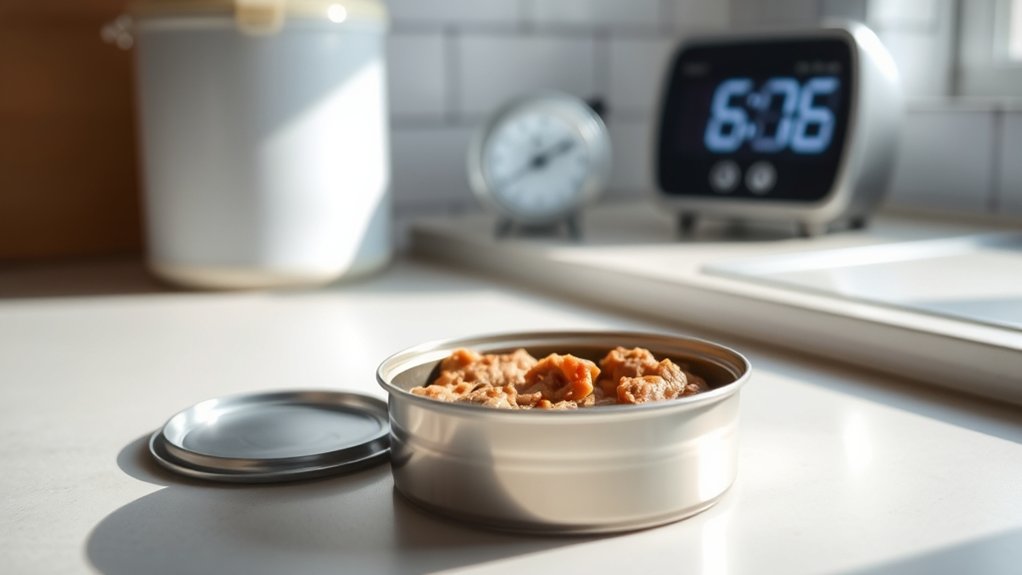
You should refrigerate leftover canned cat food within 1 to 2 hours, and make sure to keep it in a covered container to stop bacteria from growing.
Also, always use clean utensils when serving your cat to keep things hygienic.
Try not to keep opened cans for more than 5 to 7 days.
When it’s time to feed your cat again, warm the food up to room temperature—but avoid microwaving it.
This way, you can be sure it’s safe and tasty for your furry friend.
Proper Refrigeration Methods
To keep leftover canned cat food safe and fresh, store it promptly in a covered container to limit exposure to air and bacteria. Proper refrigeration methods are crucial to maintain food safety and prevent spoilage.
Refrigerate uneaten portions within two hours of serving, and use refrigerated food within 5 to 7 days for peak freshness.
Always check for signs of spoilage, like off smells or texture changes, before offering leftovers to your cat.
Follow these guidelines to protect your cat’s health:
- Use an airtight, covered container to seal in freshness
- Label containers with the date to track storage time
- Let refrigerated food reach room temperature for 30 to 60 minutes before serving to make it more appealing
Safe Food Storage
Although it’s tempting to leave canned cat food out after mealtime, refrigerating leftovers within two hours is crucial to prevent bacterial growth and spoilage.
To store leftover canned cat food safely, transfer uneaten portions into a clean, covered container to maintain freshness and avoid contamination. Refrigerate promptly, as the safe time limits for refrigerated leftovers range from 5 to 7 days.
If the food has been left out beyond two hours, discard it immediately to protect your cat’s health.
Before serving refrigerated canned cat food, warm it to room temperature, which many cats prefer. Always use a clean spoon to serve, minimizing bacterial introduction.
Following these steps guarantees your cat’s food stays safe, fresh, and nutritious. It’s a simple routine that helps keep your furry friend healthy and happy!
Does Covering Canned Cat Food Keep It Fresh Longer?
While covering canned cat food might seem like a simple way to keep it fresh, it doesn’t stop bacteria from growing. So, you really shouldn’t leave it out for more than 1 to 2 hours.
Wet cat food creates a perfect environment for bacteria to multiply, especially when left at room temperature. This happens even if the food is covered.
Wet cat food fosters rapid bacterial growth at room temperature, even when covered.
To keep your cat’s food fresh and safe, proper storage is key. Uneaten portions should always be refrigerated promptly. This helps maintain peak freshness and prevents spoilage.
Remember: leaving food out too long risks harmful bacteria. Covering the food slows drying but doesn’t stop spoilage.
So, make sure to refrigerate uneaten portions within 1 to 2 hours. Always prioritize proper storage over just covering to protect your cat’s health and safety.
It’s the best way to keep your furry friend happy and healthy!
Mixing Canned Wet and Dry Cat Food: Safety Considerations
Because wet cat food spoils quickly, mixing it with dry kibble requires careful attention to safety. When combining canned wet food and dry cat food, you must follow the same safety guidelines as for wet food alone.
This means the mixed meal shouldn’t sit out for more than 1 to 2 hours to prevent bacterial growth and spoilage. Leaving it out longer increases health risks for your cat.
So, keep an eye on the mixed food and watch for any changes in smell, color, or texture that might mean it’s gone bad.
To reduce waste and keep feeding safe, practice strict portion control by serving only amounts your cat can finish within the safe time limit.
Proper mixing and timely feeding are essential to protect your cat’s health.
Tips to Keep Canned Cat Food Fresh and Safe Longer
To keep canned cat food fresh and safe longer, you should refrigerate it within 1 to 2 hours of opening to prevent bacterial growth. As a responsible cat parent, don’t leave wet food out all day, as this encourages spoilage.
Store uneaten canned cat food in an airtight container and use it within 5 to 7 days to guarantee peak freshness.
Here are tips to help keep food fresh:
- Portion smaller servings to reduce waste and maintain freshness.
- Always serve refrigerated food at room temperature, letting it sit out about 30 minutes before feeding.
- Use a clean spoon each time to avoid contamination.
Following these practices helps you avoid bacterial growth and keeps your cat’s food fresh, safe, and appetizing.
It’s all about keeping things clean and timely so your furry friend stays happy and healthy!
Frequently Asked Questions
Can Canned Cat Food Be Frozen for Long-Term Storage?
Yes, you can freeze canned cat food for long-term storage to keep its nutritional value intact. Just make sure to use airtight storage containers or freezer bags. Proper freezing techniques help prevent quality loss and freezer burn.
When you’re ready to serve it, thaw the food safely by defrosting it in the refrigerator. Never leave it out at room temperature—that’s not safe. This way, you keep the pet food fresh and safe for your cat.
Also, try not to refreeze any thawed portions. Doing so helps avoid spoilage and keeps feeding your cat worry-free over the long term.
Is It Safe to Heat Canned Cat Food in a Microwave?
When Jenna microwaved her cat’s food for too long, her cat got burned by hot spots. This shows why microwave safety is essential.
You should transfer food to a microwave-safe dish, heat it for just 4 to 6 seconds, and stir thoroughly.
This careful warming technique helps preserve nutrient retention and avoids food poisoning risks.
For portion control and cat preferences, letting food reach room temperature naturally often works best. It ensures safe, tasty meals.
How Does Temperature Affect the Shelf Life of Canned Cat Food?
Temperature directly affects the shelf life of canned cat food by accelerating bacterial growth and nutrient degradation.
When left at room temperature, spoilage happens faster, reducing food safety.
Proper storage conditions like refrigeration slow bacterial growth and preserve nutrients. This can extend the shelf life up to several days.
You should always consider temperature effects to keep the food fresh and safe.
Refrigeration is essential to maximize safety and nutrient preservation in your cat’s food. It really makes a difference in maintaining quality and avoiding health risks.
Are Certain Brands of Canned Cat Food Safer to Leave Out?
When you compare brands, you’ll find variations in ingredient quality, preservative types, moisture levels, and flavor variations that impact safety.
Brands with higher nutritional value and strict safety standards tend to use effective preservatives, making their canned cat food slightly safer if left out briefly.
However, texture differences and moisture content can speed spoilage, so no brand is truly safe beyond recommended limits.
Always prioritize freshness over brand claims. It’s better to be cautious and not leave any canned cat food out for too long.
Can Canned Cat Food Cause Allergies if Left Out Too Long?
Yes, canned cat food can trigger allergy symptoms if left out too long. Bacterial growth from improper storage causes food spoilage, which can increase risks for cats with ingredient sensitivity.
You need to follow strict feeding guidelines to protect your pet’s health. Spoiled food can make allergy symptoms and digestive issues worse.
Conclusion
Think of canned cat food like a ticking clock. Each minute it sits out invites unseen bacteria to multiply. By respecting safe time limits and proper storage, you’re not just preserving food; you’re safeguarding your cat’s health and happiness.
Cover leftovers promptly and avoid mixing without care. Stay vigilant for signs of spoilage. When you do this, you transform a simple meal into a symbol of your commitment to your pet’s well-being and longevity.