Can Cat Eat Blueberries – Benefits And Serving Tips
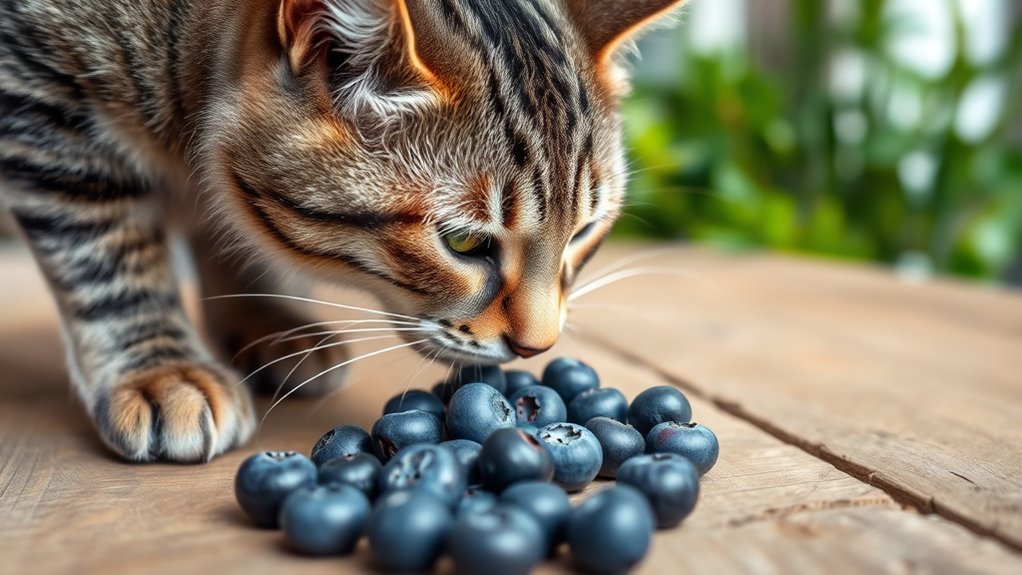
You can safely give your cat small amounts of blueberries. They’re low-calorie treats packed with antioxidants and fiber that support immune and digestive health. Just limit servings to 1-3 berries.
Make sure to cut or mash them to prevent choking, and always rinse the berries to remove pesticides. Avoid giving blueberries to diabetic cats, and never replace a balanced meat-based diet with them.
Introduce blueberries gradually so you can see how your cat tolerates them. If you want to learn more about the benefits, risks, and proper serving tips for your feline friend, keep exploring further guidance.
Are Blueberries Safe for Cats to Eat?
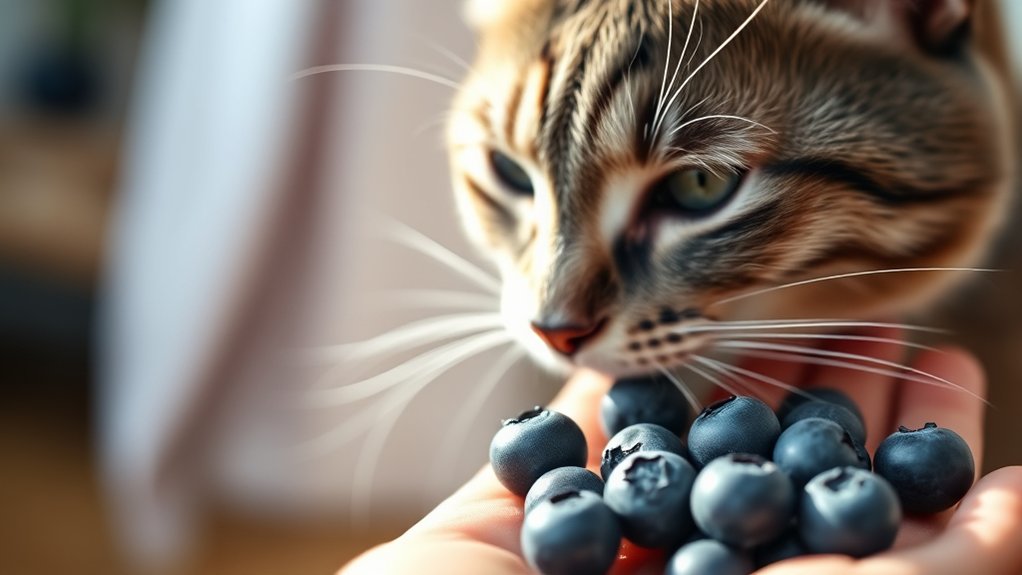
Wondering if blueberries are safe for your cat? Yes, cats can eat blueberries, but only in small quantities. Blueberries are generally safe when you serve them sparingly, ideally no more than two to three berries at a time.
Because of their high sugar content, feeding too many can spike your cat’s blood sugar, especially if your cat is diabetic. Since cats are obligate carnivores, blueberries should only make up about 10% of their daily diet.
Always wash blueberries thoroughly to remove dirt and pesticides before offering them. Whole blueberries can pose a choking hazard, so it’s best to cut or mash them to guarantee your cat’s safety.
While blueberries offer some health benefits, moderation and proper preparation are key to keeping your feline friend safe. Just remember, a little treat goes a long way!
Health Benefits of Blueberries for Cats
While blueberries should only be given in small amounts, they offer several health benefits that make them a worthwhile occasional treat for your cat. Blueberries are rich in antioxidants, which help protect your cat’s cells from oxidative stress, supporting long-term health.
They also provide vitamin C, which may boost the immune system and overall wellness. The fiber content aids digestive health by promoting regular bowel movements when fed in moderation.
Plus, blueberries are low in calories, making them an ideal treat for cats that need to maintain a healthy weight. Their high water content contributes to hydration, offering a refreshing snack option.
Risks of Feeding Blueberries to Cats
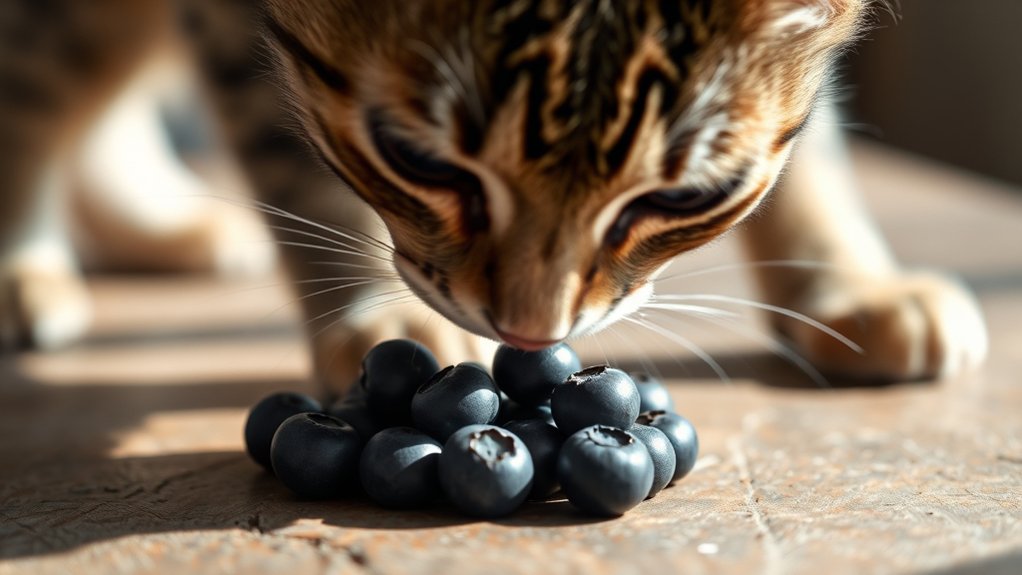
Although blueberries offer health benefits, feeding them to your cat carries certain risks you should consider carefully. Overconsumption can cause digestive issues such as diarrhea and vomiting, especially in sensitive cats.
Whole blueberries pose a choking hazard, particularly for smaller cats, so always cut them into manageable pieces.
Whole blueberries can choke small cats; always slice them into safe, bite-sized pieces.
Also, unwashed blueberries may contain harmful pesticides that can endanger your cat’s health.
Cats with diabetes should avoid blueberries because of their natural sugar content, which can trigger blood sugar spikes.
Plus, individual health conditions affect your cat’s tolerance to blueberries.
That’s why it’s crucial to consult your veterinarian before introducing this fruit.
Being aware of these risks helps you provide safe, cautious servings while protecting your cat’s well-being.
How Many Blueberries Can Cats Eat Safely?
You should limit your cat to no more than three blueberries at a time.
It’s best to feed them only once or twice a week to keep treats under 10% of their daily intake.
Start with just one blueberry to see if your cat has any adverse reactions before giving more.
Always prepare the berries by cutting or mashing them up to avoid any choking hazards.
And if your cat has any health issues, be sure to check with your vet first.
Recommended Daily Serving
Since treats should make up no more than 10% of your cat’s daily diet, you can safely offer up to three blueberries at a time, a few times a week.
Start with one blueberry to monitor your cat’s reaction, then gradually increase to two or three if no digestive issues occur. Always watch for signs like diarrhea or vomiting, especially when introducing blueberries for the first time.
Because whole blueberries can be a choking hazard for small cats, it’s best to cut or mash them into small amounts.
Remember, diabetic cats should avoid blueberries due to their natural sugar content, which can negatively impact blood sugar levels.
Following these serving tips guarantees your cat enjoys the health benefits of blueberries safely and responsibly.
Portion Size Guidelines
When introducing blueberries to your cat’s diet, it’s important to keep portion sizes small and controlled to prevent digestive upset.
Follow portion size guidelines by limiting blueberry intake to 1-3 berries per serving. These should be offered a few times a week and must never cause treats to exceed 10% of your cat’s daily diet.
Start with a single berry to assess your cat’s reaction, then gradually increase if no issues arise. Always monitor for digestive issues such as vomiting or diarrhea, and discontinue feeding if symptoms occur.
Healthy cats generally tolerate this quantity well, but it’s vital to consult a veterinarian for personalized advice, especially if your cat has health concerns.
Maintaining proper portion control guarantees blueberries remain a safe, enjoyable treat.
Frequency Of Feeding
Although blueberries can be a healthy occasional treat, maintaining a strict feeding frequency is essential to keep your cat’s diet balanced and prevent digestive issues.
When considering if cats can eat blueberries safely, limit serving size to 1-3 berries at a time, a few times per week. Treats like blueberries should never exceed 10% of your cat’s daily intake to guarantee balanced nutrition.
Start with one blueberry to monitor your cat’s reaction and watch for any digestive upset. If your cat has existing health issues, especially diabetes, seek veterinary consultation before introducing blueberries.
How Should You Prepare Blueberries for Your Cat?
Properly preparing blueberries guarantees your cat can safely enjoy this nutritious treat. First, rinse fresh blueberries thoroughly to remove dirt and pesticides.
Then, cut or mash blueberries into small pieces to reduce choking hazards, especially for smaller cats.
Always serve plain blueberries. Avoid sweetened or processed types to keep them a healthy treat.
Limit the serving size to just two or three blueberries at a time to prevent digestive upset.
It’s important to introduce blueberries gradually and watch your cat’s reaction closely to see if they tolerate this new food well.
How Can You Introduce Blueberries to Hesitant Cats?
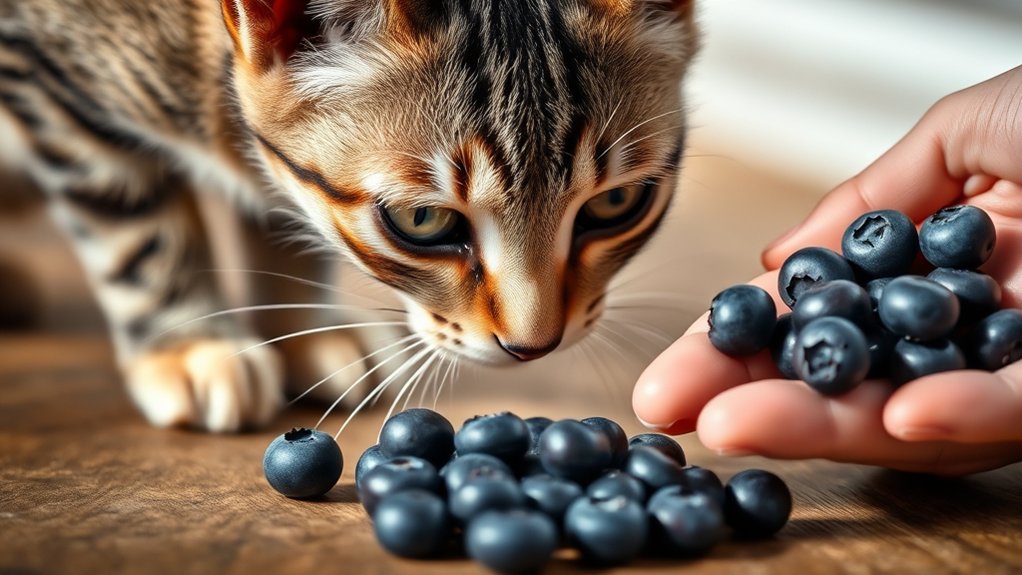
How can you encourage a hesitant cat to try blueberries? Start by thoroughly washing the blueberries to remove any pesticides.
Then, cut or mash them into small pieces to make them easier to chew and safer.
To introduce the flavor gradually, mix a small amount of mashed blueberries with your cat’s regular wet food. This subtle approach can spark curiosity without overwhelming your cat.
To increase acceptance, try these tips:
- Serve blueberries at room temperature or lightly thawed to enhance aroma.
- Offer blueberries during different times to find the best moment.
- Use blueberries as treats or rewards during play to build positive associations.
- Be patient; repeated gentle exposure helps your hesitant cat adjust comfortably.
Can Kittens Eat Blueberries Safely?
You can offer kittens blueberries occasionally, but keep in mind they need more calories and protein for growth.
Always serve small, washed blueberries to avoid choking.
Introduce them slowly so you can watch for any digestive issues.
Just remember, blueberries should be a rare treat, not a regular part of their meals.
Kittens’ Nutritional Needs
Although kittens can enjoy blueberries occasionally, you need to offer them in moderation because their digestive systems are still sensitive and developing. Kittens’ nutritional needs are quite different from adult cats. They require a balanced diet rich in meat-based nutrition to support healthy growth.
While occasional blueberries can be a safe treat, they should never replace essential nutrients. It’s best to introduce blueberries slowly and keep an eye out for any digestive upset. Keeping blueberry servings minimal helps avoid stressing their digestive systems.
Limit blueberry servings to one or two small, fresh, and washed berries. Always prioritize meat-based nutrition for kittens’ healthy growth. Introduce new foods like blueberries slowly and monitor their reactions.
Make sure to maintain a balanced diet that meets kittens’ high protein and calorie needs. This way, they can enjoy occasional blueberries without compromising their nutritional health.
Blueberry Feeding Guidelines
While kittens can safely enjoy blueberries as an occasional treat, it’s vital to introduce them carefully and in small amounts.
Because kittens’ digestive systems are still developing, start with one or two washed blueberries to avoid any digestive upset. Always wash blueberries thoroughly to remove pesticides and contaminants before offering them.
Monitor your kitten closely after feeding to spot any adverse reactions promptly. Serving blueberries whole can pose a choking hazard, so consider cutting them into smaller pieces to guarantee safety.
Remember, blueberries should never replace a balanced diet rich in protein and calories that kittens need for healthy growth.
Use these serving tips to provide blueberries as occasional treats, enhancing variety without compromising your kitten’s nutrition or wellbeing.
Blueberries and a Cat’s Carnivorous Diet
Because cats are obligate carnivores, their diet depends heavily on animal protein to meet essential nutritional needs. While blueberries are safe for cats in small amounts, their digestive systems aren’t designed to process large quantities of carbohydrates found in fruits.
Cats need animal protein, so blueberries are safe only in small amounts due to their carb content.
Blueberries can offer some health benefits but should never replace a meat-based diet.
When including blueberries, keep these points in mind:
- Blueberries provide antioxidant content and fiber content that can support your cat’s overall health.
- They should only make up about 10% of your cat’s daily calorie intake.
- Cats rely on meat for critical nutrients absent in blueberries.
- Moderation and careful serving tips help avoid digestive issues and guarantee safety.
Always prioritize your cat’s nutritional needs with a meat-based diet supplemented cautiously with blueberries. Just remember, a little treat here and there’s fine, but meat is the real star of the show.
Frequently Asked Questions
Can Blueberries Help With a Cat’s Urinary Tract Health?
Yes, blueberries can support your cat’s urinary tract health thanks to their antioxidant properties and fiber content.
Their hydration benefits also help maintain urinary health by promoting proper fluid balance.
Including blueberries as a natural remedy in your cat’s nutrition can assist in preventing urinary issues, but watch for potential risks like allergies.
Always follow vet recommendations and serve blueberries in small, safe portions to complement, not replace, professional care.
Are Dried Blueberries Safe for Cats to Eat?
Think of dried blueberries like a concentrated candy for your cat. They’ve too much sugar in a small bite.
Dried blueberries also have less moisture and higher sugar levels than fresh ones, which can cause digestive issues and even trigger allergies in some cats.
If you want to try them, keep the portion size tiny and watch your cat’s preferences closely. Choose options that are free from additives to keep things safe.
Fresh berries generally offer better health benefits.
Always consider other treat alternatives and consult your vet for advice on safe storage and feeding.
Do Blueberries Interact With Common Cat Medications?
Blueberries generally don’t cause blueberry toxicity or interfere with medication absorption in cats, but you should still watch for fruit allergies or dietary restrictions.
Their natural antioxidants offer health benefits, but safe portions are essential to avoid upsetting feline digestion.
Some medications might interact subtly, so don’t ignore veterinary advice.
Avoid common misconceptions that all fruits are safe.
Always consult your vet before adding blueberries to your cat’s diet to guarantee safety and effectiveness.
Can Blueberry Juice Be Given to Cats?
You shouldn’t give your cat blueberry juice. It’s like a sugar bomb disguised as a treat! The high sugar content can harm your cat’s health, disrupt digestion, and spike blood sugar.
Instead, stick to whole blueberries as fruit alternatives. They provide antioxidants and hydration benefits without the added sugars.
Always consider your cat’s flavor preferences and how often you feed them.
And it’s a good idea to get veterinary advice before introducing new foods to make sure they support your feline’s well-being.
Are There Specific Cat Breeds That Shouldn’T Eat Blueberries?
No specific cat breeds should avoid blueberries outright, but you need to take into account breed-specific diets and feline allergies.
Blueberry nutrition offers antioxidant benefits that support digestive health and weight management. Yet some breeds like Siamese may react differently.
Always follow feeding guidelines, start with a safe portion, and watch your cat’s preferences closely.
If concerns arise, consult your vet and explore fruit alternatives to keep your cat happy and healthy.
Conclusion
You can safely share a few fresh blueberries with your cat, like tiny bursts of nature’s sweetness against their carnivorous palate. Just imagine those vibrant blue gems as occasional treats, not a meal replacement. Prepare them carefully and introduce them slowly to avoid any tummy troubles.
Remember, blueberries offer benefits but aren’t a staple. Keep your cat’s diet balanced and meat-focused to keep them thriving and purring with health.