Can I Use Dish Soap To Wash My Cat – Safety And Alternatives
You shouldn’t use dish soap to wash your cat because its harsh chemicals can irritate sensitive skin and strip essential natural oils. This can cause dryness and discomfort for your furry friend. Dish soap ingredients like strong surfactants and fragrances might lead to inflammation or even toxicity if your cat licks it off.
Only use dish soap in emergencies, and even then, make sure it’s diluted and rinsed thoroughly. Instead, it’s better to go for shampoos made specifically for cats or try gentle spot cleaning.
To keep your cat safe and comfortable, it’s important to understand safer washing methods and how to care for them after a bath. This way, you’ll avoid any unnecessary stress or health issues for your pet.
Why Dish Soap Is Not Ideal for Washing Your Cat
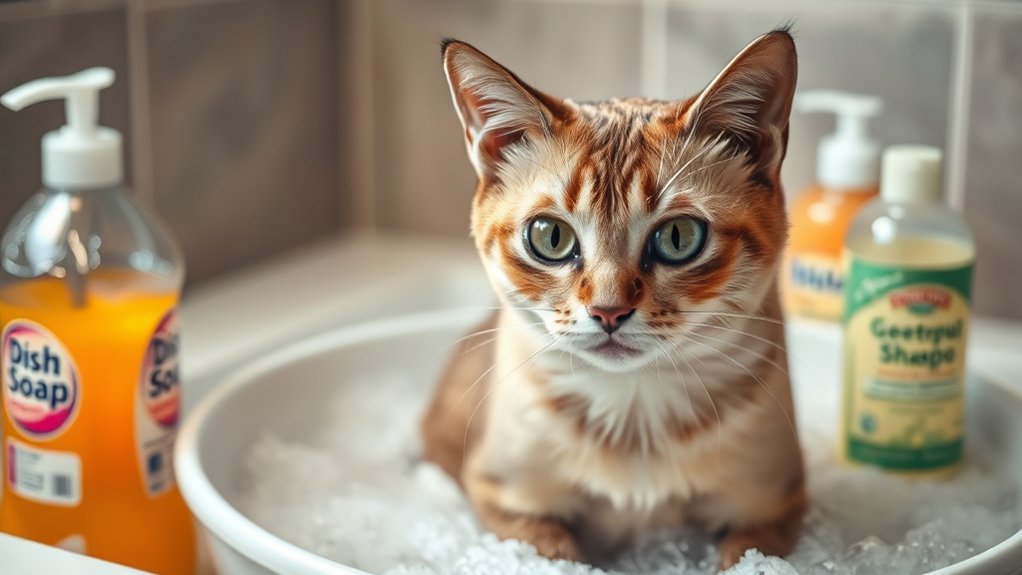
Although dish soap like Dawn might seem like a convenient option for washing your cat, it’s not designed for feline skin and can cause significant harm.
Dawn Dish Soap contains harsh chemicals, including surfactants and alcohol-based solvents, that strip essential natural oils from your cat’s skin. This leads to dryness, skin irritation, and disrupts the delicate lipid layers vital for your cat’s comfort and health.
On top of that, fragrances and dyes in dish soaps may introduce harmful substances your cat could ingest during grooming, increasing health risks.
Using Dawn Dish Soap regularly can worsen skin conditions and cause allergic reactions, especially in cats with sensitive skin.
So, for these reasons, it’s best to avoid dish soap and opt for products formulated specifically for cats.
It’s always better to choose something gentle and safe to keep your furry friend happy and healthy.
Risks of Using Dish Soap for Cat Baths
When you use dish soap to wash your cat, you run the risk of irritating their sensitive skin and stripping away the natural oils that protect them.
These oils are really important for keeping their coat healthy and shiny.
Plus, dish soap often contains harsh chemicals that can be toxic if your cat licks them off while grooming.
This could lead to some serious health problems.
Skin Irritation Risks
Because dish soap contains strong surfactants like Sodium Lauryl Sulfate, using it to wash your cat can strip away the natural oils that protect their skin. This causes dryness and irritation.
It messes with the skin’s lipid barrier, which often leads to itching and inflammation. This can be especially uncomfortable for cats with sensitive skin.
And if your cat is a kitten or an older adult, they’re even more vulnerable to these effects. Using dish soap frequently only makes things worse, potentially making any existing skin problems harder to deal with.
While dish soap might seem like a quick fix, it’s best to avoid it to protect your cat’s delicate skin.
Instead, choose gentle, cat-safe shampoos. They help prevent irritation and keep your furry friend comfortable and healthy.
Toxic Chemical Exposure
Beyond irritation, using dish soap to wash your cat introduces serious risks because of the toxic chemicals it contains.
Many dish soaps have ingredients like Sodium Lauryl Sulfate (SLS) and alcohol-based solvents, which are toxic to cats. These substances can cause irritation and dryness by messing with your cat’s delicate skin barrier.
When your cat licks its fur after a bath, it might ingest these harmful chemicals. That can lead to stomach upset or even more serious health problems.
Plus, fragrances and dyes in dish soaps can increase the chance of allergic reactions or skin irritation.
Cats have thinner, more sensitive skin than humans, so repeated exposure only makes things worse.
This means dish soap is definitely not a safe choice for bathing your cat. It’s really best to avoid products made for dishes and stick to ones designed for pets instead.
Your cat’s health will thank you for it!
Oil Stripping Effects
Although dish soap might seem like a convenient option for cleaning your cat, it contains harsh surfactants like Sodium Lauryl Sulfate that strip away the natural oils protecting your cat’s skin.
These essential oils act like a barrier, preventing irritation and shielding your cat from environmental factors, kind of like how oil spills affect wildlife by removing protective layers.
When you use dish soap, you risk drying out your cat’s skin, which can lead to flakiness, discomfort, and increased vulnerability to infections.
This oil stripping effect disrupts the lipid balance and can cause chronic skin issues.
Plus, harsh ingredients and fragrances in dish soap can make existing irritation worse.
For your cat’s health and comfort, it’s best to avoid dish soap and choose shampoos that are specially formulated to preserve those vital essential oils.
Key Harmful Ingredients in Dish Soap for Cats
When you consider using dish soap to wash your cat, it’s important to recognize that many common ingredients can harm their sensitive skin.
Dish soap often contains harsh surfactants like Sodium Lauryl Sulfate (SLS) and Sodium Laureth Sulfate (SLES). These ingredients strip natural oils and disrupt the lipid layers of your cat’s delicate skin, causing dryness, itching, and inflammation.
Harsh surfactants in dish soap strip oils and damage your cat’s sensitive skin, leading to dryness and irritation.
Also, alcohol-based solvents in dish soaps can make skin sensitivity and dryness even worse.
Fragrances and dyes are added for scent and appearance, but they introduce chemicals that your cat might ingest during grooming. This can pose toxicity risks.
All these ingredients together can lead to discomfort and skin problems for your feline friend.
Knowing about these harmful components helps you make safer choices for your cat’s hygiene and health.
When Is It Okay to Use Dish Soap on Your Cat?
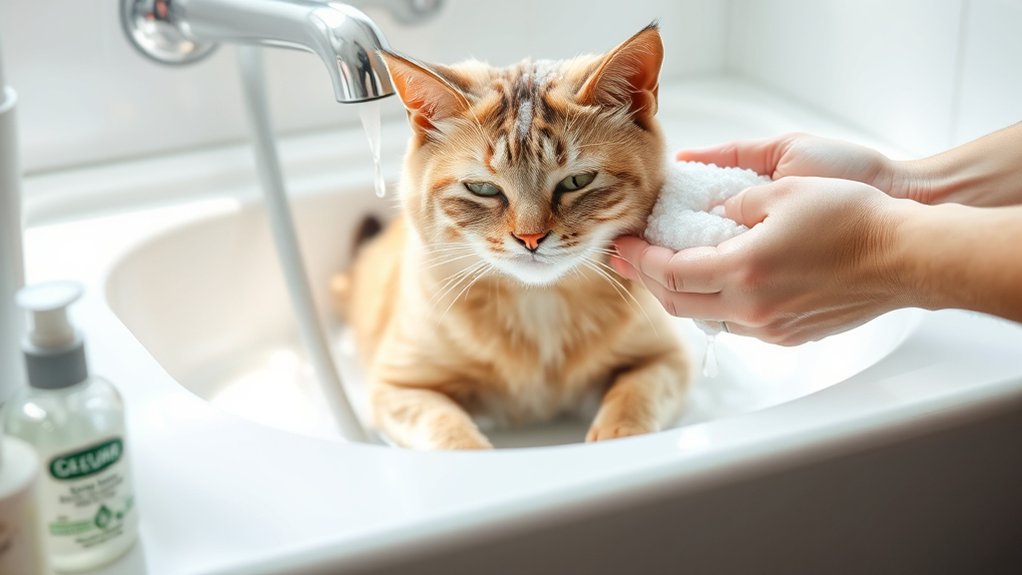
Understanding the potential risks of dish soap ingredients for your cat’s skin helps you recognize when its use might be justified. You should only consider dish soap in emergencies, such as removing fleas quickly or cleaning harmful oils or toxins from your cat’s coat.
In these cases, make sure to dilute the dish soap and rinse your cat thoroughly to minimize irritation.
Avoid using dish soap if your cat has existing skin conditions or sensitive skin, as it can worsen these issues. Dish soap strips essential natural oils, so it’s not suitable for routine cat care or regular bathing.
Always consult your veterinarian for safer, tailored cleaning options to protect your cat’s skin health and overall well-being.
Safer Alternatives to Dish Soap for Cleaning Your Cat
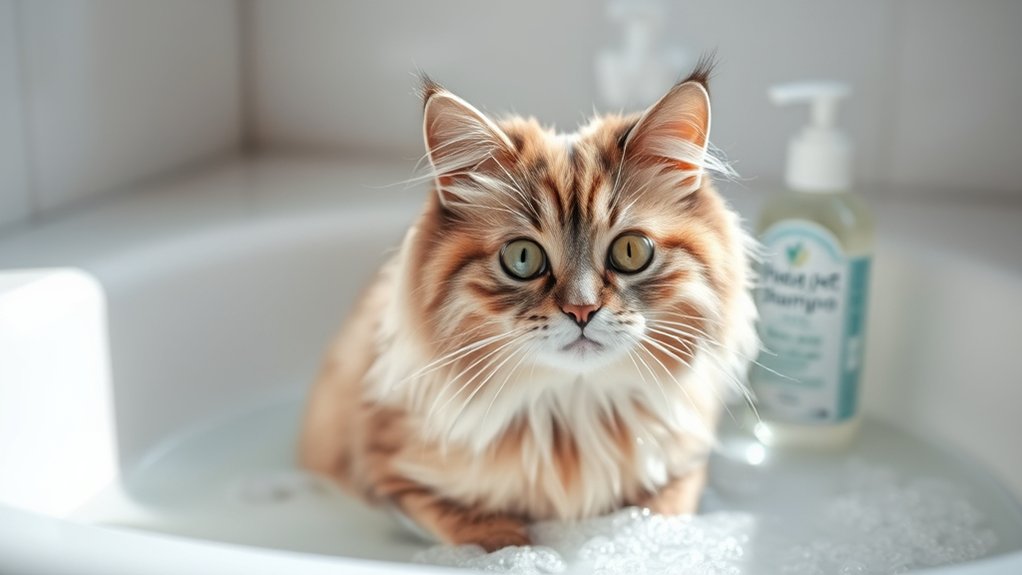
When it comes to cleaning your cat, using cat-specific shampoos is the way to go. They protect your kitty’s skin and coat while giving a gentle cleanse.
Plus, you don’t always have to give your cat a full bath. Spot cleaning can work wonders—just grab a damp microfiber cloth or some pet-safe grooming wipes to freshen them up without the fuss.
Regular grooming is super helpful, too. It keeps your cat healthy by removing dirt and spreading their natural oils around.
That means fewer baths and a lot less stress for both of you. So, with a little care and the right tools, keeping your cat clean can be easy and gentle!
Cat-Specific Shampoo Benefits
Although dish soap might seem like a convenient option, using cat-specific shampoos offers a much safer and more effective way to clean your feline friend.
A cat-specific shampoo is carefully formulated to protect your cat’s delicate skin by preserving natural oils that keep their coat healthy and moisturized.
Unlike harsh dish soap, these shampoos contain gentle ingredients designed to soothe irritation and prevent dryness.
They’re pH-balanced specifically for feline skin, which is very different from human skin, ensuring safety during baths.
Many formulas include beneficial additives like oatmeal or aloe vera, helping to relieve itching and promote a shiny coat.
Plus, cat-specific shampoos minimize the risk of harmful chemical ingestion since they’re safe if your cat licks their fur after washing.
Spot Cleaning Techniques
Since dish soap can be too harsh for your cat’s sensitive skin, it’s best to rely on gentler spot cleaning techniques to keep them fresh between baths.
Use a damp microfiber cloth to softly remove dirt or sticky spots without a full bath. Pet wipes designed for cats work well for spot cleaning areas like paws, tails, and faces, offering a quick, stress-free solution.
You can also try regular brushing to eliminate loose fur and dirt, maintaining your cat’s coat condition naturally.
For minor messes, diluted unscented baby shampoo may be used cautiously, but always rinse thoroughly. Remember to test any method on a small patch first.
Make grooming positive with treats and praise to keep your cat comfortable throughout the process.
This way, your cat will be more relaxed and cooperative during spot cleaning sessions. It’s all about making the experience as pleasant as possible for both of you.
Regular Grooming Importance
Because your cat’s skin is delicate, regular grooming plays an essential role in keeping their coat clean and healthy without resorting to harsh products like dish soap. Developing regular cat grooming habits helps remove dirt, loose fur, and dander while stimulating natural oils that enhance your cat’s coat shine.
Spot cleaning with damp cloths or pet wipes is a gentle alternative for minor messes. Using cat-specific shampoos when necessary preserves skin moisture and prevents irritation. Consistent grooming also allows you to spot any skin issues early, ensuring timely care.
| Grooming Method | Benefit | Frequency |
|---|---|---|
| Brushing | Reduces shedding, oils skin | Daily to weekly |
| Damp Cloth/Wipes | Spot cleaning | As needed |
| Cat Shampoo | Deep cleaning, gentle | Occasionally |
| Regular Inspection | Early skin problem detection | Weekly |
| Routine Establishment | Builds comfort, reduces stress | Ongoing |
How to Wash Your Cat Without Shampoo
If you want to clean your cat without using shampoo, you can rely on plain lukewarm water to effectively remove minor dirt and dust while preserving your cat’s natural oils.
Simply wet a soft cloth or sponge with lukewarm water and gently wipe your cat’s coat, focusing on soiled areas. This method helps keep your cat’s coat healthy without stripping essential oils.
Use a damp cloth with lukewarm water to gently clean soiled areas without removing natural oils.
For localized cleaning, unscented pet or baby wipes are a great alternative, especially for sticky spots like paws and face.
Regular brushing also plays an important role in maintaining a clean and healthy coat by distributing natural oils and removing dirt.
Tips to Protect Your Cat’s Skin After Dish Soap Use
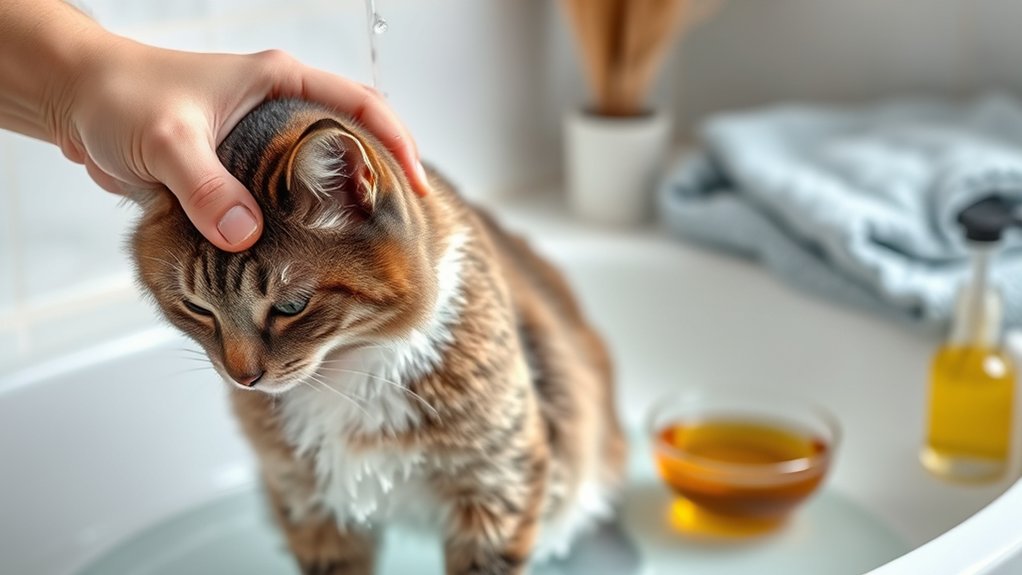
When you use dish soap to wash your cat, thoroughly rinsing their coat with lukewarm water is essential to remove any soap residue that might irritate the skin.
After rinsing, gently pat your cat dry using a damp cloth to avoid getting their skin too dry or irritated. Applying a cat-specific conditioner or moisturizing spray helps restore natural oils and keeps cat skin hydrated.
Keep an eye out for signs of dryness or irritation, like excessive scratching or flakiness. To support skin health internally, include omega fatty acids like fish oil in their diet.
Regular brushing also promotes healthy skin by removing loose fur and dander, reducing irritation risks.
These steps help protect your cat’s skin after dish soap use safely and effectively. Taking a little extra time with these care tips can make a big difference in keeping your furry friend comfortable and happy.
When to See a Vet About Dish Soap Skin Issues
Several warning signs indicate it’s time to see a vet after washing your cat with dish soap. If your cat has a skin reaction or you notice issues while trying to wash, don’t wait to get veterinary care.
Watch for excessive itching, redness, or inflammation. These could suggest an allergic reaction or irritation.
Also, keep an eye out for vomiting, diarrhea, or signs of gastrointestinal upset from ingesting soap residue. Persistent dryness, flakiness, or changes in behavior like lethargy or excessive grooming are red flags too.
If your cat has a skin sensitivity or pre-existing condition, be especially vigilant.
Getting prompt veterinary attention can prevent complications like secondary infections. It also helps guarantee your cat’s comfort and health after exposure to dish soap.
Frequently Asked Questions
Can Dish Soap Remove Fleas Effectively From Cats?
Yes, dish soap can remove fleas effectively from cats temporarily by breaking down their exoskeletons. However, you shouldn’t rely on it regularly.
For safe grooming practices, use vet-approved flea prevention methods and natural flea treatments to avoid skin irritation.
Always rinse your cat thoroughly after washing with dish soap to prevent residue buildup.
Combining gentle cleaning with long-term flea control helps keep your cat healthy and comfortable.
It’s a good idea to talk to your vet about the best flea control plan for your furry friend.
How Often Should I Bathe My Cat Regardless of the Soap Used?
You should bathe your cat every few months. Studies show that about 80% of cats keep themselves clean through regular self-grooming.
For the best skin health, try to keep bathing to a minimum unless your cat gets dirty or has skin problems. When it’s bath time, use lukewarm water and a gentle pet shampoo.
Avoid over-bathing because it can cause dryness. Always keep an eye on your cat’s skin condition, and if you’re unsure, check with your vet for personalized advice.
Is It Safe to Use Dish Soap on Kittens or Elderly Cats?
You shouldn’t use dish soap on kittens or elderly cats because kitten skin is very delicate, and elderly sensitivities make their skin prone to irritation.
Dish soap can strip natural oils, causing dryness or infections.
Instead, opt for soap alternatives like cat-specific shampoos or just warm water to keep them clean safely.
These options respect their sensitive skin and help you avoid unnecessary discomfort or health issues during bath time.
What Should I Do if My Cat Ingests Dish Soap Accidentally?
Imagine your cat as a ship caught in a sudden storm. The dish soap ingestion is the unexpected tempest.
If your cat swallows dish soap, watch carefully for symptoms like vomiting or lethargy.
Provide immediate care by removing any soap residue. Then contact your vet for professional advice. Don’t induce vomiting unless your vet says so.
Stay vigilant. Timely veterinary advice guarantees your cat safely navigates through this rough patch.
Can Dish Soap Cause Allergic Reactions in Cats?
Yes, dish soap can cause allergic reactions in cats. The soap ingredients, like sodium lauryl sulfate, may irritate your cat’s skin and trigger allergic symptoms such as redness, itching, and swelling.
If your cat shows any unusual behavior or skin changes after exposure, it’s essential to act quickly.
Monitoring your cat’s skin health helps prevent serious issues. So, avoid using harsh soaps and opt for safer alternatives designed specifically for cats.
Conclusion
While it might seem convenient, using dish soap to wash your cat isn’t ideal. About 70% of cats experience skin irritation from harsh soaps. You want to avoid these risks by choosing safer, pet-specific shampoos or gentle alternatives.
If you ever do use dish soap, watch for signs of discomfort and protect your cat’s skin afterward. Remember, your furry friend’s health is worth the extra care. When in doubt, consulting your vet is always the best move.