Can Cats Eat Fries – Health Risks Explained
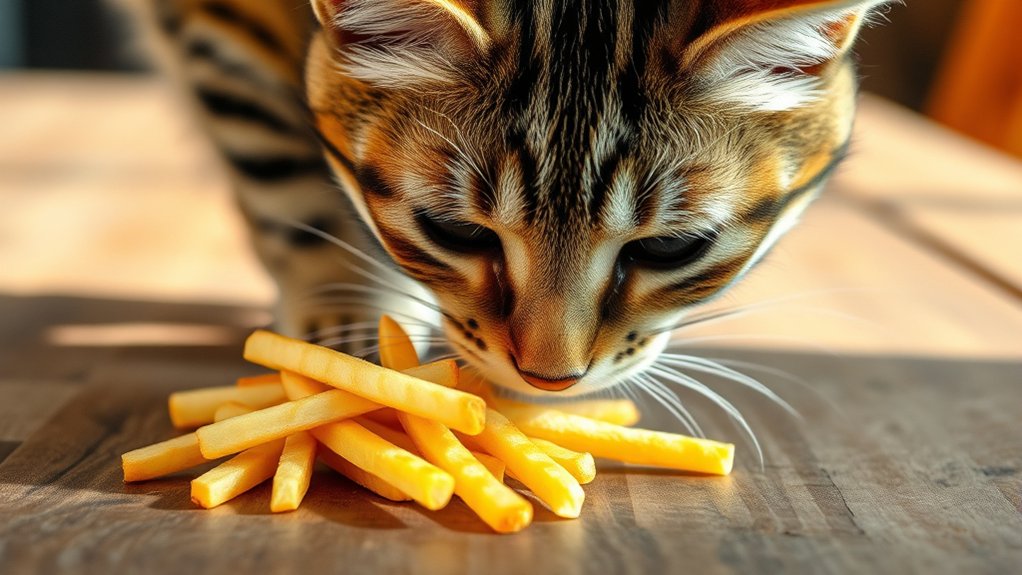
You shouldn’t feed your cat fries because they’re high in fat, salt, and unhealthy seasonings like garlic or onion that can cause serious health problems. Fries lack essential nutrients cats need and can lead to digestive upset, dehydration, pancreatitis, and long-term issues like obesity and kidney strain. Even occasional treats may cause harm, so it’s best to avoid them.
If you want to understand the full risks and safer alternatives, keep exploring this topic.
Why You Shouldn’t Feed Your Cat French Fries
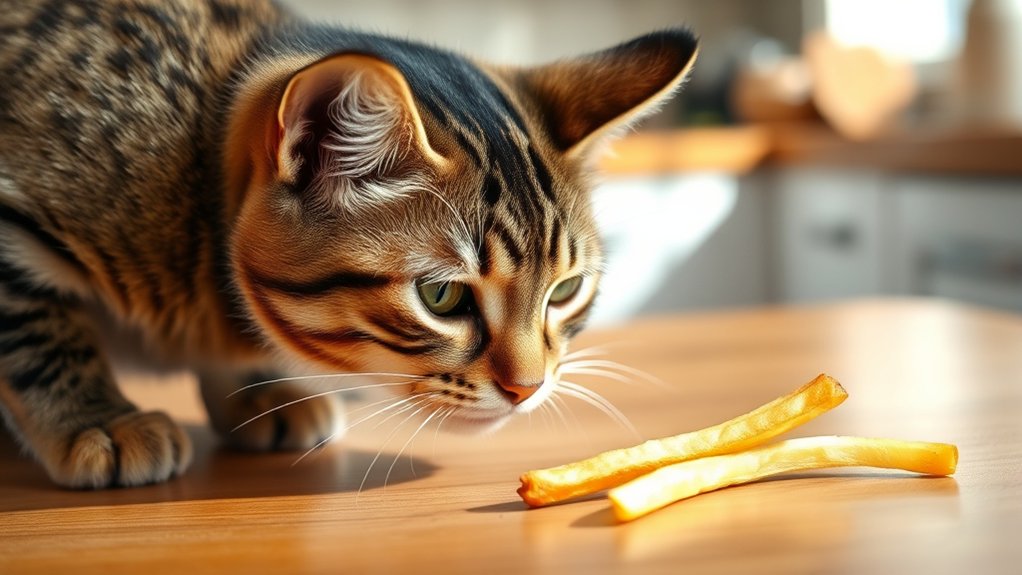
Although it might be tempting to share your snack, you shouldn’t feed your cat French fries because of their high fat and salt content. These can lead to serious health issues like obesity and pancreatitis.
French fries don’t offer much nutritional value for cats, who really need a protein-rich diet to thrive. The high fat and salt can cause salt poisoning and long-term health problems. Even small amounts might upset your cat’s stomach, causing vomiting and diarrhea since cats struggle to digest carbohydrates effectively.
Plus, many fries have seasonings like garlic and onion, which are toxic to cats and can cause severe complications.
What Makes French Fries Harmful to Cats
When you consider feeding your cat French fries, it’s important to understand what makes them harmful. French fries contain high salt levels that can cause dehydration and serious health issues like kidney strain and hypertension.
Their greasy nature increases the risk of pancreatitis, which is a painful inflammation of the pancreas.
Greasy foods like French fries can trigger pancreatitis, causing painful inflammation in your cat’s pancreas.
Plus, many fries are seasoned with toxic additives such as garlic and onion powder. These can be dangerous even in small amounts.
The high fat and carbohydrate content may also lead to gastrointestinal problems, including vomiting and diarrhea, since cats struggle to digest plant-based foods.
Regular consumption of French fries exposes your cat to empty calories. This increases the risk of obesity and related health problems like diabetes and heart disease.
How French Fries Affect Cats’ Digestion
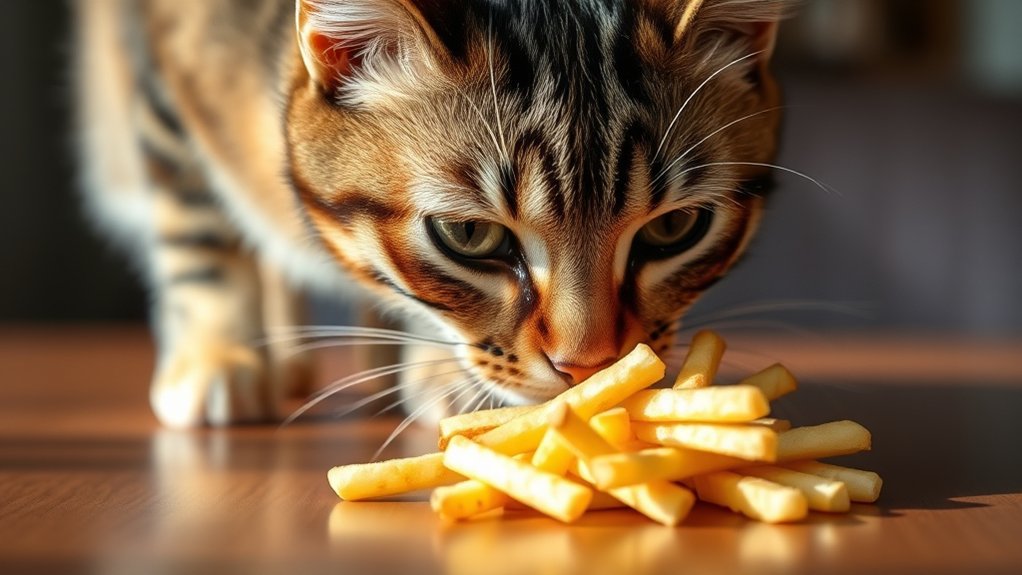
Since cats are obligate carnivores, their digestive systems aren’t equipped to process the high carbohydrate and greasy content found in French fries. Feeding cats French fries can disrupt their digestion, leading to gastrointestinal issues like vomiting and diarrhea.
The high-fat content strains their pancreas, increasing health risks such as pancreatitis. Even small amounts of fries can cause digestive upset because cats can’t break down these foods efficiently.
| Factor | Effect on Cats’ Digestion |
|---|---|
| High Carbohydrates | Difficult to digest, causes upset |
| Greasy Texture | Leads to gastrointestinal stress |
| High-Fat Content | Risks pancreatitis |
| Salt Content | Causes dehydration, imbalance |
| Frequent Intake | Long-term digestive complications |
The Dangers of Salt and Seasonings in Fries for Cats
Because French fries often contain high levels of salt and seasonings, feeding them to your cat can pose serious health risks. The salt content in fries can easily exceed your cat’s safe daily limit, leading to dehydration and kidney strain. You might notice symptoms like vomiting or excessive thirst if your cat ingests too much salt.
Also, fries frequently include garlic powder and onion powder, both toxic to cats. These seasonings can cause gastrointestinal distress and, in severe cases, damage red blood cells.
Garlic and onion powders in fries are toxic to cats, causing digestive issues and potential red blood cell damage.
Over time, regular exposure to high salt levels may contribute to heart disease and other health complications.
To protect your cat’s health, it’s best to avoid giving fries or any salty, seasoned human foods. That way, you can make sure their diet stays safe and balanced.
Can Eating Fries Occasionally Cause Long-Term Health Issues?
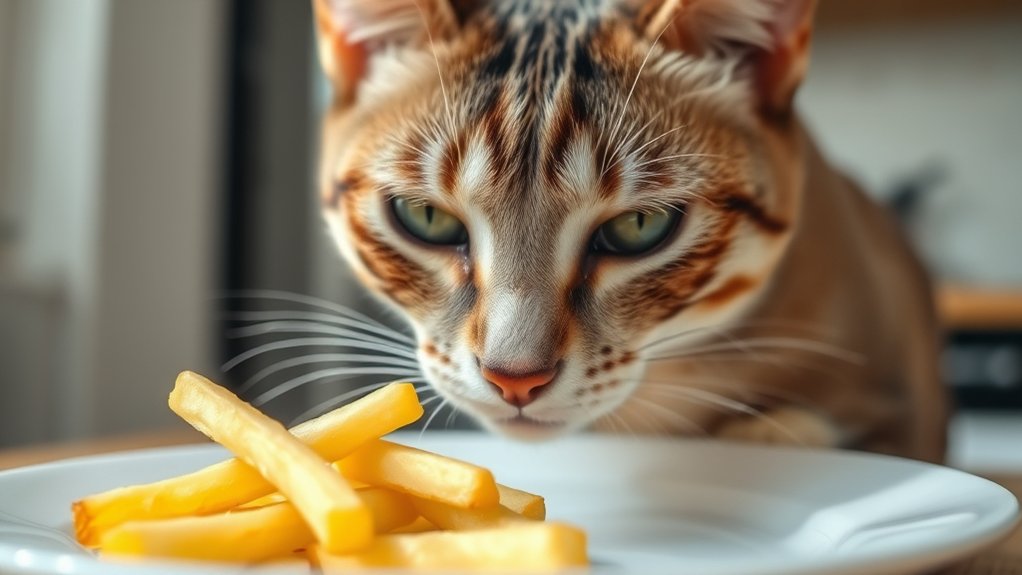
Beyond the immediate risks of salt and toxic seasonings, even occasional consumption of fries can affect your cat’s long-term health. When cats eat fries, the high fat and carbohydrate content may cause gastrointestinal distress, including vomiting and diarrhea.
Over time, repeated exposure to unhealthy foods like fries can contribute to obesity, which increases the risk of diabetes, arthritis, and heart disease. High sodium levels also pose serious health risks, potentially leading to dehydration and kidney strain.
Furthermore, cats lack enzymes to digest starches properly, which can disrupt digestive health and nutrient absorption.
| Health Risk | Potential Impact |
|---|---|
| Gastrointestinal distress | Vomiting, diarrhea |
| Obesity | Diabetes, arthritis, heart disease |
| High sodium levels | Dehydration, kidney strain |
| Toxic seasonings | Long-term toxicity |
| Poor digestive health | Nutrient absorption disruption |
What to Do If Your Cat Eats French Fries
If your cat happens to eat French fries, the first thing you should do is check the ingredients. Look out for anything harmful like garlic or onion, which can be toxic to cats.
Next, make sure your cat has plenty of fresh water to drink right away. This helps flush out any potential toxins from their system.
Keep a close eye on your furry friend after that. Watch for any signs like vomiting or diarrhea, which could mean they’re not feeling well.
If you see anything unusual or concerning, don’t hesitate to get in touch with your veterinarian. They can offer advice and suggest the best course of action to keep your cat safe and healthy.
Immediate Actions
Act quickly to assess the situation when your cat eats French fries. First, check the fries for any toxic ingredients like garlic or onion powder that could harm your cat.
Offer fresh water immediately to encourage hydration, which helps flush out potential toxins from their system.
While hydration is essential, you must closely monitor your cat for signs of distress such as vomiting, diarrhea, or excessive thirst for the next 24 to 48 hours.
If you notice any of these symptoms, contact your veterinarian promptly. They may recommend treatments like fluid therapy or blood tests to guarantee your cat’s safety.
To prevent future incidents, keep French fries out of reach and reinforce training to avoid unhealthy foods.
It’s better to be safe than sorry when it comes to your furry friend’s health!
Monitoring Symptoms
How should you monitor your cat after it eats French fries? Start by carefully watching for symptoms like vomiting, diarrhea, or excessive thirst. These can indicate digestive upset or salt poisoning.
Make sure your cat always has access to fresh water. This helps keep them hydrated and can flush out potential toxins.
Keep an eye out for lethargy or any unusual behavior changes. These might signal health issues caused by the fries’ unhealthy ingredients.
It’s a good idea to keep a detailed log of your cat’s eating habits and any symptoms you notice.
If your cat shows severe symptoms or if the fries had toxic seasonings like garlic or onion, call your vet right away.
Getting prompt attention and sharing accurate info will help your vet diagnose and treat your cat quickly. That way, you can minimize any risks and keep your furry friend safe.
When to Contact a Veterinarian After Fries Consumption
When should you contact a veterinarian after your cat eats French fries? If your cat shows signs of an upset stomach, like vomiting or diarrhea, contact a veterinarian immediately. These symptoms can mean gastrointestinal distress, which is a common health risk when cats eat French fries.
Contact a vet immediately if your cat vomits or has diarrhea after eating French fries.
Keep a close eye on your cat for at least 24 hours. Watch for any worsening symptoms or unusual behavior. Be extra careful if you notice signs of salt poisoning, such as lethargy, tremors, or seizures, because those need urgent care.
If your cat drinks a lot of water, has dry gums, or urinates more than usual, these could be signs of dehydration. In that case, you should get veterinary advice quickly.
Always tell your vet how much your cat ate and if the fries had any seasonings, since additives might need special treatment. Acting quickly helps keep your cat safe and healthy.
How to Train Your Cat to Avoid French Fries
You can train your cat to avoid French fries by setting clear boundaries.
Just be consistent about it and gently redirect them to healthier options instead.
Try using positive reinforcement—like giving your cat their favorite treats whenever they steer clear of those unhealthy snacks.
It really helps them learn what’s okay to eat.
Also, make sure everyone in your household is on the same page with this.
That way, you’ll keep your cat safe and healthy without any mixed signals.
Establish Clear Boundaries
Setting clear boundaries is essential to prevent your cat from consuming French fries, which can be harmful. To establish clear boundaries, consistently monitor access to harmful foods like fries, ensuring they remain out of your cat’s reach.
Make sure everyone in your household knows about your cat’s dietary restrictions to keep things consistent.
Create an environment that minimizes temptation by storing French fries and similar snacks securely.
Redirect your cat’s attention toward healthy alternatives such as cat-friendly treats or engaging toys.
While positive reinforcement plays a role in training, your main focus should be on controlling access and shaping the environment to reduce risks.
By combining these strategies, you can effectively protect your cat from unhealthy foods and promote safer eating habits.
It’s all about keeping your furry friend safe and healthy!
Use Positive Reinforcement
Establishing clear boundaries lays the groundwork for training your cat to avoid French fries.
But reinforcing this behavior effectively requires positive reinforcement techniques. Using cat treats specifically designed for felines encourages your cat to associate ignoring fries with rewards.
You can also incorporate clicker training to link a distinct sound with positive behavior, which helps strengthen the message.
Consistently redirecting attention whenever your cat approaches fries keeps those boundaries in place.
To effectively use positive reinforcement, you should:
- Use cat treats during short, engaging training sessions
- Implement clicker training for consistent cues
- Redirect attention to safe options whenever fries appear
- Monitor progress and adapt techniques based on your cat’s response
Applying these health tips and insights will help you train your cat to avoid French fries safely while making sure the learning experience stays positive and fun.
Provide Healthy Alternatives
Although French fries may seem harmless, providing your cat with healthy alternatives plays an essential role in steering them away from these unhealthy snacks. You can offer a variety of cat-friendly treats made from high-quality ingredients, such as freeze-dried meats or commercial options designed for a feline-appropriate diet.
Use positive reinforcement during training sessions by rewarding your cat when they ignore French fries. This helps them associate good behavior with desirable rewards.
Consistently keep French fries out of reach to prevent accidental consumption, and redirect your cat’s attention to approved treats when needed.
Finally, make sure to educate family members and visitors about these healthy alternatives and the risks of feeding French fries. That way, everyone supports your efforts to keep your cat healthy.
Healthy Treat Alternatives to French Fries for Cats
When you want to treat your cat without risking their health, choosing nutritious alternatives to French fries is essential. Providing healthy treat alternatives supports your cat’s diet while avoiding harmful additives and excessive fats.
Consider these options:
Lean meats like cooked chicken, turkey, or fish offer high protein and essential amino acids. Freeze-dried treats made from meat or fish deliver concentrated flavor and nutrition without unhealthy extras.
Small portions of vegetables such as steamed carrots or green beans add fiber and vitamins but should complement, not replace, meat.
Vet-approved commercial cat treats guarantee your pet receives appropriate nutrition in a tasty form.
Tips for Maintaining a Balanced Diet for Your Cat
Choosing healthy treat alternatives is just one part of supporting your cat’s overall nutrition. To maintain a balanced diet, focus on high-quality animal proteins like chicken and fish. These fulfill your cat’s obligate carnivore nutritional needs.
Treats should make up no more than 10% of their daily calories. Cat-safe fruits and vegetables can provide extra vitamins, too. Regular veterinary check-ups help tailor your cat’s diet and catch any issues early.
Always select commercially prepared cat food that meets AAFCO standards. This guarantees complete nutrition without risks.
| Component | Examples | Purpose |
|---|---|---|
| High-quality proteins | Chicken, fish | Primary nutrition source |
| Treats | Freeze-dried meat | Occasional rewards |
| Cat-safe fruits/veggies | Cucumbers, carrots | Vitamin supplementation |
Maintaining this balance safeguards your cat’s health effectively.
Frequently Asked Questions
Can Fries Cause Allergies in Cats?
Yes, fries can cause allergies in cats, mainly due to fry ingredients like garlic or onion.
You might notice allergy symptoms such as itching or vomiting after your cat eats fries. Digestive issues could also arise from high carb content.
Considering cat preferences, it’s best to avoid fries or offer fry alternatives in small portion sizes.
Be cautious of long-term effects and always consult a vet if symptoms persist.
Are Sweet Potato Fries Safer for Cats Than Regular Fries?
Back in the days of quills and ink, you’d want to know, yes, sweet potato fries are safer for cats than regular fries. Their sweet potato benefits include vitamins A and C, unlike regular fries’ harmful solanine.
However, frying methods and portion sizes matter. Always serve plain, without oils or seasonings.
Consider alternative snacks aligned with feline preferences, and consult your vet. Proper preparation tips guarantee a cautious, nutritional comparison for your furry friend.
Can Fries Affect a Cat’s Weight or Obesity Risk?
Yes, fries can negatively impact your cat’s weight and increase obesity risk. Fries are high in calories and fat, which can disrupt proper cat nutrition and make weight management challenging.
Feeding fries regularly raises calorie intake and upsets a balanced feline diet.
To support obesity prevention, stick to healthy treats and practice strict portion control. Avoid fries to help your cat maintain a healthy weight and overall well-being.
It’s really best to keep fries out of your cat’s diet for their health.
How Do Fries Impact Kittens Versus Adult Cats?
Think of fries as a storm your kitten’s delicate digestion isn’t ready to weather.
Unlike adult metabolism, kittens struggle with frying oils and high sodium, which can disrupt their nutritional needs and stunt growth.
While adults might handle small portion sizes occasionally, kittens’ food preferences should lean toward protein-rich diets.
You should avoid fries for kittens entirely because their developing systems aren’t equipped to process these unhealthy treats safely.
Do Fries Interact With Common Medications for Cats?
Yes, fries can cause medication interactions in cats, especially those with gastrointestinal issues or on heart and blood pressure meds.
The high sodium content and toxic ingredients like garlic or onion seasonings may worsen digestive health and lead to behavioral changes.
Long term effects include weight gain and reduced medication efficacy.
You should always consult your vet before giving fries to a cat on medication to avoid these risks and guarantee proper treatment.
Conclusion
When it comes to your cat’s health, remember that “an ounce of prevention is worth a pound of cure.” French fries might seem like a harmless treat, but their salt, seasonings, and oils can actually harm your feline friend.
So, it’s best to avoid feeding fries and instead focus on healthy alternatives to keep your cat’s diet balanced. If you notice any issues after your cat eats fries, don’t hesitate to contact your veterinarian right away.
Your careful choices really help protect your cat’s well-being. It’s all about keeping them safe and healthy in the long run.