How Much Are Bengal Cats – Price Breakdown
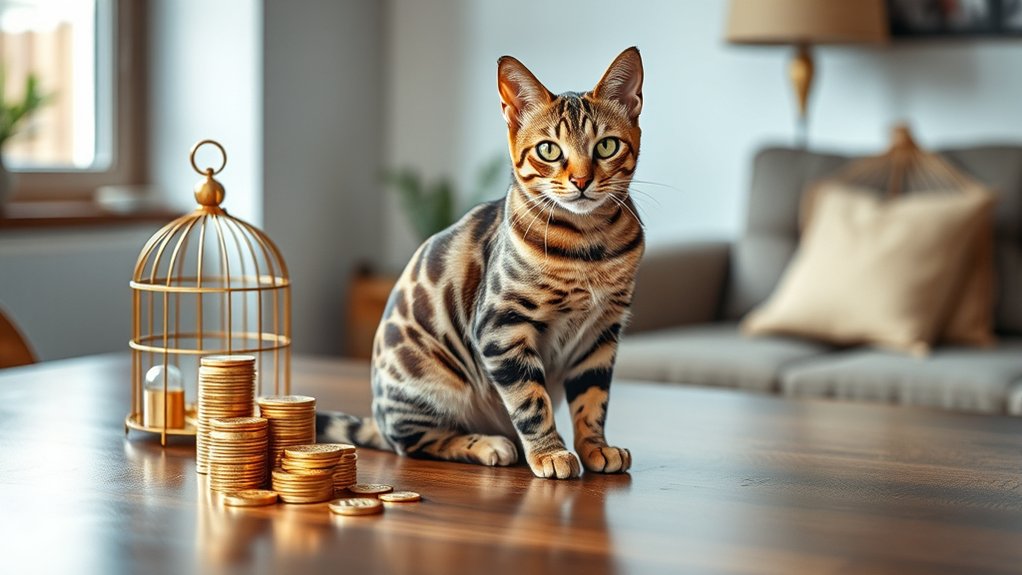
Bengal cat prices typically range from $1,000 for lower pedigree pets to $3,000 for pet-quality kittens, with show-quality Bengals costing between $3,000 and $5,000. Breeding-quality Bengals with superior lineage and rare traits can reach $10,000 or more. Prices depend on factors like generation, color, and breeder reputation.
Keep in mind, additional expenses like vet care and food add to the total cost. Exploring these details can help you make an informed choice. It’s always a good idea to consider the full picture before deciding on a Bengal cat.
How Much Do Bengal Cats Cost in 2025?
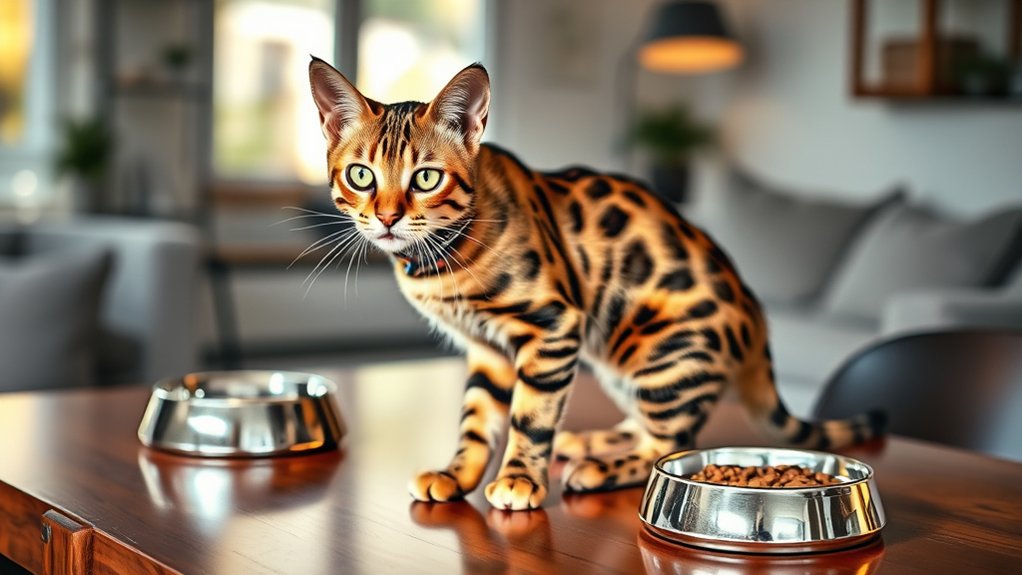
How much will you need to invest if you want a Bengal cat in 2025? The price of a Bengal varies widely, primarily depending on breeder quality and the kitten’s traits. A Bengal kitten typically costs between $1,500 and $3,000 for pet-quality animals.
Expect to invest $1,500 to $3,000 for a pet-quality Bengal kitten in 2025.
Ethical breeders who prioritize health testing and animal welfare often set prices in this range. Show-quality kittens command higher prices, usually from $3,000 to $5,000, reflecting superior breed standards.
Breeding-quality Bengals, especially those from champion bloodlines, can start at $4,000 and reach up to $10,000. These figures highlight the importance of breeder quality in determining costs.
Keep in mind, the initial price is just part of the total investment you’ll make when welcoming a Bengal into your home. So, be prepared for the ongoing expenses that come with caring for your new feline friend.
Bengal Cat Price Ranges by Quality
When you’re looking into Bengal cat prices, you’ll see there are pretty clear ranges depending on their quality.
Pet-quality Bengals usually go for around $1,500 to $3,000.
Now, if you’re thinking about show-quality cats, those tend to be a bit pricier, somewhere between $3,000 and $5,000 because they’ve those standout traits judges look for.
And then, there are breeding-quality Bengals, which are the most expensive of the bunch.
These can run anywhere from $4,000 to $10,000 since they come with exceptional pedigree and genetics.
Pet Quality Pricing
Pet-quality Bengal kittens usually cost between $1,500 and $3,000. This price reflects the breeder’s commitment to health, socialization, and ethical practices. Prices may start as low as $1,000, but such Bengals often come with lower pedigree or potential health risks.
When considering pet-quality pricing, factors like the kitten’s generation, specific color and pattern demand, and overall traits play significant roles. Higher-quality Bengal kittens with better health guarantees and thorough socialization typically fall between $1,500 and $2,000.
Responsible breeders invest in health testing and proper care to make sure you get a healthy, well-adjusted kitten. Understanding these factors helps you make an informed decision when selecting your Bengal kitten.
It’s all about balancing cost with quality and long-term wellbeing.
Show Quality Costs
Several factors influence the cost of show-quality Bengal kittens, which typically range from $3,000 to $5,000 due to their superior adherence to breed standards and exceptional appearance.
Show-quality Bengals are carefully evaluated around four weeks old to assess traits like coat pattern, color, and overall conformation.
Variations such as brown spotted or mink spotted coats can affect the Bengal cat price, with rarer patterns sometimes commanding higher fees.
Genetic testing also plays a key role in determining price, ensuring healthy lineage and reducing inherited health risks.
Demand for specific bloodlines or champion ancestry further impacts costs.
If you’re aiming for a cat that excels in competitions, expect to invest more in show quality Bengals compared to pet-quality cats.
This reflects their exceptional breeding and potential.
Breeder Quality Value
Understanding the price differences among Bengal cats requires examining the quality categories breeders use. Breeder quality value depends on factors like breeding standards, breeder rights, and genetic health testing.
Pet-quality Bengals cost $1,500 to $3,000 and are suitable for companions with basic health screening. Show-quality Bengals range from $3,000 to $5,000, reflecting strict adherence to breed standards and competition potential. Breeding-quality Bengals, priced between $4,000 and $10,000, hold superior lineage and coat patterns, making them ideal for responsible breeding programs.
| Quality | Price Range | Key Features |
|---|---|---|
| Pet-Quality | $1,500–$3,000 | Basic health screening, pet use |
| Show-Quality | $3,000–$5,000 | Breed standards, show potential |
| Breeding-Quality | $4,000–$10,000 | Superior lineage, genetic health |
Choosing a breeder committed to ethical breeding guarantees transparency in breeder rights and genetic health. It’s always best to work with someone who values honesty and the well-being of their cats.
How Do Kitten Traits Affect Bengal Cat Prices?
When you’re thinking about Bengal cat prices, generation and lineage really matter.
For example, SBT Bengals usually cost more because they tend to be healthier and have great temperaments.
Then, there are specific color and pattern variations that can bump up the price even more.
Think about snow minx or charcoal spotted Bengals—those are pretty rare and super appealing to many buyers.
Generation And Lineage
Because the generation and lineage of a Bengal cat directly impact its traits, they play an essential role in determining its price. When you’re looking at Bengals, understanding their generation, such as SBT (Stud Book Tradition), and lineage helps you gauge quality and value.
SBT Bengals usually cost more due to their purebred status. Plus, champion bloodlines and rare traits can push prices above $3,000. Quality breeding practices, including genetic testing for health issues like HCM and PRA, also raise costs by ensuring healthier kittens.
Keep these factors in mind:
- SBT generation signifies pedigree purity
- Champion lineage adds prestige and price
- Genetic testing reflects breeder quality
- Health assurances increase value
- Unique traits from lineage influence market demand
All these things together directly affect the price you’ll pay for a Bengal kitten.
Color And Pattern Variations
Beyond lineage and generation, the color and pattern variations of a Bengal cat greatly influence its price. Bengal cats with classic brown (black) spotted coats typically start around $2,700, while rarer colors like charcoal spotted can exceed $3,500.
Unique markings, such as seal lynx spotted or mink spotted, usually command higher prices, beginning at $2,500 and $3,000 respectively. These variations reflect the kitten’s rarity and appeal, which directly impacts the price.
Plus, show-quality Bengals with exceptional color and pattern traits can range anywhere between $3,000 and $5,000. Kittens with champion bloodlines or extraordinary coat features might even fetch prices from $4,000 up to $10,000.
Why Do Caring Breeders Charge More for Bengals?
Although Bengals might seem costly at first glance, caring breeders justify higher prices through rigorous health testing for conditions like HCM, PRA, and PK-def. This ensures you receive a kitten with better overall health.
A reputable Bengal breeder invests in HCM screening and genetic tests to protect the quality of the kitten you bring home.
Beyond health, the costs reflect ethical breeding practices, including proper nutrition and veterinary care. You also gain peace of mind with guarantees against congenital defects.
The meticulous breeding process focuses on temperament, appearance, and breed standards, emphasizing quality over quantity.
Factors influencing price include:
- Extensive health screenings
- Ethical care and housing
- Guarantees on health and genetics
- Selection for temperament and appearance
- Demand for champion bloodlines
Where Can You Find Bengal Cats for Sale Safely?
Where should you look if you want to find Bengal cats for sale safely? Start by seeking reputable breeders who prioritize health testing and ethical breeding practices.
Using a Bengal Breeder Directory helps you locate trusted breeders in your area, avoiding risky classifieds like Craigslist or eBay.
When adopting a Bengal, verify the kitten’s legitimacy through video calls and request health guarantees and after-sales support. These measures guarantee you’re dealing with responsible breeders rather than scams or backyard operations.
Be cautious of prices considerably below $1,500, as they often indicate unethical breeding.
How Do You Spot Bengal Cat Scams and Avoid Backyard Breeders?
How can you tell if a Bengal cat offer is a scam or comes from a backyard breeder?
Bengal owners must be vigilant since prices under $1,000 often signal scams or irresponsible breeding practices. Backyard breeders usually neglect health screenings, housing, and nutrition, risking kittens’ well-being.
To protect yourself, watch for these signs:
- Unusually low prices that seem too good to be true
- Lack of transparent health records or vaccination proof
- Refusal to provide video calls or visits showing living conditions
- No clear information about breeding cats’ lineage or health testing
- Poor reviews or absence of testimonials from previous buyers
Additional Costs After Buying a Bengal Kitten
After you bring your Bengal kitten home, keep in mind there might be some extra costs for transportation or delivery. These fees can change depending on how far you’re and the method used.
Then, there are veterinary expenses to think about too. You’ll need to cover initial vaccinations, spaying or neutering, and routine check-ups, all of which add up over time.
And don’t forget about good-quality food. Feeding your Bengal well is important, and you can usually expect to spend between $40 and $80 each month on their nutrition.
Transportation And Delivery
Several transportation and delivery options are available when bringing your Bengal kitten home, each with associated costs you should consider. Transportation costs vary widely depending on the method and distance involved. Delivery services from breeders can be convenient but come at a price.
You might also want to pick up your kitten yourself, which adds travel expenses. Here are key factors affecting transportation and delivery costs:
- Ground transportation ranges from $300 to $800, based on distance.
- Air cargo shipping costs $400 to $1,200, including crates and health certificates.
- Flight nanny services for air travel run between $500 and $1,500.
- Breeder delivery fees typically fall between $200 and $500.
- Personal travel expenses if you choose to pick up the kitten yourself.
Weigh these costs carefully to plan your Bengal kitten’s safe and smooth arrival. It’s all about making the best choice for you and your new furry friend.
Veterinary And Nutrition
While bringing your Bengal kitten home marks an exciting milestone, you’ll need to budget for ongoing veterinary care and nutrition to keep your cat healthy. Initial vaccinations and wellness checks typically cost $150 to $300, setting a strong foundation for your kitten’s health.
Spaying or neutering runs between $200 and $500, an essential step for responsible ownership. Annual veterinary visits and preventative care may add another $200 to $500 to your yearly expenses.
Moreover, monthly cat food costs range from $40 to $80, depending on the quality of premium cat food you select.
Optional pet insurance, costing around $30 to $70 monthly, can help manage unexpected veterinary expenses. Factoring these costs guarantees you provide the best care for your Bengal kitten.
Can Adopting or Rescuing a Bengal Cat Save Money?
How much can you really save by adopting or rescuing a Bengal cat instead of buying one from a breeder? Adopting through rescue organizations often costs between $100 and $1,000, compared to breeder prices of $1,500 to $3,000.
Rescue groups usually provide vaccinated and spayed/neutered Bengals, which can save you some initial vet bills.
Here’s what adopting a Bengal cat offers:
- Lower upfront costs than breeders
- Potential to save a cat needing a home
- Vaccinations and spay/neuter included
- Older Bengals available at reduced prices
- The joy of giving a second chance
Keep in mind, ongoing care expenses, around $1,000 annually, remain regardless of adoption price.
But adopting lets you save upfront while providing a loving home for a Bengal in need. It’s a win-win!
How Do Bengal Cat Patterns and Colors Influence Price?
The coat patterns and colors of Bengal cats play a crucial role in determining their price, reflecting both rarity and demand.
Bengal cat prices start around $2,700 for common brown spotted Bengals, but rarer colors like charcoal spotted can fetch $3,500 or more. Unique markings such as seal lynx spotted or mink spotted increase value, with prices ranging from $2,500 to $3,000.
Show-quality Bengals, which exhibit breed-standard patterns and colors, command higher prices, typically between $3,000 and $5,000.
Breeding-quality Bengals with exceptional traits and champion lineage can start at $4,000 and rise to $10,000.
So, you see, these price differences really highlight how specific coat patterns and colors directly impact Bengal cat prices.
Making unique markings and rare coloration key factors in their market value.
What Payment and Deposit Options Do Bengal Cat Breeders Offer?
When planning to purchase a Bengal cat, you might wonder what payment and deposit options breeders typically offer.
Bengal cat breeders usually require a non-refundable reservation deposit of $800, which is deducted from the total price. If you want breeding rights, expect to pay a higher deposit, around $1,000.
The remaining balance is due two weeks before the kitten’s departure. Payment methods vary but often include PayPal, major credit cards (with a 4% fee), and international bank transfers (with a $30 fee).
Here’s what to expect:
- Non-refundable, non-transferable deposits guarantee commitment
- $800 standard deposit; $1,000 for breeding rights
- Balance due two weeks before kitten leaves
- PayPal and credit cards accepted (fees apply)
- International transfers possible with extra fee
Understanding these deposit options helps you plan your Bengal cat purchase confidently.
It’s always good to know what to expect upfront!
Frequently Asked Questions
What Is the Average Lifespan of a Bengal Cat?
You can expect a Bengal cat’s average lifespan to be around 12 to 16 years, thanks to their robust Bengal cat traits inherited from wild Asian leopard cats.
Their active Bengal cat behavior keeps them healthy, but you’ll need to watch for genetic issues like Hypertrophic Cardiomyopathy.
Knowing Bengal cat history helps you understand their unique needs.
With proper care, including regular vet visits and mental stimulation, your Bengal can live a long, vibrant life.
How Much Does Bengal Cat Grooming Cost Annually?
Wondering how much Bengal cat grooming costs annually? You’ll spend around $200 to $600, depending on whether you hire professional groomers or handle coat maintenance yourself.
Investing in quality grooming tools like brushes and nail clippers, which cost $30 to $100 initially, can reduce long-term expenses.
Weekly brushing keeps their short fur healthy, while occasional baths and routine nail trims or ear cleaning add to the yearly grooming budget.
Taking care of your Bengal’s grooming needs regularly not only saves money but also keeps your feline friend happy and looking great!
Are Bengal Cats Hypoallergenic Compared to Other Breeds?
Bengal cats aren’t completely hypoallergenic, but they do produce fewer allergens than many breeds, which can help with Bengal cat allergies. Their unique grooming behaviors, like less frequent licking, reduce allergen spread.
Don’t fall for Bengal cat myths claiming they’re allergy-free; individual reactions vary. If you have allergies, spend time with a Bengal to see how you react before adopting.
This helps guarantee a comfortable match for you.
What Health Issues Are Common in Bengal Cats?
Think of your Bengal cat genetics like a complex map with hidden traps. Common health issues include Hypertrophic Cardiomyopathy, a heart condition, Progressive Retinal Atrophy causing vision loss, and Pyruvate Kinase Deficiency affecting red blood cells.
Your Bengal cat temperament and diet play roles in managing these risks, but regular vet checkups and genetic screenings are essential.
Staying proactive helps your Bengal thrive despite these genetic challenges. So, keep an eye on their health and don’t skip those vet visits. It’s all about giving your furry friend the best chance to live a happy, healthy life.
How Much Exercise Do Bengal Cats Require Daily?
You should provide your Bengal cat with 30 to 60 minutes of daily exercise to match their high Bengal cat energy.
Focus on Bengal cat playtime that encourages agility, like climbing cat trees or interactive games mimicking hunting.
Incorporate puzzle toys and training sessions to stimulate their intelligence and maintain their Bengal cat agility.
This routine keeps them physically fit, mentally sharp, and prevents obesity.
It’s all about making sure your Bengal stays happy and healthy.
Regular playtime really makes a difference!
Conclusion
When you’re ready to bring a Bengal cat into your life, understanding the price landscape helps you make a wise choice. From quality and unique patterns to breeder care and extra costs, every factor shapes the final price tag.
Think of it as investing in a little piece of wild elegance. By doing your homework and choosing reputable breeders, you guarantee your Bengal will be a healthy, happy companion worth every penny.