Can Cats Get Colds – Symptoms And Care Tips
Yes, cats can get colds caused by viruses like feline herpesvirus and calicivirus. You’ll notice symptoms such as sneezing, runny nose, watery eyes, and lethargy.
To care for your cat, keep them warm, offer soft, warm food, and make sure they stay hydrated. If symptoms last more than four days or get worse, it’s a good idea to check in with your vet.
Managing stress and cleanliness helps prevent colds, especially in homes with more than one cat. You’ll find more guidance on care and prevention ahead.
What Are Cat Colds? How Are They Different From Human Colds?
Although cats don’t catch human colds, they can develop their own version called upper respiratory infections, commonly known as “cat colds.” These infections are mainly caused by feline herpesvirus and calicivirus, which produce symptoms like sneezing, nasal discharge, lethargy, and sometimes mouth sores.
Cat colds differ from human colds because they’re caused by different viruses and can lead to complications if untreated. Feline herpesvirus is highly contagious, especially in multi-cat environments, where it can spread quickly and remain dormant, causing recurrent symptoms.
You should monitor your cat closely since persistent symptoms beyond a week need veterinary consultation to avoid serious health issues.
Understanding these differences helps you provide the right care and prevent spreading infections among your cats.
Signs Your Cat Has a Cold
Recognizing the signs that your cat has a cold can help you respond promptly and provide comfort. Common symptoms include excessive sneezing, a runny nose, and watery eyes. Usually, it starts with sneezing and progresses within 24 hours.
Recognize early signs like sneezing, runny nose, and watery eyes to comfort your cat promptly.
You might notice lethargy, loss of appetite, or a mild fever, all of which indicate your cat’s body is fighting an upper respiratory infection.
More severe signs like coughing, open-mouth breathing, red swollen eyes, or nasal discharge need close attention.
Young or senior cats are especially vulnerable to dehydration during a cold. If symptoms last longer than four days or get worse, you should seek veterinary care to prevent complications such as pneumonia.
Keeping an eye on these signs helps you give your cat the best chance for a swift recovery.
What Causes Cat Colds: Viruses and Bacteria Explained
Cat colds, also known as upper respiratory infections, most often result from viral agents. Feline herpesvirus and calicivirus are responsible for about 90% of cases. These viruses are highly contagious, especially in multi-cat environments where close contact makes it easy for them to spread.
Feline herpesvirus can stay dormant in your cat and then reactivate during times of stress. Bacterial infections often show up as secondary infections, which can make recovery more complicated. Environmental factors like crowded living spaces and seasonal changes also increase the risks of infection.
| Cause | Key Details |
|---|---|
| Feline Herpesvirus | Dormant potential, reactivates with stress |
| Calicivirus | Common viral cause, highly contagious |
| Bacterial Infections | Usually secondary, worsen symptoms |
| Environmental Factors | Crowding, seasons heighten infection risk |
| Multi-Cat Environments | Facilitate rapid spread among cats |
Knowing what causes cat colds helps you protect your cat more effectively. It’s always good to keep these factors in mind to keep your furry friend healthy.
How Cat Colds Spread Between Cats
When your feline companions live closely together, respiratory droplets from sneezes or coughs can quickly pass infectious viruses like feline herpesvirus and calicivirus between them.
These viruses cause most upper respiratory infections in cats, making it easy for cats to catch colds in crowded living conditions such as shelters or multi-cat homes.
Outdoor cats face higher risks because they often come into contact with other felines.
Stress plays a big role too, since it weakens a cat’s immune system and makes them more prone to infections.
To protect your cats, try to minimize their exposure to infected animals and reduce stress in their environment.
Understanding how these colds spread helps you take proactive steps to keep your feline friends healthy and comfortable.
How Your Vet Diagnoses Cat Colds
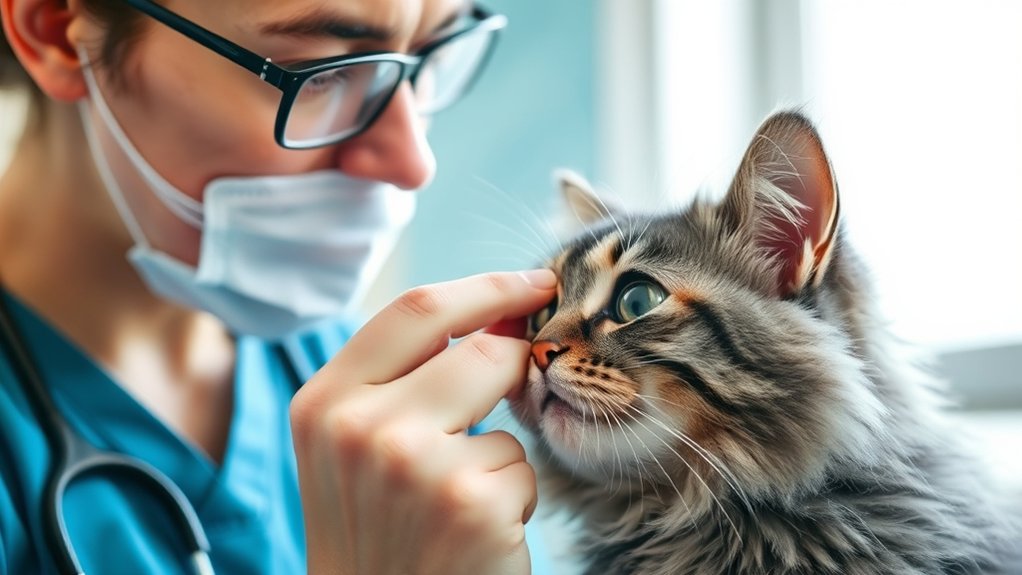
When you take your cat to the vet because it has cold symptoms, they’ll start by doing a thorough physical exam.
They’ll look for signs like sneezing or a runny nose. Your vet might also suggest some tests, like blood work or chest X-rays, just to make sure there aren’t any complications.
If things seem more serious, they can run special tests to figure out exactly which virus is causing the illness. That way, your cat gets the right treatment.
Veterinary Examination Process
Although diagnosing a cold in your feline requires careful attention, veterinarians rely on a detailed physical examination to assess symptoms like sneezing and nasal discharge.
During the veterinary examination, your vet will thoroughly check your cat’s upper respiratory tract and overall health.
Providing a complete medical history is essential. It helps the vet understand the duration and severity of symptoms. This information guides the examination and decision-making process.
Your vet will also monitor for secondary bacterial infections, especially in vulnerable cats such as kittens or those with weakened immune systems.
While diagnostic tests may be recommended to rule out complications, the physical examination remains the cornerstone of identifying and managing cat colds effectively. This ensures your furry friend gets the appropriate care promptly.
Diagnostic Testing Methods
After gathering a thorough medical history and completing a physical exam, your vet may recommend specific diagnostic tests to better understand your cat’s condition. These tests help identify the cause of symptoms persisting and detect complications like pneumonia.
Here are common diagnostic tests your vet might use:
- Routine diagnostic tests such as blood work to assess overall health.
- Chest X-rays to check for lung involvement or pneumonia.
- An upper respiratory PCR panel for severe or recurrent cases to pinpoint viral infections.
- Additional tests if symptoms persisting beyond four days suggest secondary bacterial infections.
Close monitoring is essential, especially for young, senior, or immune-compromised cats, to prevent complications.
Your vet’s thorough examination and diagnostic approach guarantee timely, effective care.
Easy Home Care for Cats With Colds
Caring for a cat with a cold at home involves creating a comfortable environment that supports their healing. Use a humidifier to ease congestion and gently wipe your cat’s nose and eyes with a warm, damp cloth to remove discharge.
Offer warm, soft food to encourage eating, and keep an eye on hydration by mixing water into meals or providing fresh water. Make sure your cat has a cozy resting spot with extra blankets to stay warm.
Watch for any changes in symptoms, and don’t hesitate to consult a vet if things seem to get worse.
| Care Tip | Purpose | How to Do It |
|---|---|---|
| Humidifier | Relieve congestion | Run in room with your cat |
| Warm, soft food | Encourage eating | Heat food slightly before serving |
| Monitor hydration | Prevent dehydration | Add water to food, fresh water bowl |
When to Treat Your Cat’s Cold at Home or See a Vet
If your cat shows mild cold symptoms, you can often manage their care at home by maintaining a warm, humid environment and encouraging rest.
Home treatments like using a humidifier, wiping nasal discharge, and offering warm, wet food help comfort your cat while their immune system fights the infection.
However, it’s important to closely monitor your cat, especially if you have very young kittens or senior cats.
Pay close attention to your cat’s health, particularly with young kittens or older cats.
Consider a veterinary visit if:
- Symptoms persist beyond 4 days or worsen.
- Your cat has a cold with loss of appetite or difficulty breathing.
- Nasal discharge turns green or yellow, or coughing develops.
- Signs of dehydration or severe lethargy appear.
For these cases, immediate veterinary attention is essential to avoid complications.
Supporting Your Cat’s Recovery From a Cold
To help your cat recover from a cold, try to create a warm and cozy spot where they can relax without stress.
It really helps to keep things calm and comfortable.
Also, encourage your cat to eat by offering warm, soft foods that are easier to nibble on.
And don’t forget to make sure they’re drinking plenty of water to stay hydrated.
Little changes like these can make a big difference and help your furry friend feel better sooner.
Creating Comfortable Environments
When your cat is feeling under the weather, creating a warm and soothing environment can really support their recovery. By making a comfortable space, you help your cat feel safe and cared for, which is super important for healing.
Try to provide a cozy spot away from noise and other pets to keep their stress levels down.
Using a humidifier nearby adds moisture to the air, which can ease nasal congestion and help your cat breathe easier. You can also gently wipe your cat’s nose and eyes with a warm, damp cloth to reduce irritation and keep them clean.
Adding an extra blanket in their resting area gives them more warmth and comfort, encouraging plenty of rest.
These little steps can make a big difference in helping your cat bounce back and get their usual energy back.
- Provide a quiet, cozy space
- Use a humidifier nearby
- Gently wipe with a warm damp cloth
- Add an extra blanket for warmth
Encouraging Food And Hydration
Creating a comfortable environment helps your cat rest, but supporting their recovery also means encouraging proper food and hydration. Offering warm soft food, like extra special wet cat food, can tempt your feline friend to eat by enhancing aroma and texture.
Mixing water into their meals helps prevent dehydration, especially if they’re reluctant to drink. Providing a variety of flavors may also encourage eating during illness.
Keep food and water dishes clean and easily accessible to support hydration and nourishment. It’s essential to monitor your cat’s eating and drinking habits closely, as a lack of interest for over 24 hours requires a consultation with a veterinarian.
These steps guarantee your cat gets the care needed to recover comfortably and safely.
Preventing Cat Colds in Multi-Cat Households
Although managing multiple cats can be rewarding, it also requires extra care to prevent the spread of colds among them.
Preventing respiratory infections in multi-cat households means controlling stress and infectious agents effectively.
Effective control of stress and infectious agents is key to preventing respiratory infections in multi-cat homes.
You should focus on maintaining proper ventilation and humidity levels to reduce respiratory irritation.
Also, providing separate feeding and litter areas helps minimize stress and cross-contamination.
Isolating new or sick cats from healthy ones is important to stop viral transmission.
And don’t forget to monitor each cat’s health closely, since overcrowding can weaken their immune systems.
Taking these steps can really make a difference in keeping all your cats healthy and happy.
When to Take Your Cat to the Vet Right Away
If your cat starts showing worrying symptoms like coughing, difficulty breathing, or persistent lethargy, you should seek veterinary care immediately. Knowing when to take your cat to the vet right away is essential, especially if your cat is sick and not improving after four days.
Pay close attention to signs like green or yellow nasal discharge, vomiting, or prolonged diarrhea, as these require urgent veterinary care. Senior cats and young kittens are particularly vulnerable and need prompt attention.
Also, if your cat isn’t eating for over 24 hours or shows signs of dehydration such as reduced water intake, don’t hesitate to consult your vet.
Recognizing these signs lets you act swiftly and guarantee your cat gets the care it needs.
Frequently Asked Questions
Can Cats Catch Colds From Humans?
No, cats can’t catch colds from humans because feline respiratory viruses are different from human ones.
You should watch for cold symptoms like sneezing, nasal discharge, or eye irritation. These often stem from viral infections or bacterial infections.
Supporting your cat’s immune system with good cat hygiene and minimizing stress during seasonal changes really helps.
If symptoms persist, seek veterinary care promptly. This way, you can make sure your cat recovers well and stays healthy.
Are Certain Cat Breeds More Prone to Colds?
Of course, Persians and Himalayans didn’t invent colds to make life harder. They just happen to have a genetic predisposition because of their flat faces.
You’ll notice breed susceptibility varies with immune response, age considerations, and environmental factors like indoor vs. outdoor living.
Stress impact and vaccination effects also matter.
How Long Do Cat Colds Usually Last?
Cat cold duration usually lasts about 7 to 10 days, depending on feline symptoms and your cat’s overall health.
Recovery time can be influenced by environmental factors and stress impact, so keep their space calm and clean.
During the contagious period, limit contact with other pets.
Follow prevention tips like good hygiene and dietary considerations to support immunity.
If symptoms worsen or persist, seek veterinary advice promptly to guarantee proper care.
Can Cat Colds Cause Lasting Health Issues?
Yes, cat colds can lead to lasting health issues if untreated. You need to watch symptoms carefully and understand the feline immune system’s role in recovery time expectations.
Stress and indoor environment factors can worsen symptoms, so cold prevention tips matter.
Nutrition supports healing, but don’t rely solely on home care. Veterinary advice is really important and can’t be overstated.
Using a symptoms comparison chart helps you spot complications from common cold viruses early. That way, you can protect your cat’s health before problems get worse.
Keep an eye on changes and don’t hesitate to reach out to your vet when you’re unsure. It’s all about giving your cat the best chance to recover fully.
What Home Remedies Should Be Avoided for Cat Colds?
You should avoid home remedies like essential oils and garlic, as they cause toxicity in cats.
Skip over-the-counter medications and herbal supplements without vet approval, since they can be harmful.
Avoid steam treatments or rapid temperature changes that stress your cat and worsen symptoms.
Also, don’t neglect maintaining stable humidity levels or minimizing stress factors. Both are vital for recovery.
Always consult your vet before trying any remedies to keep your cat safe and comfortable.
It’s better to be cautious and get professional advice when your furry friend is under the weather.
Conclusion
You might be surprised to learn that up to 90% of cat upper respiratory infections are caused by viruses, not bacteria. This means antibiotics won’t always help.
Knowing the signs and how colds spread can make a real difference in your cat’s recovery. By staying vigilant and providing supportive care, you’re helping your feline friend feel better.
Also, preventing exposure in multi-cat homes is super important. It gives your cat the best chance to bounce back quickly and comfortably.