Why Does My Cat Keep Throwing Up – Common Causes Explained
If your cat keeps throwing up, it’s often due to common causes like eating too fast, hairballs, or food intolerances. Sometimes, infections, parasites, or ingesting foreign objects can trigger vomiting too.
Frequent or severe vomiting can signal health issues like kidney disease or hyperthyroidism, which means your cat needs vet care. Watching for symptoms like blood in the vomit or lethargy is really important.
Understanding these causes helps you respond better. You’ll also find useful insights on when to seek help and what treatment options are available ahead.
What Are the Most Common Causes of Cat Vomiting?
Although occasional vomiting can be normal for cats, frequent or severe episodes usually signal an underlying issue you should address.
Cat vomiting often stems from common causes like food intolerances or eating too fast, which upset the stomach shortly after meals.
You might also notice vomiting due to hairballs, especially if your cat grooms heavily.
Foreign bodies are another concern. Curious cats sometimes swallow strings or small objects that cause blockages and forceful vomiting.
Infections and parasites can irritate your cat’s digestive tract, leading to vomiting combined with other symptoms.
If your cat experiences chronic vomiting, it could indicate serious health problems like kidney disease or inflammatory bowel disease.
In any case, understanding these causes can help you act promptly to protect your cat’s health.
How Can You Tell If Vomiting Is Acute or Chronic?
How can you tell if your cat’s vomiting is acute or chronic? Acute vomiting usually happens suddenly and is brief. It often comes from dietary issues or infections.
Chronic vomiting, however, happens repeatedly over time. It often signals underlying health issues that need a vet’s evaluation.
Pay attention to how often it happens, how long it lasts, and any other symptoms like lethargy or blood. Those signs mean you should get prompt care.
| Vomiting Type | Frequency | Concern Level |
|---|---|---|
| Acute Vomiting | Sudden, brief | Often resolves on its own |
| Chronic Vomiting | Repeated episodes | Indicates deeper issues |
| Additional Symptoms | Present or absent | Requires veterinary evaluation |
Knowing these differences helps you act quickly to keep your cat healthy.
Which Vomit Types Signal Danger in Cats?
What types of vomit should immediately raise concern when your cat throws up? Recognizing dangerous vomit types can help you act quickly and protect your cat’s health. Watch for:
- Blood in vomit. This signals possible internal bleeding or serious illness and needs urgent veterinary care. It’s definitely not something to ignore.
- Repeated vomiting. If your cat vomits more than two to three times in a row, it may indicate a dangerous condition requiring prompt attention. Keep an eye on how often it happens.
- Yellow or bile vomit and undigested food. Yellow vomit could mean an empty stomach or liver issues, while undigested food might point to obstruction or motility problems. Both need a vet’s evaluation.
If your cat is vomiting alongside other symptoms like lethargy or loss of appetite, don’t delay in seeking help.
It’s always better to be safe when it comes to your furry friend.
Why Do Hairballs Cause Cat Vomiting?
When your cat grooms itself, it ends up swallowing loose fur. Over time, this fur can clump together and form hairballs in the stomach.
Since your cat’s body can’t digest these hairballs, it usually triggers vomiting to get rid of the blockage.
So, when you see your cat throw up, it’s often just a natural way for them to clear out those pesky hairballs.
Understanding this makes it easier to see why hairballs cause your cat to vomit.
Hairball Formation Process
Because your cat spends a significant portion of its day grooming, it inevitably swallows loose fur that accumulates in the stomach as hairballs.
These hairballs can irritate your cat’s digestive tract, leading to vomiting as the body tries to expel the fur. Understanding the hairball formation process helps you better care for your cat.
Here’s how hairballs form:
- During grooming, your cat ingests loose fur that doesn’t fully pass through the digestive system.
- The fur clumps together in the stomach, forming a dense, tubular mass.
- When the hairball irritates the digestive tract, your cat may cough or retch before vomiting it up.
Regular grooming can reduce loose fur, helping minimize hairball-related vomiting episodes and keep your cat comfortable.
It’s a simple way to make a big difference in your cat’s health and happiness.
Vomiting Mechanism Explained
Understanding how hairballs trigger vomiting helps you recognize why your cat reacts the way it does. Hairballs form when your cat grooms itself, swallowing loose fur that accumulates in the cat’s stomach.
When these hairballs grow too large or cause irritation, the vomiting mechanism kicks in. This involves strong contractions of the abdominal muscles and diaphragm, which work together to push the hairball out.
You might notice your cat expels a tubular mass, which is the hairball itself. Frequent vomiting due to hairballs can signal your cat struggles to manage grooming or may have underlying gastrointestinal issues.
To help reduce this, regular grooming and special hairball control diets support your cat’s digestion and comfort. This minimizes irritation and the need for vomiting.
How Can Dietary Issues Trigger Vomiting in Cats?
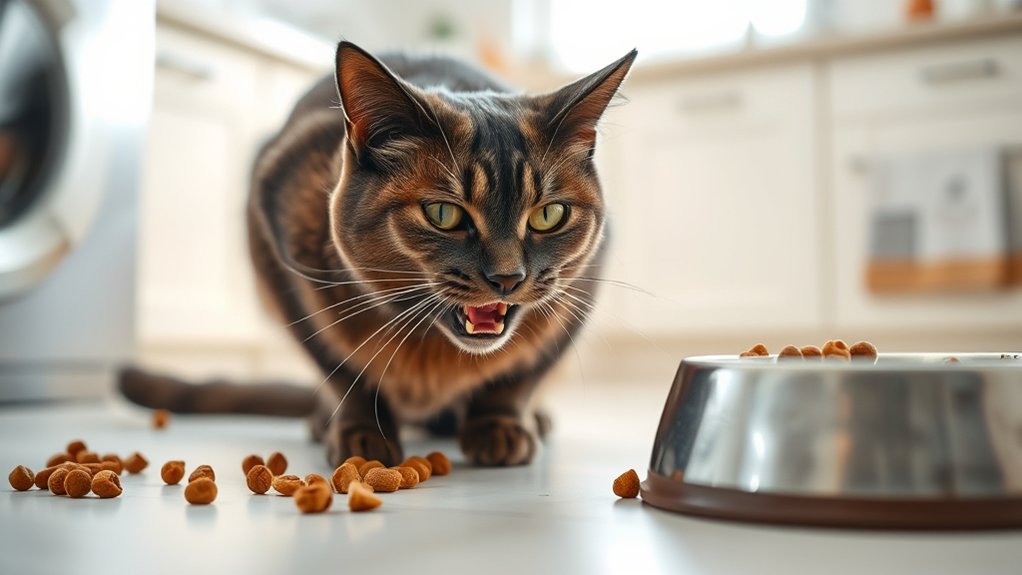
Any sudden change in your cat’s diet can upset their delicate digestive system and cause vomiting. When your cat vomits, dietary issues are often a key factor. Here are common triggers to watch for:
- Cat eats too quickly. Gulping food traps air, which can lead to stomach upset and vomiting. It’s like when we eat too fast and feel uncomfortable afterward.
- Spoiled cat food. Bacteria in old or improperly stored food can irritate the stomach lining. So always check the freshness before serving your cat.
- Inflammatory bowel disease. Food intolerances or allergies can trigger inflammation, causing frequent vomiting.
It’s important to identify these issues with your vet’s help.
What Are the Signs of Foreign Objects Causing Vomiting?
How can you tell if your cat’s vomiting is caused by swallowing a foreign object? Pay close attention to repeated vomiting, especially if your cat shows lethargy or refuses to eat. These signs often indicate irritation or blockage in the gastrointestinal tract.
If your cat is retching without producing anything, a foreign object might be lodged in the esophagus or stomach.
Watch for abdominal pain too. Your cat may vocalize or shy away when you touch its belly.
These symptoms are serious and require immediate veterinary attention. Persistent vomiting or the presence of blood signals potentially severe complications from a foreign object.
Recognizing these signs early can help guarantee your cat receives prompt care and avoids further distress or injury.
How Do Parasites and Infections Lead to Cat Vomiting?
Because parasites and infections directly affect your cat’s digestive system, they often cause vomiting as a clear sign of distress. Cat vomiting triggered by intestinal parasites or infections usually signals underlying irritation or damage to the gut.
Parasites and infections disrupt your cat’s digestion, often causing vomiting as a clear sign of gut irritation.
Here’s how these issues lead to vomiting:
- Intestinal parasites like roundworms and hookworms irritate the intestinal lining, causing inflammation and vomiting.
- Bacterial infections such as Salmonella disrupt the gastrointestinal tract, leading to vomiting, diarrhea, and abdominal pain.
- Viral and protozoan infections including Feline Panleukopenia and Giardia damage gut health and nutrient absorption, resulting in persistent vomiting.
If your cat shows vomiting alongside lethargy or weight loss, it’s essential to seek veterinary care promptly to address these infections or parasites. Better safe than sorry when it comes to your furry friend’s health!
Which Chronic Illnesses Cause Cats to Vomit Repeatedly?
If your cat keeps vomiting, it might be more than just an upset stomach. Sometimes, chronic illnesses like kidney disease are to blame.
When the kidneys aren’t working well, toxins can build up in their system and make them vomit repeatedly.
Another common cause, especially in older cats, is hyperthyroidism. This condition speeds up their metabolism, which can lead to frequent vomiting as well.
Knowing about these health issues can really help you catch the signs early on. That way, you can get the right care for your furry friend before things get worse.
Kidney Disease Effects
When your cat suffers from chronic kidney disease (CKD), you might notice frequent vomiting as a distressing symptom. Vomiting may indicate that toxins are building up in your cat’s system because the kidneys aren’t filtering waste effectively.
Along with vomiting, weight loss and lethargy often appear, signaling the need for prompt veterinary care. Blood work, including tests for blood urea nitrogen (BUN) and creatinine, helps confirm kidney disease and guides treatment.
Here’s what to watch for if your cat is vomiting due to kidney disease:
- Repeated vomiting episodes linked to toxin buildup.
- Noticeable weight loss and decreased appetite.
- Abnormal blood test results confirming kidney dysfunction.
Early diagnosis and dietary management can improve your cat’s quality of life. So, if you notice these signs, don’t wait to get your cat checked out.
Hyperthyroidism Symptoms
Why does your cat keep vomiting even when it seems healthy otherwise? One possible reason is hyperthyroidism, a common chronic illness in older cats. This condition speeds up your cat’s metabolism, causing symptoms like weight loss, increased appetite, and frequent vomiting due to gastrointestinal irritation.
You might also notice hyperactivity and restlessness. These can worsen vomiting episodes as your cat’s body struggles with excess energy.
Diagnosing hyperthyroidism involves blood tests measuring elevated thyroid hormone levels (T4).
The good news is that treatment options such as medication, radioactive iodine therapy, and dietary changes can reduce vomiting and improve your cat’s quality of life.
Regular veterinary check-ups are essential to monitor the condition and prevent serious gastrointestinal complications linked to untreated hyperthyroidism.
When Should You Take Your Cat to the Vet for Vomiting?
How do you know when your cat’s vomiting calls for a vet visit? Cat vomiting can sometimes be harmless, but certain signs demand urgent veterinary intervention. You should contact your vet immediately if your cat shows any of the following:
- Vomiting more than two to three times consecutively or if vomiting is accompanied by additional symptoms like diarrhea, lethargy, or refusal to eat.
- Your cat hasn’t eaten or drunk anything for 12 hours and continues to vomit.
- Vomiting blood, worms, or if your cat has pre-existing conditions such as diabetes or kidney disease, as these increase the risk of complications.
Prompt vet care guarantees your cat gets the right diagnosis and treatment, protecting their health and wellbeing.
What Treatment Options Are Available for Cats That Vomit?
When your cat is vomiting, the treatment really depends on what’s causing it. Sometimes, you’ll need to take your cat to the vet, who might suggest medications, fluids, or special diets to help your furry friend feel better.
At the same time, there are simple things you can do at home to manage mild cases. These include keeping your cat comfortable and making sure they stay hydrated.
With the right care, your cat can recover smoothly.
Veterinary Treatment Options
Although vomiting in cats can stem from various causes, your veterinarian will tailor treatment options based on the specific underlying issue.
When addressing cat vomiting, veterinary care begins with diagnostic procedures like blood work or imaging to identify the root cause.
Treatment options depend on this diagnosis and may include medication, fluids, or dietary changes.
Here are common approaches your vet might recommend:
- Administering anti-emetics and fluids to control vomiting and prevent dehydration.
- Introducing dietary modifications, such as prescription foods that are easier to digest.
- Hospitalization for severe cases requiring continuous monitoring and intensive care.
Home Care Strategies
Beyond veterinary care, there are several home strategies you can use to help manage your cat’s vomiting and support their recovery.
Start by offering home remedies like a bland diet, such as small portions of boiled chicken and rice, to soothe your cat’s stomach. Guarantee proper hydration by providing fresh water at all times.
You might also consider subcutaneous fluids if dehydration is a concern. Feeding smaller meals more frequently can reduce digestive stress and lower vomiting frequency.
It’s essential to monitor symptoms closely. Note the vomiting’s frequency, appearance, and any additional signs like lethargy. This information helps you and your vet make informed decisions.
If vomiting persists or worsens, don’t hesitate to seek professional care. These home care strategies can ease your cat’s discomfort while you watch for changes.
Dietary Management Plans
Since vomiting can stem from various digestive issues, adjusting your cat’s diet plays a key role in managing symptoms and promoting recovery.
Dietary management focuses on soothing your cat’s stomach while guaranteeing proper nutrition and hydration.
Here are three treatment options you can try:
- Feed easily digestible food in small amounts throughout the day to prevent overeating and reduce irritation.
- Incorporate probiotics to support gut health and minimize inflammation linked to vomiting.
- Maintain constant access to fresh water and consider wet food to uphold hydration, especially after vomiting episodes.
Make changes gradually to avoid further gastrointestinal upset.
Frequently Asked Questions
Can Stress Cause My Cat to Vomit Frequently?
Yes, cat anxiety can definitely cause your cat to vomit frequently.
Environmental factors like loud noises or new pets may trigger stress, leading to gastrointestinal upset. Dietary changes can worsen this, especially if your cat’s stomach is already sensitive.
You might notice behavioral issues such as hiding or excessive grooming alongside vomiting.
It’s important to track these signs and seek a vet consultation to rule out any underlying health problems and get proper treatment.
How Does Hydration Affect a Vomiting Cat?
Hydration levels directly impact your vomiting cat’s recovery, as vomiting causes fluid loss that leads to dehydration symptoms like lethargy and dry gums.
You should monitor water intake closely and offer multiple moisture sources, such as wet food or electrolyte solutions, to keep your cat hydrated.
Hydration tips include providing fresh water frequently and encouraging drinking by placing bowls in quiet areas.
Maintaining proper hydration supports digestion and prevents complications.
Are Certain Cat Breeds More Prone to Vomiting?
Back in the days of knights and castles, certain cat breeds already showed unique quirks.
You’ll find breed tendencies like Siamese and Burmese have dietary sensitivities and hairball issues causing vomiting. Flat-faced breeds struggle with swallowing, making them prone too.
Age factors and health conditions, like hyperthyroidism in older cats, also play a role.
Knowing these helps you manage your cat’s care with empathy and precision. This way, you can ensure they stay healthier longer.
Can Medication Side Effects Lead to Cat Vomiting?
Yes, medication side effects can definitely cause your cat to vomit. You need to watch for symptom monitoring closely, as medication interactions or dosage sensitivity often trigger gastrointestinal upset.
Since feline health can be delicate, some drugs irritate their stomach, especially if given without food.
Always seek veterinary advice if vomiting happens consistently after medication. That way, adjustments can be made to keep your cat comfortable and safe.
It’s always better to be cautious when it comes to your furry friend’s health.
How Can I Prevent My Cat From Vomiting at Home?
To prevent your cat from vomiting at home, start by adjusting their diet. Introduce new foods gradually and offer smaller, more frequent meals.
Keeping a consistent feeding schedule really helps too.
Regular grooming is key to managing hairballs since it reduces the amount of loose fur your cat might swallow. It’s a simple step but makes a big difference.
Also, make sure to remove any toxic plants and small objects from your cat’s environment that they might accidentally eat. This helps keep them safe and healthy.
If your cat keeps vomiting despite these changes, don’t hesitate to visit the vet. They can help find out if there’s an underlying health issue that needs treatment.
It’s always better to be safe and get it checked out.
Conclusion
Understanding why your cat keeps coughing up can calm your concerns and clarify care. Whether it’s hairballs, dietary dilemmas, or challenging diseases, detecting danger early is decisive.
Don’t delay in seeking vet advice when vomiting worsens or persists. With timely treatment, tailored to your cat’s troubles, you can tackle tummy troubles and trust in their thriving health.
Stay observant, stay proactive, and support your feline friend’s well-being with wisdom and warmth.