Can A Cat Swim – What Most Owners Should Know
Yes, your cat can likely swim instinctively, but most prefer to avoid water because of their desert ancestry and discomfort with wet fur. Some breeds like Bengals and Turkish Vans enjoy water more, while others may struggle.
Introducing swimming safely means starting slow, supervising closely, and watching for signs of stress. Swimming offers health benefits, but there are also risks if it’s not handled carefully.
Keep these points in mind, and you’ll understand how to help your cat enjoy water safely. It’s all about patience and paying attention to your cat’s reactions.
Can Cats Swim? Understanding Their Natural Ability
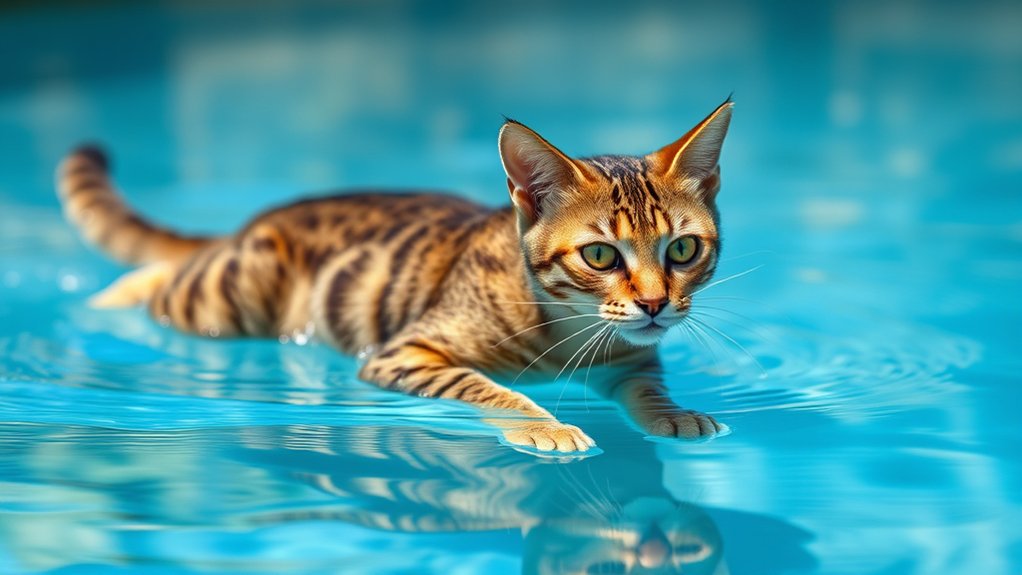
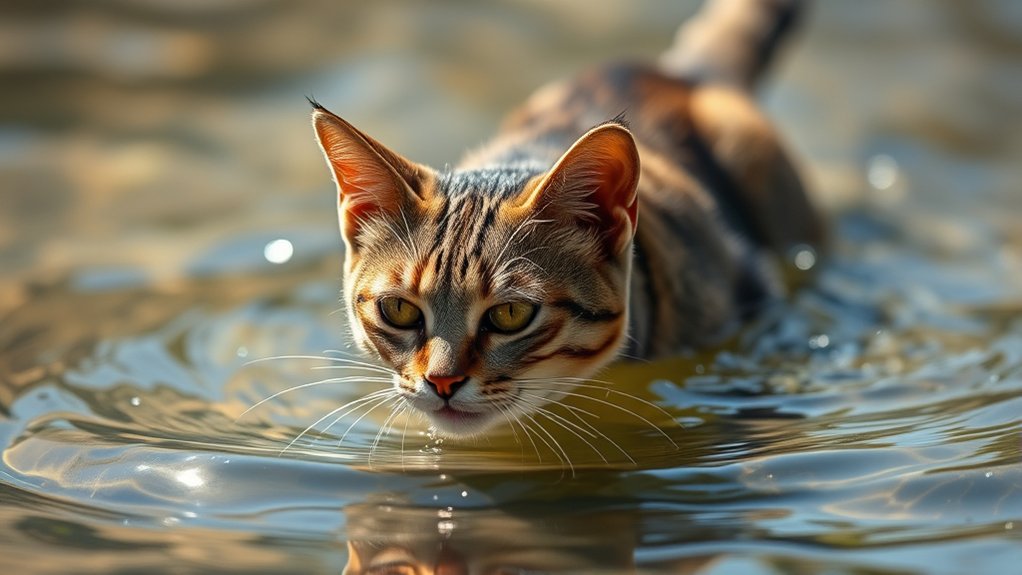
How well can cats swim? You might be surprised to learn that most domestic cats can swim instinctively. Their ability to swim is natural, even though cats hate water and often panic if submerged unexpectedly.
Swimming skills vary widely though. Some breeds like Bengals and Turkish Vans actually show a higher affinity for water. On the other hand, breeds such as Munchkins may struggle because their shorter limbs affect their swimming efficiency.
Some cat breeds, like Bengals and Turkish Vans, swim well, while others, like Munchkins, may find it challenging.
Despite this natural ability to swim, most cats prefer staying dry and avoid water whenever possible.
Understanding that cats can swim but generally dislike it helps you appreciate their natural instincts. Just don’t assume all cats will enjoy or be good at swimming.
Why Cats Often Avoid Water: Evolution and Discomfort
Although cats can swim, their evolution from desert-dwelling ancestors means they naturally avoid water. This aversion comes from survival instincts. Wet fur becomes heavy, slowing them down and making them vulnerable.
Cats also prefer dry environments because water can contain unfamiliar scents or irritants, which makes them uncomfortable. Their fur soaks up water and takes a long time to dry, causing physical distress and sometimes panic.
Of course, individual personalities and past experiences shape how each cat reacts to water. But most cats instinctively choose to stay dry.
| Reason for Aversion | Explanation |
|---|---|
| Evolutionary Origin | Desert ancestors avoid water |
| Fur Properties | Absorbs water, heavy and slow |
| Survival Instinct | Wet fur hinders agility |
| Sensory Sensitivity | Water can contain irritants |
Cat Breeds That Enjoy Water and Swimming
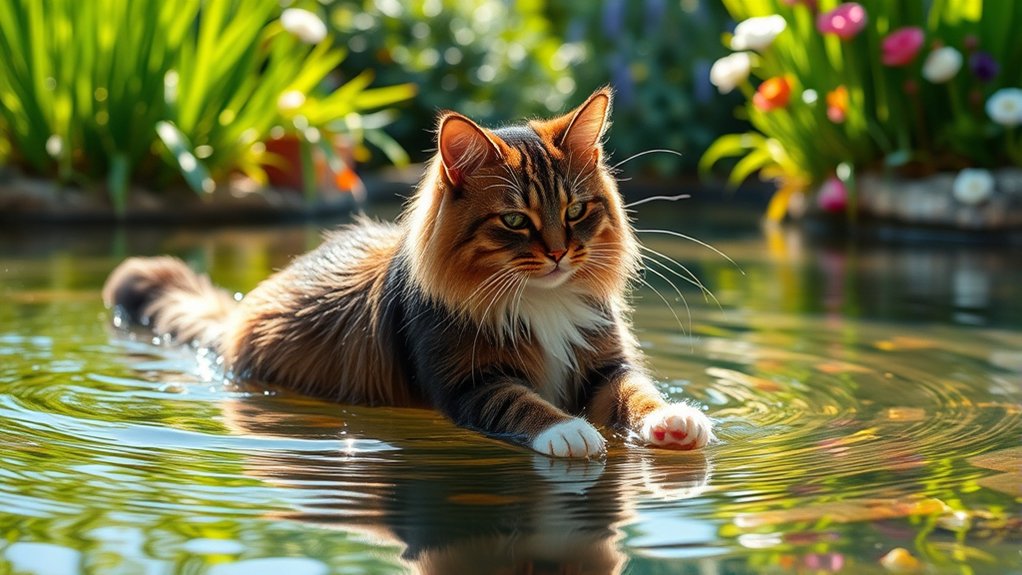
When you explore cat breeds known for their affinity to water, you’ll find that Bengals, Savannahs, and Turkish Vans often stand out because of their wild ancestry and unique physical traits.
These cat breeds enjoy water and sometimes swimming, which really sets them apart from most domestic cats.
Certain cat breeds enjoy water and swimming, making them unique among most domestic cats.
Here are five notable breeds:
Bengals and Savannahs have wild lineage, making them comfortable near water. Turkish Vans have water-repellent fur and a sturdy build that helps with swimming.
Maine Coons show curiosity and playful behavior when it comes to water.
Norwegian Forest Cats have a history of fishing, so they naturally have some aquatic skills.
But keep in mind, individual preferences vary, so not every cat in these breeds will enjoy water.
Understanding these breeds can help you figure out which cats might be more open to swimming activities.
It’s pretty interesting to see how some cats really take to water!
Health Benefits and Risks of Swimming for Your Cat
If your cat shows an interest in water or swimming, it’s important to think about both the health benefits and potential risks involved. Swimming is a low-impact exercise that helps tone muscles and reduce joint strain. This makes it ideal for older or recovering cats.
It also promotes mental stimulation and can help relieve stress. But water safety is really important. Natural bodies of water might have currents, harmful algae, or contaminants that could be dangerous.
Keep an eye out for signs of stress, like frantic paddling or vocalizing. This helps prevent panic or drowning.
| Health Benefits | Risks |
|---|---|
| Low-impact muscle toning | Strong currents |
| Stress relief and enrichment | Harmful algae blooms |
| Weight management support | Contaminated water ingestion |
How to Introduce Your Cat to Water Safely
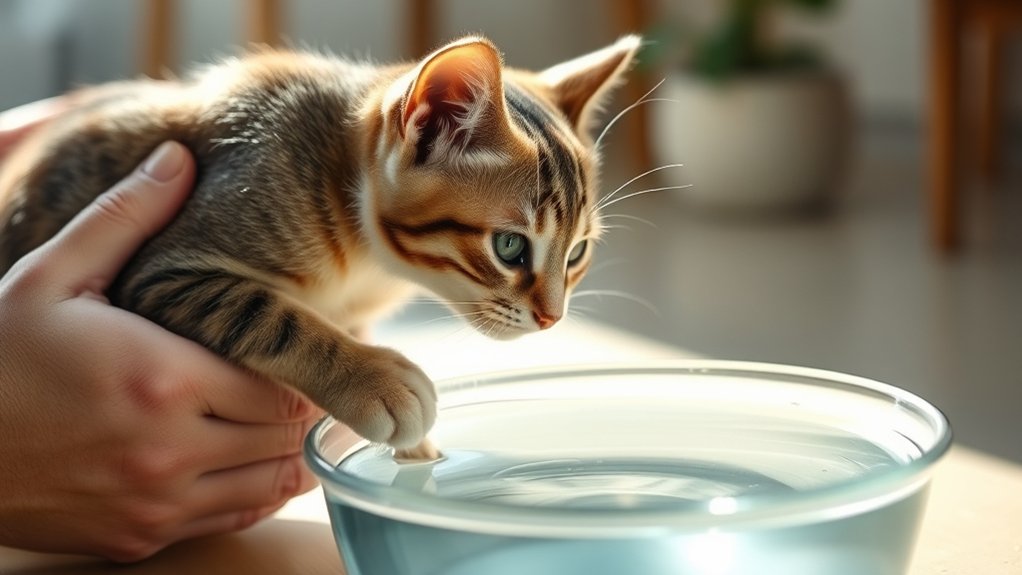
To introduce your cat to water safely, begin by letting them explore a shallow, secure area where they can easily get out whenever they want.
Take it slow and watch how your cat reacts—if they seem stressed, it’s best to pause and give them a break.
Always keep the environment safe and stay close by to supervise, making sure nothing unexpected happens.
Gradual Water Exposure
Although many cats are naturally wary of water, you can help your feline friend become comfortable by introducing them to shallow, controlled environments.
Gradual exposure is essential to avoid stress and build positive associations with water. Start slow and always supervise your cat to guarantee their safety.
Here’s how you can proceed: Use shallow water in a bathtub or container to create a safe introduction. Allow your cat to explore at their own pace without forcing them in.
Offer treats and praise to encourage positive experiences.
Increase water depth gradually as your cat gains confidence. Always supervise your cat closely to prevent panic or distress.
Taking it step by step really makes a difference with your furry friend.
Monitor Cat Reactions
How can you tell if your cat is comfortable around water? To start, closely monitor cat reactions during initial water exposure in a shallow, controlled environment.
Supervise your cat at all times to observe signs of curiosity or anxiety. If your cat seems hesitant or stressed, avoid forcing the experience. Instead, use positive reinforcement. Offer treats and gentle praise to encourage exploration without pressure.
Pay close attention to subtle cues like tail flicks, ear position, and vocalizations. Also, make certain the water temperature is comfortable, ideally around 100°F, to prevent distress.
Ensure Safe Environment
Once you’ve gauged your cat’s comfort level around water, the next step is creating a safe environment for introducing them to it.
To guarantee your cat has a comfortable experience, follow these guidelines:
Start in a shallow, controlled area to prevent panic. Always supervise your cat during water exposure to observe reactions.
Use positive reinforcement like treats and praise to build confidence.
Check that the water temperature is around 100°F for comfort.
Consider a cat-sized life vest for added safety in deeper water. This way, your furry friend stays safe and feels secure throughout the process.
Keeping Your Cat Safe Around Pools and Ponds
Because cats can drown quickly and silently, you should always supervise them around pools and ponds to assure their safety.
Cats need constant monitoring during any water activities to prevent accidents. Secure your pool area with fencing to stop your cat from accessing water unsupervised.
When your cat ventures into deeper water, consider a cat-sized life vest for added flotation support.
Be mindful of pool chemicals and natural hazards, as these can cause stomach upset or serious health issues. Gradually introduce your cat to water starting in shallow areas to reduce anxiety and encourage comfortable exploration.
By taking these precautions, you assure your feline’s safety while allowing them to experience water environments confidently.
Always supervise your cat to keep water activities safe and enjoyable. It’s all about keeping things safe but fun for your furry friend.
How to Train Your Cat to Swim
Although many cats are naturally wary of water, you can gently train your feline to swim by starting with shallow, controlled environments like a bathtub.
To teach your cat to swim effectively, follow these key steps:
Introduce your cat gradually to shallow water to build comfort and reduce anxiety. Use treats and praise as positive reinforcement to encourage exploration without forcing.
Start with shallow water and use treats and praise to gently encourage your cat’s exploration and comfort.
Always supervise your cat during water sessions and consider a cat-specific life jacket.
Slowly increase water depth as your cat gains confidence. Recognize that each cat’s willingness and ability to swim varies, so be patient.
When adapting to a swimming pool, apply the same careful approach to maintain safety and confidence. Just take it slow and keep an eye on your furry friend.
When to Talk to Your Veterinarian About Swimming
Before you introduce your cat to swimming, it’s a good idea to check in with your veterinarian. They can help assess any health concerns and talk about the best safety measures for your furry friend.
If you notice your cat seems stressed or uncomfortable around water, your vet can offer advice that’s just right for your cat’s needs.
Health Assessment Before Swimming
When you’re thinking about introducing your cat to swimming, it’s really important to check in with your veterinarian first. They can help spot any health issues that might make swimming unsafe for your furry friend. A thorough health assessment can catch underlying problems that could affect your cat’s ability to swim safely.
You definitely want to talk to your vet especially if your cat has joint problems or breathing issues.
Also, if your cat is elderly, overweight, or not very fit, it’s a good idea to get a professional opinion. The same goes if your cat is healing from surgery or an injury.
If your cat gets anxious or stressed around water, or hasn’t had a recent health check-up, make sure to bring that up with your vet too.
Taking care of these things ahead of time helps make sure swimming stays safe and fun for your cat. Prioritizing a vet’s health assessment can prevent problems and keep your cat happy during water activities.
Addressing Swimming-Related Stress
If your cat shows signs of distress around water, like panicking, excessive meowing, or trying to escape, it’s important to talk to your veterinarian right away. Catching swimming-related stress early can stop anxiety from getting worse. Your vet can check your cat’s behavior, overall health, and any past negative experiences with water.
They’ll help guide you on how to safely introduce your cat to water or suggest other options if swimming isn’t a good fit. Watching for body language cues like flattened ears or a tense posture can be really helpful when you discuss your concerns with your vet.
| Signs of Stress | Possible Causes | Veterinary Advice |
|---|---|---|
| Panicking | Fear/negative past events | Behavioral therapy or slow exposure |
| Excessive meowing | Anxiety | Calming strategies, medication |
| Escape attempts | Discomfort | Controlled reintroduction to water |
| Flattened ears | Stress | Environmental adjustments |
| Health issues (skin/gut) | Water-related problems | Medical treatment and care |
Veterinary Guidance On Safety
How do you know the right moment to consult your veterinarian about your cat’s swimming activities?
You should reach out before introducing your cat to water, especially if they’ve health issues or are older. Your veterinarian can guide you on safety measures and assess potential health benefits.
It’s a good idea to talk about your cat’s temperament and past water experiences to guarantee comfort and safety. You can also ask about using a cat-sized life vest and controlled environments for their first exposure to swimming.
Plus, get advice on recognizing signs of stress during swimming to protect your cat’s well-being.
Key points to discuss with your veterinarian include:
- Pre-existing health conditions and risks
- Cat’s temperament and water history
- Recommended safety measures
- Health benefits of swimming
- Signs of swimming-related stress
Frequently Asked Questions
Can Cats Swim in Saltwater or Only Freshwater?
Yes, cats can swim in both saltwater and freshwater, but you should watch their cat swimming behavior closely. Their feline water instincts vary; some cats dislike the buoyancy and saltiness of ocean water.
When introducing your cat to saltwater, follow aquatic safety tips: supervise them carefully to prevent salt poisoning or dehydration.
Freshwater is generally safer, but always prioritize your cat’s comfort and safety during any water activity. Just keep an eye on how they react, and don’t force them if they seem uneasy. It’s all about making sure they feel secure and happy.
Do Kittens Have a Better Chance of Learning to Swim?
Yes, kittens have a better chance of learning to swim because their kitten instincts make them naturally curious and adaptable.
If you provide early exposure to water, you can help them develop positive associations with swimming.
Using gentle swimming techniques, like gradual introductions and positive reinforcement, encourages confidence.
Are There Signs My Cat Is Stressed While Swimming?
Yes, you can spot stress signals in your cat’s behavior while swimming.
Look for flattened ears, dilated pupils, and tense posture, which indicate discomfort. Excessive vocalization, thrashing, or attempts to escape also signal anxiety.
Rapid breathing or panting shows your cat might be overwhelmed. If your cat struggles to stay afloat, it may panic.
Watching for these signs helps you adjust swimming techniques to keep your cat calm and safe in the water.
Can Swimming Help Overweight Cats Lose Weight?
Yes, swimming can help overweight cats lose weight by combining exercise with low-impact benefits.
You’ll find the benefits of swimming include improved cardiovascular health and muscle tone without stressing joints.
Using proper swimming techniques guarantees your cat stays safe and comfortable, making it an effective weight loss strategy.
Just make sure to introduce your cat to water slowly and gently.
Incorporate regular swimming sessions into your cat’s routine to support gradual, consistent weight loss while promoting overall fitness and well-being.
It’s a fun way to keep your furry friend active and healthy!
Is It Safe to Use Flotation Devices for Cats?
Yes, flotation device safety is essential when helping your cat swim. Choose a well-fitting, comfortable life vest designed specifically for cats.
It’s a good idea to introduce the vest on dry land first to help your cat get used to it.
Remember, flotation devices support your cat’s swimming but don’t replace supervision. Always stay close by to prevent panic or disorientation.
Combining proper equipment with gradual water exposure helps guarantee a safer, more confident swimming experience for your feline companion.
Just take it slow and keep an eye on them at all times.
Conclusion
While cats aren’t natural swimmers like dolphins, some breeds do enjoy water. With patience, you can safely introduce your feline friend to swimming. Always prioritize their comfort and health.
Keep a watchful eye around pools or ponds. Remember, swimming isn’t for every cat. If you notice stress or health concerns, consult your veterinarian promptly.
Just like a knight with a trusty sword, your careful guidance guarantees your cat’s safety in this new adventure.