Can A Cat Eat Popcorn – Safe Snack Or Bad Idea
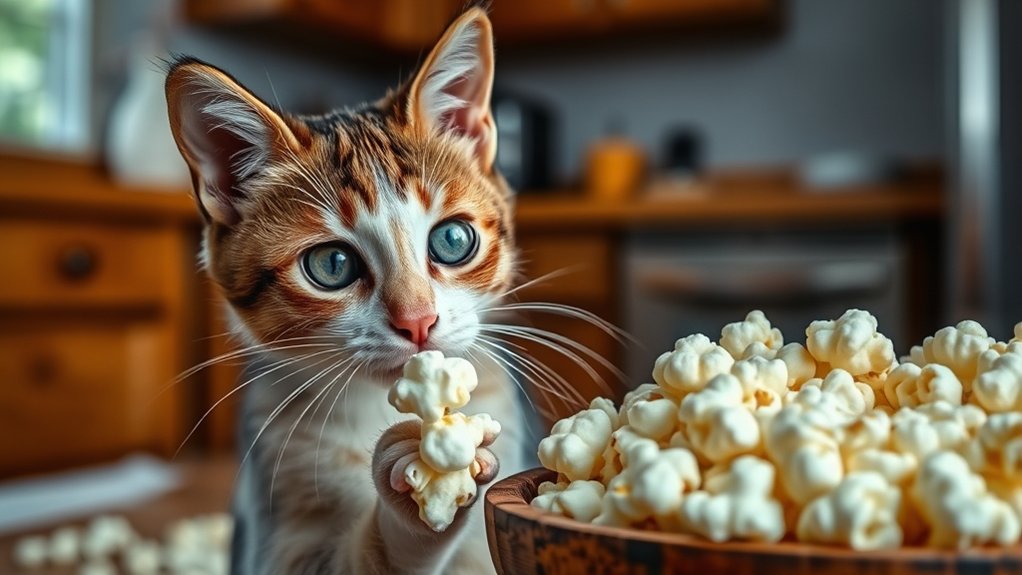
You can give your cat plain, air-popped popcorn occasionally, but keep it to small amounts since it offers little nutrition. Avoid buttered or flavored popcorn, as added salts, fats, and ingredients like garlic can cause digestive upset, toxicity, or obesity.
Unpopped kernels also risk choking or intestinal blockages. Always watch your cat when offering popcorn, and stop if they show signs of distress.
Understanding these risks and safer snack options will help keep your cat healthy and happy. So, it’s best to be cautious and pick treats that are truly good for them.
Is Popcorn Safe for Cats?
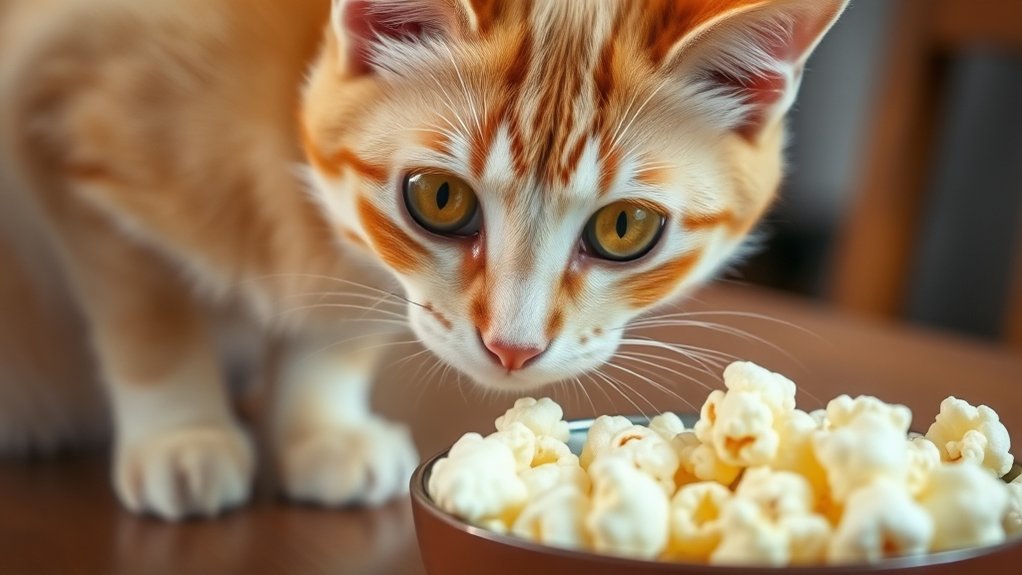
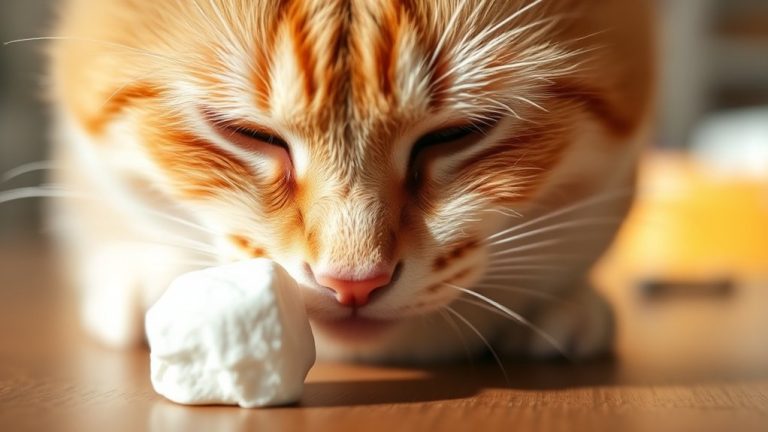
Wondering if your cat can safely nibble on popcorn? Plain popcorn, especially air-popped without additives, is generally safe for cats in small amounts as an occasional treat.
Since cats are obligate carnivores, popcorn offers little to no nutritional value and shouldn’t replace their regular diet.
However, flavored popcorn containing butter, salt, or other additives can cause gastrointestinal upset and contribute to obesity, so it’s best avoided.
Unpopped kernels pose a choking hazard and risk intestinal obstruction if swallowed.
Always supervise your cat when offering popcorn, watching carefully for any signs of digestive distress or adverse reactions.
Why Is Buttered or Flavored Popcorn Harmful to Cats?
You really shouldn’t give your cat buttered or flavored popcorn. The added fats and salts, plus some ingredients like garlic, can be pretty harmful. They might cause your cat to have stomach problems or even lead to kidney issues down the line.
On top of that, regular exposure to these unhealthy extras can contribute to obesity.
Harmful Ingredients Explained
Although popcorn might seem like a harmless snack, buttered and flavored varieties contain ingredients that can be harmful to cats.
Popcorn contains high fat levels in buttered forms, which can cause digestive upset, vomiting, and diarrhea since cats struggle to process rich foods.
Salted popcorn poses risks of salt toxicity, potentially leading to kidney problems and dehydration.
Flavored popcorn often includes additives and seasonings like garlic or cheese, which are toxic to cats and may trigger gastrointestinal distress or more severe health issues.
Moreover, popcorn with caramel or sugary toppings presents a choking hazard and dental problems due to its sticky texture and high sugar content.
These ingredients offer no nutritional benefit and can contribute to various health issues, so it’s safest to avoid giving your cat such snacks.
Health Risks Overview
Understanding the specific health risks associated with buttered or flavored popcorn is essential when considering your cat’s diet. Buttered popcorn contains high fat levels, which cats struggle to digest. This often causes gastrointestinal upset, vomiting, and diarrhea.
Flavored popcorns may include toxic ingredients like garlic or cheese, posing serious health threats. The elevated sodium content in salted popcorn risks sodium toxicity. This can lead to kidney problems and dehydration.
Caramel popcorn’s sticky texture presents a choking hazard and can damage your cat’s teeth.
Beyond these dangers, popcorn offers little to no nutritional value for cats, whose diets rely on protein-rich foods. So, for your cat’s safety, avoid feeding buttered or flavored popcorn. The potential health risks definitely outweigh any treat value.
How Can Popcorn Cause Choking and Digestive Problems?
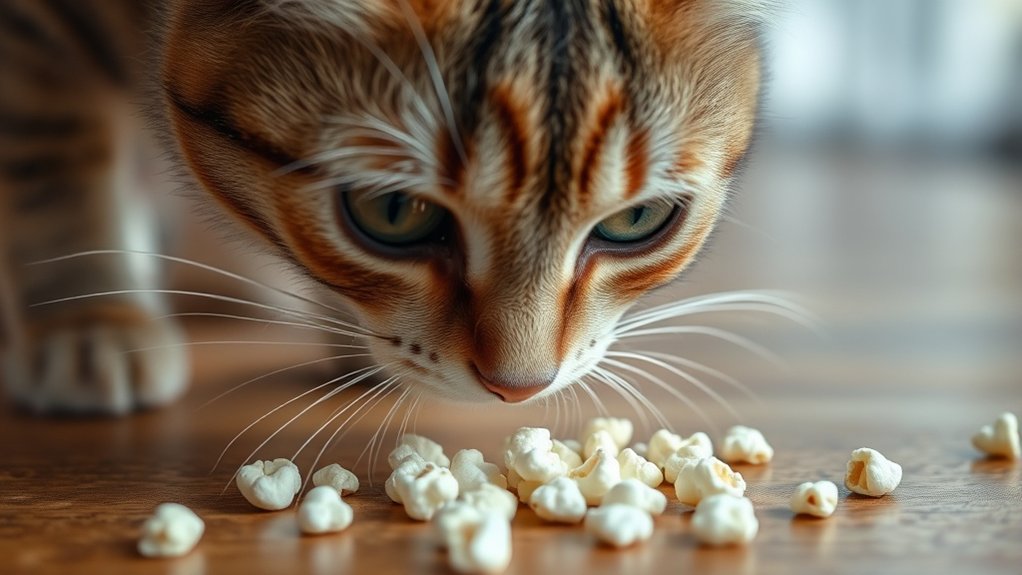
Because popcorn kernels can be hard and unevenly shaped, they pose a significant choking risk for cats, especially if unpopped or partially popped pieces get stuck in their throat. Your cat’s small mouth makes chewing difficult, increasing the choking hazard.
Moreover, unpopped kernels can cause digestive blockages if swallowed. Eating popcorn in large quantities can lead to gastrointestinal upset, such as vomiting or diarrhea, due to the fiber content.
To protect your cat’s health, monitor portion sizes carefully and offer only small amounts, avoiding unpopped kernels entirely.
| Risk Factor | Impact on Cat |
|---|---|
| Unpopped kernels | Choking hazard, digestive blockages |
| Large popcorn pieces | Difficult to chew, choking risk |
| Excessive fiber | Gastrointestinal upset |
Can Popcorn Really Harm or Kill Your Cat?
While plain, air-popped popcorn isn’t toxic and unlikely to kill your cat, you should still be cautious about how much and what type you offer.
When cats eat popcorn, especially large amounts or buttered popcorn, it can cause gastrointestinal upset due to the added fats and salts.
Plain popcorn provides minimal nutritional value and shouldn’t replace a balanced diet.
Plain popcorn offers little nutrition and should never substitute a well-rounded, balanced diet for your cat.
Also, unpopped kernels or large pieces can pose a choking hazard that might block your cat’s digestive tract.
If your cat consumes popcorn, keep a close eye out for any signs of trouble like vomiting or lethargy.
Though plain popcorn is generally safe in small amounts, steering clear of flavored or seasoned varieties is a smart move to avoid health risks.
Being watchful ensures you keep your cat safe from any potential problems that might come from eating popcorn.
What Should You Do If Your Cat Eats Popcorn?
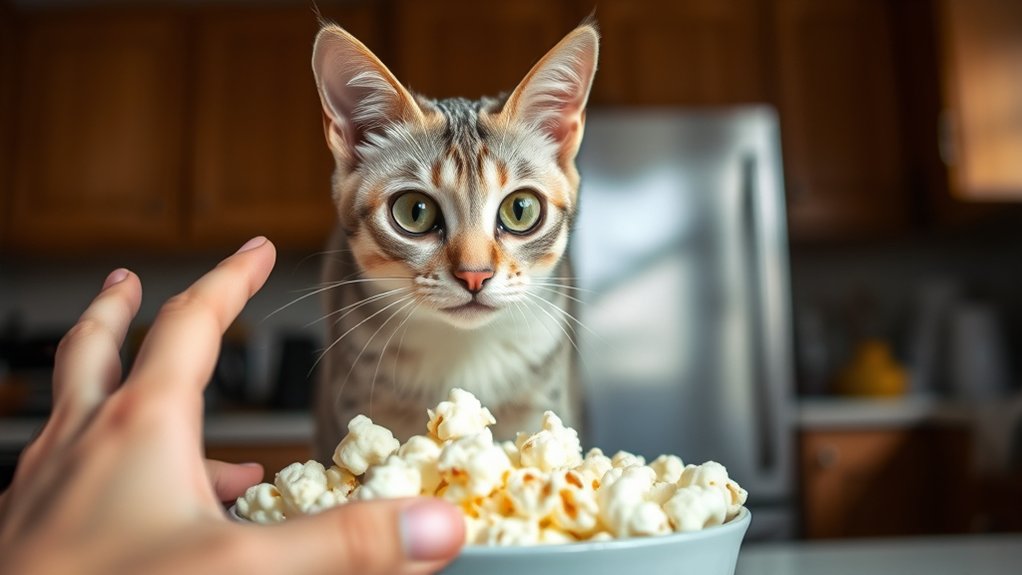
If your cat eats popcorn, you should carefully observe them for any signs of distress such as vomiting, diarrhea, or lethargy.
What should you do if your cat eats popcorn? First, monitor them closely for gastrointestinal distress, especially if they consumed flavored varieties that may contain harmful ingredients like salt, butter, or artificial flavors.
These additives can upset your cat’s stomach or lead to more serious issues. Also, be alert for choking hazards or signs of intestinal obstruction if your cat ate a large quantity.
If you notice any unusual symptoms or if your cat consumed seasoned popcorn, contact a veterinarian promptly.
Timely professional advice guarantees your cat’s safety and helps manage potential complications from popcorn ingestion.
Why Are Cats Attracted to Popcorn’s Texture and Smell?
What draws cats to popcorn’s texture and smell? Cats are naturally intrigued by the crunchy texture of freshly popped popcorn, which appeals to their natural instinct to chew on harder foods.
While cats are obligate carnivores and don’t need popcorn for nutrition, their curiosity often leads them to investigate this unusual snack. It’s kind of like when cats eat strawberries just out of curiosity.
Here’s why popcorn catches their attention:
The crunchy texture mimics the feel of prey or toys.
The aromatic smell of freshly popped popcorn stimulates their senses.
The popping sound intrigues them, encouraging playful behavior.
Although popcorn may be safe in small amounts, remember it offers no real benefits for your cat’s health.
Healthier Snacks Than Popcorn for Cats
Although popcorn might seem like a harmless treat, you should consider healthier alternatives that provide real nutritional benefits for your cat.
Healthier snacks than popcorn for cats include cooked plain meats like chicken, turkey, and fish. These offer essential protein and crucial nutrients.
Cooked plain meats like chicken, turkey, and fish provide cats with essential protein and vital nutrients for better health.
You can also introduce cooked plain eggs, which supply protein and healthy fats.
Safe fruits such as bananas and blueberries work well as occasional sweet treats in small amounts.
Vegetables like broccoli, peas, and sweet potatoes can be added gradually to diversify your cat’s diet.
Remember, always consult a veterinarian before introducing new foods to confirm they fit your cat’s dietary needs and prevent allergies.
Choosing these options supports your cat’s health far better than popcorn. So, why not try these instead?
How to Make Safe Popcorn for Cats at Home
When preparing popcorn for your cat, you’ll want to use plain, air-popped kernels without any oils, butter, or seasonings to guarantee safety.
Learning how to make safe popcorn for cats at home means prioritizing your cat’s health by avoiding additives that could cause digestive issues.
Always limit serving sizes to 10-20 pieces to reduce choking hazards and prevent upset stomachs. Remember, popcorn should be an occasional treat, not a staple, since cats thrive on a meat-based diet.
To confirm safety, follow these tips:
- Use only air-popped popcorn with no additives
- Monitor for choking while your cat eats
- Store leftovers in an airtight container for freshness
Frequently Asked Questions
Can Kittens Safely Eat Popcorn or Is It Only for Adult Cats?
Kittens shouldn’t eat popcorn because their digestive systems are super sensitive, and they’ve specific nutrition needs.
Since they’re still growing, they need safe snacks that are rich in animal protein—not carbs or tough textures like popcorn.
Even if you cook popcorn carefully and give only small amounts, it can still cause digestive issues or even choking.
Adult cats might handle popcorn better, but for kittens, it’s really best to stick to foods made for their growth and taste preferences.
That way, you avoid any health problems and keep your little furball happy and healthy.
Does Popcorn Affect a Cat’s Dental Health?
Coincidentally, your cat’s chewing habits directly influence its dental hygiene when eating popcorn. The popcorn texture, especially hard kernels, can damage teeth and worsen oral health.
This risk increases with sticky coatings, promoting plaque buildup and tartar formation.
While plain popcorn poses less harm, it offers no dietary impact to improve dental health.
You’re better off choosing safe snacks designed specifically to support your cat’s oral care needs.
How Often Can I Give My Cat Popcorn as a Treat?
You should give your cat popcorn only occasionally, following strict popcorn portion control.
Stick to safe popcorn types like plain, air-popped kernels, and avoid flavored popcorn risks such as salt or butter. Homemade popcorn recipes help you control the ingredients.
Treat guidelines suggest keeping treats under 10% of their diet to protect your cat’s digestive system.
Always monitor your cat’s reactions after feeding popcorn.
And honestly, there are plenty of alternative cat snacks that are better suited for their health.
Are There Any Breeds More Sensitive to Popcorn?
You should know that breed sensitivity to popcorn digestion varies, but no specific feline breed is universally more sensitive.
Siamese and Burmese cats might show lower feline tolerance due to dietary restrictions linked to gastrointestinal issues. Always watch for health implications or texture preference problems.
Since popcorn offers little nutritional value, consider snack alternatives that suit your cat’s diet better.
Monitor your cat closely to avoid adverse reactions when trying new treats. It’s always better to be safe and keep an eye on how your kitty reacts!
Can Popcorn Cause Allergies in Cats?
Yes, popcorn ingredients can sometimes trigger allergic reactions in cats, especially if they’re sensitive to corn. You should keep an eye on your cat for any symptoms after offering popcorn since cat digestion varies.
Watch out for signs like itching, vomiting, or diarrhea.
For safer treat options, consider popcorn alternatives made specifically for feline nutrition. Always remember to give snacks in moderation to avoid any issues.
And hey, consulting your vet is a smart move. It helps ensure you’re supporting your cat’s health without risking allergies or digestive upset.
Conclusion
Think of popcorn as a shiny but fragile vase. It’s tempting to admire, yet risky to handle. While plain popcorn isn’t toxic, it can be a choking hazard.
Plus, any harmful additives make it a shaky snack choice for your cat. You wouldn’t fill that vase with rough stones. Similarly, it’s better to choose safer treats that nourish without danger.
Always prioritize your cat’s health by picking snacks designed with their digestion and safety in mind. It’s all about keeping your furry friend happy and healthy!