Can Cat Eat Salami – Health Risks You Should Know
You shouldn’t feed your cat salami because it has high salt, fat, and toxic spices like garlic and onion powder. These ingredients can cause dehydration, pancreatitis, anemia, and even sodium poisoning.
While salami contains protein, the risks outweigh the benefits, especially for kittens and pregnant cats. Small amounts might not cause immediate harm, but offering it regularly isn’t safe.
If you want to protect your cat’s health, understanding these dangers and safer alternatives is essential. It’s better to stick with foods made specifically for cats to keep them happy and healthy.
Salami: What It Is and Why Cats Like It
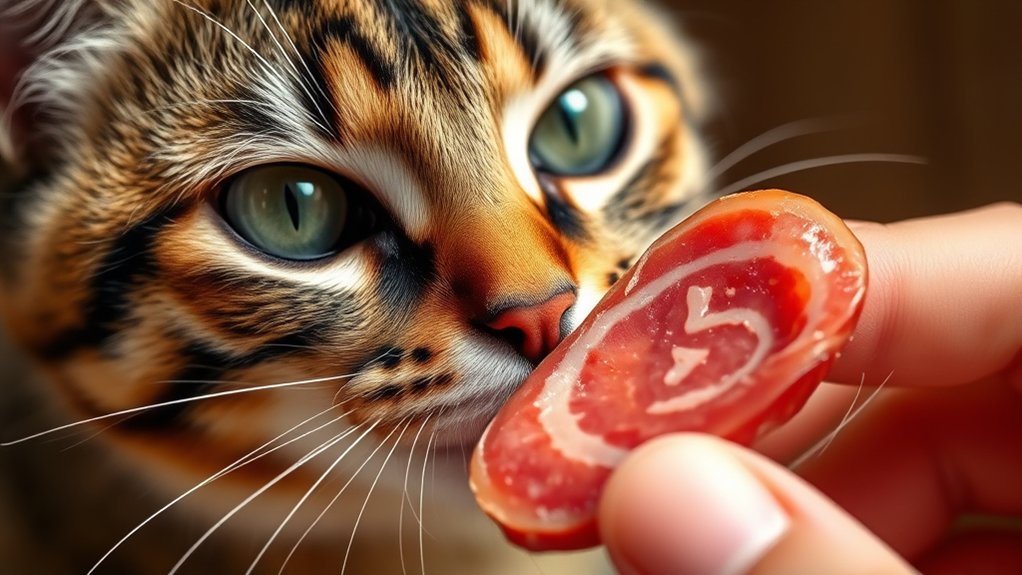
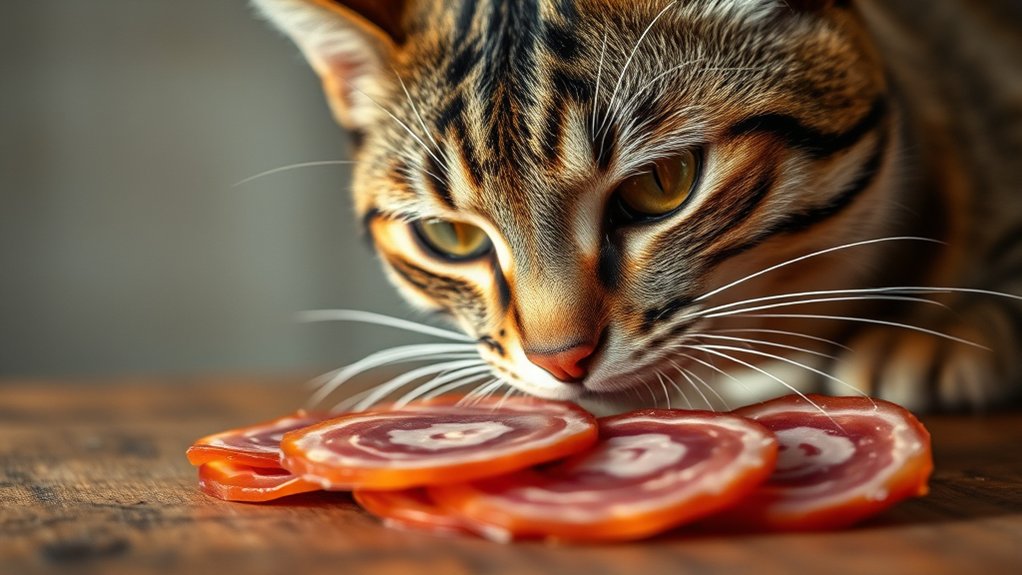
Salami is a cured sausage made from ground pork or beef, seasoned with spices, and preserved through drying and curing. You might notice cats find salami appealing because it’s a tasty snack rich in meat and protein content, roughly 2 grams per thin slice.
As obligate carnivores, cats are naturally drawn to the strong aroma and flavor.
However, you should be cautious. Salami often contains garlic powder, which poses significant health risks to cats. Plus, its high salt content and fat can negatively affect your cat’s health if consumed regularly.
While salami seems tempting to share, understanding these risks helps you make informed decisions about your cat’s diet and well-being.
Is Salami Safe for Cats?
You should know that salami isn’t toxic to cats, but it does come with some risks. It has a lot of salt and fat, plus sometimes it contains ingredients like garlic and onion powder that aren’t good for them.
So, if you’re going to feed your cat salami, make sure it’s only occasionally and in very small amounts. This helps prevent problems like dehydration, obesity, and even bacterial contamination.
Also, keep in mind that pregnant cats and kittens are more vulnerable. It’s best to avoid giving salami to them altogether.
Safety Concerns
Although salami isn’t inherently toxic to cats, you should be cautious because of its high salt content. Too much salt can cause dehydration and even sodium poisoning. Feeding your cat salami in small amounts might seem harmless, but those high salt levels really do pose health risks, especially if you give it often.
Also, some salami contains ingredients like garlic and onion powder. These are toxic to cats and can lead to serious health problems like anemia. So, it’s definitely something to watch out for.
There’s also the risk of bacterial contamination, including Salmonella. While less than 1% of cats test positive, it’s still a concern. Pregnant cats and kittens are especially vulnerable, so they should avoid salami completely.
To keep your cat safe, limit salami to just occasional treats. Never make it a regular part of their diet to prevent possible poisoning and other health complications.
Nutritional Considerations
Understanding the nutritional makeup of salami helps clarify why it’s not an ideal regular food for cats. While salami offers a protein source, its high salt content poses significant health risks. Feeding salami in small amounts may be safe, but frequent consumption can lead to sodium poisoning.
Also, toxic ingredients like garlic and onion powder found in some salami varieties threaten cat health. It’s always best to seek veterinary consultation before introducing salami or any processed meats into your cat’s diet.
| Nutrient/Factor | Impact on Cats |
|---|---|
| Protein | Provides 2g per thin slice |
| High Salt | Risk of sodium poisoning |
| Fat | Unsuitable for regular intake |
| Toxic Ingredients | Garlic, onion powder cause anemia |
| Small Amounts | Safer, but not recommended regularly |
Why Salt, Fat, and Spices in Salami Are Bad for Cats
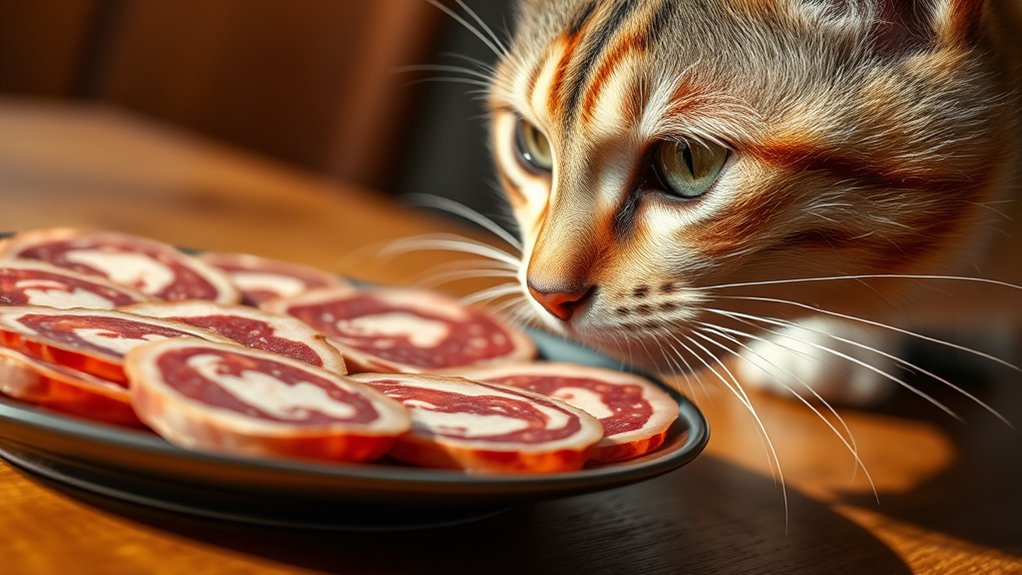
When cats consume salami, the high levels of salt, fat, and spices present serious health risks. Salami contains excessive sodium, about 200 mg per slice, which far exceeds a cat’s recommended daily intake of 40 mg. This puts them at risk of sodium poisoning.
The high-fat content, often up to 75%, can contribute to obesity and pancreatitis, both dangerous conditions for cats.
Excessive fat, sometimes reaching 75%, increases cats’ risk of obesity and pancreatitis, serious health threats.
Plus, spices like garlic and onion powder are toxic to cats and may cause vomiting, anemia, and other severe health issues.
On top of that, preservatives such as nitrates and nitrites in salami pose potential long-term health hazards even in small amounts.
Because of these factors, feeding salami to your cat can jeopardize their health and wellbeing.
Signs Your Cat Reacts to Salami and What to Do
If your cat happens to eat some salami, keep an eye out for symptoms like vomiting, diarrhea, increased thirst, or lethargy.
These signs might mean your cat is having a negative reaction or could even be experiencing sodium poisoning, especially within the first few hours.
Common Reaction Symptoms
Although salami might seem like a tasty treat, it can trigger several adverse reactions in cats due to its high salt content and potentially toxic ingredients like garlic and onion powder.
When cats eat salami, common symptoms include vomiting, diarrhea, and increased thirst, primarily from sodium overload.
Sodium poisoning may cause weakness or lethargy, which signals serious health risks. Garlic toxicity is particularly concerning; watch for pale or yellow gums as key indicators.
Appetite changes, such as a decreased interest in food, often come along with digestive upset or toxicity.
If you notice these symptoms or suspect your cat consumed a significant amount of salami, contact a veterinarian promptly. Early recognition and professional guidance are essential to manage these risks and keep your cat healthy.
Immediate Steps To Take
Recognizing the signs of salami ingestion in your cat helps you act quickly to prevent serious complications. Cat owners should monitor symptoms such as vomiting, diarrhea, lethargy, and increased thirst, which may indicate sodium poisoning or gastrointestinal upset.
Pale or yellow gums suggest garlic toxicity, which means you need to get your cat to a vet right away. It’s also important to assess the amount ingested; small amounts might not cause harm, but larger quantities increase health risks.
If you notice any symptoms, don’t hesitate to contact your veterinarian promptly.
| Symptom | Possible Cause |
|---|---|
| Vomiting/Diarrhea | Sodium poisoning |
| Lethargy/Weakness | Garlic toxicity |
| Pale/Yellow gums | Urgent veterinary care |
Timely recognition and response are essential to protect your cat’s health after salami exposure. So, keep an eye out and act fast if you suspect your cat has eaten salami.
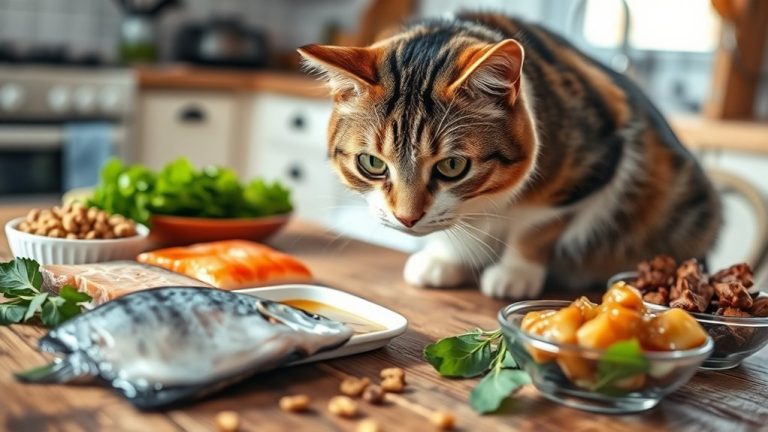
Safer and Healthier Treat Alternatives to Salami
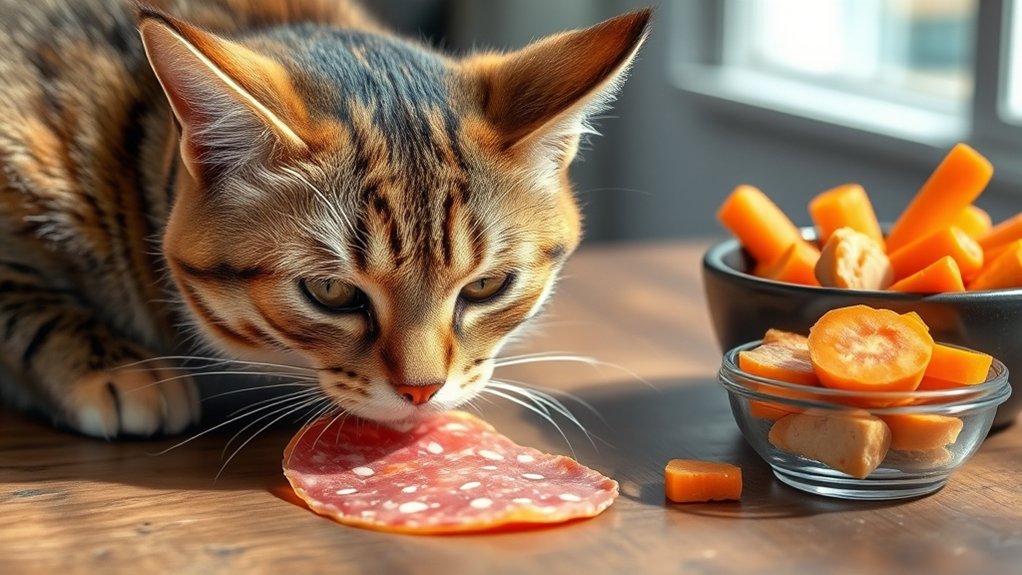
When choosing treats for your cat, opting for safer and healthier alternatives to salami helps protect their well-being from harmful additives and excessive fat.
Small portions of cooked meat, such as unseasoned chicken or turkey, provide essential protein without risks.
Plain cooked fish like salmon or tuna can also be offered in moderation, delivering beneficial omega-3 fatty acids.
Plain cooked egg serves as another protein-rich option, free from harmful spices.
Commercial cat treats, formulated to meet feline dietary needs, offer a convenient and safer choice compared to human foods.
Freeze-dried treats, often made from raw meat, provide concentrated nutrition and a crunchy texture but require careful handling.
These healthier and safer alternatives support your cat’s nutritional requirements without exposing them to the dangers found in salami.
It’s all about keeping your furry friend happy and healthy with treats that truly benefit them.
How to Safely Share Salami and Other Treats With Your Cat
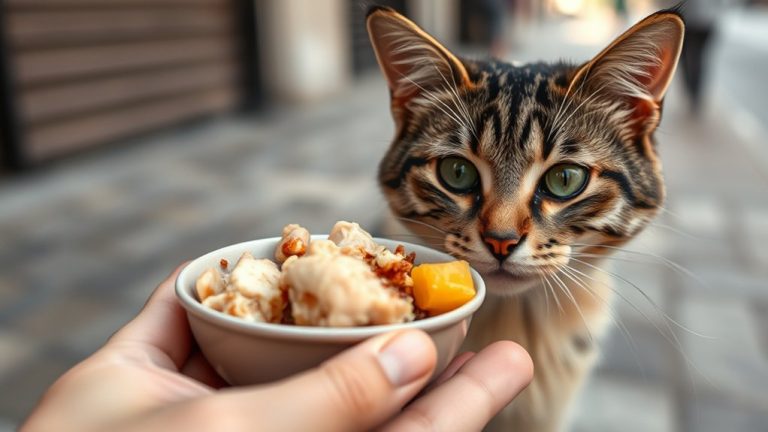
If you decide to share salami or other human treats with your cat, proceed with caution to protect their health. Always consult a veterinarian first to verify salami or any new treat is safe for cats. Offer only occasional nibbles of natural salami, which is low in toxic ingredients like garlic or onion powder, and monitor for adverse reactions such as vomiting or diarrhea.
Remember, salami is high in salt and fat, so limit portions and frequency. Consider healthier alternatives like cooked chicken or commercial cat treats.
| Action | Recommendation |
|---|---|
| Consult veterinarian | Before introducing treats |
| Portion size | Tiny pieces |
| Frequency | Occasional nibbles |
| Type of salami | Natural, minimal salt |
| Monitor | Check for adverse reactions |
What Happens If Your Cat Eats Too Much Salami?
Although salami might seem like a harmless snack, feeding your cat too much can quickly lead to serious health issues because of its high sodium and fat content.
Salami contains a lot of sodium, about 200 mg per slice, which is way more than the 40 mg a 4 kg cat should have daily.
One slice of salami has 200 mg of sodium, far exceeding a 4 kg cat’s daily 40 mg limit.
Eating too much salami can cause salt poisoning. You might notice symptoms like vomiting, diarrhea, increased thirst, and lethargy showing up within hours.
On top of that, the saturated fat in salami can lead to obesity and pancreatitis if your cat eats it regularly in large amounts.
Some ingredients in salami, like garlic and onion, are also harmful to cats and can cause toxic reactions such as weakness and vomiting.
Avoiding Toxic Ingredients in Salami for Cat Safety
Recognizing the potential dangers of feeding your cat too much salami leads naturally to understanding which specific ingredients pose the greatest risks.
Salami often contains toxic ingredients like garlic and onion powder, both harmful to cats’ health and wellbeing. These can potentially cause anemia.
The high sodium content in salami can trigger dehydration and sodium poisoning. Symptoms can show up within hours, so it’s something to watch out for.
Moreover, preservatives such as nitrates and nitrites may build up over time, increasing health risks.
Some salami varieties also include mustard seeds or chilis, which can upset your cat’s stomach.
To protect your cat, always read ingredient labels carefully. Avoid salami containing these harmful substances.
Prioritizing your cat’s safety means steering clear of salami to prevent serious complications linked to these toxic ingredients.
Frequently Asked Questions
Can Kittens Eat Small Amounts of Salami Safely?
You shouldn’t feed kittens small amounts of salami because of their sensitive digestive systems and the safety concerns around ingredients like garlic and onion powder. These can be harmful to kittens and might cause stomach upset.
Instead, try to focus on safe meat alternatives that offer better nutritional value for your little furry friend. It’s always best to stick with foods made specifically for kittens to keep them healthy.
If you do give treats, remember to do so in moderation to avoid any signs of distress like vomiting. Keeping treats minimal helps make sure your kitten stays happy and comfortable.
It’s really important for owners to be aware of what they’re feeding their kittens.
And don’t forget — always check with your vet before offering any human food. That way, you can protect your kitten’s health effectively.
Does Salami Affect a Cat’s Appetite for Regular Food?
Salami can tip the scales of your cat’s appetite, like a siren song leading them away from balanced meals. The salami flavor preferences often overshadow regular cat food, disrupting feline dietary habits.
High sodium effects and processed meats concerns contribute to feeding behavior changes, making your cat favor treats over essential protein sources.
To maintain nutritional balance importance, offer cat food alternatives and follow moderation guidelines to protect your cat’s health.
It’s all about keeping things balanced so your cat stays happy and healthy. Just remember, treats like salami should never replace their regular meals.
How Quickly Do Symptoms Appear After a Cat Eats Salami?
Symptoms typically appear within hours after your cat eats salami because of its high sodium levels and fatty content. Gastrointestinal issues like vomiting or diarrhea can start within three hours.
This is especially true if the salami’s ingredients trigger food allergies or overwhelm your cat’s digestion.
Because of these risks, you should practice strict portion control. It’s always a good idea to consult your vet before offering any salami.
Honestly, it’s safer to stick with vet-approved treats to keep your cat’s health in check.
Are There Any Long-Term Effects From Occasional Salami Consumption?
Like a slow drip wearing away stone, occasional salami consumption can quietly raise salami toxicity levels in your cat.
You’ll notice sodium intake concerns and fat content implications that may cause digestive issues and weight gain risks.
Over time, these can contribute to long-term health impacts such as organ stress effects and nutritional deficiencies.
Behavioral changes might also emerge, signaling your cat’s discomfort.
It’s best to avoid making salami a regular treat.
Can Salami Cause Allergic Reactions in Some Cats?
Yes, salami ingredients like garlic and onion powder can cause food allergies in some cats, disrupting cat digestion.
Common symptoms include vomiting, diarrhea, itching, and swelling. You should follow feeding guidelines carefully and seek veterinary advice before offering salami.
Considering its low nutritional value for cats, it’s wiser to choose safe alternatives.
As a pet owner, take precautions to avoid allergic reactions and protect your cat’s health. Better safe than sorry when it comes to your furry friend!
Conclusion
Imagine your curious cat eyeing that spicy slice of salami, its aroma tempting but risky. While it’s tempting to share, remember the salt, fat, and spices can harm your feline friend. Instead, opt for safer, healthier treats that support their well-being.
If your cat does nibble salami, watch closely for any reactions and act quickly. Prioritizing your cat’s health means choosing wisely and keeping harmful ingredients far from their reach.