Can I Shave My Cat – When It Helps And When It Hurts
You can shave your cat when severe matting causes pain or medical issues require better hygiene. In warm climates, trimming may ease heat stress, especially for long-haired breeds. However, shaving risks skin irritation, cuts, and disrupts natural temperature control, so professional help is best.
Regular grooming usually prevents the need for shaving. If your cat shows discomfort or matting, understanding safe grooming and alternatives can help you keep your cat healthy and comfortable.
When Should You Shave Your Cat?
When should you consider shaving your cat? Shaving is appropriate mainly when your cat’s fur has severe matting. This matting can cause pain and skin irritation if left untreated.
Consider shaving your cat only if severe matting causes discomfort or skin issues.
In these cases, a professional groomer should handle the shaving to avoid injury and stress. There are also medical reasons, like preparing for surgery or treating skin conditions, that mean shaving is important. It helps maintain hygiene and lets you monitor skin health effectively.
If your cat lives in a warm climate, they might benefit from partial fur trimming to help with temperature regulation.
But complete shaving usually isn’t a good idea because it can mess with their natural ability to regulate heat.
Instead, regular grooming and brushing are the best ways to manage shedding and prevent matting. This keeps your cat comfortable and healthy without needing to shave unnecessarily.
Signs Your Cat Needs a Shave
You’ll want to keep an eye out for severe matting, especially if your cat seems uncomfortable or in pain. That usually means a shave is necessary to prevent skin problems.
Also, if your cat starts showing signs of heat stress—like excessive panting or restlessness—a trim can really help them stay cool.
Catching these signs early is key to making sure your cat stays comfortable and healthy.
Identifying Severe Matting
Although regular grooming helps prevent tangles, severe matting can still develop and cause serious discomfort for your cat. Severe matting appears as dense, felted patches of matted fur that pull tightly against the skin. These mats often trap moisture and dirt, which creates a risk of skin infections and sores.
If you notice your cat excessively grooming or biting specific areas, it’s a clear sign of discomfort due to mats. Long-haired breeds are especially prone to these grooming needs, and mats can greatly restrict your cat’s mobility.
So, it’s important to pay close attention to common trouble spots like behind the ears and under the legs.
Identifying severe matting early helps you decide if shaving is necessary to relieve your cat’s pain and improve their quality of life. It’s all about keeping your furry friend comfortable and happy.
Observing Heat Stress
If your cat shows signs like excessive panting, restlessness, or frequently seeking out cool surfaces, they might be experiencing heat stress and could benefit from a trim or shave.
Long-haired cats are especially prone to overheating since their thick coats trap heat, making it harder to regulate body temperature.
Excessive shedding or constant grooming can indicate your cat is struggling to stay cool. You might also notice changes in behavior, such as hiding or increased irritability.
In these cases, professional grooming offers a safe way to shave your cat, reducing fur burden and preventing matting, which can worsen discomfort.
Paying close attention to these signs helps you decide when grooming and shaving can improve your cat’s comfort in hot weather.
It’s all about keeping them safe and comfortable when the temperature rises.
Risks of Shaving Your Cat
You should know that shaving your cat can cause skin injuries like cuts and irritation because their skin is really delicate.
It’s not just about the skin though—it can also mess with how they naturally regulate their temperature. That means your cat might end up overheating or feeling too cold.
On top of that, the whole shaving process can stress them out, which might lead to discomfort or even changes in their behavior.
Skin Injury Risks
Because cats have thin, delicate skin, shaving them carries significant risks of cuts and injuries if not done properly.
Shaving can cause serious skin issues, especially when improper shaving techniques are used. Clippers that overheat may lead to skin irritation or even burns, worsening your cat’s skin conditions.
Without their protective fur, your cat’s thin skin becomes vulnerable to sunburn, insect bites, and scratches.
To protect your cat’s well-being and animal welfare, it’s essential to rely on professional groomers who understand how to minimize these risks. They use the right tools and methods to prevent injury.
If you try shaving without proper knowledge, you risk causing pain and lasting damage to your cat’s sensitive skin.
Stress And Discomfort
Although shaving may seem like a simple grooming solution, it can cause your cat significant stress and discomfort. Many cats aren’t used to the noise and vibration of clippers designed for pets, which can provoke anxiety and fear.
Shaving might also irritate your cat’s skin, leading to redness or even cuts, since their delicate skin is more vulnerable during grooming.
Plus, behavioral changes like increased aggression or withdrawal can happen if your cat feels uneasy or looks different.
To minimize these risks, always seek professional advice before shaving. A groomer experienced in handling cats can really help reduce stress and avoid skin irritation.
Temperature Regulation Issues
When you shave your cat, you interfere with its natural ability to regulate body temperature, which can lead to several health risks.
Shaving a cat removes its insulation, making it harder to stay warm in cooler weather. At the same time, exposed skin becomes vulnerable to sunburn, especially for light-colored or thin-furred cats. This increases the risk of painful skin conditions.
This disruption in temperature regulation can cause discomfort and may even trigger behavioral changes due to stress. Plus, cats rely on their fur to detect environmental changes, so shaving can affect their sensory functions.
Before deciding to shave your cat, carefully consider your pet’s individual situation, including medical conditions and climate. This helps avoid unintended harm and guarantees their well-being.
How to Shave or Trim Your Cat Safely
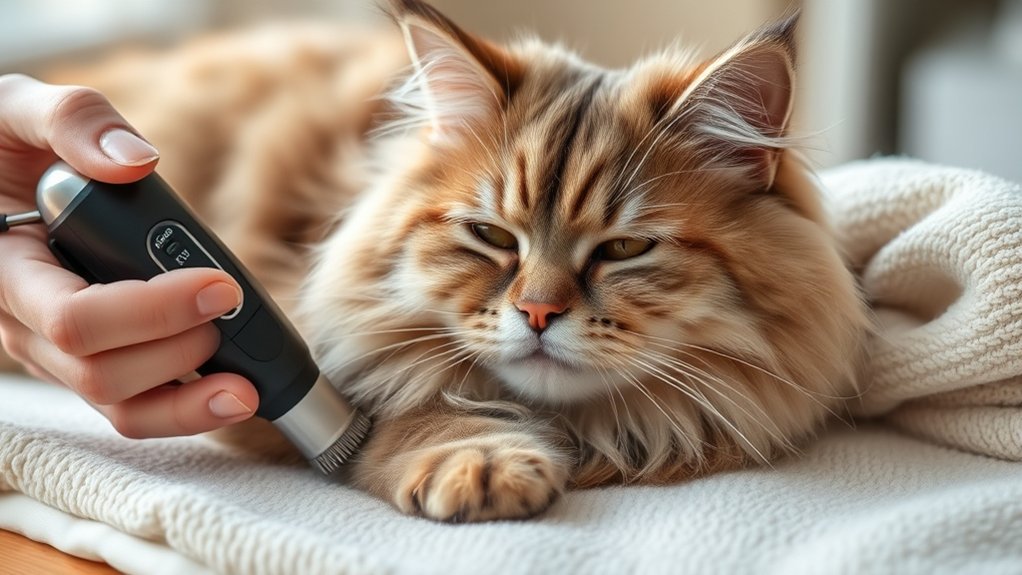
Shaving or trimming your cat requires careful preparation and patience to guarantee their safety and comfort. As a cat owner, it’s best to seek professional help when shaving is necessary, since groomers know how to handle sensitive areas and reduce your cat’s stress.
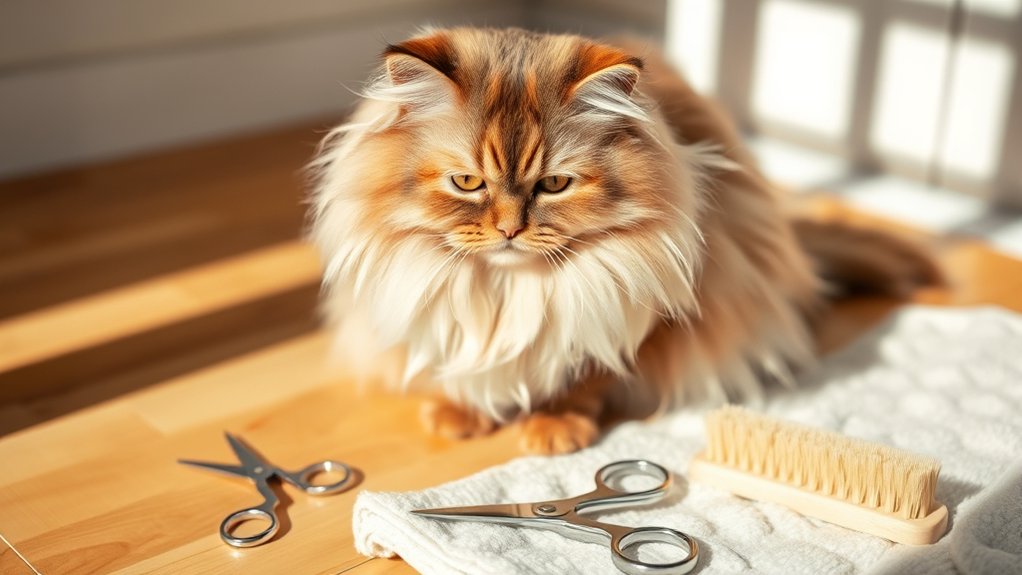
Before using electric clippers, trim any long or matted fur with scissors. Always shave your cat’s coat gradually, moving in the direction of hair growth. Avoid sensitive spots like the face, belly, and paws to keep your cat calm.
Prepare a quiet space and use calming techniques such as treats and gentle petting. After grooming, closely monitor the shaved areas for redness or irritation. You might also want to consider applying pet-safe sun lotion to protect exposed skin.
This approach guarantees a safe, comfortable experience for your cat.
Common Cat Shaving Styles
Anyone considering grooming their cat will find several popular shaving styles to choose from, each serving different purposes and aesthetic preferences.
The lion cut shaves the cat’s fur on the body but leaves a mane and tail fluffy. This gives a striking look while helping manage matted hair.
The teddy bear cut keeps ½ to 1 inch of fur, offering protection against sunburn and cold with a cute, rounded appearance.
A belly shave targets the underside, preventing mats without drastically shortening the entire coat.
For long-haired cats, summer trims reduce fur bulk to help with heat, but you should be cautious to avoid skin exposure.
Many pet owners choose to shave their cats with guidance from professional groomers who can recommend the safest style for your cat’s coat condition.
Alternatives to Shaving for Mats and Shedding
Although shaving might seem like the easiest solution for dealing with mats and shedding, there are effective alternatives that protect your cat’s skin and coat health. Instead of shaving a matted cat, try these approaches:
Shaving mats may seem simple, but gentler methods protect your cat’s skin and coat health.
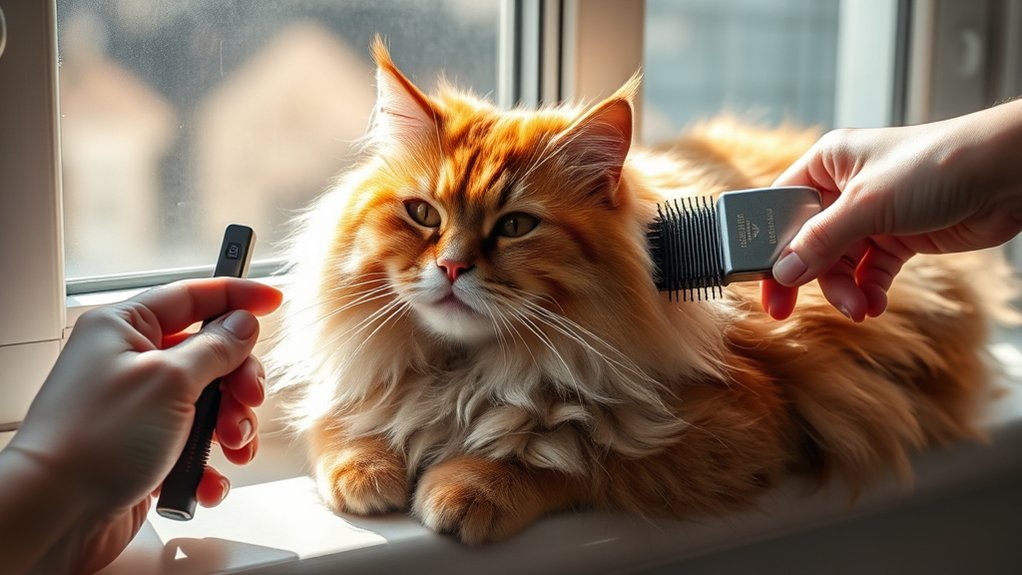
1. Regular brushing and daily brushing**: Use appropriate tools** like rubber brushes or detangling combs to reduce shedding and prevent mats, especially in long-haired breeds.
This also distributes natural oils throughout your cat’s coat, keeping it healthy.
2. Detangling sprays: These make grooming easier and less stressful, helping you gently work through tangles without harming your cat’s skin.
3. Consult a professional groomer**: They can offer tailored advice and techniques to maintain your cat’s coat** without resorting to shaving, ensuring your cat stays comfortable and well-groomed.
Caring for Your Cat’s Skin After a Shave
When you shave your cat, their sensitive skin becomes more exposed and needs extra care to prevent irritation and discomfort. It’s important to keep a close eye on their skin for any redness, irritation, or signs of infection since exposed skin is more vulnerable.
You should use pet-safe sunscreen on shaved areas, especially for lighter-skinned cats or when it’s sunny outside. This helps protect them from getting sunburned.
Also, keeping your cat’s environment cool is a good idea because their natural insulation is gone, and they can’t regulate temperature as well.
To soothe your cat’s skin, you can apply gentle, hypoallergenic moisturizers or conditioners made specifically for pets.
Make sure to watch for signs of discomfort, like excessive licking or scratching, which might mean irritation or an allergic reaction. Taking these simple steps will help your cat’s shaved skin heal smoothly and stay healthy.
When to Get Professional Grooming or Veterinary Help
How do you know if your cat needs professional grooming or veterinary help? Consider these signs:
- Severe matting: Professional grooming is essential to safely remove mats without injuring your cat’s skin or causing stress.
- Health issues or skin infections: Seek veterinary advice to address underlying health concerns that require fur removal for treatment or observation.
- Anxious or aggressive cats: Professionals can handle your cat safely, ensuring a stress-free grooming experience that you might struggle with.
Regular vet check-ups help identify health problems affecting coat condition, guiding tailored grooming schedules.
Routine vet visits reveal coat health issues and help customize grooming plans for your cat.
Professional groomers not only manage shedding but also prevent matting, promoting your cat’s overall comfort and health.
Don’t hesitate to reach out for expert support when these situations arise. It’s always better to get help early than let problems get worse. Your cat will thank you!
Frequently Asked Questions
Can Shaving Affect My Cat’s Natural Body Temperature?
Yes, shaving can affect your cat’s natural temperature regulation by removing fur insulation that protects their skin and helps manage summer heat and winter warmth.
Without that fur, your cat may face health risks like overheating or cold sensitivity.
Depending on their coat type, grooming alternatives like regular brushing might be safer and more effective.
Always consider your cat’s specific needs before shaving to support their comfort and overall well-being.
How Often Should I Groom My Cat to Avoid Shaving?
Think of grooming frequency as tuning an instrument. Regular care keeps your cat’s coat in harmony.
For long-haired breeds, daily grooming helps prevent fur matting and controls shedding.
Short-haired cats usually need brushing every few weeks. Adjust your grooming techniques with seasonal changes. Be gentle to avoid skin sensitivity.
Tailor sessions to breed specifications. You’ll enjoy health benefits like reduced mats and a happier, healthier feline companion.
Does Shaving Impact a Cat’s Behavior or Mood?
Yes, shaving can cause behavioral changes in your cat, including mood swings and increased cat anxiety.
It often leads to grooming stress, as cats may over-groom trying to compensate for lost fur. This can disrupt feline comfort and affect your bonding time.
Maintaining regular grooming routines helps prevent the need for shaving, reducing stress relief challenges and supporting your cat’s emotional well-being.
Always monitor their mood closely after any grooming changes. It’s important to keep an eye on how your cat is feeling so you can help them adjust.
Can Certain Cat Breeds Be Shaved More Safely Than Others?
You can shave certain cat breeds more safely than others. For example, Maine Coon and Persian coats often need shaving because of heavy matting and grooming sensitivity.
On the other hand, Siamese fur usually doesn’t require it since it’s easier to maintain.
Hairless breeds obviously don’t need shaving at all. When thinking about shaving, keep skin exposure and shedding patterns in mind.
Breeds with thick undercoats might’ve temperature issues if shaved.
What Tools Are Best for At-Home Cat Grooming Without Shaving?
For at-home cat grooming without shaving, focus on grooming brushes and de-shedding tools to keep your cat’s coat healthy and tangle-free.
Use grooming gloves for gentle massaging and shedding control. Regularly trim with nail clippers, clean ears with ear cleaners, and tackle pests with flea combs.
Grooming wipes and bathing supplies help maintain cleanliness. These tools make grooming comfortable and effective, keeping your cat happy and well-groomed without needing to shave.
It’s easier than you might think once you get the hang of it!
Conclusion
You might worry that shaving your cat will stress them out or harm their skin, but when done carefully and for the right reasons, it can actually improve their comfort and health. Just remember, not every cat needs a shave. Know the signs and risks first.
If you’re unsure, consulting a professional groomer or vet can make all the difference. Taking these steps guarantees your furry friend stays happy and healthy.