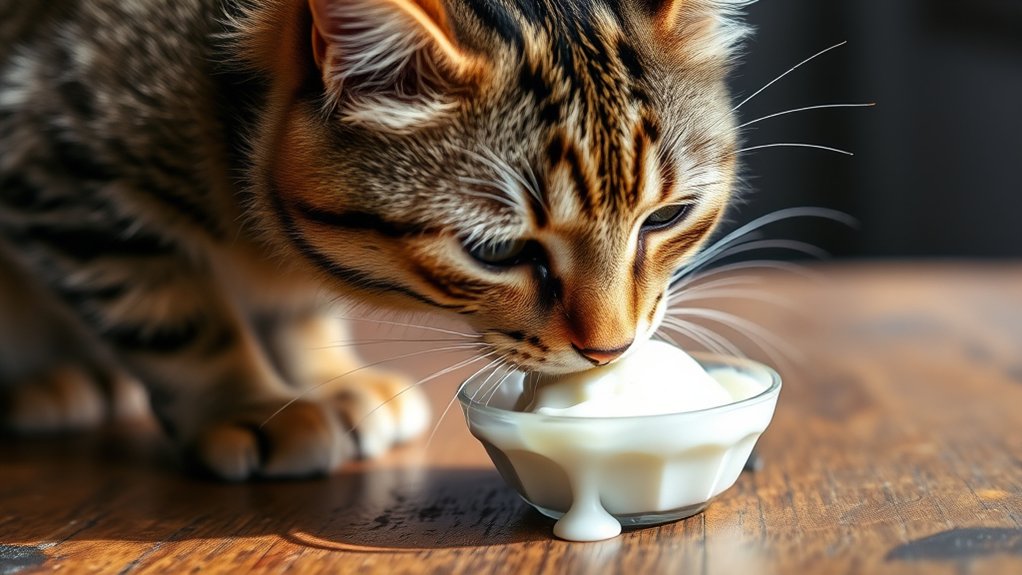
Can A Cat Eat Ice Cream – Is It Safe For Cats
You shouldn’t give your cat regular ice cream because most cats are lactose intolerant and can get upset stomachs, diarrhea, or vomiting. Plus, ice cream often contains harmful ingredients like chocolate, xylitol, or high sugar that can cause serious health problems.
Even lactose-free varieties aren’t a safe choice due to fat and sugar content. If you want to treat your cat safely, understanding these risks and alternatives is important to keep them healthy. So, it’s better to stick with treats made specifically for cats.
Can Cats Eat Ice Cream? The Quick Answer
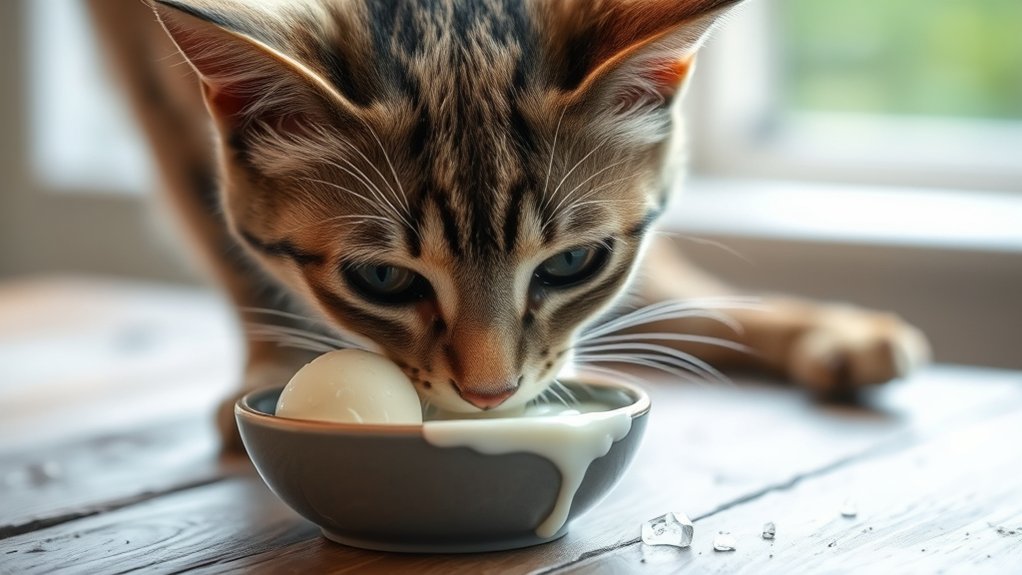
Wondering if you can share your ice cream with your cat? While it might seem like a fun treat, cats eat ice cream poorly due to widespread lactose intolerance. Most cats lack the enzyme needed to digest lactose, causing digestive upset like diarrhea or vomiting.
Beyond lactose issues, ice cream contains high levels of sugar and fat, which aren’t safe for cats and can lead to obesity or diabetes.
Even lactose-free ice cream still has added sugars and unhealthy ingredients that don’t meet your cat’s dietary needs.
Why Ice Cream Is Unsafe for Cats: Key Risks
Although ice cream might seem like a harmless treat, it poses several significant risks to your cat’s health. Many ice cream flavors contain ingredients that are toxic to cats, such as chocolate, nuts, and artificial sweeteners like xylitol.
Ice cream may seem harmless but often contains toxic ingredients like chocolate, nuts, and xylitol harmful to cats.
Beyond toxicity, the high sugar and fat content in ice cream can contribute to obesity and related health problems, which already affect a large percentage of cats.
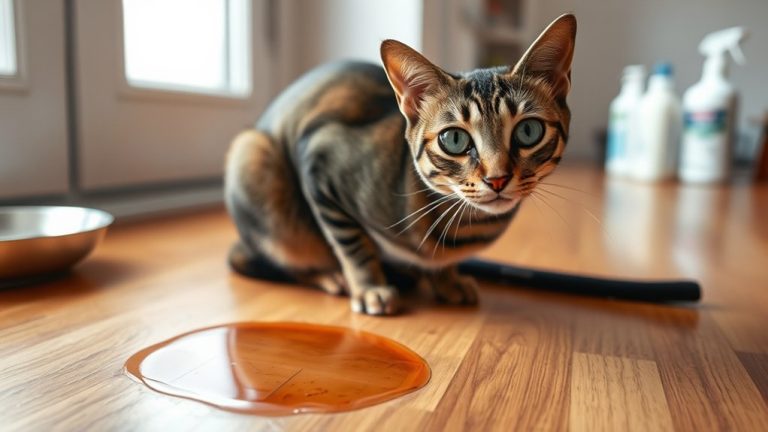
Since most cats are lactose intolerant, consuming ice cream can trigger gastrointestinal distress, including diarrhea, vomiting, and bloating.
Even lactose-free ice cream options aren’t safe, as they often still have high sugar levels and harmful additives.
Given these factors, it’s best to avoid offering your cat any type of ice cream flavors to keep them healthy and safe. It might seem like a nice treat, but there are much better options out there for your furry friend!
How Lactose Intolerance Affects Cats Eating Ice Cream
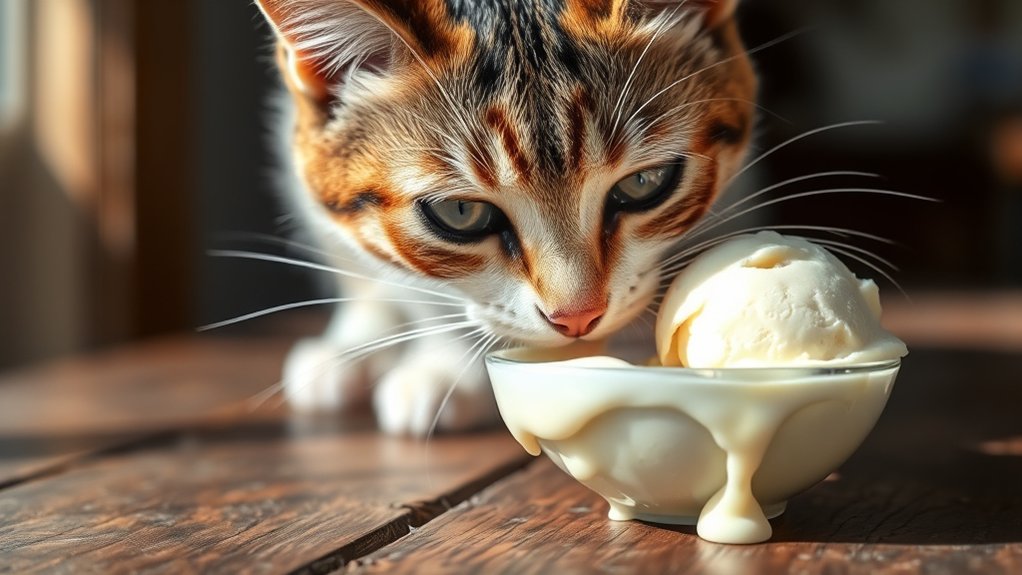
Since most adult cats lack the enzyme lactase, they can’t properly digest the lactose in ice cream. This often leads to uncomfortable digestive issues for your pet.
When your cat consumes ice cream containing lactose, it can trigger symptoms like diarrhea, bloating, and gas. These symptoms happen because the undigested lactose ferments in the gastrointestinal tract, causing discomfort. This can distress your cat quite a bit.
Even lactose-free ice cream isn’t a safe alternative because its high sugar and fat content can upset your cat’s digestive system.
Understanding lactose intolerance helps you avoid giving ice cream to your feline friend. This way, you prevent unnecessary gastrointestinal problems.
Always prioritize your cat’s health by steering clear of lactose-rich treats like ice cream, which aren’t made for their sensitive digestive systems.
Dangerous Ice Cream Ingredients Cats Must Avoid
Beyond lactose intolerance, several other ingredients in ice cream pose serious risks to your cat’s health.
Chocolate, for example, is highly toxic to cats and can trigger vomiting, seizures, or even cardiac failure.
Similarly, xylitol, a sweetener found in some ice creams, causes dangerous hypoglycemia and potential liver failure.
Raisins and grapes, sometimes included in flavors, can lead to kidney failure and must be strictly avoided.
High sugar content in ice cream also contributes to obesity and diabetes in cats, with many varieties containing significant carbs.
Furthermore, artificial flavorings and colorants may irritate your cat’s digestive system, causing vomiting or diarrhea.
To protect your cat, always check ingredients carefully and avoid feeding them ice cream with these toxic components.
It’s better to be safe than sorry when it comes to your furry friend’s health!
What Digestive Problems Can Ice Cream Cause in Cats?
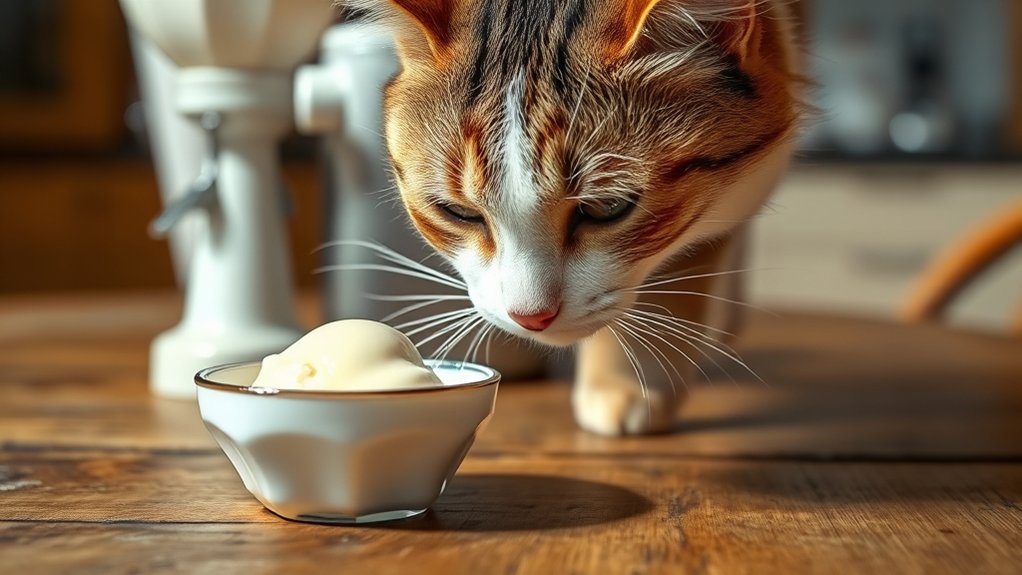
How exactly does ice cream affect your cat’s digestion? Many cats are lactose intolerant, so the lactose in ice cream can trigger digestive problems like vomiting, diarrhea, and bloating.
Because they can’t break down lactose effectively, your cat’s stomach may become upset, leading to discomfort and gastrointestinal issues.
Plus, the high fat content in ice cream can cause further digestive disturbances such as constipation and gas. The sugar and artificial additives also make these problems worse, potentially disrupting your cat’s digestive balance.
Over time, this can increase the risk of long-term gastrointestinal sensitivity and other health concerns.
What Happens If Your Cat Eats Too Much Ice Cream?
When your cat eats too much ice cream, you’ll likely notice immediate digestive issues such as vomiting, diarrhea, and bloating. These all come from their inability to properly digest lactose.
Because ice cream has a lot of fat and sugar, eating too much can cause more serious problems over time. Remember, cats really shouldn’t have ice cream regularly because it can lead to some health issues.
For example, it can cause gastrointestinal problems that make your cat uncomfortable and dehydrated. It might also increase their cravings for fatty snacks, which can lead to poor nutrition.
Over the long run, this could mean risks like obesity, diabetes, and pancreatitis. So, it’s best to avoid giving your cat ice cream to keep these issues from happening.
Even small amounts can cause these effects, so sticking to a balanced diet is definitely the way to go for your cat’s health.
Safe and Healthy Frozen Treats for Cats
You can easily make safe frozen treats for your cat at home, like little tuna cubes or mixes using lactose-free yogurt.
These are simple to prepare and your cat will love them.
If you’re not up for making treats yourself, no worries—there are plenty of store-bought options made just for cats.
These are specially formulated to avoid anything harmful.
Just remember to pick treats that actually support your cat’s health.
Stay away from anything with added sugars or regular dairy, since those aren’t great for our feline friends.
Homemade Frozen Cat Treats
Although many commercial frozen treats for cats exist, making homemade frozen cat treats lets you control the ingredients and guarantee safety and nutrition. Unlike regular ice cream, which often contains lactose and sugar that can be harmful to cats, homemade options focus on feline-friendly components.
Here are some simple, safe-for-cats ideas you can try at home:
- Frozen Tuna Cubes: Freeze plain tuna in water for a protein-packed, tasty snack.
- Chicken Broth Pops: Use low-sodium chicken broth to create savory pops that hydrate your cat.
- DIY Kitty Ice Cream: Blend lactose-free yogurt with cooked chicken, then freeze for a nutritious, creamy treat.
Making these treats ensures your cats enjoy refreshing snacks without risking digestive upset from unsuitable ice cream.
It’s a fun and easy way to spoil your furry friends!
Store-Bought Safe Alternatives
Since regular ice cream poses risks due to lactose and sugar, choosing store-bought frozen treats specifically formulated for cats offers a safer way to keep your feline friend cool and satisfied. These safe alternatives provide hydration and essential nutrients without harmful additives.
You can find frozen treats that cater to your cat’s dietary needs while avoiding common ice cream ingredients.
| Treat Name | Description |
|---|---|
| Frozen Tuna Cubes | Tuna and water, protein-rich and hydrating |
| Chicken Broth Pops | Low-sodium broth, flavorful and invigorating |
| Catnip Ice Chips | Water with catnip, stimulates senses |
| DIY ‘Kitty Ice Cream’ | Lactose-free yogurt with cooked chicken |
| Applaws Lickable Treats | Freeze into pops for safe, tasty enjoyment |
These store-bought frozen options guarantee your cat stays safe and happy during warm days.
How to Introduce Treats and Control Portions
When you start giving your cat ice cream treats, begin with just 1 teaspoon if you have an average-sized cat, or 2 teaspoons for bigger breeds.
This way, you can keep an eye out for any reactions. It’s best to limit these treats to no more than once a month to prevent any digestive issues.
Keeping portions and how often you offer treats in check helps your cat stay safe and healthy.
Portion Size Guidelines
A small amount of ice cream can be introduced as an occasional treat for your cat, but it’s essential to keep portions minimal to avoid health risks. For average-sized cats, limit the portion size to 1 teaspoon; larger breeds can have up to 2 teaspoons.
Always watch for any adverse reactions like vomiting or diarrhea after the first taste.
To help you manage portion size and keep treats safe, consider these tips:
Offer ice cream no more than once a month to prevent digestive issues.
Use automatic feeders to control the amount and avoid overindulgence.
And if you’re looking for something a bit healthier, try frozen tuna cubes or lactose-free yogurt as alternatives.
Treat Frequency Limits
Giving your cat ice cream treats no more than once a month helps prevent digestive upset and unhealthy weight gain. Setting clear treat frequency limits is essential because overindulgence in high-fat foods like ice cream can cause gastrointestinal upset and nutritional imbalances.
When introducing ice cream, start with tiny portions, one teaspoon for average breeds and up to two for larger cats, to minimize digestive issues.
Regular treats can lead your cat to develop food obsession, which might make them reject their balanced, high-protein meals.
Always monitor your cat’s reaction carefully. If you notice any signs of gastrointestinal upset, stop offering the treat immediately.
Frequently Asked Questions
Can Kittens Eat Ice Cream Safely?
You shouldn’t give kittens ice cream because their digestion isn’t equipped to handle lactose or high sugar levels.
Instead, focus on treat alternatives with safe ingredients specifically designed for their dietary needs.
Try offering small amounts of plain cooked meat or specially formulated kitten treats. This way, you can also observe your kitten’s flavor preferences.
This approach supports their health without risking digestive upset or obesity. It keeps your kitten happy and safe.
Are There Any Cat-Friendly Ice Cream Brands?
You’ll find cat-friendly ice cream brands offering dairy alternatives that keep your feline safe and happy. Brands like Feline Greenies and PetSafe craft frozen cat snacks in popular cat ice cream flavors, including tuna or catnip-infused options.
If you prefer homemade cat treats, you can blend lactose-free ingredients for a safe dessert.
Always check the label for harmful additives and choose low-fat formulas to avoid digestive issues while treating your cat responsibly.
How Can I Tell if My Cat Is Lactose Intolerant?
You can tell if your cat is lactose intolerant by watching for symptoms like diarrhea, vomiting, bloating, or gas after they consume dairy.
These signs usually mean your cat’s digestive system is having trouble handling lactose.
To keep your feline friend comfortable, try offering dairy alternatives made specifically for cats.
See how they respond to those options.
If your cat still shows symptoms, it’s best to avoid all dairy products.
And of course, check in with your vet for advice that’s tailored to your cat’s health and nutrition.
What Are Signs of an Allergic Reaction to Ice Cream in Cats?
If your cat’s body suddenly feels like a storm after eating ice cream, watch for allergy symptoms like vomiting, diarrhea, or skin redness.
Digestive issues may cause discomfort and behavioral changes, signaling trouble.
If you notice swelling, difficulty breathing, or rapid heartbeat, seek vet advice immediately.
Instead of risking your cat’s health, offer safe alternatives like lactose-free treats or specially formulated cat snacks to keep them happy without harm.
Can Ice Cream Affect a Cat’s Behavior or Energy Levels?
Yes, ice cream can affect your cat’s energy and behavior. The sugar effects may cause sudden bursts of hyperactivity followed by lethargy, disrupting your cat’s energy balance.
Over time, frequent treats high in fat and sugar can lead to behavior changes like irritability or food obsession.
So, you should practice treat moderation to prevent these issues and keep your cat feeling good.
Always keep an eye out for any unusual reactions after giving treats. It’s better to be safe and make sure your furry friend stays happy and healthy.
Conclusion
Before you offer your cat a lick of ice cream, pause and picture the hidden risks lurking in that cold treat. Lactose intolerance and harmful ingredients could turn a sweet moment into a digestive nightmare. You might think it’s harmless fun, but too much ice cream can lead to serious health issues.
Instead, choose safe, vet-approved frozen snacks to keep your feline friend happy and healthy. When it comes to their diet, caution is key.