Why Do Cats Bite – Causes And Solutions
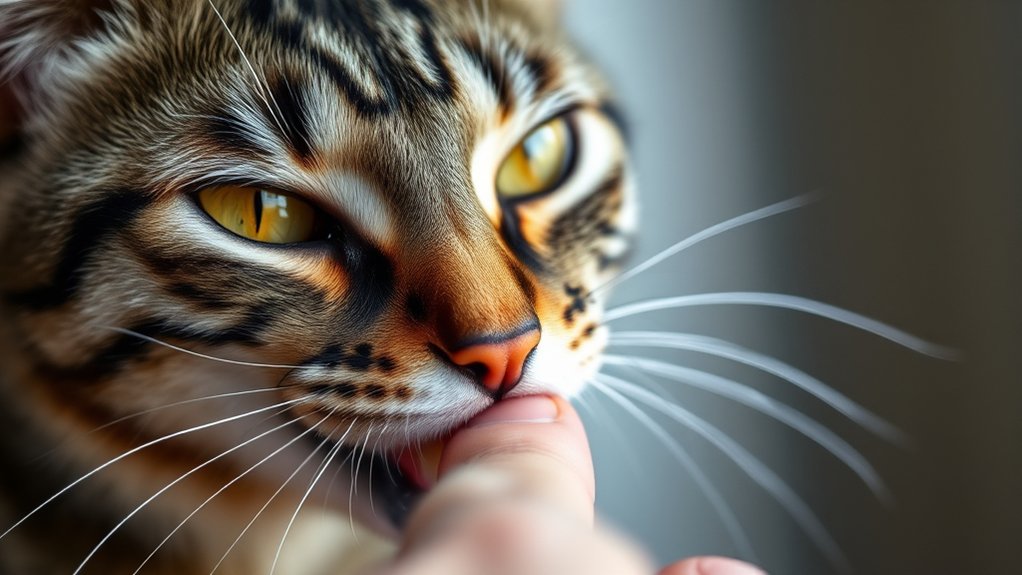
Cats bite for several reasons, including overstimulation during petting, playful instincts, fear, or discomfort from medical issues. You’ll notice different types of bites, from gentle “love bites” to aggressive ones accompanied by hissing or tense body language.
To manage biting, redirect your cat’s energy with toys and watch for signs of stress. It’s also important to respect their boundaries.
If biting persists, seeking a vet or behaviorist’s help can make a big difference. Exploring these causes and solutions will give you insight to improve your cat’s behavior and your bond.
Why Do Cats Bite? Common Causes Explained
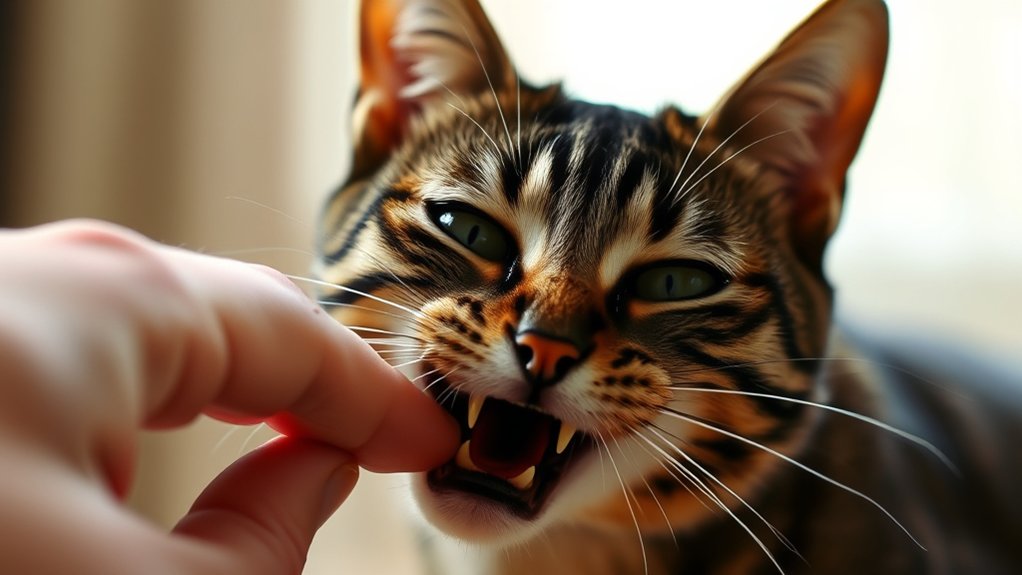
Although cats may seem unpredictable, understanding why they bite can help you respond appropriately and keep a positive relationship going.
Cat bites often come from several common reasons you should know about.
Overstimulation during petting is a frequent cause. Cats have different tolerance levels, and a sudden bite usually means they want you to stop.
Playful biting is another natural behavior tied to their hunting instincts. Fingers or toes often become targets during play.
Aggressive behavior can happen if your cat feels threatened or uncomfortable.
Sometimes medical problems, like dental pain or infections, can cause biting as a defensive reaction.
By learning these reasons why cats bite, you can better read their signals and address what’s really going on.
That way, you create a trusting and safe environment for both of you.
Fear and Stress: Triggers for Cat Biting
When your cat feels scared or stressed, you’ll often see signs like hissing, crouching, or flattened ears before they bite.
Changes in their environment or getting overstimulated during play can quickly ramp up their stress levels.
If you learn to recognize these body language cues, it’s much easier to understand what’s making them fearful and stop biting before it happens.
Signs Of Fear
If your cat starts hissing, crouching, or flattening its ears, these are clear signs of fear that can quickly escalate to biting as a defense mechanism.
You’ll also notice an arched back, a classic body language signal showing your cat is trying to appear larger and more aggressive to ward off perceived threats.
Understanding these signs helps you recognize when your cat feels overwhelmed or stressed.
Overstimulation during play can misdirect your cat’s natural hunting instincts, triggering biting as a way to communicate that it needs space.
Causes Of Stress
Recognizing the signs of fear in your cat is just the first step. Understanding what causes that fear or stress can help you address the root of biting behaviors. Your cat feels threatened or uneasy when exposed to stressful changes in their environment, like new pets, unfamiliar visitors, or loud noises.
These changes can trigger biting as a defensive reaction. Pay close attention to your cat’s body language. Flattened ears, hissing, or crouching all signal discomfort.
Overstimulation during play also contributes to biting because your cat’s hunting instincts may become misdirected toward you instead of toys.
Identifying early signs of stress, like hiding or excessive grooming, lets you adjust the environment to reduce anxiety and prevent aggressive responses.
Understanding these triggers promotes a safer, more comfortable space for both you and your cat.
Why Cats Bite Certain People More Than Others
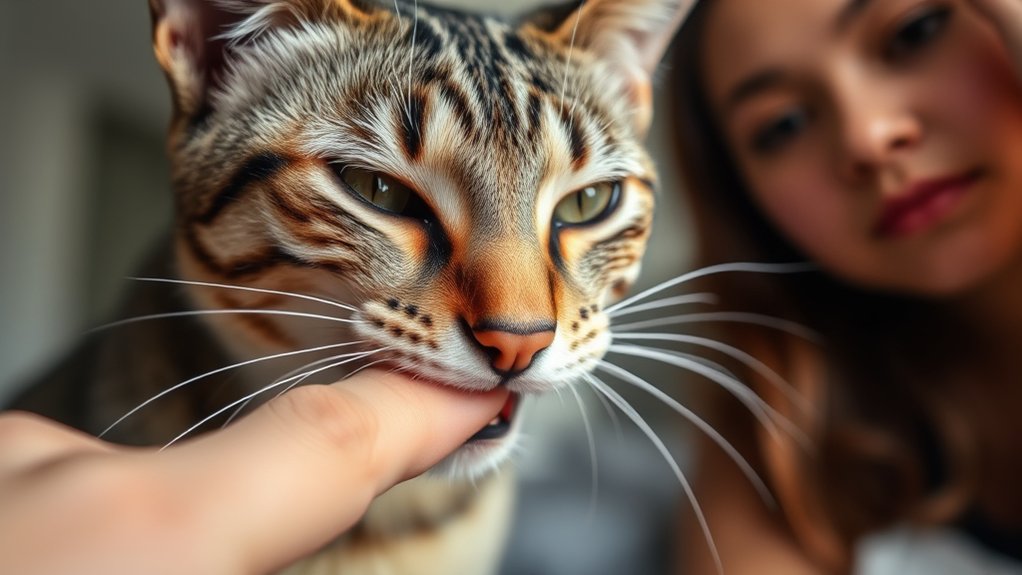
Although cats can be affectionate companions, they tend to bite certain people more than others due to a combination of fear, overstimulation, and sensitivity to specific behaviors. You might notice that cat biting often happens with individuals who unknowingly trigger fear responses, maybe because of unfamiliarity or past negative experiences.
Paying attention to a cat’s body language, like flattened ears or twitching tails, helps you recognize when they feel threatened or overstimulated. Some people’s movements or handling styles may provoke an aggressive cat, which can lead to bites.
Understanding these reasons behind biting lets you adjust your approach, reducing discomfort for both you and the cat. By reading these cues carefully, you can create safer, more positive interactions and prevent biting incidents effectively.
Types of Cat Bites: Love Bites vs. Aggression
You’ll want to learn how to tell the difference between love bites and aggressive ones because their meanings and contexts are pretty different.
Love bites tend to be gentle and usually mean your cat is a bit overstimulated. On the other hand, aggressive bites come with obvious warning signs like hissing or a tense body.
Knowing how to read these cues makes it easier to respond the right way and take care of your cat’s behavior with patience and understanding.
Recognizing Love Bites
When your cat gives you a gentle nip during petting or play, it’s often their way of saying they’ve reached their limit and want the interaction to pause. These love bites are a form of affectionate behavior, signaling boundaries without hostility.
Pay close attention to your cat’s body language. Relaxed posture, calm tail, and purring often come with these nips, showing contentment rather than aggression.
Overstimulation can trigger love bites, so recognizing signs like sudden tensing or abrupt purring stops helps you respond appropriately.
To prevent overstimulation, engage your cat with gentle play using appropriate toys. This lets them express natural behaviors safely.
Understanding these cues strengthens your bond and keeps interactions positive, making sure your cat feels secure and loved.
Signs of Aggression
Understanding the signs of aggression in cats is essential for distinguishing between harmless love bites and more serious, forceful bites. You’ll notice that a cat’s body language shifts with aggressive biting. Flattened ears, hissing, or a tense posture signal discomfort or threat.
Overstimulation indicators like sudden cessation of purring, rapid tail flicking, and rigid muscles often precede aggressive bites. Unlike love bites, which are gentle nips during play behaviors or after petting, aggressive biting is more intense and may cause injury.
Recognizing these signs of aggression helps you respond appropriately and prevents escalation. Paying close attention to your cat’s cues guarantees you respect their limits while maintaining positive interactions.
This way, you avoid misunderstandings between affectionate nips and defensive aggression.
Managing Different Bites
Distinguishing between love bites and aggressive bites helps you respond appropriately to your cat’s behavior. Love bites often signal overstimulation or a need to pause petting. Aggressive biting usually stems from fear or pain.
Recognizing behavioral triggers is key when managing biting types.
| Bite Type | Characteristics | Management Tips |
|---|---|---|
| Love Bites | Gentle nips during petting | Stop petting, watch for signs |
| Aggressive Biting | Sudden, forceful, may injure | Avoid triggers, consult vet |
| Behavioral Triggers | Overstimulation, fear, pain | Redirect to appropriate toys |
| Prevention | Body language cues | Use toys to prevent biting |
Play and Overstimulation: Why Cats Bite During Fun
Because cats naturally mimic hunting behaviors during play, they often bite to simulate capturing prey. This biting reflects their natural instinct and predatory behaviors. You can manage this by providing appropriate cat toys designed to redirect their energy away from your hands.
Overstimulation during play is another common reason for cat bites. As your cat becomes overly excited, it may nip to signal it needs a break. Understanding this helps you respond empathetically and maintain a positive bond.
Kittens especially require gentle guidance since they’re still learning social boundaries. By recognizing overstimulation and consistently using proper toys, you can reduce biting incidents during fun.
This makes playtime safe and enjoyable for both you and your cat.
Recognizing Overstimulation Signs Before Biting
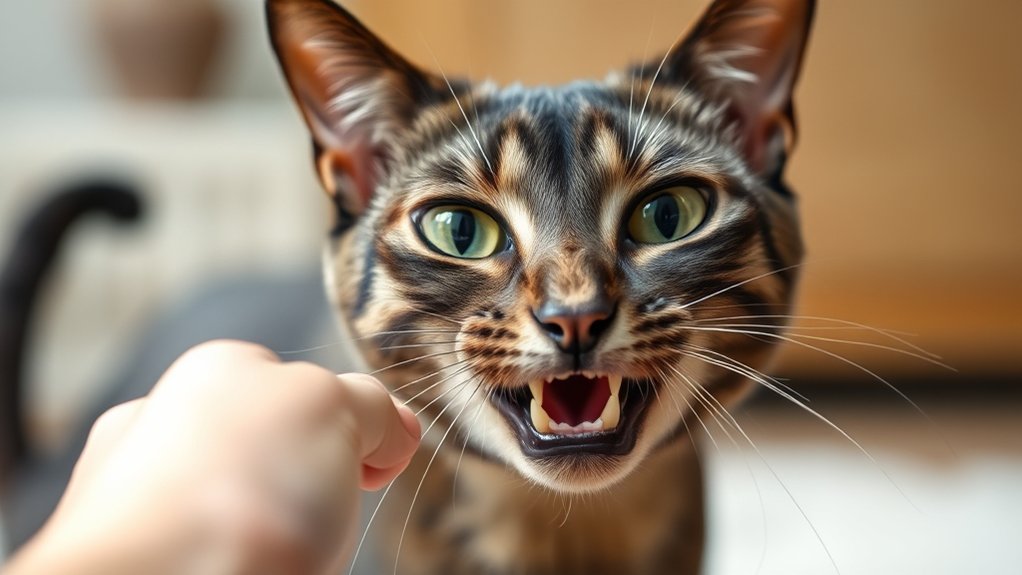
When your cat starts to show subtle signs like a twitching tail or flattened ears, it’s a clear signal that they’re becoming overstimulated and may soon bite. You need to recognize these signs early to prevent a cat bite and avoid escalating aggressive behavior.
Overstimulation often happens during excessive petting or play, especially around sensitive areas like the belly. Other signs include sudden stopping of purring, freezing, tensing, or withdrawing from interaction.
Hissing or growling also warns that your cat is overwhelmed.
Paying close attention to these cues helps you step in at the right time and respect their boundaries. By letting your cat initiate contact and recognizing overstimulation signs, you can prevent biting incidents and keep a positive, safe relationship with your feline friend.
Reading Body Language That Signals a Cat May Bite
You’ll notice warning signs like flattened ears, flicking tails, or sudden freezing when a cat feels threatened or uncomfortable.
These little signals are their way of saying, “Hey, back off a bit.” If you pay attention to these body language cues, it really helps you understand when a cat might bite.
Catching these signs early means you can avoid bites and keep your time with the cat safe and positive.
It’s all about tuning in and respecting their space.
Warning Signs To Watch
How can you tell if a cat is about to bite? Paying close attention to your cat’s warning signs is key.
When a cat feels threatened or overstimulated, their body language often shifts. Flattened ears, twitching or flicking tail, and hissing are clear indicators.
You might also notice sudden silence in purring or the cat withdrawing from interaction, signaling discomfort.
A tense or frozen body posture shows the cat is on edge and could respond aggressively if pushed.
Recognizing these signals helps you prevent bites by giving your cat space to calm down.
Watching the cat’s body closely guarantees you respect their limits, reducing the chance of unwanted biting and promoting a safer, more trusting bond.
Interpreting Cat Body Language
Understanding your cat’s body language is essential to recognizing when they might be on the verge of biting. Pay close attention to warning signs like flattened ears, hissing, or growling. These all indicate aggression and potential biting if you continue interacting with the cat.
A twitching tail and crouched posture often signal overstimulation or agitation. These are common precursors to a bite. Notice if your cat suddenly stops purring or withdraws. These subtle cues mean they’re uncomfortable and need space.
Increased body tension or freezing behavior suggests your cat feels cornered or frightened. They might be preparing to defend themselves.
Recognizing play aggression like swatting or stalking helps you avoid accidental bites during play. Adjusting how you engage with your cat’s body language is key.
How to Stop Your Cat From Biting
Although cat biting can be frustrating, you can effectively reduce this behavior by redirecting your cat’s natural instincts toward appropriate toys and paying close attention to their body language.
When your cat might bite, recognizing signs of overstimulation helps you stop interactions before biting occurs.
To help manage biting behavior, try these steps:
- Provide appropriate toys to satisfy your cat’s hunting instincts.
- Monitor body language for signs of discomfort or agitation.
- Calmly stop play or petting immediately if your cat bites.
- Consult a veterinarian or behaviorist if biting continues, to rule out medical issues.
Redirecting Cat Biting: Using Toys and Playtime
Redirecting your cat’s biting behavior towards appropriate toys and structured playtime offers a practical way to manage their natural hunting instincts. By using toys instead of your hands, you teach your cat to associate play with objects, not human skin.
Regular playtime fulfills their hunting needs, which reduces biting caused by boredom or misdirected aggression. Introducing various toys keeps your cat mentally engaged and satisfied.
| Toy Type | Purpose | Benefit |
|---|---|---|
| Kicker Toys | Mimic prey movements | Encourages natural hunting |
| Interactive Toys | Stimulate mental focus | Reduces boredom-related biting |
| Wand Toys | Maintain distance | Prevents hand-targeted biting |
Consistently redirect biting to toys with positive reinforcement to build healthy play habits. It really helps your cat learn what’s okay to bite and what’s not.
When to Seek Help From a Vet or Cat Behaviorist
When should you consider seeking professional help for your cat’s biting behavior? If your cat’s bites are sudden, frequent, or come with aggression, it’s really important to check with a vet first. This helps rule out any medical issues that might be causing the problem.
If your cat’s biting is sudden, frequent, or aggressive, consult a vet to rule out medical causes.
Catching things early can stop the behavior from getting worse and keep your cat feeling good.
You should definitely seek help if you notice biting along with symptoms like lethargy, appetite changes, or hiding.
Or if your cat shows more aggression or seems distressed without any clear reason.
Also, if the biting keeps happening even after you’ve tried managing it yourself, it’s time to get some professional advice.
Stress or anxiety from changes in your cat’s environment can also trigger biting.
In these cases, a cat behaviorist can help by creating a plan tailored just for your cat’s needs.
Don’t hesitate to reach out to experts — dealing with biting quickly is best for both you and your furry friend.
Frequently Asked Questions
Can Certain Cat Breeds Be More Prone to Biting?
Yes, certain cat breeds are more prone to biting due to their breed temperament and playful aggression.
You’ll notice that breeds like Bengals may bite more during predatory play, while sensitive breeds like Scottish Folds might bite when overstimulated.
You should focus on socialization importance from kittenhood to reduce fear responses and territorial biting.
Learning to recognize overstimulation signs helps you manage their behavior better and tailor your approach to each cat’s unique needs.
Does a Cat’s Diet Influence Its Biting Behavior?
Think of your cat’s mood like a delicate recipe. Dietary deficiencies and poor nutritional balance can easily spoil it.
You’ll notice biting behavior often spikes if hydration levels drop or food allergies cause discomfort.
Adjust feeding frequency and treat types thoughtfully to keep irritability at bay.
How Does a Cat’s Age Affect Its Likelihood to Bite?
You’ll notice kitten behavior often includes biting due to play aggression and socialization impact, as they explore and learn boundaries.
As cats age, hormonal changes and environmental stressors can influence biting tendencies.
Senior temperament usually means less biting, but discomfort or stress may trigger it.
Understanding these age-related shifts helps you manage your cat’s needs, reducing biting by providing proper outlets and empathetic care throughout their life stages.
Are There Health Conditions That Cause Sudden Biting?
Yes, sudden aggression in cats can often stem from underlying medical conditions.
You might notice pain-related biting if your cat suffers from arthritis, dental problems, or injuries. These health issues can trigger a fear response or stress triggers, making your cat react defensively.
While playful behavior sometimes looks like biting, persistent sudden aggression warrants a vet visit to rule out medical conditions.
Addressing these promptly helps improve your cat’s comfort and behavior.
Can Training Methods Reduce Biting in Adult Cats?
You can reduce biting in adult cats through positive reinforcement and behavioral modification. By rewarding gentle behaviors, you encourage good habits.
Environmental enrichment and play aggression outlets help redirect their energy.
Stress reduction techniques and socialization improve their comfort around you. Consistency matters, so keep training steady.
These combined methods not only curb biting but also strengthen your bond. That makes interactions more enjoyable and peaceful for both of you.
Conclusion
Understanding why cats bite helps you respond with patience and care. Did you know that nearly 50% of cat bites stem from overstimulation during play? Recognizing their body language and redirecting their energy with toys can prevent biting and strengthen your bond.
If biting persists, don’t hesitate to consult a vet or behaviorist. With the right approach, you can enjoy a loving, bite-free relationship with your feline friend.